Storage Guide · Square and Round Bales · Indoor and Outdoor
Guia de armazenamento de fardos de feno
The quality of hay in a bale at feeding time is determined by how well it was stored from the moment it left the field. Moisture infiltration, ground contact, inadequate ventilation and fire risk from fresh high-moisture bales are the four primary storage failures that convert high-quality baled hay into degraded feed. This guide covers every aspect of safe, quality-preserving hay storage for both square and round bale formats.
Covers: moisture management · indoor barn storage · outdoor storage · round vs square differences · fire risk in fresh bales · stack safety · long-term storage quality
Moisture: The Primary Storage Risk
Every hay storage problem — mold, heating, quality loss, fire risk — originates from moisture. Hay baled at the correct moisture and stored to prevent subsequent moisture absorption will maintain its quality for 12–24 months with very low losses. Hay baled at excess moisture, or correctly baled hay that absorbs moisture during storage, can reach unmarketable condition within 4–8 weeks.
Initial baling moisture: the foundation. Hay baled at 14–18% (small square) or 16–20% (round bales) with correct storage will preserve well. Hay baled above 20% will begin heat damage regardless of storage quality — address the field management first.
Ground moisture: bales placed directly on soil or concrete absorb ground moisture by capillary action upward through the bottom 10–20cm of the bale — even when the bale was dry at baling. This bottom-bale mold is the most common storage quality failure in small farm operations.
Rain infiltration: outdoor-stored bales without cover absorb rain from the upper surface. Net-wrapped round bales shed rain reasonably well from the cylindrical surface; twine-wrapped bales and uncovered square bales absorb significant rain. A 25mm rain event can add 1–3% moisture to the outer 50–100mm of an exposed bale surface.
Condensation: in climates with large day-night temperature swings, condensation forms on cool bale surfaces as warm, humid air contacts them at night. This cycle of condensation and partial evaporation gradually increases surface moisture, particularly on bales stored in partially open structures with poor airflow.
Indoor Barn Storage: Best Practices
Small Square Bale Barn Stacking
CAMADA 1
First layer on pallets or wooden runners minimum 100mm off the floor. Place bales with the flat face downward and the long axis perpendicular to the barn wall for the first row. Pallets at 1.2-metre intervals are sufficient — the bales span the gap between pallets without contact with the floor.
PATTERN
Alternate the bale direction by 90 degrees on each layer. Layer 1 bales run north-south; layer 2 bales run east-west across layer 1; layer 3 runs north-south again. This alternating pattern ties the layers together and prevents column stacking where all bales are directly above each other — column stacking is unstable and a collapse risk above 3 layers.
HEIGHT
Maximum safe stacking height for manual access: 5–6 layers (approximately 2.0–2.5 metres). This is the maximum at which the stack is accessible for safe manual bale removal from the top layer. Mechanically stacked bale storage can go higher — but any stack above 2.5 metres requires inspection of the bottom layers for deformation before loading new bales on top.
AIRFLOW
Leave 300–500mm between the stack and solid barn walls. Airflow along the bale stack sides prevents moisture accumulation against the wall face. Position the long axis of the stack parallel to the prevailing wind direction through the barn to maximise airflow through the stack.
Round Bale Indoor Storage
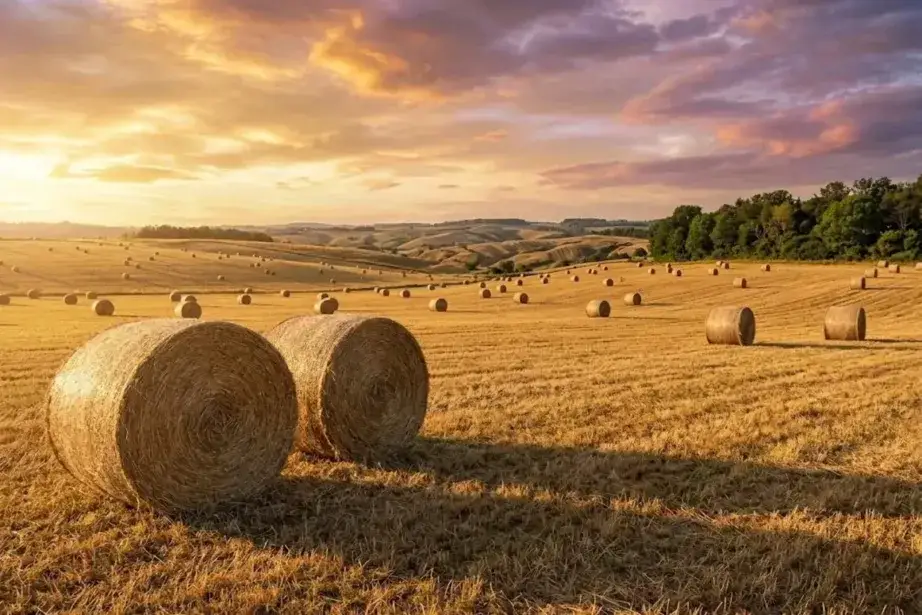
Round bales stored in a barn should be placed on their curved side rather than on the flat cut end — the curved side contact distributes the bale weight across a longer contact line and avoids the flat-end deformation that occurs when a heavy bale rests on its narrow flat face. Maximum indoor stacking for round bales without a bale stacker: 2 rows high in a pyramid pattern with the second row bales resting in the groove between the two bottom bales. Never stack round bales 3 high without mechanical stacking equipment — the top bale on a 2-high stack is already at the limit of safe manual unloading with a tractor bale spike.
Outdoor Storage: Practical Guidelines
Square Bale Outdoor Storage
Elevation: pallets, gravel bed or pressure-treated wooden runners. Minimum 100mm clearance from soil. A gravel pad under the pallet provides additional drainage and reduces the soil-moisture contact that causes bottom-bale deterioration.
Tarpaulin: breathable waterproof tarp covering the full stack to ground level on all four sides. Secure with ropes and ground anchors — a tarp that lifts in wind and re-drops traps moisture under the cover. Replace any tarp with holes before the storage period begins.
Stack height: maximum 4 layers outdoors. Wind load on a fully tarped outdoor stack at 5+ layers creates overturning risk. The tarp also becomes difficult to secure correctly on stacks above 4 layers high.
Localização: choose a well-drained location on a slight slope. Avoid low-lying areas that collect surface water runoff. Position the long axis of the stack facing the prevailing wind for maximum natural tarp ventilation under the cover.
Round Bale Outdoor Storage
Round bales stored outdoors perform best in a single row on a north-south orientation — with the flat bale ends facing north and south, the curved surface faces east and west where it receives maximum solar drying between rain events. The north-south orientation also positions the flat (more absorbent) bale ends away from the prevailing south-western wind direction in most US locations, reducing direct rain impact on the flat ends. Space bales 150–200mm apart in the row to allow airflow between bales and prevent the inter-bale zone from becoming a permanently damp contact point. Net-wrapped bales require no additional tarpaulin for storage up to 4–6 months in most US climates. Twine-wrapped round bales benefit from an individual round bale net cover or a row tarpaulin secured along the top of the row.
Fire Risk in Freshly Baled Hay — A Critical Safety Issue
Barn fires from fresh hay are among the most common farm fire causes in the US
Hay baled above 18–20% moisture undergoes microbial heating in the first 21 days after baling. This heating is driven by aerobic bacteria and fungi consuming the hay carbon compounds while the bale moisture is elevated. In most correctly baled hay, this heating phase reaches 45–55°C and then stabilises as moisture is consumed and microbial activity decreases. In hay baled too wet (above 22–25%), the heating phase can exceed 65°C — at which point a secondary chemical oxidation reaction begins that does not require oxygen and can continue to generate heat even within the centre of a bale. This secondary reaction is self-sustaining and, once started, can reach 200°C+ before igniting the surrounding hay.
WARNING SIGN 1
Steam visible rising from the stack 3–7 days after storage. Steam rising from the top of a freshly stored stack indicates active microbial heating. This is not automatically a fire risk — but it means the hay is heating beyond expected levels and the temperature must be monitored immediately.
WARNING SIGN 2
Bale exterior warm to touch on Day 7–14. A bale that is noticeably warm on the exterior surface at this stage has an interior temperature substantially above 60°C. Push a steel pipe into the bale and check the pipe temperature after 5 minutes — a pipe too hot to hold means internal temperatures are above 70°C.
WARNING SIGN 3
Caramel or tobacco-like smell from the stack. This smell indicates that hay chemistry has changed significantly from the heating — the sugar compounds that give fresh hay its characteristic smell have been converted by heat. A tobacco smell indicates the hay has been heated to the point where the hay quality is already substantially reduced.
ACTION
If bale internal temperature exceeds 70°C: contact your local fire department or rural fire service and inform them of the situation before moving any bales. Moving a self-heating bale introduces oxygen to the heated interior and can cause immediate ignition. The fire service can advise on the safest procedure for your specific situation and the number of bales involved.
Dry Matter Loss by Storage Method — What Quality Is Lost
| Storage Method |
Dry Matter Loss at 6 Months |
Crude Protein Change |
Primary Loss Mechanism |
| Indoor barn, pallets, correct baling moisture |
2–5% |
Negligível |
Initial curing heat only. No ongoing loss after moisture stabilises. |
| Outdoor, net wrap (round bales), on gravel |
5–10% |
1–2% reduction |
Surface weathering of exposed ends; initial curing heat in core. |
| Outdoor, tarped square bales, pallets |
5–12% |
1–3% reduction |
Tarp condensation on the outer bale layers; initial curing heat. |
| Outdoor, twine-wrapped round bales, on soil |
15–25% |
3–5% reduction |
Ground moisture wicking into base; rain absorption on exposed surface; initial heating. |
| Outdoor, uncovered, on soil — worst case |
25–40% |
5–8% reduction |
All mechanisms combined: ground moisture, rain, UV, rodent and bird damage. |
Long-Term Storage (12 Months and Beyond)
Hay intended for storage beyond 12 months should be baled at the lower end of the safe moisture range — 14–15% for small square bales, 15–17% for round bales. Starting at the lower moisture allows a wider margin before any moisture gain from storage conditions (condensation, ground contact) pushes the bale above the mold threshold.
Long-term storage quality factors:
Crude protein: declines 1–3% per year in indoor storage from enzymatic activity at the surface layer. The interior remains at or near original protein for 2–3 years in dry indoor storage.
Energy (TDN): declines 2–5% per year in indoor storage from oxidation of readily digestible carbohydrates. More stable than crude protein but measurable quality loss by year 2.
Colour: green bales fade to tan in 3–6 months in any storage type. Year-old correctly stored bales are typically golden tan throughout — this is cosmetic, not a quality indicator for most markets.
Mold risk in second year: if the bale survived the first year without mold, the second year is much lower risk — the microbial population that would initiate mold is present but the conditions (elevated moisture) that allow them to grow are not available in correctly stored bales.
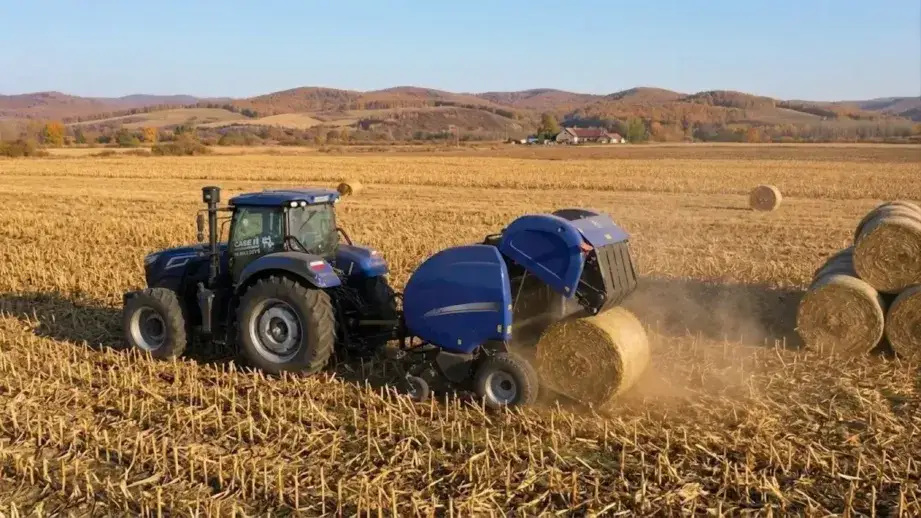
From Baler to Barn — Equipment That Determines Storability
Frequently Asked Questions — Hay Bale Storage
How long can I leave round bales in the field before moving them to storage?+
Net-wrapped round bales can remain in the field for up to 7–10 days without significant quality loss in dry conditions — the net provides weather protection and the bale cures from its own initial heat without additional moisture input. Twine-wrapped bales should be moved within 3–5 days — rain contact without net protection begins to increase surface moisture immediately. Both bale types should be moved from the field before the next rain event regardless of days since baling, since rain on the flat bale ends (which are always exposed regardless of wrapping type) accelerates quality loss at the end faces. In summer heat with temperatures above 32°C: move bales within 2–3 days regardless of wrapping type — ground heat absorption through the bale base is significant at high soil surface temperatures.
Can I store new hay bales directly on top of old bales from last season?+
Yes — if the old bales are in sound condition (no mold, correct structural shape) they can serve as the base layer for new season bales in a barn storage arrangement. This is a common practice that avoids the need for pallet replacement every season. Before stacking new bales on old: inspect the top surface of the old bales for any soft spots, mold, or structural deformation that would make them an unreliable base. Old bales that have compressed and settled significantly (more than 15% of original height) may not provide stable support for new bales and should be used first before new season stock is stacked above. Label or mark the storage arrangement so that oldest bales are accessed first — a first-in-first-out system prevents old bales from being buried behind new stock and remaining unused beyond their optimal storage life.
My barn roof leaks in one area. Does this ruin all the bales underneath?+
A roof leak affects the bales directly under the leak point and — through horizontal moisture migration — bales within approximately 50cm of the wet zone. The damage is typically limited to the outer 10–20cm of the wet bales; the interior of bales that were correctly dried and baled often remains acceptable. To assess: remove the top wet bale and inspect the next layer. If the bales below have a dry interior when opened, the moisture has not penetrated deeply. If the bales below are uniformly damp when opened, the moisture has migrated through multiple layers and all damp bales should be assessed for mold before feeding. The wet top-layer bales should be moved outdoors and fed within 2–3 weeks before mold develops. Repair the roof before the next rain event — a persistent roof leak that wets the same stack repeatedly will eventually compromise the entire stack from accumulated moisture cycling regardless of initial bale quality.
How do I know if a warm bale is at a dangerous temperature?+
The steel pipe temperature test is the most practical field method: drive a 1.2-metre steel pipe (25–30mm diameter) into the bale core area using a hammer, leave for 5 minutes, then withdraw and immediately test the pipe temperature with your hand. A pipe that is comfortably warm (like a cup of warm tea) indicates bale temperature around 40–50°C — high but not yet in the danger zone. A pipe you cannot hold for more than 3 seconds indicates temperature above 65–70°C — this is the threshold where immediate action and fire service consultation is warranted. If the pipe cannot be touched at all, the bale interior is above 80°C — this is a fire emergency. For operations storing significant quantities of fresh hay: purchase an agricultural hay thermometer with a 1.5-metre probe rod — this provides a direct temperature reading without the ambiguity of the touch test and is a modest investment that can prevent a significant loss.
Is concrete barn floor better than dirt floor for hay storage?+
Concrete floor is better than bare dirt for hay storage — but only if the concrete is dry and the bales are kept off it with pallets. Concrete still transmits moisture by condensation during temperature cycling and allows water absorption from any flooding or drainage into the barn. Bare dirt is worse because it also transmits ground moisture and is more susceptible to surface water pooling during heavy rain. The practical priority order for barn floor types: concrete with pallets or wood runners under bales (best) — gravel base with pallets (good) — concrete with direct bale contact (moderate risk, not recommended) — dirt with pallets (moderate) — bare dirt with direct bale contact (avoid). In any case, the most important single action regardless of floor type is to elevate bales off the floor surface with a minimum 100mm clearance through pallets or wooden runners.
My 3-year-old hay bales smell fine but look tan/brown. Are they safe to feed?+
Tan or brown colour alone after 3 years of storage does not indicate the hay is unsafe — colour change in stored hay is primarily a cosmetic change from UV bleaching and oxidation of chlorophyll, not a nutritional quality indicator on its own. The key safety assessment for old hay: (1) No mold — open a bale and look for white, blue, black or grey mold growth anywhere in the bale interior. Any visible mold is a rejection trigger for horses and small ruminants; cattle can tolerate low-level surface mold in some circumstances. (2) No musty or sour smell — fresh hay smell long gone after 3 years, but the smell should be neutral to slightly sweet. Musty or sharp odors indicate mold even if not visible. (3) No significant dustiness — old hay that produces a visible dust cloud when shaken has lost leaf structure and the fine particles are a respiratory irritant. If the hay passes all three checks, send a forage sample to a laboratory for crude protein and energy analysis — 3-year-old hay may be nutritionally adequate for beef cattle but potentially deficient for horses or dairy. The laboratory analysis determines whether the nutrient content meets the requirements of your specific animals.
How far from the barn should I store hay outdoors for fire safety?+
NFPA 1, the National Fire Protection Association standard for fire code, recommends a minimum 15-metre (50-foot) separation between hay storage and any structure. Many state and county fire codes have specific requirements — check your local agricultural fire code for the applicable distance in your jurisdiction. The 15-metre minimum is a functional safety distance that allows fire suppression equipment to operate between the burning hay stack and the structure without the structure being exposed to direct flame contact from the burning hay. Fresh hay bales (within 21 days of baling) present a higher spontaneous combustion risk than older well-cured bales — the 15-metre minimum is especially important for fresh hay storage in the first 3 weeks after baling.
Can I use silage plastic wrap to cover square bales stored outdoors?+
Silage stretch film on square hay bales creates an anaerobic (low-oxygen) environment under the film — which is exactly what is needed for silage fermentation but not for hay storage. Hay wrapped in sealed silage film ferments rather than cures, producing a low-quality silage that is not the same product as the hay that was baled. If you intend to make silage from a hay crop: bale at 40–55% moisture, wrap with stretch film immediately on the day of baling, and manage as haylage. If you intend to make dry hay: do not use silage stretch film as a substitute for a breathable waterproof tarp. Standard agricultural tarps or machine-specific hay covers are the correct product for outdoor dry hay storage — they are waterproof on the outer surface but allow water vapor movement from inside the cover to the atmosphere, preventing the condensation accumulation that sealed film creates.
Bale Quality Starts With the Right Equipment
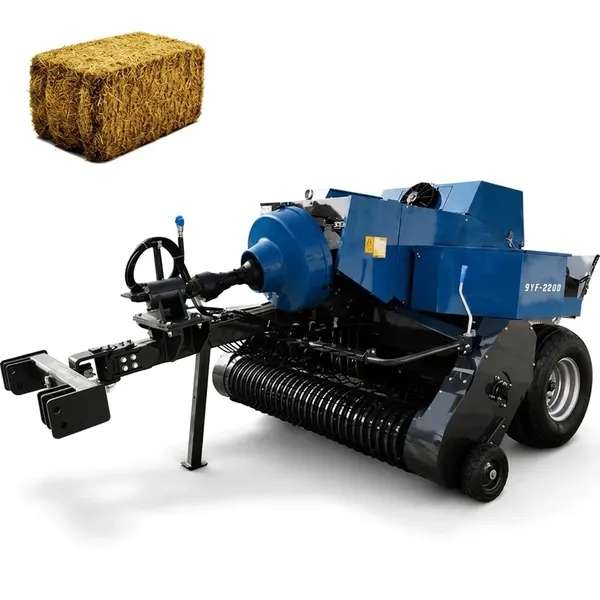
Bales that store well are bales that were produced at the right moisture in the available window. The Série 9YF is designed for reliability across that window — contact us to discuss the right model for your crop, acreage and storage goals.
Editor: Cxm