
Michigan is the largest dark red kidney bean producing state in the United States, and the Thumb peninsula — the cluster of counties forming the northeastern corner of the Lower Peninsula — is responsible for the majority of that production. Huron County is consistently the highest dry bean-producing county in the U.S. by acreage. The concentration of commercial dry bean production in this geography, combined with the tight late-summer harvest window driven by the Great Lakes climate, makes the Michigan Thumb one of the most logistically demanding dry bean production environments in North America — and one of the most important markets for commercial-scale mechanical harvest equipment.
Michigan’s Position in the U.S. Dry Bean Industry
Michigan produces approximately 60 to 70 percent of the U.S. dark red kidney bean supply in normal crop years, with total Michigan bean acreage (all classes) consistently in the 300,000 to 400,000-acre range depending on relative price signals and rotation considerations. Dark red kidney beans represent 50 to 60 percent of Michigan bean acreage in a typical year, with navy (pea bean) comprising the second largest class at approximately 20 to 25 percent of acreage, followed by black beans, cranberry beans, and a small amount of other specialty classes.
The U.S. Dark Red Kidney Bean market is primarily a canned food supply chain — DRK beans processed in Michigan are used in canned kidney beans, baked beans, and chili products supplied to major U.S. food companies and private-label retailers. The quality specifications for this market, administered through USDA grading at elevator and processor receiving stations, are the commercial reality that defines what Michigan Thumb producers must deliver from their mechanical harvest operations.
Michigan Thumb County-Level Production Overview
The following table summarizes key production characteristics by county cluster in the Michigan Thumb region, based on USDA NASS Michigan field crop data and Michigan State University Extension dry bean program publications. These profiles represent typical conditions in each area — individual farm operations vary significantly in scale and variety mix.
| County/Area | Dominant Bean Class | Typical Row Spacing | Typical Farm Scale | Key Production Characteristics | Puller Model Reference |
|---|---|---|---|---|---|
| Huron County (Bad Axe, Caseville area) |
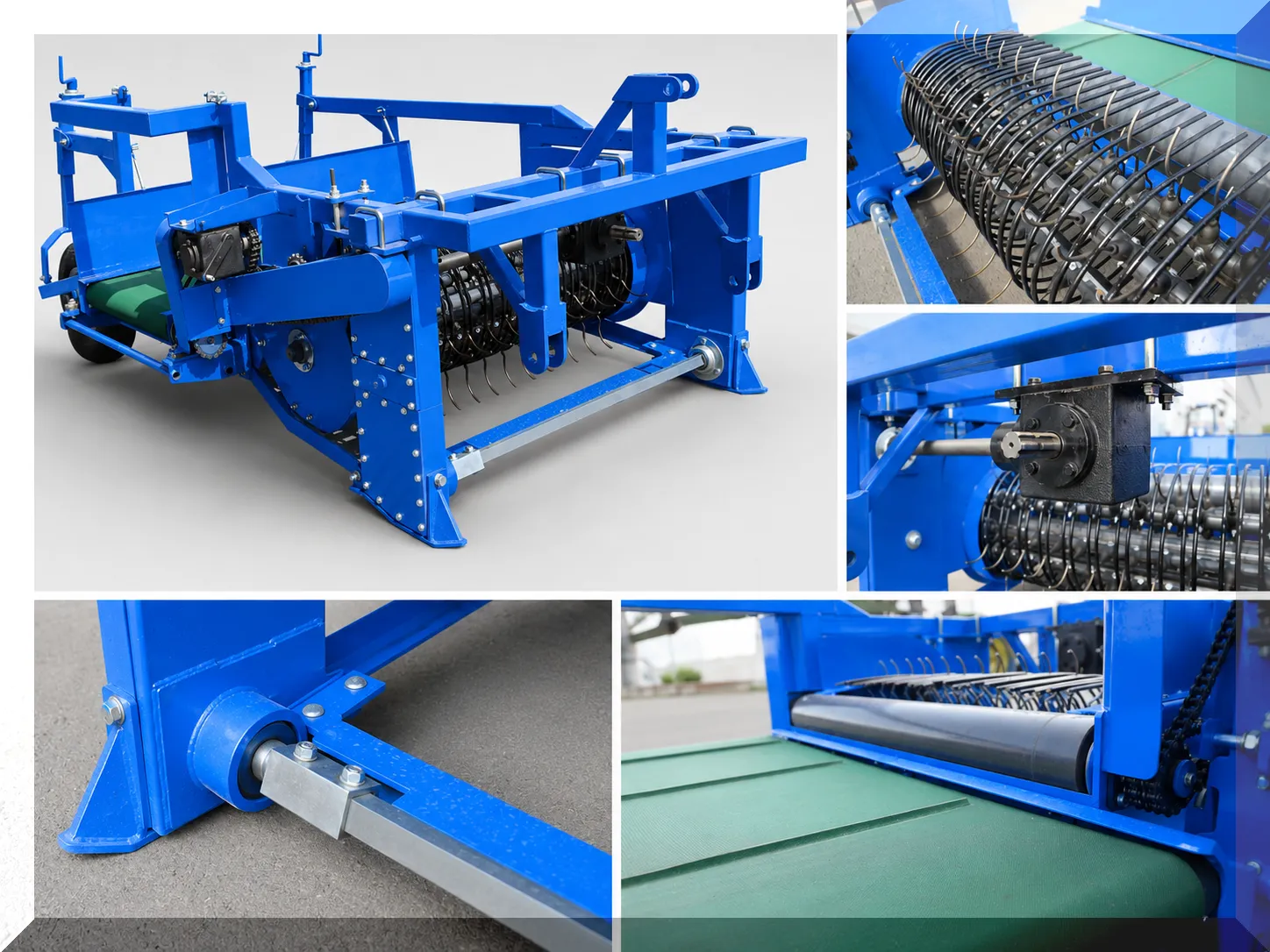
Dark Red Kidney; Navy | 28–30 in | 200–800+ acres beans | Highest bean acreage county in U.S.; sandy loam soils with good drainage typical; tight late-August harvest window; strong elevator infrastructure | 4BYH-3.25 (5-row) to 4BYHD-3.9 (6-row) for larger operations; 4BYH-2.6 (4-row) for mid-scale |
| Sanilac County (Sandusky, Deckerville area) |
Dark Red Kidney; Black | 28–30 in | 150–600 acres beans | Second largest Michigan bean county; more variable soil texture than Huron; some clay loam soils require timing attention for pulling in wet conditions | 4BYH-2.6 (4-row) to 4BYH-3.25 (5-row) most common scale; 4BYHD-3.9 for largest operations |
| Tuscola County (Caro, Vassar area) |
Dark Red Kidney; Navy; Cranberry | 28–30 in | 100–500 acres beans | Transitional area from Thumb core; more diverse crop mix (sugarbeets, corn, soybeans); some operations run 36-in rows for sugar beet equipment compatibility | 4BYH-2.6 (4-row) most common; row spacing confirmation essential for 36-in fields |
| Lapeer / St. Clair Counties (Southern Thumb edge) |
Navy; Black; Mixed | 28–30 in | 50–300 acres beans | Smaller operations; more diverse crop rotation; heavier soils in some areas; navy and black bean more prevalent than DRK relative to core Thumb | 4BYH-1.3 (2-row) to 4BYH-2.6 (4-row) appropriate scale |
County profiles based on USDA NASS Michigan field crop data and MSU Extension dry bean program publications. Farm scale and variety mix data represent typical range, not averages. Consult MSU Extension and local elevator contacts for current production information specific to your county.
The Michigan Thumb Harvest Window: Why Speed and Reliability Matter Here
The Michigan Thumb harvest window for dark red kidney beans is narrower than most U.S. dry bean production regions. The combination of Great Lakes humidity, September rain risk, and early frost dates converges in the Thumb to compress the optimal pull period to as little as 7 to 12 days across the majority of fields in a typical year. In dry, hot years the window narrows further; in cool, cloudy years it may extend to 14 to 18 days, but those years are the exception rather than the rule.
The practical implication is that machine reliability and daily field capacity are proportionally more important in Michigan than in regions with longer harvest windows. A machine breakdown in the Michigan Thumb during the harvest window can cost 3 to 5 days of lost harvest time — potentially a third to half of the entire window. This is why commercial Michigan producers prioritize parts availability and support infrastructure when selecting harvest equipment: a California warehouse stocking the highest-frequency wear parts for same-day dispatch is a meaningful operational advantage in a region where 5-day parts delays can make the difference between a successful harvest and significant shatter losses.
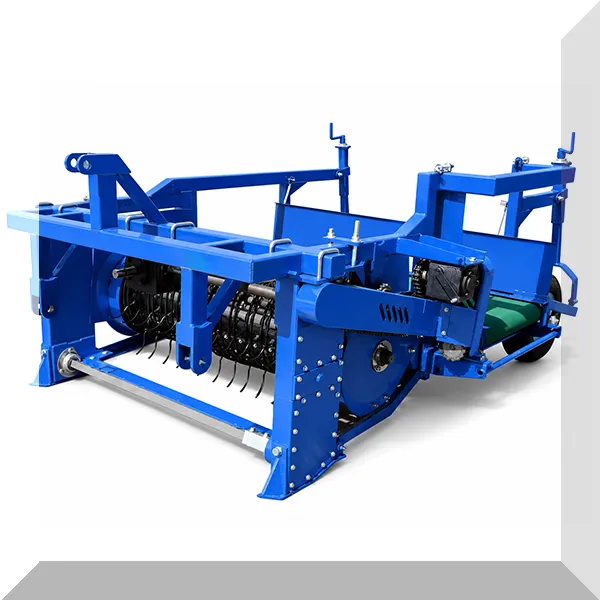
For large-scale Michigan Thumb operations (above 300 acres of beans), the 4BYHD-3.9 6-row kidney bean puller delivers the per-day coverage necessary to complete pulling within the reliable portion of the harvest window. At 5 km/h ground speed across a 3.9 m working width, the 4BYHD-3.9 covers approximately 1.5 to 2.0 ha/h (3.7 to 4.9 acres/h) in typical Michigan field conditions — allowing a 400-acre operation to complete pulling in 8 to 10 days of consistent field operation.
Michigan Elevator Contract Specifications: What Quality the Market Requires

Michigan dark red kidney bean elevator contracts reference USDA grade specifications that define the quality standards for commercial delivery. The grade factors that mechanical harvest operations most directly influence are:
Moisture content at delivery is typically specified at 18% or below for commercial elevator acceptance, with dockage schedules for beans delivered above 14% moisture. Beans harvested at optimal timing and properly field-cured for 3 to 7 days after pulling should reach 14 to 16% moisture at threshing, which is within delivery specifications without additional on-farm drying at most Michigan elevators.
Total defects include splits and brokens (seed coat damage from mechanical harvest), foreign material, wrinkled and immature beans, and off-color beans. For USDA Grade No. 1 DRK, the total defect allowance is 2.0% or less of sample weight. Seed coat splits from threshing at over-dry pod moisture, immature seeds from early pulling, and soil contamination from improper pickup height are the primary mechanical harvest contributions to defect percentage. Each of these is controllable through correct timing and equipment adjustment — the grade received is directly linked to harvest management quality.
Germination percentage is increasingly relevant as a contract specification in seed-bean markets (beans sold for replanting rather than food processing). For seed contract DRK production, the pulling timing and threshing operation must maintain seed viability — typically specified at 85% or above minimum germination — which places additional constraints on both pulling moisture (too wet = disease risk; too dry = mechanical damage) and threshing drum speed and concave settings.
Michigan State University Dry Bean Resources
Michigan State University Extension is the primary agronomic and technical resource for Michigan dry bean producers. Key publications that inform mechanical harvest decisions include the annual Bean Varieties for Michigan publication (updated each spring with current variety trial results including shatter resistance, yield, disease ratings, and maturity), and the MSU Extension dry bean production guide series. The MSU Bean Research Farm in Saginaw County is the primary trial location for DRK and navy bean variety evaluations under Michigan production conditions.
MSU Extension dry bean specialists based in the Thumb counties provide direct farm consultation on variety selection, harvest timing scouting, and integrated pest management for bean operations in the region. Our fasulye hasat makinesi serisi complements MSU Extension’s agronomic guidance with the mechanical harvest equipment that executes the pull stage of the production system. The agricultural PTO driveline and drive components for our puller series are specified for the sustained operating hours that Michigan Thumb commercial-scale pulling requires across a compressed seasonal window.
Sıkça Sorulan Sorular
Configure a Puller for Your Michigan Thumb Operation — Delivery Before the Harvest Window
Row spacing confirmation, model selection, and delivery timing coordinated for Michigan harvest windows. Parts availability for Michigan operations confirmed from our California warehouse. Contact us by May to ensure delivery before the late-August pull season begins.
Editör: Cxm


