Hay Farm Financial Guide

Hay Production Cost Per Ton: Full Cost Breakdown

Most hay producers know what they sell their hay for. Very few know what it actually costs them to produce a ton. That gap — between revenue and true production cost — is where profit disappears. This guide breaks down every cost category, provides regional benchmarks, and gives you the exact calculation to find your break-even price per ton.

Calculate My Break-Even

The Number Most Hay Producers Don’t Know

In a Kansas State University survey of commercial hay producers, fewer than 30% could accurately state their all-in cost per ton of hay produced within $15. The other 70% were either guessing based on a few line items they tracked (usually fuel and net wrap) or using a rough “cost per bale” estimate that ignored equipment depreciation, land cost, and overhead entirely.

That gap between perceived cost and actual cost explains a lot of observed behavior in hay markets: why producers sell hay at prices that don’t cover their true costs in low-market years, why some operations appear profitable on a cash basis but are consuming capital invisibly, and why the decision to expand acreage or invest in new equipment often looks right in a good price year and catastrophic in a poor one. The discipline of full-cost accounting in hay production is not about adding complexity — it is about knowing, before market prices move, whether your operation has a structural profit margin or is dependent on favorable prices to survive.

70%
of hay producers cannot accurately estimate their true cost per ton
$38
average gap between estimated and actual production cost in one Midwest study
7
distinct cost categories that must be tracked for accurate cost-per-ton analysis

The 7 Cost Categories in Hay Production

A complete hay production cost analysis requires tracking seven distinct cost categories. Missing any one of them understates your true cost and distorts the profitability picture. The categories below apply to perennial hay (alfalfa, grass, mixed) — annual hay crops (sudangrass, annual ryegrass) require the same categories but with higher establishment cost allocated annually.

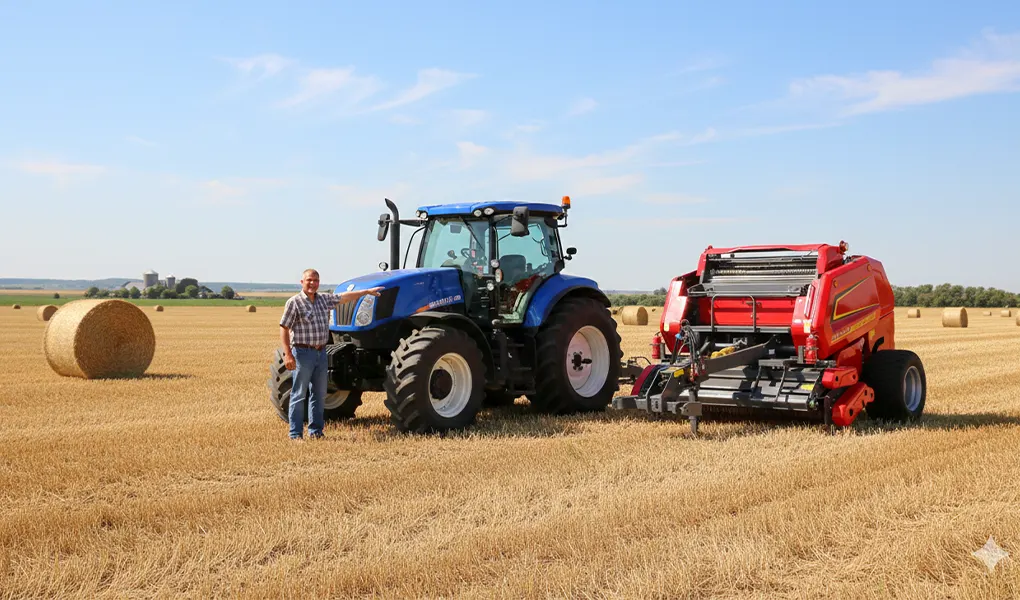
commercial round baling operation — production cost per ton includes equipment, fuel, labor, and seven other categories tracked separately

🌱

Category 1
Establishment / Seed

For perennial hay, establishment cost (seed, seedbed prep, herbicide, inoculant) is amortized over the stand life. A $220/acre establishment on a 7-year stand = $31/acre/year. At 3 tons/acre/year, that’s $10.33/ton of establishment cost — often ignored but real.

Typical range: $8–$18/ton (alfalfa, 6–8 year stand)

🌿

Category 2
Fertilizer and Lime

Alfalfa removes 12–15 lbs of potassium per ton of hay harvested. At 3 tons/acre that’s 36–45 lbs K₂O/acre annually — roughly $20–$28/acre in potash at current prices. Sulfur and boron replacement add another $8–$14/acre. Phosphate, lime, and micronutrients vary widely by soil.

Typical range: $18–$40/ton (varies heavily by removal rate and soil type)

💧

Category 3
Irrigation (if applicable)

Irrigation is the largest single cost item for irrigated alfalfa — often $60–$120/acre/year when water, pump energy, and infrastructure depreciation are included. On 5-cutting irrigated programs at 7 tons/acre, this may be only $9–$17/ton. On lower-yield systems, the per-ton cost can exceed $30.

Typical range: $0 (dryland) to $30+/ton (low-yield irrigated)

🚜

Category 4
Equipment: Ownership + Operating

Equipment cost has two components: ownership cost (depreciation, interest, insurance, housing — approximately 15–20% of purchase price annually) and operating cost (repairs, fuel, lubrication, consumables like net wrap). A $28,000 baler at 15% annual ownership = $4,200/year, spread over 800 bales/year = $5.25/bale or ~$3.85/ton.

Typical range: $22–$48/ton for full equipment line (mower, rake, baler, tractor share)

Category 5
Fuel and Lubrication

Fuel consumption across the full hay operation (mowing, tedding, raking, baling, transport) typically runs 2.5–4.5 gallons of diesel per ton of hay produced. At $3.80/gallon diesel, that’s $9.50–$17.10/ton in fuel alone. Lubrication adds another $1–$2/ton. This category fluctuates with diesel prices and operating efficiency.

Typical range: $10–$20/ton at current diesel prices

👷

Category 6
Labor

Labor cost depends on whether you count owner-operator time at opportunity cost or only hired labor wages. For a true cost analysis, owner-operator time should be valued at a market wage rate ($20–$35/hr for skilled equipment operator). At 0.8 hours per ton of hay produced (mowing + tedding + raking + baling + storage), that’s $16–$28/ton in operator labor value.

Typical range: $12–$28/ton (varies by mechanization level and wage rate)

🏦

Category 7
Land Cost and Overhead

Land cost (cash rent or opportunity cost of owned land) is often the largest single cost in high-value agricultural regions. At $150/acre cash rent in the Mountain West producing 4 tons/acre, land cost alone is $37.50/ton. Add overhead (insurance, property tax, management time, marketing) and this category can exceed $50/ton in high-rent areas.

Typical range: $20–$65/ton (highest variability across all categories)

Regional Production Cost Benchmarks: Five Major Hay Regions

Production costs vary significantly by region due to differences in land values, water costs, yield potential, and input prices. The following benchmarks represent estimated all-in costs for established commercial operations — they are directional guides, not exact figures for any individual operation.

地区 Typical yield
(tons DM/acre)
Total cost
per acre
Cost per ton Dominant cost driver Break-even
market price
Mountain West irrigated
(ID, UT, NV, CO)
5.5–8.0 $480–$660 $72–$95 Irrigation + water rights $85–$110/ton
Central Plains dryland
(KS, NE, SD)
1.8–3.2 $180–$280 $70–$110 Land cost, yield variability $80–$125/ton
太平洋西北地区
(OR, WA irrigated)
5.0–7.5 $520–$720 $80–$115 High land cost, labor market $95–$130/ton
Upper Midwest grass hay
(MN, WI, MI)
2.0–3.5 $200–$320 $68–$105 Weather risk, yield inconsistency $80–$120/ton
Southeast bermudagrass
(AL, GA, TN)
3.5–6.0 $240–$400 $55–$90 Preservative, low establishment cost $65–$100/ton

Benchmarks synthesized from USDA Economic Research Service hay cost studies, state extension enterprise budgets (University of Idaho, K-State, UW-Extension), and producer survey data. Ranges represent 25th–75th percentile of surveyed operations. Individual operations vary widely. Costs shown in 2024–2025 price environment.

Equipment Cost: Ownership vs Custom Baling — the Key Decision

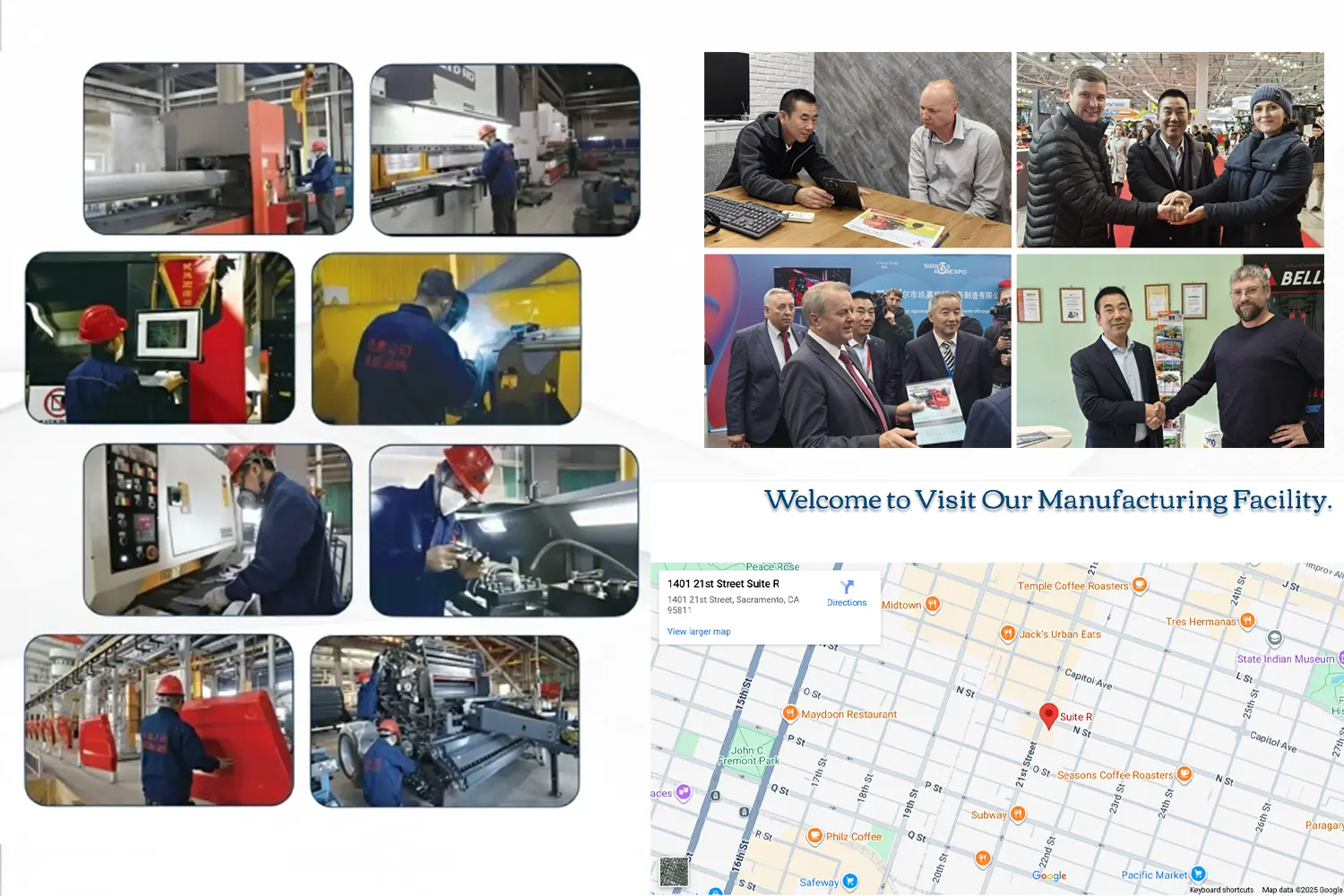
foragebaler.com manufacturing facility — equipment purchase price is the starting point for ownership cost-per-ton calculation in hay production

Equipment cost is the category that shows the most dramatic difference between operations. A 500-acre hay farm spreading equipment ownership across 1,500+ bales per season achieves dramatically lower cost per bale than a 75-acre hobby operation producing 200 bales on the same equipment. The scale effect is non-linear — doubling acreage more than doubles the equipment cost efficiency.

Equipment Annual Ownership Cost Formula
Annual Ownership Cost = (Purchase Price × 0.15) + (Loan Balance × Interest Rate)
Operating Cost Per Bale = (Annual Fuel + Repairs + Consumables) ÷ Annual Bale Count
Total Equipment Cost Per Ton = (Annual Ownership + Annual Operating) ÷ Annual Tons Produced

例子: $28,000 round baler, 15% annual ownership cost = $4,200/year. Operating cost (fuel share, repairs, net wrap) = $3,200/year. Total annual cost = $7,400. At 1,200 bales/year averaging 1,050 lbs = 630 tons: $11.75/ton equipment cost for the baler alone.

At 400 bales/year (210 tons) on the same equipment: $7,400 ÷ 210 = $35.24/ton — three times higher per-ton cost for the same machine.

This scale effect is why the custom baling vs. ownership decision deserves rigorous analysis before equipment purchase. The full investment analysis framework — including break-even bale count, financing scenarios, and resale value impact — is covered in the baler ROI investment analysis.

Your Break-Even Price Per Ton: How to Calculate It

The break-even price is the minimum market price you need to receive per ton to cover all production costs and earn a normal return on your land and management time.

1
Sum all seven cost categories per acre (seed amortization + fertilizer + irrigation + equipment + fuel + labor + land/overhead)
2
Divide total cost per acre by your expected average yield (tons DM per acre) = cost per ton produced
3
Add your target profit margin (10–20% of cost, or a fixed dollar amount per ton) = minimum selling price needed
4
Compare to your local hay market price range (see hay pricing guide) to evaluate whether production is justified at current market conditions
Worked Example: Idaho Irrigated Alfalfa
Costs: Establishment $14/ton + Fertilizer $28/ton + Irrigation $22/ton + Equipment $18/ton + Fuel/lube $14/ton + Labor $20/ton + Land/overhead $38/ton = $154/ton total cost
Break-even with 15% margin: $154 × 1.15 = $177/ton minimum market price needed
Current Supreme alfalfa range in Idaho: $190–$240/ton → viable at current prices

Five Highest-Impact Ways to Reduce Cost Per Ton

Cost reduction in hay production should target the highest-cost categories first. Generic “cut expenses” advice is far less useful than knowing specifically which lever moves the number most for your operation type.

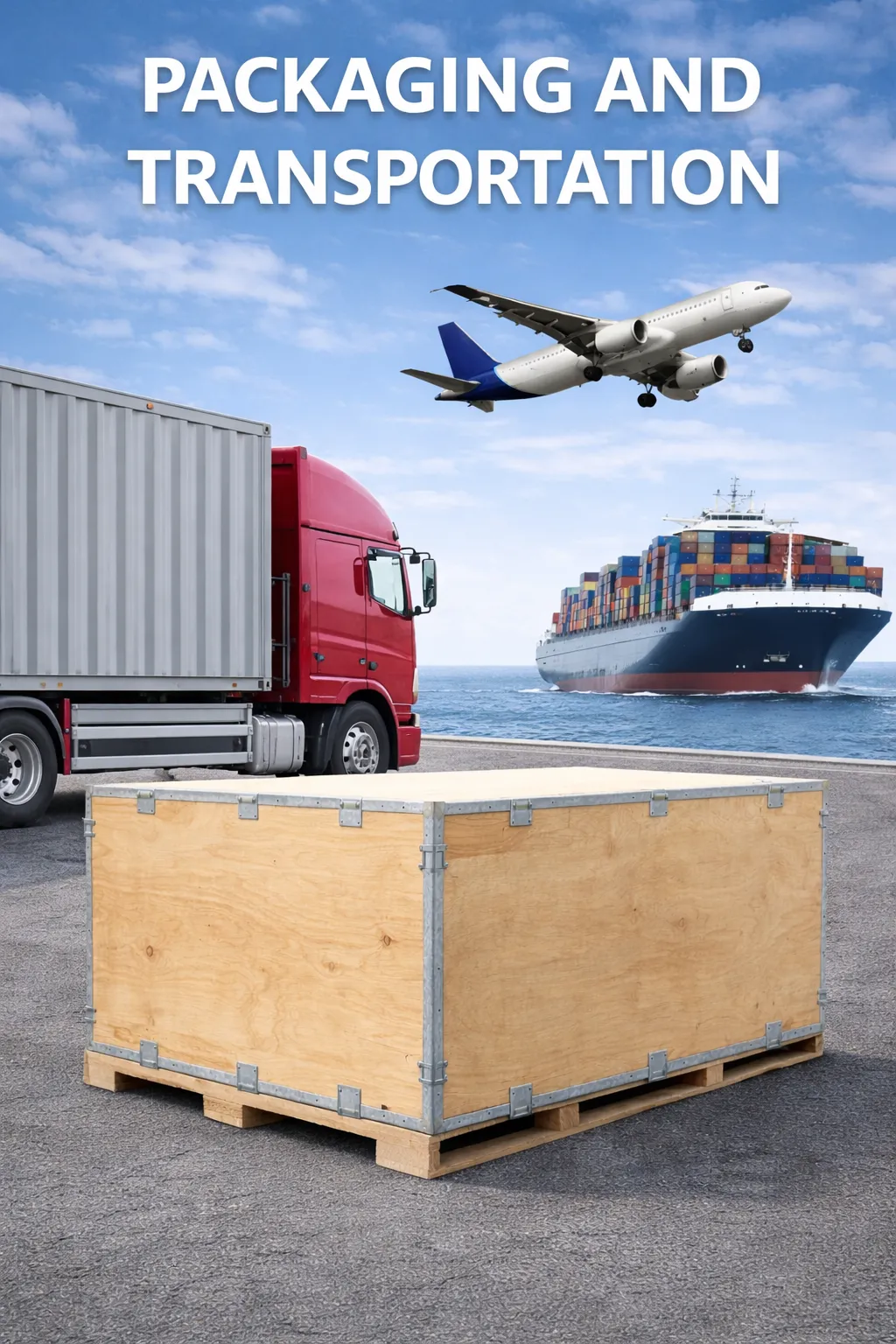
hay bale handling and shipping efficiency — transport and handling cost is one of five categories where precision management reduces cost per ton

1. Maximize yield per acre — it dilutes all fixed costs simultaneously

Every additional half-ton of yield per acre drops every fixed cost (land, equipment ownership, establishment amortization) by the same proportional amount. Yield is the single highest-leverage variable in cost per ton. Soil testing and targeted fertility replacement, stand management to prevent premature thinning, and cutting interval management to maintain RFV while sustaining production are the yield drivers that most directly reduce fixed cost per ton.

2. Right-size equipment to actual annual bale volume

Over-equipped operations — a $45,000 commercial baler making 300 bales per year — carry ownership costs that are not recoverable at any market price. Match machine capacity to actual volume, not aspirational volume. Custom baling the margin acreage (the acres you might add in a good year) rather than sizing equipment for maximum possible acreage reduces the per-ton equipment cost significantly.

3. Reduce field losses — every percent of DM loss is a percent of cost wasted

A 15% DM loss in outdoor storage means you paid the full production cost on 15% of your hay that was never converted to a sellable or feedable product. Improving net wrap quality, elevating bales from soil contact, and converting outdoor storage to covered storage where economically justified can recover $8–$25/ton of hay that is currently being written off as storage loss.

4. Access premium market channels, not just local elevator

The cost-per-ton metric is only relevant relative to selling price. A $95/ton production cost generating $115/ton at the local elevator is a $20/ton margin. The same hay quality in a direct-to-dairy relationship at $155/ton is a $60/ton margin — the same cost structure generating three times the profit through market channel selection. Investing in the quality management that opens premium channels often has a higher ROI than pure cost-cutting.

5. Track and benchmark annually — improvement requires measurement

Operations that formally track cost per ton by category each year can identify which costs are trending up and address them before they erode margins significantly. Fuel cost per ton, repair cost per ton, and labor hours per ton are the three operating cost metrics most sensitive to management practices and most controllable through operating efficiency improvements.

Often-Missed Cost: Baler Consumables Per Ton

Equipment operating costs include consumables that many operators track at the annual purchase level but rarely convert to per-ton cost. The following per-ton consumable costs are based on standard commercial round baling for a 4×5 baler producing 1,050-lb average bales at 3 tons/acre on mixed hay:

Consumable Cost per bale Cost per ton 笔记
Net wrap (2–3 wraps) $1.80–$3.20 $1.30–$2.30 Varies with roll price and bale count per roll
Replacement tines (annualized) $0.25–$0.55 $0.18–$0.40 Set replacement every 2,000–4,000 bales
Belt replacement (annualized) $0.80–$1.60 $0.58–$1.15 Full set replacement every 3,000–5,000 bales
Lubrication / grease $0.12–$0.22 $0.09–$0.16 Grease, gearbox oil, chain lube
Total baler consumables $2.97–$5.57 $2.15–$4.01 Per ton excluding fuel and repairs

Cost Analysis FAQs

Should I include land cost if I own my hay ground outright?+
Yes — absolutely. Owned land represents capital that has an opportunity cost: the same capital invested elsewhere (in bonds, another farm enterprise, or equipment) would generate a return. The standard practice in agricultural accounting is to charge owned land at its cash rental value (what you could receive if you rented it to another producer). If your land would rent for $90/acre in the local market, that $90/acre is a real cost of your hay operation — it represents the return you are forgoing by farming it yourself rather than renting it out. Not including land cost is the most common reason hay enterprises appear “profitable” on a cash flow basis while actually consuming long-term capital value.
How does hay production cost compare to buying hay at market price?+
For livestock operations considering whether to grow their own hay or purchase it, the comparison is between your full production cost per ton and the delivered cost of purchased hay of equivalent quality. The key advantage of own-production is not usually lower cost — in most regions, purchased hay from a specialized hay operation is at or below the cost of growing it on a small scale — but rather reliability of supply, quality control, and feed timing flexibility. Operations in regions with reliable hay markets and good supply consistently find that purchasing hay and using their land and capital for a more productive enterprise is economically superior to hay production at low yield levels. The break-even typically occurs around 3–4 tons per acre per year for dryland programs and 5–6 tons per acre for irrigated alfalfa.
How do I allocate shared equipment costs between hay and other crops?+
Tractors and other multi-use equipment should be allocated to hay production based on hours of use. If your 100 HP tractor runs 400 hours/year and 120 of those hours are for hay operations, allocate 30% of the tractor’s annual ownership and operating cost to the hay enterprise. Dedicated hay equipment (baler, mower, rake) with no other use is 100% allocated to hay. This allocation method ensures that each enterprise in your operation bears its fair share of shared capital costs, giving you an accurate picture of which enterprises are profitable and which are being subsidized by others.
What is a typical net margin for commercial hay production?+
Net margin in commercial hay production is highly variable with market conditions. In normal-supply years, well-managed irrigated alfalfa operations in the Mountain West typically generate 10–20% margins above full cost (including land). In drought-reduced supply years, premiums can push margins above 30%. In over-supply years — when winter hay carryover is high — margins can compress to zero or negative for producers without premium market channels. The operations that sustain profitability through price cycles are those with consistent premium quality (dairy or export channel access), very efficient cost structures through scale or yield, or stored-hay inventory management that allows selling in tight-supply periods rather than at harvest-time lows.
Does using a newer baler meaningfully reduce production cost per ton?+
A newer baler can reduce cost per ton through three mechanisms: lower repair and downtime costs (newer equipment typically requires less unscheduled maintenance, which has both direct repair cost and indirect lost-baling-time costs); better bale density consistency (improved density directly reduces DM losses in storage and improves elevator grade); and lower fuel consumption in modern designs versus older balers. The magnitude of the savings depends on the age and condition of the equipment being replaced. Replacing a 15-year-old baler with extensive annual repair costs can produce $3–$8/ton in repair savings alone. Replacing a well-maintained 5-year-old baler rarely produces savings that justify the purchase cost of a new machine.
How does the cost per ton change between first and later cuttings of alfalfa?+
Most fixed costs (land, establishment amortization, equipment ownership) are allocated across all cuttings in proportion to tonnage produced — so they are relatively similar per ton regardless of cutting number. Where cost-per-ton varies between cuttings is in the variable cost categories. First cutting typically has higher fuel cost per ton because the heavier windrow requires more drying time and potentially more tedding passes. Later cuttings in irrigated programs have higher irrigation cost per ton in the periods between cuttings when evapotranspiration is highest. Fall cuttings in humid regions often have higher preservative cost because of marginal drying conditions. In a well-managed 4-cutting irrigated program, total cost per ton is often 5–15% higher for first cutting than for second and third cuttings, with fourth cutting cost rising again due to shorter drying windows and higher labor intensity for field operations.

foragebaler.com certified round balers — equipment designed for the cost efficiency demanded by commercial hay production operations

Get Equipment Matched to Your Production Scale and Cost Targets

Tell us your annual bale volume, primary crop, and target cost per ton. We’ll recommend the baler model that gives you the best ownership cost-per-bale for your specific production scale — not the biggest machine or the cheapest one, but the right one.

Get Equipment Advice

编辑:Cxm