Summer Annual Hay — Safety and BMR Production

高粱苏丹草干草:氢氰酸、BMR 和打捆指南

Sorghum sudangrass produces 4–8 tons per acre in one summer season and, in BMR form, delivers digestibility values that dairy nutritionists specifically request. It is also the hay crop with the most serious safety hazard in U.S. production — prussic acid. This guide covers the safety science producers must know, the BMR vs conventional quality difference, cutting timing, and the baler settings that thick sorghum stems require.

See Prussic Acid Safety Guide

Why Sorghum Sudangrass Hay Is More Complex — and More Valuable — Than Most Summer Annuals

Sorghum sudangrass (Sorghum bicolor × S. bicolor var. drummondii) was developed specifically to combine the high biomass yield of grain sorghum with the fine stems and rapid regrowth of sudangrass. The resulting hybrid occupies a production niche that no other warm-season annual hay crop fills: it establishes in a single growing season, tolerates drought and heat stress that would limit bermudagrass yield, produces 4–8 tons per acre across 2–3 cuttings, and in BMR form delivers digestibility values competitive with good-quality alfalfa. It demands more from the producer — in safety management, in baling equipment, and in seasonal timing precision — than any other hay crop in common production.

4–8 T/acre
Total season yield across 2–3 cuttings, surpassing most perennial warm-season grasses in the first production year without the multi-year establishment investment
58–72% NDFD
48-hour neutral detergent fiber digestibility for BMR sorghum sudangrass — the digestibility metric dairy nutritionists use to optimize milk production per ton of forage consumed
18英寸
Minimum plant height below which sorghum sudangrass hay and grazing carry elevated prussic acid risk — the single most important safety rule in sorghum forage management
Where sorghum sudangrass hay fits in a production system: It is primarily a supplemental or transitional hay crop rather than a perennial foundation crop. Operations that use it most successfully are those with an established perennial hay base (alfalfa, bermudagrass) who need to bridge a drought or cover a field rotation year, dairy operations that want a high-digestibility summer annual specifically for silage or hay to complement perennial forages, and dryland producers in the southern and central plains where summer annual forages produce more reliably than alfalfa in drought years. It is not a replacement for perennial hay systems — it is a high-yield, high-risk, high-return single-season tool.

Prussic Acid (HCN): The Safety Science Every Sorghum Hay Producer Must Know

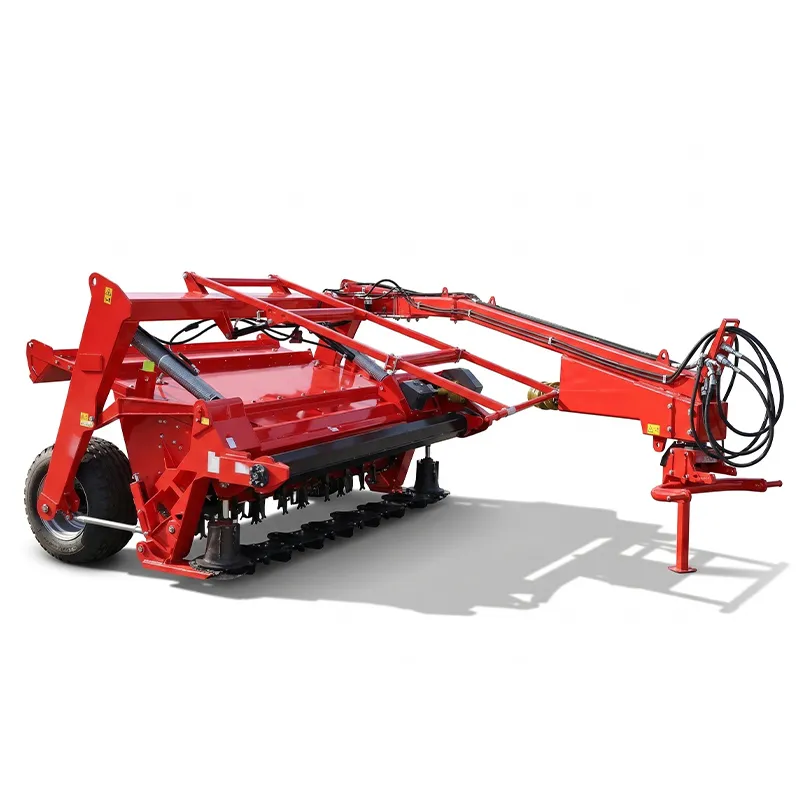
mowing equipment for sorghum sudangrass hay — timing the cut is more safety-critical for sorghum sudangrass than for any other hay crop because plants below 18 inches in height, plants under drought stress, and post-frost regrowth all carry elevated prussic acid levels; cutting at these stages produces hay material that can be lethal to cattle within minutes of ingestion

Prussic acid (hydrocyanic acid, HCN) is produced in sorghum species from a plant compound called dhurrin, a cyanogenic glycoside stored in the plant’s vacuoles. Under normal cellular conditions, dhurrin and the enzyme that breaks it down are physically separated. When plant cells are damaged — by frost, drought stress, wilting, mechanical injury, or even rapid growth — the vacuole structure breaks down and dhurrin contacts the enzyme, releasing free HCN within the plant tissue. Livestock that consume this material absorb HCN through the rumen wall at rates that can exceed the body’s detoxification capacity, causing cellular asphyxiation within minutes at sufficient dose.

⚠ HIGH-RISK SITUATION 1: Plants below 18–24 inches

Young sorghum plants have a higher dhurrin concentration per unit of dry matter than mature plants — specifically, the first 12 inches of growth contain the highest dhurrin levels of any stage in the plant’s lifecycle. The 18-inch minimum height rule is not an arbitrary guideline; it reflects the point at which total plant mass has diluted the dhurrin to a level that poses much lower risk to cattle under normal consumption conditions. Do not cut, graze, or allow livestock to access sorghum sudangrass below 18 inches under any circumstances.

⚠ HIGH-RISK SITUATION 2: Post-frost plant and regrowth

A killing frost is the most dangerous event in sorghum sudangrass management. The cellular damage from freezing temperatures breaks down the vacuole separation of dhurrin and its enzyme throughout the plant simultaneously, producing high HCN levels within hours of the frost event. The risk persists until the plant has completely dried — typically 5–7 days after a hard frost in dry conditions. Do not cut or allow access to frost-killed sorghum material until it is completely dry and brown. Regrowth shoots that emerge from the crown after frost are even higher in dhurrin than the original plant at equivalent height — the 18-inch rule applies with additional caution to post-frost regrowth.

⚠ ELEVATED-RISK SITUATION 3: Drought-stressed plants

Drought stress concentrates dhurrin in sorghum tissue through two mechanisms: the plant actively increases dhurrin production under stress as a defense response, and water deficit reduces the total plant mass while dhurrin levels remain relatively constant, increasing concentration per unit dry matter. Plants that have experienced significant wilting from heat or drought stress but are above 18 inches may still carry elevated HCN — particularly if the drought stress was severe and recent. When baling drought-stressed sorghum sudangrass, allow adequate field drying time (minimum 72 hours) before baling to ensure HCN dissipation.

✓ WHY PROPERLY CURED HAY IS GENERALLY SAFE

Prussic acid is volatile — it evaporates from plant tissue at ambient temperatures during field drying. Research consistently shows that HCN levels in sorghum sudangrass hay drop by 50–75% within the first 48 hours of field drying and reach negligible levels (below 500 ppm on a dry matter basis, the threshold generally considered safe for cattle) within 3–5 days of field drying under normal conditions. This is why properly cured sorghum sudangrass hay, baled at the correct growth stage above 18 inches and adequately dried, poses minimal HCN risk to cattle — the HCN has dissipated during the drying process. The risk in hay production is not in the finished bale; it is in the field conditions at cutting and in the adequacy of the drying period.

Important: Horses and sorghum spp. are a different safety category. Horses should never consume sorghum sudangrass hay or pasture in any form. In horses, chronic low-level HCN exposure from sorghum species causes a progressive neurological syndrome called sorghum cystitis ataxia — bladder dysfunction and posterior incoordination that is irreversible and often fatal. This condition occurs at HCN levels that are below the acute toxicity threshold for cattle and at which cattle exhibit no symptoms. Even well-cured sorghum sudangrass hay is not appropriate for horses, and no amount of field drying eliminates this risk. Keep all sorghum species strictly out of any feeding program that includes horses.

BMR vs Conventional Sorghum Sudangrass: What the Digestibility Numbers Mean in Practice

Brown midrib (BMR) sorghum sudangrass varieties carry a genetic mutation that reduces lignin concentration in the vascular tissue by 30–50% compared to conventional varieties. This structural change produces the brown coloration in the leaf midrib (the central vein visible on each leaf) that gives the trait its name, and it translates into a measurable improvement in the digestibility of the fiber fraction of the hay — the fraction that most limits intake and production in cattle fed mature-stage forages.

Quality parameter Conventional SxS at boot BMR SxS at boot Practical significance
粗蛋白(CP) 10–15% 10–14% Similar — BMR does not significantly affect CP
中性纤维化 58–72% 55–68% BMR NDF slightly lower — less structural fiber per unit DM
48-hr NDFD (fiber digestibility) 44–55% 58–72% 15–20 point improvement — the primary value of BMR
In vitro total digestibility 58–66% 64–74% 8–10% improvement in total nutrient availability
Yield (tons DM/acre) 4–8 3.5–7 BMR may yield 5–10% less — lower lignin reduces stem structural rigidity and stand height
Seed cost premium Baseline +$8–$15/acre Worth it when marketing to dairies paying NDFD premiums; neutral for commodity cattle hay
The BMR economic calculation: At $180/ton and 6 tons/acre conventional yield, gross revenue is $1,080/acre. BMR at $200/ton (NDFD premium) and 5.5 tons/acre yield produces $1,100/acre — essentially the same with an additional $12/acre seed cost, yielding a marginal outcome. If the dairy premium reaches $220/ton for documented BMR (which some operations achieve with NDFD documentation), BMR at 5.5 tons/acre produces $1,210/acre — a $118/acre advantage that clearly justifies the seed cost. The economic case for BMR depends entirely on accessing buyers who pay for NDFD — it does not make sense for commodity beef hay markets where buyers don’t differentiate on digestibility.

Cutting Timing: Managing the Quality-Safety Tradeoff Across the Season

Cutting timing in sorghum sudangrass hay production balances three objectives that pull in different directions: quality (peaks early in the growth cycle and declines sharply with maturity), safety (requires minimum height and adequate drying time), and yield (maximizes at later stages). The window where all three objectives are simultaneously satisfied is narrower than most producers expect — particularly for first-cutting timing where the prussic acid risk is highest.

CUTTING TIMING GUIDE — All cuttings require plant height above 18 inches minimum
First cutting (30–40 in height)
Recommended height: 30–42 inches. CP 12–16%, NDF 58–68%. At this height, dhurrin concentration is approaching the safe range and total plant mass provides adequate dilution. Do NOT cut at exactly 18 inches — the 18-inch minimum is the absolute safety floor, not the target cutting height. Cutting at 30+ inches provides both better quality (more leaf relative to stem) and additional safety margin. Allow 48–72 hours of field drying before baling regardless of apparent moisture — the full drying period is needed for HCN dissipation, not just moisture reduction.
Regrowth cuttings (28–35 days)
Regrowth after the first cutting germinates from crown buds and reaches 30+ inches in 28–35 days under good growing conditions. CP often higher in regrowth (14–18%) because the regenerating plant has a higher leaf-to-stem ratio in the early growth phase. HCN risk is generally lower in regrowth cuttings than first cuttings at equivalent height — the plant has already channeled its defensive chemistry investment into the first growth cycle. Standard 30-inch minimum still applies. Do not cut regrowth shorter than the previous cutting’s stubble height (typically 4–6 inches) — leaving adequate stubble protects the crown buds for subsequent regrowth.
Final cutting timing
Plan the final cutting to allow complete field curing before the first expected frost date. A cutting made 10 days before frost should be baled within 4–6 days if possible — if the bale is not yet field-cured when frost arrives, move it to covered storage rather than allowing it to freeze and re-dry in the field. Frost-killed sorghum hay that has not fully cured carries elevated HCN even after apparent drying. Never cut or bale frost-killed standing sorghum sudangrass — only bale material that was cut before the frost and has been adequately field-dried before the frost event.

Drying Challenges: Thick Stems, Slow Moisture Loss, and Heat Damage Risk

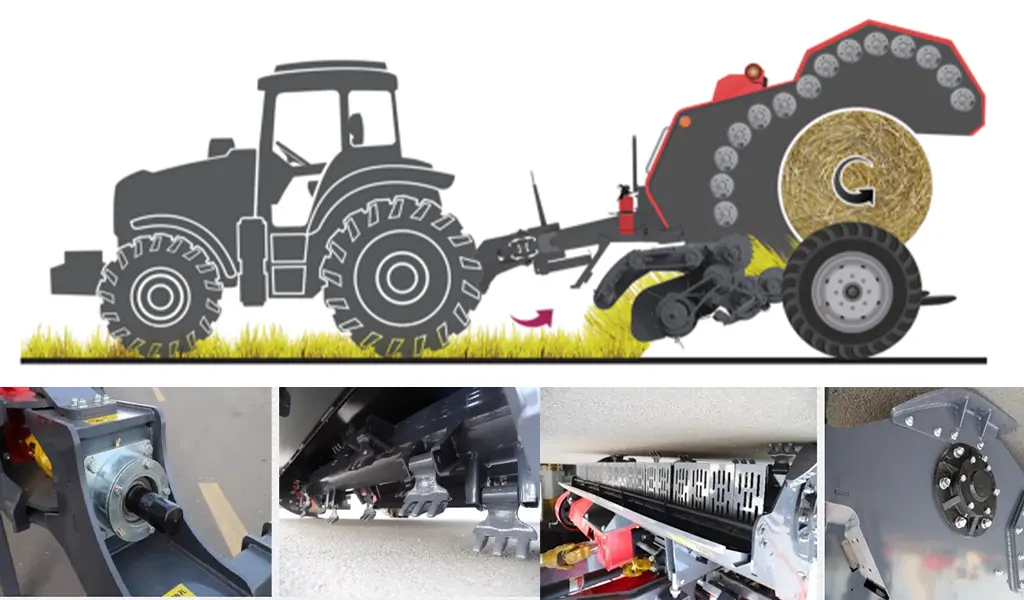
round baler working principle diagram showing bale chamber compression — sorghum sudangrass presents the greatest challenge to the bale chamber compression system of any common hay crop because its thick, rigid culms resist compression much more than alfalfa or grass stems; the bale density gauge may indicate correct density while the actual mass per cubic foot is significantly lower than for other crops at equivalent compression force

Sorghum sudangrass at cutting has stems that can reach 3/4 to 1 inch in diameter at the base — significantly thicker than alfalfa or grass stems. These thick culms contain a pith center surrounded by a dense vascular ring that holds moisture long after the leaf material has dried. An operator who bales on stem surface moisture or leaf moisture without specifically checking the stem interior will systematically bale hay that appears dry but carries 18–22% moisture at the culm core — hay that will heat severely within the first week of storage.

Why conditioning is non-negotiable for sorghum sudangrass

Unconditioned sorghum sudangrass hay requires 72–120 hours to reach baling moisture under good field conditions, due to the thick stem’s resistance to moisture diffusion. Conditioning that physically crushes the main stem — using a heavy roller conditioner set at maximum closing force — splits open the culm and allows direct moisture evaporation from the pith. Properly conditioned sorghum sudangrass reaches baling moisture in 48–72 hours. This time reduction is not a convenience improvement — it is a safety-critical difference because the shorter field time reduces rain exposure windows and allows better integration with weather patterns. Set the mower-conditioner roller pressure at maximum for sorghum sudangrass; settings adequate for alfalfa are insufficient for stems 3–5× the diameter. PTO shaft specifications for the high conditioning drive loads are in 农业机械变速箱和动力输出轴传动系统部件规格.

Measuring stem moisture, not just surface moisture

Use a long-probe insertion meter (18–24 inch probe) to measure the windrow core. For sorghum sudangrass specifically, push the probe through the windrow until it contacts the base of a cut stem — the stem-bottom region is the last part of the plant to dry and is the most critical measurement point. Any reading above 18% at the stem base indicates the hay is not ready to bale safely. Wait for the stem core reading to drop to 16% or below before baling — at that point the outer leaf material and upper stem will be well within the 12–14% range and the overall bale moisture average will be appropriately low.

Do ted sorghum sudangrass — it is one of the few crops where tedding is consistently recommended: Sorghum sudangrass cut with a disc mower forms a dense, slow-drying mat due to the thick stems stacking compactly on the ground. Tedding within 2–4 hours of cutting, while the stems are still flexible and green, lifts and aerates this mat and reduces drying time by 30–50% compared to unmanaged windrows. Unlike fine-stemmed teff or bermudagrass (where tedding risks shatter), sorghum sudangrass at high moisture is too flexible to shatter — ted as vigorously as needed to fully open the windrow and allow air circulation.

Baler Settings for Thick-Stemmed Sorghum Sudangrass

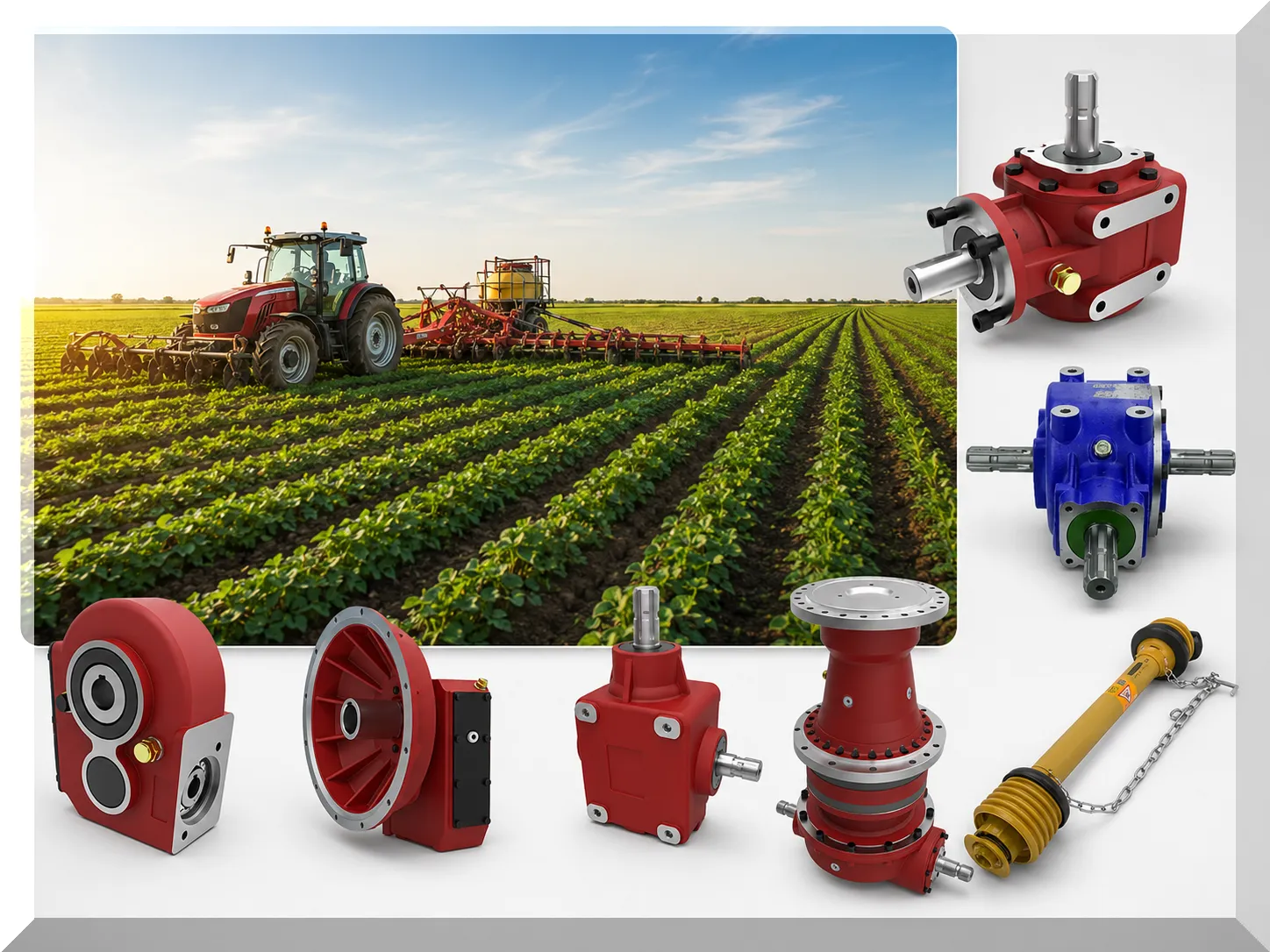
agricultural gearbox and PTO shaft assembly — sorghum sudangrass hay baling imposes higher sustained PTO torque loads than any other common hay crop; the thick, rigid stems require more drive energy to compress than grass or alfalfa, and the baling operation should not be attempted at reduced PTO speed or with a tractor that does not have adequate power reserve above the full-throttle baling demand

Sorghum sudangrass is the most mechanically demanding hay crop to bale. Its thick, rigid culms require more force to compress into a bale than any other material commonly handled in round baler production, and the coarse stems tend to bridge across the pickup and chamber in ways that fine-stemmed crops do not. Operators who bale sorghum sudangrass without adjusting from their alfalfa settings typically experience excessive PTO torque spikes, frequent pickup plugging, and bales with a loose interior surrounded by a compressed shell rather than uniformly dense material.

BALER ADJUSTMENT GUIDE — Sorghum Sudangrass vs Standard Alfalfa Settings
Density spring tension
Increase 15–25% above alfalfa settings. Sorghum sudangrass culms have 2–4× the cross-sectional area of alfalfa stems and resist compression proportionally. Standard alfalfa spring tension produces sorghum sudangrass bales that are structurally weak — the stems have not been compressed enough to interlock — and the bales lose shape within days of storage. Higher spring tension also reduces the bridging problem because the crop material is drawn into the chamber more forcefully at each tine contact.
地面速度
2–3.5 mph maximum in sorghum sudangrass windrows. This is half to two-thirds the speed appropriate for alfalfa. The thick stems require more time per foot of windrow to be fed into and compressed within the chamber without jamming. At higher speeds, the pickup cannot clear each batch of stems before the next arrives, producing the characteristic “load-pause-thud” that precedes a pickup jam. Use a tractor with adequate PTO power reserve — the baler may demand 60–75% of the tractor’s maximum PTO output during peak compression events in dense sorghum windrows.
Bale size selection
4×5 or 5×5 minimum; avoid 4×4. A 4×4 bale of sorghum sudangrass has insufficient internal volume for the thick stems to orient and interlock — the bale tends to form with a center void surrounded by a shell of compressed material rather than uniform density throughout. Larger chamber volumes allow the stems more room to align and compress. At 5×5 with adequate density spring tension, sorghum sudangrass produces a mechanically stable bale that handles normally in storage. The relationship between bale size, density setting, and the structural integrity of bales from different crops is in the round bale density and feed quality guide.
Pre-cutting knife system
Engage if equipped — significant jam reduction. Pre-cutting knives that chop the incoming sorghum stems into shorter sections dramatically reduce the bridging events that cause pickup jams in full-length sorghum. A 30-inch sorghum stem fed whole into a bale chamber can orient perpendicular to the bale circumference and create a structural bridge that stops chamber rotation. Pre-cut to 6–12 inch sections eliminates this failure mode entirely. Sorghum sudangrass is the crop most likely to justify adding a pre-cutting knife system to an existing baler if not already equipped.
Net wrap requirement
Net wrap is required. Sorghum sudangrass bales wrapped with twine lose their cylindrical shape within 1–2 weeks of storage as the rigid stems push against the twine at contact points. Net wrap maintains continuous restraint that allows the stems to settle into a stable configuration without progressive distortion. For round baler models with integrated net wrap systems and high-torque chamber drive configurations suited to sorghum sudangrass baling, browse our 圆捆打捆机型号.

Quality Testing: What the Forage Test Reveals Beyond the Basic Numbers

Sorghum sudangrass hay has quality characteristics that a basic ADF/NDF/CP forage test under-represents — and one quality characteristic that matters profoundly to dairy buyers that most basic tests do not include. Knowing which test panel to order and how to interpret the results is the difference between marketing sorghum sudangrass hay at commodity prices and documenting its true feeding value to buyers who pay for it.

Standard forage panel (minimum)
  • 干物质和水分
  • 粗蛋白(CP)
  • ADF 和 NDF
  • TDN (cattle formula)
  • Ash (confirms absence of soil contamination from low cutting height)
Adequate for commodity beef cattle hay markets. Insufficient for dairy or any market paying NDFD premiums.
Extended dairy panel (BMR and premium hay)
  • All standard panel items
  • 48-hr NDFD (neutral detergent fiber digestibility) — the primary dairy value metric
  • uNDF240 (undigested NDF at 240 hours) — longer-term digestibility indicator
  • Sugars (ESC + WSC) — relevant for feeding metabolic management
  • Starch — confirms grain content from any heading material in the bale
Required for dairy market hay and any BMR variety marketing. NDFD above 60% is the threshold that justifies premium pricing in dairy markets.

The complete guide to reading forage test values — including how to interpret NDFD, what uNDF240 means for rumen fill and intake, and how to use these values in marketing discussions with dairy nutritionists — is in the 牧草分析和干草检测结果指南.

Market Channels and the Silage-vs-Hay Decision

Sorghum sudangrass can be harvested as dry hay or as baleage/silage. The harvest method decision should be made before the crop is established, not at cutting time, because the optimal cutting stage for silage (40–65% moisture) is different from hay (at or above 30-inch height, then dried to 14–16%) and the market channels are fundamentally different. The silage-vs-hay decision affects what baler equipment is needed, what moisture management is required, and which buyers are available.

Market / use Price range Format Key buyer requirement
Dairy (BMR hay) $160–$240/ton Dry hay NDFD above 58%; BMR variety documentation; 48-hr NDFD test
Dairy (BMR silage/baleage) $50–$80/ton as-fed Wrapped baleage 40–65% moisture at baling; inoculant applied; pH below 4.5 at feedout
Beef cattle (conventional) $80–$140/ton Dry hay CP 8%+, basic forage test acceptable; prussic acid compliance documentation helpful
Emergency/drought relief $90–$160/ton (drought spike) Either Speed of availability often more important than quality tier — disaster price spikes benefit sorghum sudangrass producers with standing inventory

The hay-making workflow that integrates the cutting schedule, field drying monitoring, and baling timing for summer annual forages with specific safety constraints is in the 干草制作工作流程优化指南.

Sorghum Sudangrass Hay FAQs

Is sorghum sudangrass hay safe for horses?+
No — sorghum sudangrass hay should never be fed to horses. The risk is not primarily acute prussic acid poisoning (which properly cured hay largely eliminates for cattle) but rather chronic low-level cyanogen exposure that causes sorghum cystitis ataxia — a progressive and irreversible neurological syndrome specific to equines. Affected horses develop urinary tract dysfunction, hindlimb incoordination, and bladder paralysis from exposure levels that cause no visible effects in cattle. There is no safe level of sorghum sudangrass hay for horses. This applies to all sorghum species and hybrids (grain sorghum, forage sorghum, sudangrass, sorghum-sudangrass hybrids) in any form — hay, silage, or pasture. No amount of curing, fermentation, or processing makes these forages safe for horses. Keep all sorghum forages strictly out of any program that includes horses or equine species of any kind.
When is prussic acid actually dangerous in sorghum sudangrass hay production?+
Prussic acid is dangerous to cattle in sorghum hay production in three specific situations: (1) when green-cutting very short regrowth or plants below 18 inches height and feeding immediately (not baling for field drying), (2) when cattle access freshly cut sorghum that has not yet undergone any field drying — the first 12–24 hours post-cut at high moisture carry the highest HCN risk, and (3) when frost-killed sorghum is baled and fed before complete drying. In properly managed hay production — cutting at 30+ inches, allowing 48–72 hours of field drying before baling, and not exposing cattle to fresh-cut material — the HCN risk in the finished hay is negligible. The risk is real and serious; it is also manageable and predictable. The key is understanding exactly when it occurs rather than treating sorghum sudangrass hay production as uniformly dangerous.
Is BMR sorghum sudangrass worth the extra seed cost?+
BMR sorghum sudangrass is worth the $8–$15/acre seed premium when you have established access to dairy buyers or premium feedlot operations who pay for NDFD. The 15–20 point improvement in 48-hour NDFD that BMR provides translates directly into higher dry matter intake and energy delivery to the animal — dairy nutritionists can demonstrate this improvement in milk production data, which is why they pay for it. If you are selling hay to commodity beef operations or cow-calf producers who buy on price per ton without testing, BMR does not generate a price premium and the seed cost is a pure expense. The economic viability of BMR depends entirely on market access. Before investing in BMR seed, confirm with your target buyers that they will pay a documented premium for NDFD values above 58% from BMR varieties. If yes, BMR is almost always economically justified. If no, conventional sorghum sudangrass with lower seed cost produces equivalent income.
My baler keeps plugging in sorghum sudangrass. How do I fix this?+
Sorghum sudangrass baler jams have three primary causes, each with a different fix. First: forward speed too high — the most common cause. Reduce to 2.5–3 mph maximum in heavy windrows. Second: windrow too wide or too heavy per foot — rake the windrow narrower before baling to reduce the amount of material per linear foot. A sorghum sudangrass windrow that looks manageable to the eye is often 30–40% heavier per foot than a comparable alfalfa windrow due to the thick stems and higher bulk density. Third: the stems are not adequately dry — stems at 20%+ moisture are more rigid and resist feeding through the pickup tine gap. Waiting until the stems are below 16% moisture (probe meter in stem base) significantly reduces pickup resistance. For balers without pre-cutting knife systems, the single most effective jam-reduction measure is slowing ground speed — most sorghum sudangrass plugging problems that seem mechanical are actually solved by a 30–40% speed reduction.
How many cuttings can I get from sorghum sudangrass in one season?+
Most U.S. production regions achieve 2–3 cuttings from sorghum sudangrass in a single season. The number depends on growing degree days accumulated after each cutting — each regrowth cycle typically requires 700–900 GDD (base 50°F) to reach the 30-inch minimum cutting height. In the deep South (Alabama, Georgia, Mississippi, Texas Gulf Coast) where summer extends from May through September, 3 cuttings is the norm and 4 is occasionally achieved in warm, wet years. In the central plains (Kansas, Nebraska, Missouri), 2–3 cuttings is typical with the season running June through late September. In the northern production boundary (Iowa, northern Illinois, Colorado), 2 cuttings is usually the maximum before frost terminates growth. Seeding early (late May to early June) maximizes total cutting opportunities — each week of delay in planting typically costs half a cutting at the end of the season by moving the final cutting closer to frost risk.
Can I test my sorghum sudangrass hay for prussic acid content before feeding?+
Yes — commercial prussic acid test kits are available (commonly sold as “Quantofix” or similar strip-based field test kits) that can identify elevated HCN in fresh plant material or recently baled hay. The strip-based kits detect free HCN by color reaction and give a rough threshold reading (below 200 ppm, 200–500 ppm, above 500 ppm) adequate for go/no-go decisions. For quantitative analysis, a commercial forage laboratory can test for HCN content on a per-sample basis — this is appropriate when there is specific reason to suspect elevated HCN (unusual growing conditions, frost proximity, short plant height). For routine management of properly cured hay at the correct growth stage, quantitative HCN testing is not necessary because the field drying process predictably reduces HCN to safe levels. The primary use of HCN field testing is when circumstances raise doubt about the adequacy of drying or when cut material was exposed to frost before baling.
foragebaler.com certified round baler systems for sorghum sudangrass hay production — models with high-torque chamber drive systems, pre-cutting knife options for thick-stemmed crops, and 5x5 chamber configurations that handle the structural demands of sorghum sudangrass baling

Get Baler Settings for Sorghum Sudangrass Hay Production

Tell us your tractor PTO HP, target bale size, whether you are running BMR or conventional varieties, and your intended market (dairy, beef, or both). We confirm the density spring setting, ground speed recommendation, and pre-cutting knife configuration for your specific sorghum sudangrass production system.

Get Sorghum Hay Baling Setup

编辑:Cxm