Crop Guide · Orchard Grass Hay · Updated August 2026
Orchard Grass Hay Baling Guide
Orchard grass (Dactylis glomerata) is the most palatable cool-season hay grass for horses and cattle in the mid-Atlantic, Midwest and Appalachian regions. It offers 3–4 cuttings per year, fast regrowth between cuts, and boot-stage quality of 14–18% crude protein — comparable to light alfalfa without the irrigation demand. The primary management challenge is the narrow cutting window: orchard grass reaches head emergence quickly after boot stage, and quality falls faster than timothy or fescue once heading begins.
Covers: orchard grass characteristics · cutting stage and quality table · multi-cut timing · curing timeline · raking guidelines · equipment for horse and cattle markets · bale weight targets
Quick Answer — Orchard Grass Key Numbers
Cut at: Boot stage — before head emergence
CP at boot: 14–18%
Curing time: 2–3 days (conditioner recommended)
Cuttings/year: 3–4 cuts
Baling moisture: 14–17%
Primary markets: Horse (premium), beef cattle, dairy supplemental
Orchard Grass Characteristics and Regional Adaptation
Orchard grass grows in dense bunches (it does not spread by rhizomes) and is well-adapted across most of the eastern half of the US outside the Gulf Coast zone, plus the Pacific Northwest and Pacific Coast states. It is one of the fastest-regrowing cool-season grasses — a key reason it can produce 3–4 cuttings per year where timothy typically produces only 2. The bunchy growth habit means fields can appear patchy if stand establishment is uneven, but dense established stands with uniform tiller distribution are highly productive and persistent.
Regional zones: Mid-Atlantic, Appalachian, Midwest, Great Lakes, Pacific Northwest, Mountain West
Soil preference: Well-drained loam and clay-loam soils; tolerates slightly acidic (pH 5.8–7.0)
Stand life: 5–10 years in well-managed conditions; thins faster than timothy without adequate nitrogen and rest periods
Palatability advantage: Rated highest among cool-season hay grasses for horse and cattle acceptance — horses often prefer it over timothy in side-by-side choice tests
Cutting Stage for Quality — Why the Window Is Narrow
Orchard grass heads out faster than most other cool-season hay grasses once the plant shifts from vegetative to reproductive growth. The window between boot stage (seed head enclosed in the sheath) and mid-bloom can be as short as 7–10 days in warm spring conditions — compared to 10–14 days for timothy. Missing this window by even 5–6 days results in a measurable quality reduction that buyers can detect by both forage test and visual inspection.
| Growth Stage |
CP |
NDF |
RFV |
Best Market |
| Boot stage (target for horse and premium) |
14–18% |
42–50% |
160–200 |
Premium horse hay, dairy supplemental, high-quality beef roughage |
| Early bloom (20–30% heads emerged) |
12–15% |
48–56% |
140–165 |
Beef cattle, growing stock, horses in moderate work |
| Mid to full bloom |
10–12% |
55–65% |
115–140 |
Dry beef cattle, bedding supplement |
| Post-bloom / seed set |
Below 9% |
Above 65% |
Below 110 |
Not recommended for hay production — minimal market value |
Field observation tip: Orchard grass does not head out uniformly across a stand — bunches head at different times based on microclimate, soil fertility and tiller age. Cut when 30–50% of tillers show head emergence at the boot stage, rather than waiting for uniform heading across the field. Waiting for uniformity means the earliest-heading tillers are already past bloom by cutting time.
Three to Four Cuts Per Year — Timing and Rest Period
| Cut |
Typical Timing |
Rest Period After Cut |
Notes |
| 1st cut |
Late April – late May |
5–7 weeks |
Highest yield per cut. Target boot stage aggressively — orchard grass heads quickly in warm spring. |
| 2nd cut |
Mid June – mid July |
5–7 weeks |
Lower yield than 1st cut. Higher leaf-to-stem ratio. Often highest quality CP of the season. |
| 3rd cut |
Late July – September |
6–8 weeks (longer rest for stand persistence) |
Reduced yield in summer heat. Extend rest period to allow adequate carbohydrate reserve recovery. |
| 4th cut (where achievable) |
September – early October |
Leave for winter dormancy |
Possible in milder climates (Zones 7–8). Minimal yield but reduces overwintering weed pressure. Do not cut after mid-October. |
The last cutting of the season must allow at least 6 weeks of regrowth before the first fall frost for adequate carbohydrate reserves to accumulate in the roots for winter survival. Cutting too late in fall is the primary cause of stand thinning in orchard grass over multiple years.
Curing Orchard Grass — Faster Than Fescue, More Sensitive Than Timothy
Orchard grass cures faster than tall fescue (2–3 days versus 3–5 days) because the finer, less waxy stems allow faster moisture transpiration. However, orchard grass at 13–15% moisture is more prone to leaf shatter at rake contact than timothy — the fine leaves fracture at the petiole junction when raked in a dry state, reducing yield and increasing dust in the bale.
Rake timing: 25–35% windrow core moisture. Below 25%, leaf shatter rate increases significantly — rake in the morning when dew is still keeping leaves pliable.
Baling moisture: 14–17% core. Confirm with a probe moisture meter — do not bale by feel in orchard grass, surface moisture is unreliable indicator of core.
Conditioner benefit: Impeller or crimper conditioner reduces curing time to 1.5–2.5 days. Worth the equipment cost for producers with 3–4 cuttings annually.
Equipment Recommendations for Orchard Grass
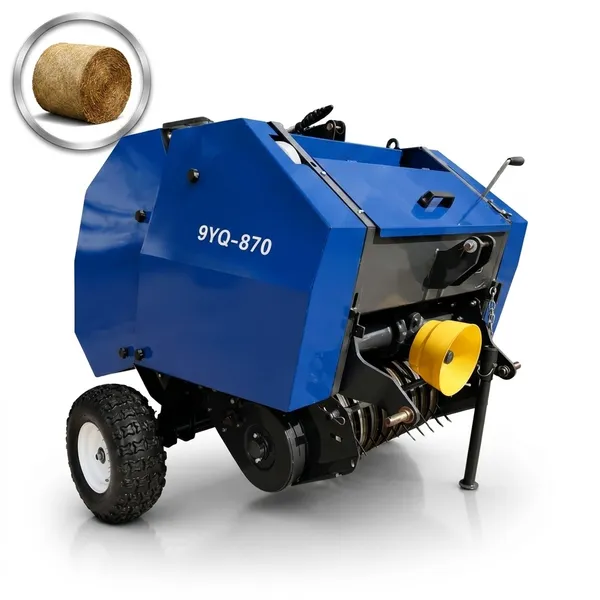
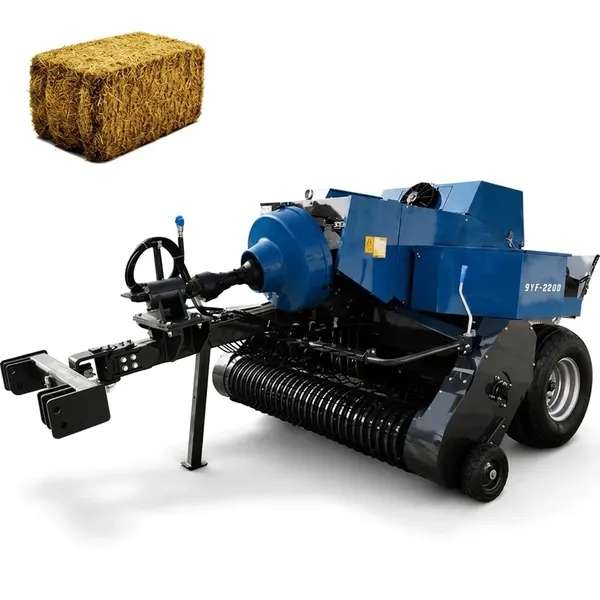
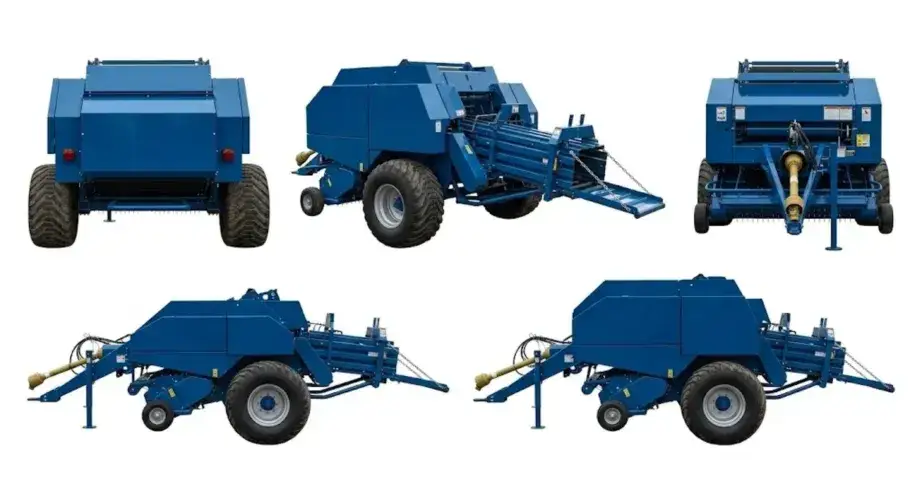
The spring-tooth pickup on all standard 9YF models handles orchard grass efficiently. There is no benefit from the shredder mechanism (9YF-2200S) in standard orchard grass hay — the uniform fine stems flow through the standard pickup and inlet without bridging. The 9YF-2200 with spring-tooth pickup is the primary recommendation for commercial horse hay operations. The 9YQ-870 or 9YQ-1250 are correct for small-to-medium beef cattle or outdoor horse operations.
| Operation Type |
Recommended Model |
Min HP |
Target Market |
| Small horse hay farm (under 30 acres) |
9YF-1700 or 9YF-1900 |
40–50 HP |
Premium horse hay market, 18–22kg bales |
| Commercial horse hay (30+ acres) |
9YF-2200 |
50 HP |
Horse market premium, retail and wholesale |
| Small beef cattle / own-use horses |
9YQ-870 |
40 HP |
Own-use feeding, 5–15 cows or outdoor horse herd |
| Medium cattle operations |
9YQ-1250 or 9YQ-1950 |
55–75 HP |
Beef cattle hay, stocker operations, 15–100 cows |
Orchard Grass in the Horse Hay Market
Orchard grass occupies a unique position in the horse hay market: it is the premium cool-season grass alternative to timothy for horse properties in regions where timothy is not commercially grown. In the mid-Atlantic, Appalachian and Midwest states, orchard grass at boot stage commands $12–$20 per bale in quality horse hay markets — comparable to timothy in the same region.
Palatability: Horses accept orchard grass hay readily — side-by-side preference trials show horse acceptance equal to or above orchardgrass vs timothy at similar quality levels. The fine stem structure and high sugar content at boot stage make it appealing to even picky feeders.
NSC content: Boot-stage orchard grass has moderate non-structural carbohydrate (NSC) levels — typically 10–16% NSC. Horses with metabolic sensitivity or laminitis risk should have NSC-tested hay; boot-stage orchard grass may be appropriate at the lower end of this range. Consult the attending veterinarian for specific horses with metabolic conditions.
Endophyte status: Unlike tall fescue, orchard grass does not carry an endophyte fungus — it is safe for all classes of horses including pregnant mares without any testing requirement. This simplifies marketing compared to fescue hay in mixed-species horse markets.
PTO Drive for Multiple Cuts per Season
Three to four cuttings per season means the baler PTO driveshaft accumulates 3–4 times the annual operating hours compared to a single-cut hay operation — making the 8-hour greasing interval proportionally more important to maintain. On a 3-cut season at 25 hours per cut: 75 operating hours total per year, requiring 9–10 greasing sessions. Missing one or two greasing intervals is a much higher risk on a multi-cut operation than on a single annual cut. Full maintenance schedule: PTO driveshaft and CV joint maintenance schedule for multi-cut hay operations.
Frequently Asked Questions — Orchard Grass Hay Baling
How does orchard grass compare to timothy for horse hay quality?+
Boot-stage orchard grass and boot-stage timothy are nutritionally comparable — orchard grass often has slightly higher CP (14–18% vs 12–15% for timothy) at similar growth stages, and similar NDF and RFV values. The primary quality difference is visual: timothy has the distinctive cylindrical seed head that experienced horse buyers specifically look for, while orchard grass has an open, branching panicle that does not have the same iconic recognition in the horse market. In regions where timothy is the benchmark (Pacific Northwest, Great Lakes, Northeast): orchard grass typically commands a modest price discount below timothy from buyers who specifically request timothy. In regions where orchard grass is the dominant cool-season hay grass (mid-Atlantic, Appalachia, Midwest): it commands the same premium price position as timothy does in timothy-growing regions. Palatability and nutritional value are not the determining factor — regional buyer familiarity and visual expectations drive the price differential.
Why is my orchard grass stand thinning after 3 years?+
Orchard grass stand thinning after 2–4 years is typically caused by one or more of: (1) cutting too close to the ground — leaving less than 7–10cm stubble prevents adequate reserve carbohydrate accumulation for regrowth; (2) cutting too late in the season — a final cut after mid-September in the northern US does not leave sufficient regrowth time before frost for root reserve replenishment; (3) insufficient nitrogen — orchard grass is responsive to nitrogen fertilization and thin stands often indicate nitrogen deficiency; the standard recommendation is 50–70kg N/ha per cutting; (4) summer moisture stress — orchard grass is less drought-tolerant than fescue and may thin in stands subjected to extended summer dry periods without irrigation; (5) soil pH below 5.8 — orchard grass is sensitive to acidity; lime to pH 6.0–6.5 if indicated by soil testing. Address all five before committing to stand renovation — renovation is expensive and many thin stands recover well with corrected management practices.
What stubble height should I leave when baling orchard grass?+
Leave 7–10cm (3–4 inches) of stubble after the cut — this is the minimum height needed to retain enough leaf area for rapid regrowth and to protect the growing points of the bunchy tillers. Cutting below 7cm consistently thins the stand by removing the growing points that initiate regrowth after each cut. The cutting height also affects the baler: a cutting height below 7cm brings the pickup tines into closer proximity to the soil surface, increasing soil pickup and ash content in the bale — a quality issue for horse and export hay markets. Set the mower cutting height by adjusting the height of the disc or sickle bar above ground, not the pickup height — the pickup height is set separately relative to the windrow.
Can orchard grass and alfalfa be grown as a mixed stand for horse hay?+
Yes — orchard grass and alfalfa is one of the most common and successful mixed stands for the horse hay market in the eastern US. The two species complement each other well: alfalfa provides high crude protein (18–22% CP), fast drying due to hollow stems, and nitrogen fixation that benefits the grass component; orchard grass provides the acceptable-to-horses grass bulk, slower maturity progression and structural fiber (eNDF) that supports healthy rumen and hindgut function. The standard seeding ratio for a horse hay mix is 60–70% orchard grass by seed weight and 30–40% alfalfa. In practice, the stand composition at harvest often shifts over time toward alfalfa dominance in high-fertility, high-moisture conditions or toward grass dominance in lower-fertility conditions. A mixed stand at 50–60% orchard grass and 40–50% alfalfa by visual assessment typically delivers 14–18% CP and RFV 150–175 — an excellent result for the horse market without the protein excess of a pure alfalfa stand for easy-keeper horses.
How do I recognize boot stage in orchard grass in the field?+
Boot stage in orchard grass is identified by grasping the stem 20–30cm from the base and feeling for the seed head — at boot stage, the head is inside the upper sheath and feels as a firm elongated swelling (the boot) that causes the sheath to look slightly inflated compared to fully vegetative stems. The boot is typically 5–10cm long and visible as a slight bulge below the flag leaf. No seed head should be visible above the sheath. Walk the field and check 10–15 representative stems from different parts of the stand — when 30–50% show the boot-stage bulge without any emerged head, cut immediately. Orchard grass can advance from boot to visible head emergence in 3–5 days in warm conditions, so once the boot stage is detected the cut should not be delayed by more than 1–2 days without a confirmed weather window.
What bale weight suits the horse hay market for orchard grass?+
The same 18–22kg target that applies to timothy horse hay applies to orchard grass. Horse buyers handle bales individually in most cases and the one-person handling limit is the primary weight constraint. Orchard grass at boot stage is less dense per unit volume than mature alfalfa, so achieving 20kg consistently requires medium-to-high density spring tension and a bale length of 500–550mm. Calibrate bale weight with a digital hanging scale at the start of each session — orchard grass density varies between cuttings (2nd cut is typically denser per unit length than 1st cut due to the higher leaf-to-stem ratio) and the density setting may need adjustment between cuttings to maintain the 18–22kg target consistently.
How long does an orchard grass stand last before renovation?+
A well-managed orchard grass stand lasts 5–10 years before renovation becomes economically necessary. The main indicator that renovation is needed is stand density falling below 15–20 live tillers per 30cm × 30cm area — below this density, weed pressure increases and hay quality suffers from the weed contamination. With good management (correct stubble height, adequate rest periods, nitrogen fertilization, pH management and avoidance of late-season cutting), stands commonly persist to 8–10 years. Pure stand renovation is necessary when stand density has fallen too far for interseeding to restore it. The renovation process: soil test and lime if needed, spray existing stand with herbicide, till or no-till into the prepared seedbed, and establish from fresh certified seed. A well-established second-year orchard grass stand typically outperforms a 7-year-old thinning stand from the first cutting — renovation is an investment that pays through productivity improvement within 1–2 seasons.
Is orchard grass suitable for the rabbit and small pet hay market?+
Yes — orchard grass is one of the most sought-after varieties for the rabbit and small animal hay market, often commanding a premium above timothy at pet supply retailers because of its high palatability rating for rabbits. Rabbits consume orchard grass readily and the fine leaf structure suits the nutritional needs of herbivores that need ad lib hay access. The baling specification for pet-market orchard grass is identical to premium horse hay — boot stage, 14–17% moisture, 14–18kg bale weight (lighter than horse hay to reduce waste from opened bales in small-quantity retail bags), and strict no-dust requirement. The retail packaging for pet-market orchard grass is typically 0.5–5kg bags from broken and reprocessed bales, or small 14–16kg bales sold directly to rabbit and guinea pig owners. The price per kilogram for pet-market orchard grass is among the highest for any US hay product — often 3–5 times the per-kilogram price of standard horse hay.
Ready to Optimize Your Orchard Grass Hay Operation?
Tell us your acreage, cuttings per year and primary market and we will confirm the right 9YF square baler or 9YQ round baler for your operation.
America Ever-Power Forage Baler Equipment INC. · 1401 21st ST STE R, Sacramento, CA 95811
Editor: Cxm