A hay tedder is the tool that buys you time when the weather forecast is tighter than your normal curing schedule can accommodate. In the right conditions — dense, thick first-cut grass windrows on a warm but cloudy day — tedding can accelerate drying by 30 to 40% and allow baling 6 to 10 hours earlier than without it. In the wrong conditions — dry alfalfa below 40% moisture on a hot afternoon — the same operation causes more leaf loss than the 6 hours of drying time is worth. The decision of when to use a hay tedder is the most important operational choice in tedder management, and it is a decision that changes by crop type, day of the cutting, and weather conditions.
What a Hay Tedder Does That Mowing Alone Cannot
When a mower cuts a dense stand of grass or alfalfa, the cut material falls into a flat mat on the ground. The top layer dries rapidly from sun and air contact, but the bottom layer — in contact with the soil surface and shaded by the material above — dries at a fraction of the surface rate. On heavy first-cut stands (above 3 tonnes dry matter per hectare), the bottom layer can remain above 60% moisture for 12 to 18 hours while the surface is below 30% — a dangerous situation where the forage baler would be compressing wet and dry material simultaneously into a single bale.
Swath Cross-Section — Before and After Tedding (Front View)
✘ Untedded Flat Mat
Bottom layer: 55–70% moisture
Middle: 35–50% — slow drying
Top surface: 20–30% — drying fast
No air under mat ⚠
Moisture gradient: 20% top to 70% bottom. Baling requires waiting until bottom reaches target — 6–12 extra hours.
✔ After Tedding — Fluffed Profile
All material exposed to air. Moisture evens out to 30–40% across entire cross-section within 2–3 hours of tedding.
The mechanism is simple: the hay tedder lifts and throws the cut material using spring-steel or rubber-tipped tines rotating from a PTO-driven shaft, tumbling the flat mat into a loose, aerated windrow. Previous bottom material ends up on top or mixed through the cross-section, where it is exposed to sun and air. Previous top material may end up partially toward the bottom, but the key gain is the creation of air channels — gaps in the mat through which moisture-laden air can escape upward and dry air can enter from below.
When to Ted and When to Skip It — Crop and Weather Decision Matrix
The hay tedding techniques decision starts with two questions: What crop am I tedding, and what are the drying conditions? The answers map to a consistent decision pattern that experienced operators apply instinctively — but which can be made explicit in a simple matrix for less experienced operators or for delegating field decisions to staff.
Tedding Decision Matrix — Weather Conditions × Crop Type
| Weather / Conditions |
Grass Hay |
Alfalfa (above 50% moisture) |
Alfalfa (below 40% moisture) |
Mixed legume/grass |
| Cool, overcast, 4+ dry hrs ahead |
✔ TED |
✔ TED |
⚠ WAIT |
✔ TED |
| Warm, sunny, low humidity |
✔ TED |
✔ TED (morning only) |
✘ SKIP |
⚠ Morning only |
| Hot afternoon (above 32°C) |
⚠ OK — reduce speed |
✘ SKIP |
✘ SKIP |
✘ SKIP |
| After light rain (<12mm), crop re-drying |
✔ TED — speeds recovery |
✔ TED after surface dries |
⚠ Once surface dry |
✔ TED after surface dries |
| Wind above 25 km/h, dry |
⚠ OK — risk of windrow scatter |
✘ SKIP — leaf shatter + scatter |
✘ SKIP |
✘ SKIP |
✔ = Ted recommended ⚠ = Conditional — check moisture first ✘ = Skip — leaf loss risk exceeds drying benefit
The Alfalfa Tedding Rule: Why Leaf Loss Limits Aggressiveness
Alfalfa is the crop where hay tedder management is most consequential — both in terms of the drying benefit when done correctly and the quality loss when done incorrectly. The critical variable is the moisture content of the alfalfa leaves at the time of tedding, specifically the moisture in the petiole (the small stem connecting the leaf to the main stem).
At leaf moisture above 45 to 50%, the petiole is flexible and has significant bending resistance — tine contact causes the leaf to flex and spring back, retaining its attachment to the stem. At leaf moisture below 35 to 40%, the petiole is brittle and has minimal bending resistance — tine contact causes the leaf to fracture at the petiole node rather than flex, detaching the leaf from the stem. These detached leaves are small, dry, and lightweight; they scatter in the tedder’s discharge pattern and are never recovered in the windrow.
| Alfalfa Moisture at Tedding |
Expected Leaf Loss |
CP Impact |
Recommendation |
| Above 60% moisture |
<2% |
Negligible |
Optimal window — ted freely at 6–8 km/h |
| 45–60% moisture |
2–5% |
Minor (−0.3–0.8% CP) |
Acceptable — reduce speed to 5–6 km/h |
| 35–45% moisture |
5–10% |
Moderate (−1–2% CP) |
Marginal — only if weather forces it; max 4 km/h |
| Below 35% moisture |
10–20%+ |
Severe (−2–4% CP) |
Do not ted — quality loss exceeds any drying benefit |
Leaf loss percentages from Wisconsin Extension and University of Minnesota field research. CP impact assumes 22% CP leaves vs 14% CP stems — leaf loss disproportionately reduces the protein fraction. Values assume standard tine speed; aggressive tines or high ground speed increase leaf loss at every moisture level.
Where Tedding Fits in the Hay-Making Sequence
The hay tedder step occurs between mowing and raking — always after the crop has had an initial curing period on the ground and always before the rake consolidates the crop into a windrow. Tedding after raking re-opens a windrow that has already been formed, which reduces the raking efficiency of the pass that must follow. The correct sequence is:
Hay-Making Sequence With Tedding Step
→
If needed
Step 2
TED
Day 0 PM – Day 1 AM
→
Step 3
RAKE
Day 1 – Day 1.5
→
→
Timing rule for tedding: Ted as early as possible after mowing — ideally in the afternoon of the same mowing day while crop moisture is still above 60%. This maximizes the drying window available before raking the following morning. Tedding the next morning when crop moisture has already dropped to 40–50% reduces the window for moisture reduction before raking and risks operating near the leaf-shatter threshold on alfalfa.
Our 9FZ-2.0 Hydraulic Folding Tedder: Specifications and Workflow Fit
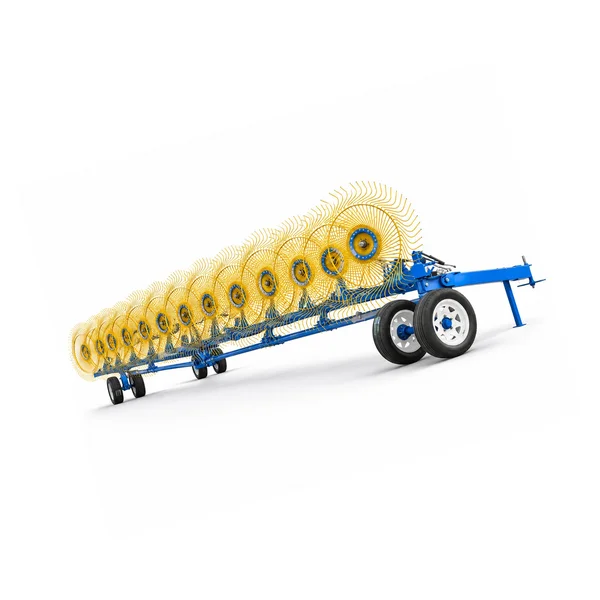
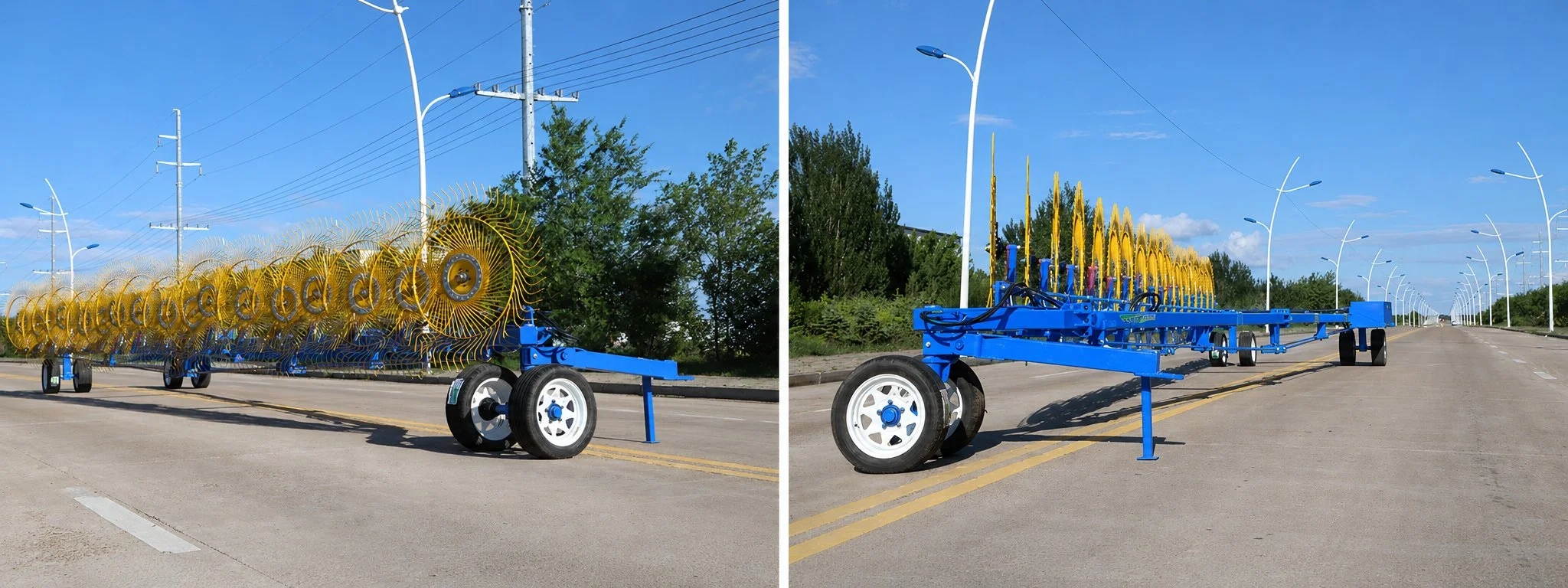
The 9FZ-2.0 hydraulic folding tedder is designed for operations where the tedder must work efficiently across the range of crop types and moisture conditions in a typical mixed hay program. The hydraulic fold system allows road transport at less than 3.0 m width without manual pin adjustment — reducing the time cost of moving between fields to under 2 minutes of hydraulic cycle time.
Working Width
2.0 m working → 3.5 m tedded width effective
PTO Requirement
540 RPM rear PTO
Tractor: ≥20 kW (27 HP) min
Tine Type
Spring-steel bowed tines — self-cleaning on tangled crop
Transport Width
<3.0 m folded — road-legal without permit
Mounting
Cat I/II 3-point hitch
Working Speed
5–10 km/h (reduce to 5–6 km/h on dry alfalfa)
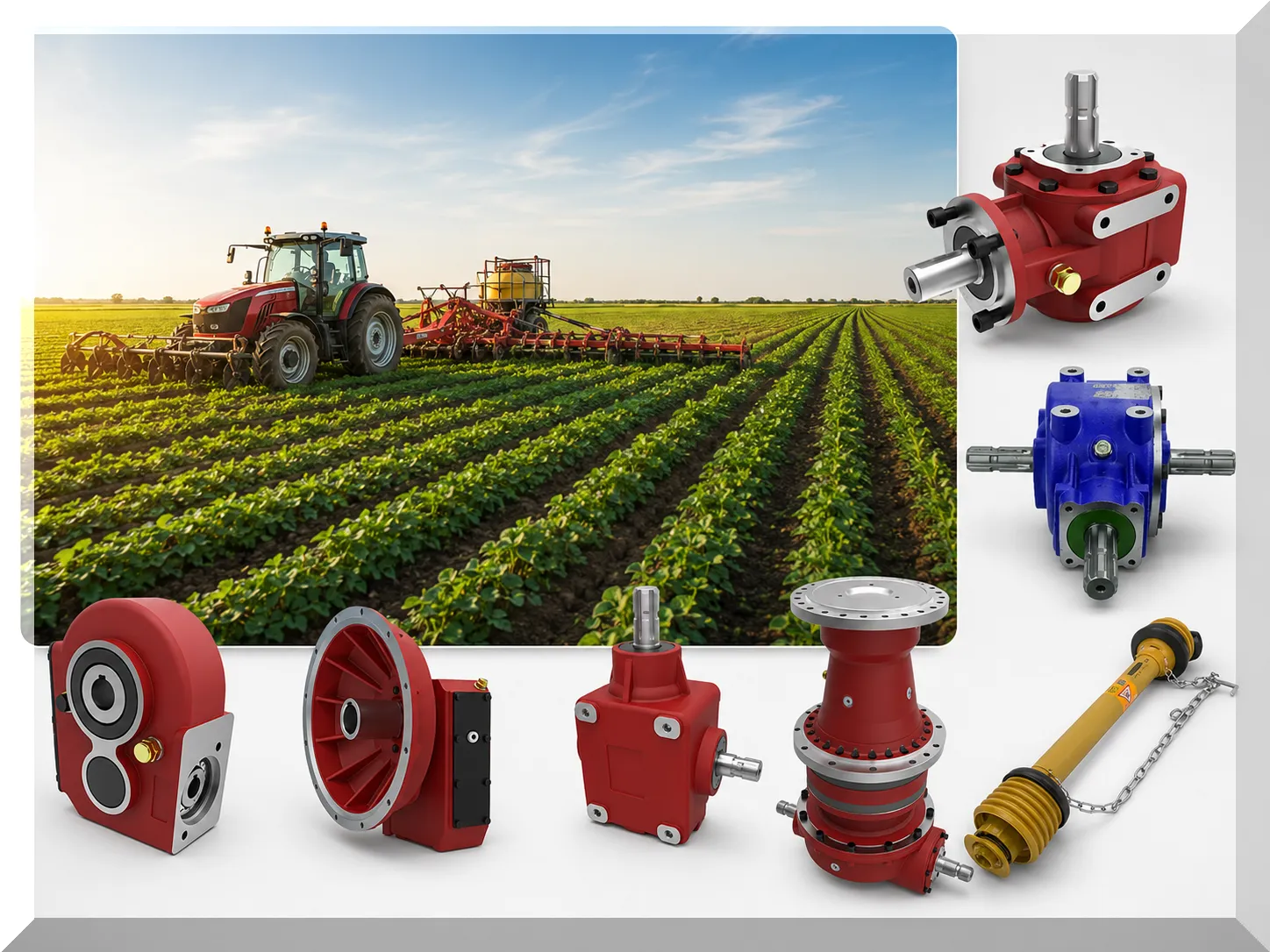
The 9FZ-2.0 tine shaft is driven through a compact agricultural drive gearbox that steps down the 540 RPM PTO input to the correct tine shaft speed for the 3-wheel rotor configuration — tine tip speed is the critical parameter that determines fluffing aggressiveness and leaf loss risk, and it is set at the gearbox rather than at the tractor throttle.
Frequently Asked Questions: Hay Tedder Use and Technique
How fast should I run the tedder for grass hay vs alfalfa?+
Grass hay: 8 to 10 km/h at the higher end of the moisture range (above 50%); 6 to 8 km/h when the crop is partially dry (30 to 50%). Grass leaves are firmly attached to stems and have a much higher fracture resistance than legume petioles at equivalent moisture — grass handles faster tedding speeds without significant leaf loss. Alfalfa: 6 to 8 km/h when above 50% moisture; 4 to 6 km/h between 40 and 50%; below 40% moisture, don’t ted. The reduction in speed matters because tine tip speed decreases proportionally with ground speed on mechanical-drive tedders — lower ground speed = lower tine impact force = less petiole fracture even at the same moisture level.
Can I ted hay that has already been rained on during curing?+
Yes — tedding after a rain event is one of the highest-value applications of a tedder. A flat swath that has been rained on and partially compressed against the soil surface will take significantly longer to re-dry than a tedded-open swath that allows air penetration throughout the mat. Ted as soon as the rain stops and the surface appears visually dry — typically 2 to 3 hours after light rain (under 12 mm) in warm conditions. Do not wait for the crop to fully surface-dry before tedding; the purpose of the post-rain tedding pass is to accelerate that drying, not to finish it. The one exception: do not ted rain-wetted alfalfa that is already at Stage 3 maturity or later in the cutting — the combination of wet-swollen petioles and tine impact after rain causes more leaf fracture than on fresh-cut alfalfa at the same moisture, because the wet-dry cycling has already weakened the petiole attachment.
Does tedding cause soil contamination in the finished bale?+
Tedding can increase soil contamination in the finished bale if the tines are set too close to the ground, particularly on soft or disturbed soil. The tines at working height should clear the soil surface by 2 to 4 cm on normal firm ground — this is sufficient to tumble the crop without contacting the soil. On soft fields (recently disturbed, high moisture content), raise the tine clearance to 4 to 6 cm and reduce speed to limit the depth that tine tip bounce reaches. The soil contamination risk from tedding is generally lower than from raking, because the tedder is handling the crop at a higher moisture content when the soil surface is more likely to be firm from dew rather than soft from rain. Check the tine height setting every season start — tine wear reduces tip clearance progressively and must be compensated by raising the height setting.
Is a tedder necessary if I have a mower-conditioner?+
Not always — but the two tools serve different functions. A mower-conditioner (crimper or flail) disrupts the stem cuticle to accelerate stem moisture loss. A tedder physically repositions the crop to expose the underside of the swath to air and sunlight. On normal-density stands in warm, clear weather, a mower-conditioner alone is often sufficient — the 25 to 40% drying improvement from conditioning may provide enough schedule acceleration without needing to ted. Tedding becomes valuable when (1) the stand density is unusually high (heavy first cut or overgrown regrowth), (2) weather conditions are cool or overcast and every hour of drying time matters, or (3) a rain event has reset the curing clock and you need to recover drying time aggressively. Operations running a mower-conditioner on normal-weight cuttings in good weather typically only need to ted 20 to 40% of their cuttings annually.
Can I ted the same swath twice to speed drying further?+
One pass is almost always enough for grass hay. For alfalfa, a second tedding pass is generally not recommended because each additional tine contact on partially-dried alfalfa increases cumulative leaf loss — and by the time a second tedding pass would be considered (when the crop is at 40 to 55% moisture), the alfalfa is approaching the leaf-loss threshold described above. If the first tedding pass at high moisture was effective in opening the swath, additional passes do not significantly accelerate drying because the crop is already well-aerated. On heavy grass stands in very slow-drying conditions (cool, high humidity), two tedding passes separated by 3 to 4 hours at high moisture (above 50%) can provide additional drying acceleration — but even then, the marginal benefit of the second pass is roughly half that of the first.
What maintenance does the 9FZ-2.0 tedder need between seasons?+
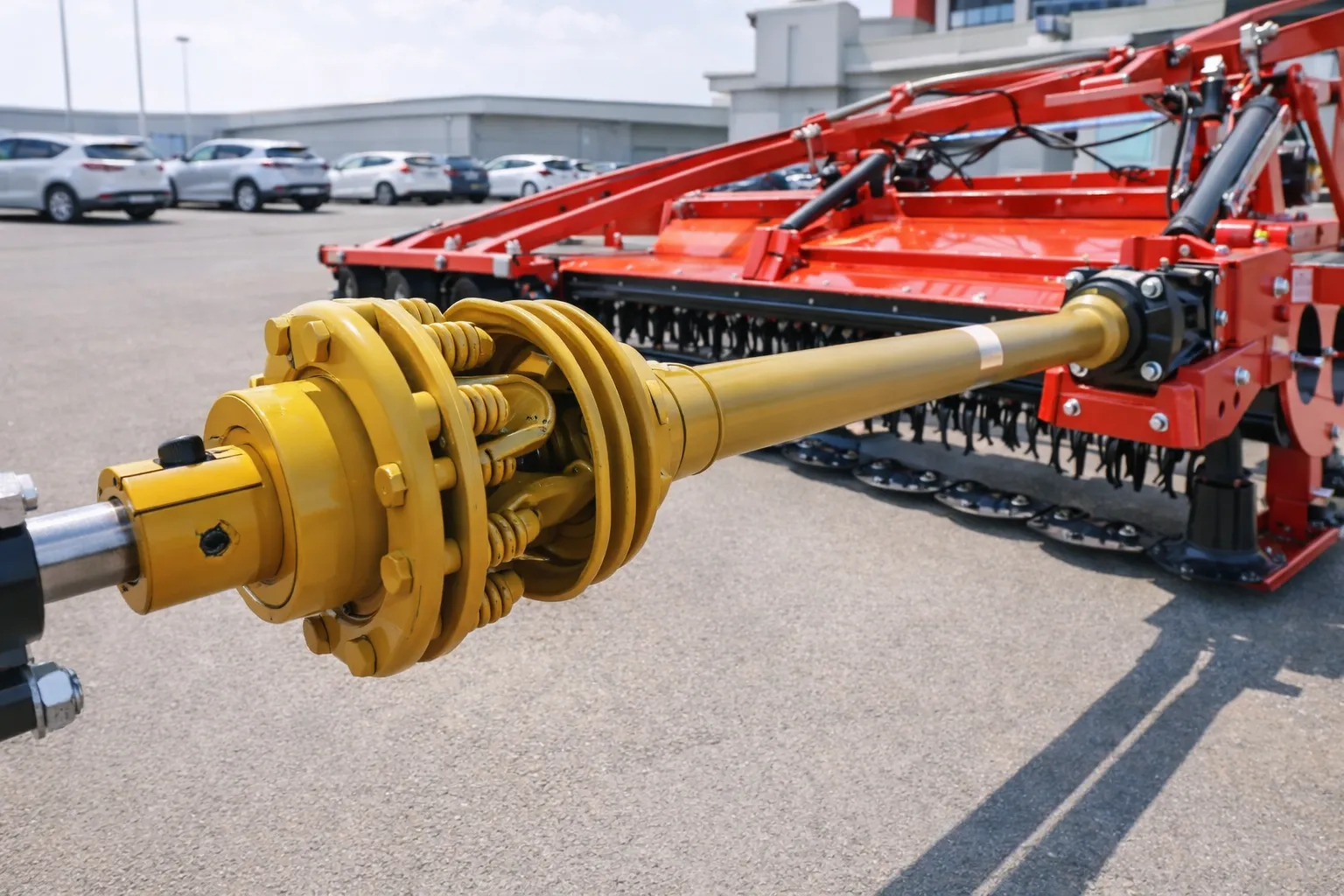
Pre-season maintenance on the 9FZ-2.0 covers: (1) Inspect all spring-steel tines for cracking, bending beyond the designed curve, or tip wear. Replace in complete wheel sets to maintain balanced rotor loading — a single bent tine on a 6-tine wheel creates a vibration imbalance that accelerates bearing wear on the rotor hub. (2) Grease all rotor hub bearings — 2 to 4 grease points per rotor depending on configuration. (3) Check the hydraulic fold cylinder seals for weeping. (4) Inspect the PTO driveline universal joints for play — replace any joint with lateral play above 2 to 3 mm. (5) Check gearbox oil level and inspect for metal particles that indicate bearing or gear wear. Full service takes 30 to 45 minutes on the 9FZ-2.0 and is best performed in late winter before the first cutting season.

Hay Tedder Equipment — California Warehouse
9FZ-2.0 Hydraulic Folding Tedder — Tractor HP and Hitch Category Confirmed Before Shipping
In stock at the California warehouse with same-day parts dispatch. Tractor 3-point hitch category and minimum HP verified before any order ships. Replacement tines, rotor bearings, and driveline components in stock year-round.
✔ Hydraulic Fold
<3.0 m road width, 2-min fold
✔ Cat I/II Hitch
Fits 27+ HP tractors
✔ Tine Kits In Stock
Same-day dispatch California
Ask About Tedder Specifications
Cxm