Pest Management — Alfalfa Stand Protection

Alfalfa Weevil: Scouting, Cutting Timing, and Stand Protection

Alfalfa weevil is the most economically damaging insect pest in U.S. alfalfa production — capable of destroying 30–80% of a first-cutting’s leaf material in two weeks. The critical decision is not whether to control it, but when and how: cut early and harvest 90% of the larvae with the crop, or spray and preserve yield. This guide covers the scouting protocol, economic thresholds, the cut-vs-spray decision framework, and how unmanaged defoliation cascades into quality loss and stand damage.

See Scouting Protocol

Why Alfalfa Weevil Consistently Targets the Most Valuable Cutting of the Season

The alfalfa weevil (Hypera postica) completes its most damaging larval stage precisely during the window when first-cutting alfalfa is accumulating its maximum quality and yield. This is not coincidence — the insect’s biology is synchronized with the alfalfa growth cycle. Adults overwinter in wooded areas surrounding alfalfa fields, then fly to the crop as temperatures warm and begin laying eggs in the alfalfa stems. Larvae emerge in spring when alfalfa is 8–12 inches tall and feed with increasing intensity through three instars — with peak feeding occurring at the 3rd instar, typically just 10–14 days before the normal first cutting window. The economic timing creates a recurring producer dilemma: the best first-cutting quality and yield window and peak weevil damage intensity occur at the same time, every year.

30–80%
Leaf material destroyed in severely infested first-cutting alfalfa during peak 3rd-instar feeding — a loss that translates directly into reduced CP per ton and an immediate hay quality downgrade from the field
$30–$80/acre
Economic loss from unmanaged alfalfa weevil damage in a severe infestation year — combining hay quality downgrade, yield reduction, stand stress, and regrowth delay from crown defoliation
90%
Fraction of alfalfa weevil larvae removed with the crop in an early rescue cut — making timely cutting the most effective, lowest-cost, and residue-free weevil control option when cutting is imminent
The opportunity cost of waiting: A producer who notices weevil feeding on April 30 with alfalfa at 18 inches, decides to watch for another week, and returns May 7 to find 70% leaf loss has not merely missed the spray window — they have produced hay that will test 3–5 CP points lower than the same field’s hay in a non-infested year, and the stand has experienced root carbohydrate depletion from extended defoliation that weakens the regrowth response. The decision to scout early and act at threshold is worth compounding over a 6–8 year stand life, not just in the current cutting.

Life Cycle and Damage Timing: When the Threat Window Opens and Closes
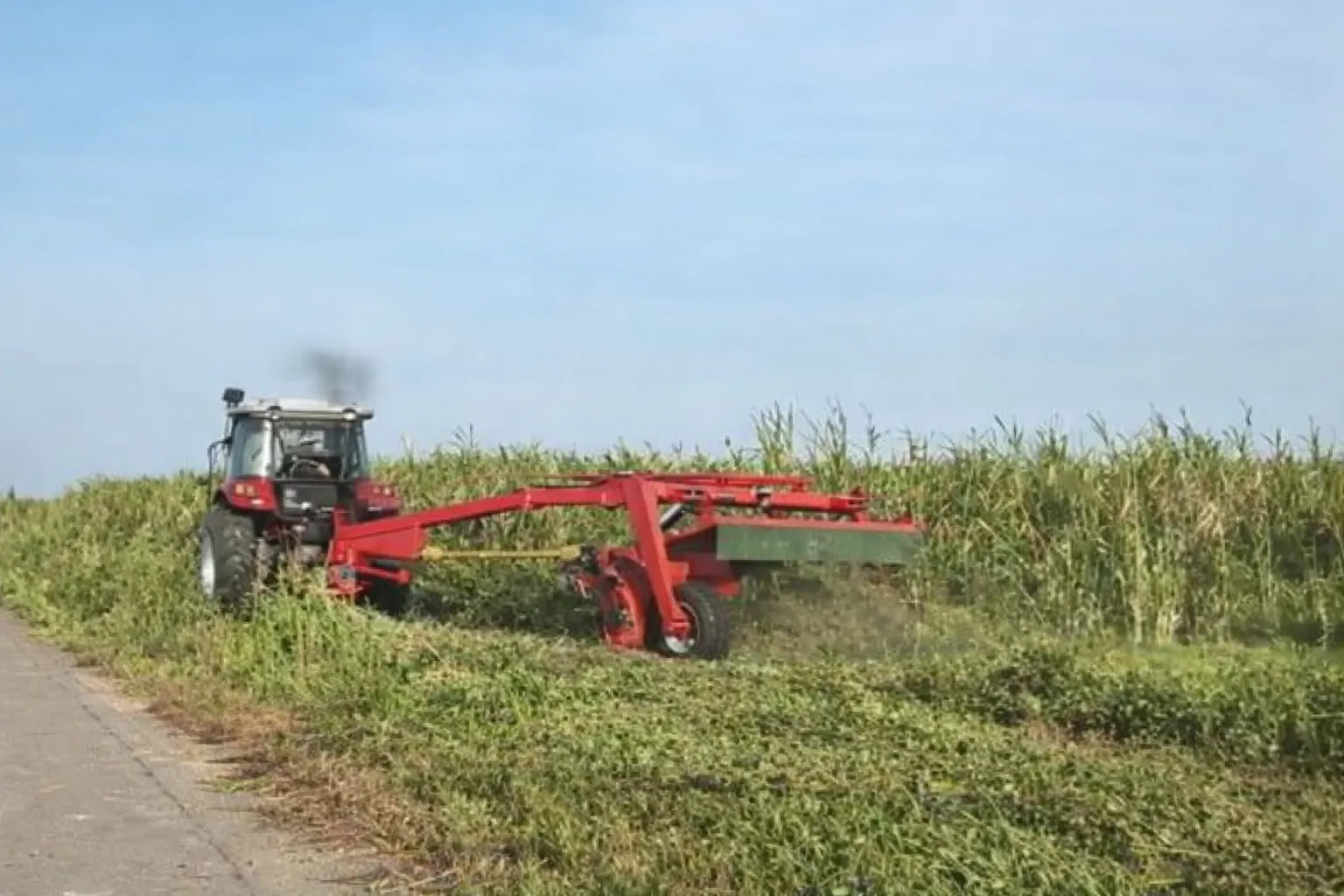
mower-conditioner in alfalfa field — the timing decision of when to cut alfalfa for first cutting is the most critical management intersection with alfalfa weevil pressure; cutting within the 7 to 10-day window before peak third-instar larval feeding removes the larvae with the hay and eliminates the pest without insecticide application, but waiting beyond that window allows severe defoliation that reduces hay quality and depletes root carbohydrate reserves critical for rapid regrowth

Understanding the weevil’s developmental timeline relative to alfalfa growth stage is the foundation of effective management. Weevil activity can be tracked using heat unit (degree day) accumulation — a predictive tool that tells producers when to start scouting rather than waiting for visible damage to appear.

Degree days accumulated (base 48°F, from Jan 1) Weevil development stage Alfalfa response Scout now?
50–100 DD Adults active; egg-laying begins in stems Alfalfa 2–4 inches tall No — too early
200 DD First larval hatch — 1st instars emerging Alfalfa 6–10 inches Begin scouting
300–400 DD 2nd instar — feeding accelerating; tip damage visible Alfalfa 12–18 inches Scout weekly
400–600 DD 3rd instar PEAK FEEDING — maximum defoliation rate Alfalfa 18–24 inches; pre-bud Act now or scout daily
600+ DD Pupation begins; adults emerging (summer generation) Post-cutting regrowth Scout regrowth
How to use degree day tracking in practice: Most state cooperative extension services provide real-time degree day accumulation maps or county-level tracking tools updated daily through the growing season. Simply checking your county’s accumulated degree days against the table above tells you whether it’s time to start scouting, scout more frequently, or confirm that larvae are at or near peak feeding stage. Extension tools are available for most major alfalfa-producing states including California, Idaho, Kansas, Iowa, Wisconsin, and Pennsylvania — a 5-minute search for “[your state] alfalfa weevil degree day tool” will locate the applicable resource. No field sampling is needed to determine when to begin scouting; the degree day trigger does that for you.

The Scouting Protocol: The 30-Stem Sample Method That Determines Your Next Action

Effective alfalfa weevil scouting requires a structured sampling protocol — not a windshield survey or a walk through the convenient corner of the field. The larvae are small (1/8 to 3/8 inch depending on instar), pale green with a white dorsal stripe, and easily missed without a systematic counting method. The standard protocol is designed to produce a field-representative larval count in 20–30 minutes that directly generates the economic threshold comparison.

1

Walk a W-pattern across the field

Enter the field from one corner and walk a W-shaped path that covers 5 sampling points across the full field width. At each point, collect 6 randomly selected stems. Avoid the field edges (weevil pressure is typically higher near edges where adults overwinter in adjacent vegetation) — sample from interior field sections to get a representative field average. Total sample: 30 stems per field scouted.

2

Cut stems at ground level; place in a bucket

Cut each sample stem at the soil surface (not 6 inches up) — larvae are often concentrated in the lower stem nodes, and cutting higher misses the larvae sheltering below the cut point. Place stems immediately into a white or light-colored bucket. The pale bucket interior makes the small green larvae visible against the background.

3

Beat stems vigorously against the bucket interior

Hold the stems over the bucket and strike them sharply against the inside wall 3–4 times. Larvae do not hold tightly to the stem under mechanical disturbance and will fall to the bucket floor. Count all larvae that fall out, including very small 1st instars (which are lime-green, 1/8 inch). Let the stems rest in the bucket for 30 seconds and check again — some larvae move slowly and will fall after the initial strike.

4

Count larvae and estimate tip-feeding damage

Count total larvae across all 30 stems; calculate larvae per stem (total ÷ 30). While collecting, also visually assess the percentage of sampled stems showing “tip feeding” — the characteristic window-pane skeletonization of the youngest leaves at the growing tip. A stem with feeding damage has leaves that appear as a white or bronze network rather than solid green leaf tissue. Record both: larvae per stem AND percentage tip-feeding. Both numbers are used in the threshold decision.

5

Scout multiple fields separately; note field-to-field variation

Alfalfa weevil pressure varies significantly between fields based on proximity to overwintering habitat, field history, and microclimate. A field bordering a wooded creek may be at economic threshold while a field 200 feet away in open farmland is below threshold. Scout each field separately; make treatment decisions field by field rather than assuming uniform pressure across the operation.

Economic Thresholds: When the Scout Count Triggers Action

The economic threshold is the larval count at which the cost of management (insecticide or early cutting) equals the economic benefit of preventing further damage. Thresholds are not fixed — they vary by alfalfa value (hay price), control cost, and plant growth stage. The thresholds below are widely adopted guidelines from university extension publications; check your state extension service for locally calibrated thresholds.

Alfalfa growth stage Larvae / stem threshold Tip-feeding % threshold Recommended action
6–10 inches tall ≥0.5 per stem Any tip damage Consider insecticide — too early for useful cutting
12–18 inches (pre-bud) ≥1.0 per stem ≥40% Action required — evaluate cut vs spray
18–24 inches (bud stage) — 10+ days from cutting ≥2.0 per stem ≥50% Spray immediately; cutting too far away
18–24 inches (bud stage) — within 7–10 days of cutting ≥1.0 per stem ≥25% Rescue cut — remove larvae with crop; most cost-effective option
Why the threshold is lower when cutting is imminent: The economic calculation shifts when cutting is 7–10 days away. An insecticide application costs $10–$20/acre (product + application) and saves the yield and quality from the remaining days of larval feeding. A rescue cut costs $0 in pest management and removes 90% of the larvae with the crop — but may reduce yield by 5–8% compared to waiting the full normal cutting interval. At alfalfa prices of $150–$250/ton, a 5% yield loss on a 1.5-ton-per-cutting field costs $11–$19/acre — comparable to insecticide cost but without pesticide residue concerns. When both cost approximately the same and the cut-early option is available, the rescue cut is almost always preferable.

The Cut-Now vs Spray Decision: A Field-by-Field Framework
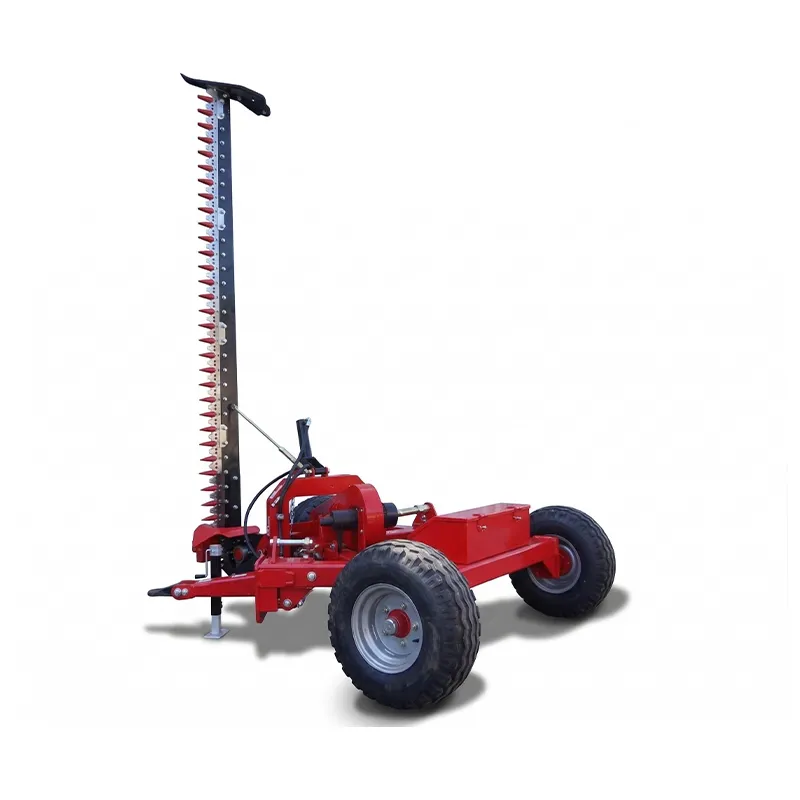
mowing equipment for alfalfa hay production — the early rescue cut decision in response to alfalfa weevil pressure is one of the most time-sensitive management calls a hay producer makes; the window between threshold being reached and irreversible leaf damage from peak third-instar feeding is often 5 to 7 days, and a rainy forecast that prevents cutting during that window changes the decision from cut to spray

The decision of whether to make a rescue cut or apply an insecticide is the highest-stakes timing call in alfalfa management. It requires evaluating four variables simultaneously: days to normal cutting, larval count and damage severity, weather forecast, and hay market timing. When all four align for an early cut, it is almost always the correct choice. When they don’t align, the spray option preserves the option to cut at the normal schedule.

Make the rescue cut when:
  • Cutting is 7–10 days away or less
  • Larval count is at or above threshold
  • Forecast shows 3+ consecutive dry days (baling window)
  • Alfalfa is at bud stage or later (adequate quality for market)
  • No pesticide pre-harvest interval conflict
  • Equipment is ready and available
Benefit: removes 90% of larvae with zero pesticide cost; produces a marketable hay bale; allows uninterrupted access to the field for regrowth scouting afterward
Apply insecticide when:
  • Cutting is 14+ days away
  • Larval count is at or above threshold
  • Weather prevents cutting this week (rain forecast)
  • Alfalfa is too short for marketable quality (under 16 inches)
  • Equipment is not available for early cutting
  • Field is in high-yield production requiring full cutting interval
Note: Do not spray if cutting is within 7 days — most insecticides have a 7-day pre-harvest interval on alfalfa. Read the label for your specific product.
The weather variable that changes everything: A rain forecast that pushes the cutting date 5–7 days out moves a borderline “rescue cut” situation into the spray category. Conversely, an unexpected 5-day clear window when alfalfa is 7 days early provides the opportunity to make an early cut that prevents both larval damage and the need for insecticide. Monitoring the 7-day forecast simultaneously with weevil scouting data is the management habit that turns good information into good decisions. The hay-making workflow integration — connecting cutting date planning with pest and weather monitoring — is in the mowing and conditioning hay quality guide.

How Larval Defoliation Damages Hay Quality — Beyond What the Eye Sees

The visible damage from alfalfa weevil — skeletonized leaf tips, white “frosted” appearance on the upper canopy — understates the nutritional damage to the harvested hay. The mechanism of quality reduction operates through three distinct pathways, each of which compounds the other in severe infestations.

PATH 1
Direct leaf removal — the CP loss pathway. Alfalfa leaves contain 70–80% of the plant’s crude protein. When larvae consume 40–60% of the leaf area, the hay baled from that crop contains proportionally less leaf material per stem — directly reducing CP concentration. Research from multiple land-grant universities consistently shows that alfalfa hay from fields at 50%+ defoliation tests 2–5 percentage points lower CP than hay from equivalent-stage non-infested fields harvested on the same day. A field that would have produced 22% CP hay without weevil pressure may test 17–18% CP after significant defoliation — a quality reduction that translates to $15–$30/ton price reduction at dairy market prices.
PATH 2
Reduced photosynthesis and root carbohydrate depletion. Alfalfa rebuilds root carbohydrate reserves through photosynthesis in the above-ground canopy during the last 7–10 days before cutting. Weevil defoliation that reduces the photosynthetically active leaf area by 50%+ during this critical window reduces root reserve replenishment by a proportional amount. Roots that enter the post-cutting period with depleted carbohydrates produce slower, weaker regrowth — delaying the next cutting by 3–7 days and predisposing the stand to summer slump or disease pressure. In a stressed stand, this effect can permanently reduce stand productivity in subsequent years beyond the immediate quality damage of the current cutting.
PATH 3
Crown bud damage — the stand persistence pathway. When weevil larvae consume not just leaves but the growing crown buds (the small nodes at the base of the plant from which regrowth emerges), the damage extends beyond the current cutting. Crown bud damage delays regrowth uniformly across the stand and in severe cases permanently reduces the number of productive crown buds per plant. A stand that entered the season with 15 productive crown buds per plant and loses 5–7 crown buds to feeding damage will produce fewer stems per plant in all subsequent cuttings that season — a production loss that persists regardless of recovery from leaf defoliation.

The Regrowth Threat: Scouting the Second Generation That Producers Consistently Miss
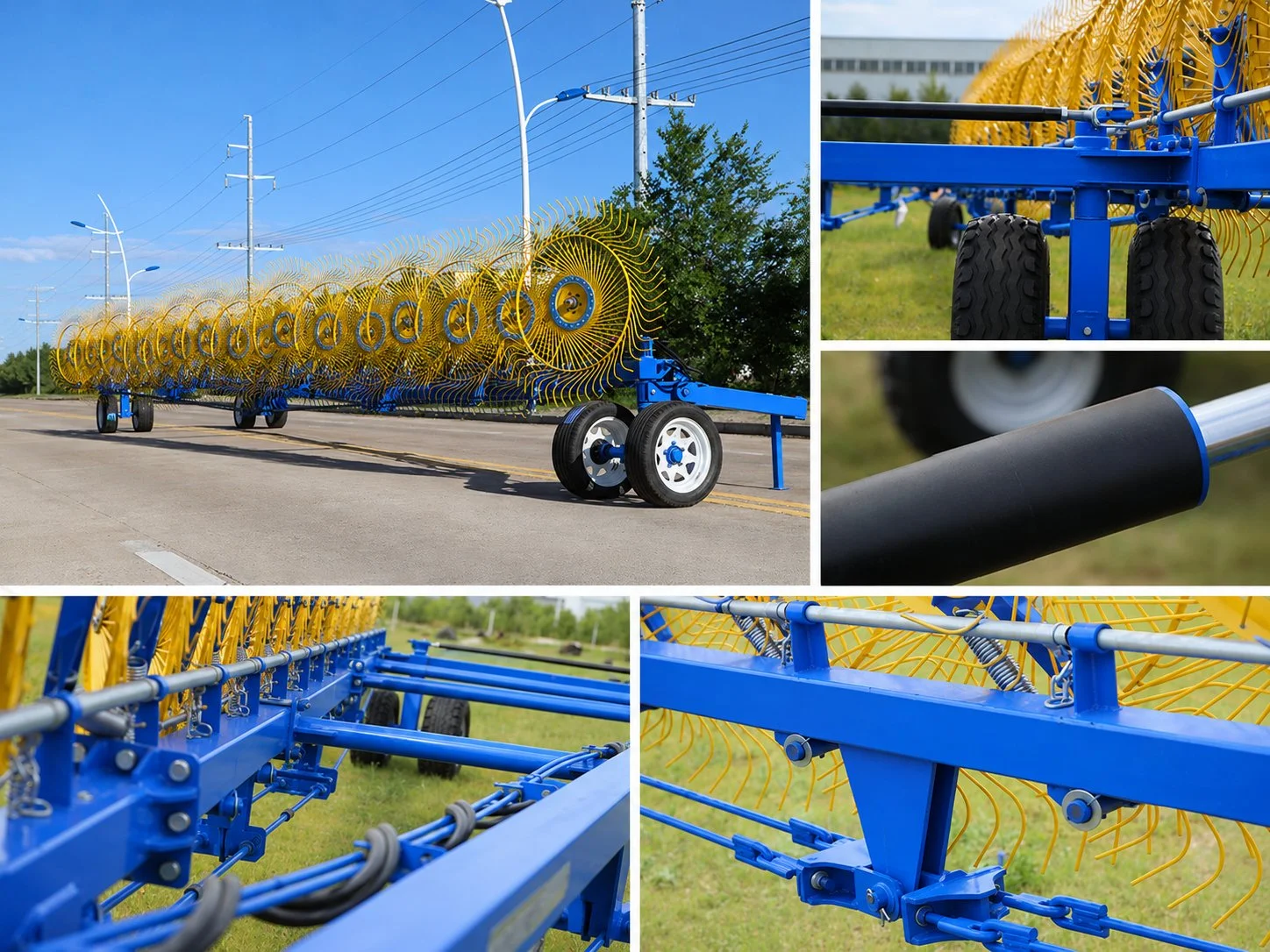
hay rake detail for windrow management — the post-cutting regrowth period is when alfalfa weevil's second generation poses a threat that many producers overlook; adults that survived the first cutting continue laying eggs in the newly established regrowth, and the larvae that hatch in this period attack the young crown buds and initial regrowth shoots that are far more critical to stand health than the mature stems cut at first harvest

First-cutting management receives the focus, but the regrowth period carries a different and often more insidious weevil threat. Adults that were not physically removed with the first cutting — those in the soil, in surrounding vegetation, or that flew off the field ahead of the mower — continue laying eggs. The second-generation larvae that hatch from these eggs attack regrowth at a stage when the plants are most vulnerable: 4–8 inches of new growth, before the photosynthetic capacity and root carbohydrate reserves needed for vigorous recovery are re-established.

When to scout regrowth

Begin scouting regrowth 7–10 days after cutting, when new growth is 4–6 inches tall. At this height the crown buds are accessible and new stem extension is beginning. Scout using the same 30-stem method, but reduce the threshold: at this sensitive growth stage, even 0.5–1.0 larvae per stem warrants action because the regrowth plants have significantly less tolerance for leaf loss than mature pre-cutting alfalfa.

Treatment options for regrowth

The rescue cut option is not available for regrowth that is only 6–8 inches tall — that material is too short to harvest and too valuable to the stand to destroy. Insecticide application is the only management tool at the regrowth stage. Pyrethroid insecticides (lambda-cyhalothrin, zeta-cypermethrin) are effective and have shorter pre-harvest intervals (typically 1–3 days for regrowth alfalfa) than organophosphates. Apply when regrowth is 4–8 inches and larvae are present, before crown bud feeding damage occurs.

Insecticide Options: Timing, Pre-Harvest Intervals, and Selecting the Right Product

When the cut-early option is not available and scouting confirms threshold has been exceeded, insecticide application protects yield and quality for the full cutting interval. Product selection should consider efficacy, pre-harvest interval, pollinator impact, and cost — in that priority order for alfalfa hay production.

Chemical class Examples Efficacy vs weevil Pre-harvest interval Key note
Pyrethroids Lambda-cyhalothrin, Zeta-cypermethrin, Bifenthrin Excellent 1–7 days (product-specific) Fast knockdown; broad spectrum; apply at dusk to reduce bee impact; most economical option at $6–$12/acre
Organophosphates Dimethoate, Chlorpyrifos (where labeled) Excellent 7–21 days (product-specific) Longer PHI limits pre-cutting flexibility; higher bee toxicity — do not apply during bloom; verify current state label status
Carbamates Methomyl Good 3–7 days Good option where pyrethroid resistance is suspected; apply in evening to minimize bee exposure
Biological / reduced-risk Beauveria bassiana, spinosad Moderate 0–1 day (OMRI listed options) Appropriate for certified organic production; less effective at high larval counts; may require repeat application
Pollinator protection is not optional: Alfalfa is a major forage crop for honey bees and native pollinators. Insecticide applications during any bloom stage (even partial bloom on stressed plants) carry significant bee mortality risk. Always apply at dusk or dawn when bees are not actively foraging. Never apply when alfalfa is in bloom if an alternative exists — the rescue cut option, where applicable, avoids this concern entirely because cutting removes the flowers along with the crop.

Long-Term Stand Management: Resistant Varieties and Habitat Practices

Beyond the season’s immediate scouting and treatment decisions, two long-term management practices meaningfully reduce alfalfa weevil pressure across the stand’s productive life: variety selection and field edge habitat management.

Alfalfa weevil-tolerant varieties

Multi-pest resistance packages in modern alfalfa varieties often include weevil resistance or tolerance — the ability to tolerate feeding without the same yield and quality loss that susceptible varieties suffer at equivalent larval counts. University trials in Nebraska, Wisconsin, and Kansas have documented 20–35% reductions in economic damage in resistant versus susceptible varieties at equivalent larval pressure. This does not eliminate the need for scouting or treatment in high-pressure years, but it raises the economic threshold and reduces the frequency of intervention. The variety selection criteria for long-term stand productivity are in the alfalfa stand establishment and seeding management guide.

Natural enemy conservation

Alfalfa weevil has several important natural enemies — parasitic wasps (Bathyplectes curculionis, Microctonus aethiopoides), predatory beetles, and fungal pathogens — that collectively suppress weevil populations significantly in fields that are not repeatedly treated with broad-spectrum insecticides. Research consistently shows that fields with established natural enemy populations require insecticide treatment significantly less frequently than fields where repeated broad-spectrum treatments have suppressed natural enemy populations. Minimizing pyrethroid use (the most disruptive class to natural enemies) and using the rescue cut option when available preserves the natural enemy community that provides season-long background suppression.

The cutting frequency management that balances alfalfa quality, yield, and stand persistence across the full productive life of a stand — including the compounding effect of repeated cutting intervals on root carbohydrate reserves that are already stressed by weevil damage — is in the alfalfa cutting frequency and stand life guide. For round baler models and PTO driveline specifications that enable the early cutting flexibility required by rescue cut management, see our round baler models and agricultural gearbox and PTO driveline component specifications.

Alfalfa Weevil Management FAQs
What does alfalfa weevil damage look like before I find the larvae?+
The earliest visible symptom is “tip feeding” — the growing tip of the stem shows a characteristic window-pane or lace pattern where the larvae have consumed the leaf tissue between the veins, leaving a transparent skeleton of vein material. As feeding intensifies, the affected area expands and the leaf tissue dies and turns tan or white — the classic “frosted” appearance at the top of the plant canopy that is visible from a distance in heavily infested fields. A field that looks like the top 6 inches of every plant has been bleached or silvered has significant weevil feeding. Individual larvae are hidden inside the stem node or leaf cluster during daylight hours and may not be visible without the bucket-shaking sampling method even when present in large numbers. The frosted-tip appearance is a reliable early indicator that should trigger scouting immediately.
Will a severely defoliated alfalfa stand recover fully?+
A stand that reached 50–70% defoliation but was then cut — even at a shortened height — will typically recover to near-normal second-cutting production provided the crown buds are intact and the soil moisture is adequate. The cutting removes the feeding pressure, and the stand regrows from crown buds that were protected below the cut height. Full recovery of root carbohydrate reserves takes 2–3 cuttings after a severe defoliation event. A stand that was defoliated and NOT cut — left standing in the field through peak and post-peak feeding — sustains the most complete damage: continued feeding depletes root reserves, attacks crown buds, and allows pest populations to complete their development without disruption. A delayed or absent rescue cut after heavy defoliation is the scenario most likely to cause persistent stand weakness or outright stand failure in stressed environments.
Is it safe to cut early if the alfalfa is only at 18 inches instead of the usual 24?+
Cutting at 18 inches as a rescue cut is agronomically acceptable and may be economically justified when weevil pressure is high, but it involves trade-offs. At 18 inches, the alfalfa is typically in early bud stage — quality is good (CP 20%+, low NDF) but yield is 20–30% below what the same stand will produce at 24 inches in full bud/early bloom. The hay quality from an 18-inch early cut may actually be higher than from the same stand allowed to reach 24 inches under active weevil defoliation, because the defoliation progressively reduces CP as it continues. The primary agronomic concern with repeated early cutting at 18 inches is long-term stand persistence — consistently cutting below 22 inches depletes root carbohydrate reserves faster than cuttings at the recommended stage allow replenishment. A rescue cut at 18 inches once in a season is a reasonable response to severe weevil pressure; making it a routine management practice is not.
How do I know if my county is in a high-pressure weevil year?+
Alfalfa weevil pressure varies year to year primarily with spring temperature patterns. Warmer, earlier springs accelerate weevil development and cause larvae to reach peak feeding stage before the alfalfa has fully developed its above-ground biomass buffer — the combination that produces the most severe economic damage. Cool, late springs slow egg hatch and allow alfalfa to outgrow early instar feeding before reaching economic impact. Several indicators help predict pressure in your area: degree day tracking (available through state extension services) tells you where larvae are in their development relative to your alfalfa’s stage; your local county extension office often publishes weekly or bi-weekly pest reports during April–May that report current scout findings across the county; and comparing spring 2026 temperature accumulation against historical averages gives a general pressure prediction. The most reliable approach is simply starting your own scouting program at 200 degree days (base 48°F) regardless of predicted pressure — the cost of 30 minutes of scouting is far less than the cost of an undetected high-pressure year.
Do resistant alfalfa varieties really reduce weevil damage enough to matter?+
Resistant varieties provide meaningful but not complete protection. University trials consistently show that varieties with high weevil resistance ratings sustain 20–35% less leaf damage than susceptible varieties at equivalent larval counts — effectively raising the practical economic threshold by reducing the damage rate per larva. This difference is economically significant: at marginal infestation levels (1.0–1.5 larvae per stem), a resistant variety may come through without intervention while a susceptible variety at the same count would require a rescue cut or spray. However, in high-pressure years with 3+ larvae per stem, both resistant and susceptible varieties require management — the resistant variety does not eliminate the problem, it reduces its severity and management frequency. For a stand that will be in production for 6–8 years, the accumulated benefit of reduced intervention frequency and lower damage intensity in moderate-pressure years is real and worth factoring into variety selection. Look for varieties with “HR” (High Resistance) or “R” (Resistant) ratings for alfalfa weevil in the National Alfalfa Alliance variety database.
Can alfalfa weevil damage be detected on a forage test?+
Not directly — a forage test has no “weevil damage” indicator. However, the test results from weevil-damaged hay will show specific patterns that differ from non-damaged hay at equivalent growth stage: CP below expected range for the cutting stage (reflecting leaf loss), NDF above expected range (reflecting the increased stem fraction from leaf removal), and ash above normal (from soil disturbance during active larval feeding near the soil surface). A first-cutting alfalfa lot that tests 16% CP and 46% NDF in what should have been a boot-stage 22% CP, 36% NDF cutting is exhibiting exactly the pattern that severe weevil defoliation produces. These results won’t name the cause, but an experienced hay producer comparing results against field records will see the deviation. This is another reason to maintain cutting date records alongside test results — the combination allows pattern recognition that the test alone does not provide.
foragebaler.com certified round baler equipment — models providing the operational flexibility and cutting-system compatibility needed for rescue cut management in response to alfalfa weevil pressure

Get Baler Configuration for First-Cutting Alfalfa Hay

Tell us your cutting stage targets, tractor PTO HP, target bale size, and intended market (dairy, horse, or beef). We confirm the density spring setting, pickup configuration, and net wrap setup that produces consistently high-quality alfalfa bales through all cutting intervals, including emergency rescue cuts.

America Ever-Power Forage Baler Equipment INC. | 1401 21st ST STE R | Sacramento, CA 95811

Get Alfalfa Hay Baling Setup