Equipment Matching Guide

Requisitos de potencia de la empacadora de balas redondas: Seleccione el tractor adecuado para la empacadora.

Underpowering a round baler doesn’t just slow you down — it produces poor bale density, accelerates belt wear, and triggers shear bolt failures that interrupt harvest during the most critical weather window of the season. This guide explains exactly how to calculate the HP you actually need for your specific baler, crop, and operating conditions.

Engine HP vs PTO HP: The Distinction That Determines Your Match

The single most common HP matching mistake in hay operations is comparing engine horsepower to the baler’s PTO HP requirement. These are not the same number, and confusing them leads to purchasing a tractor that cannot run the baler at rated conditions. The difference is typically 12–20%, and in steep-terrain operations where the tractor carries draft load simultaneously, the effective PTO HP available can be 25–35% lower than the engine nameplate rating.

Here’s how the power chain works: The engine produces rated HP at a specific RPM. Power is lost through the transmission, rear axle, and PTO gearbox before it reaches the PTO stub shaft. A tractor rated at 100 engine HP typically delivers 78–88 PTO HP under load at the PTO shaft — this is what the baler actually receives. The baler’s technical specification always lists its minimum HP requirement in PTO horsepower, not engine horsepower.

Conversion Guidance

To convert engine HP to expected PTO HP: multiply by 0.82–0.88 for tractors with mechanical transmission, or 0.78–0.84 for powershift or CVT transmissions (slightly higher transmission losses).

Ejemplo: A 90 engine HP tractor with mechanical transmission provides approximately 74–79 PTO HP. A baler requiring 75 PTO HP minimum is at the very edge of this tractor’s capacity — not comfortable operating margin.

Three Components of Baler PTO HP Demand

A round baler’s PTO HP demand is not a single fixed number — it varies moment to moment as the bale forms and fluctuates with crop density, moisture, and operating speed. The baler’s stated minimum HP requirement is the average sustained demand at rated baling conditions. Understanding the three components of this demand helps you size your tractor correctly and diagnose HP-related problems in the field.
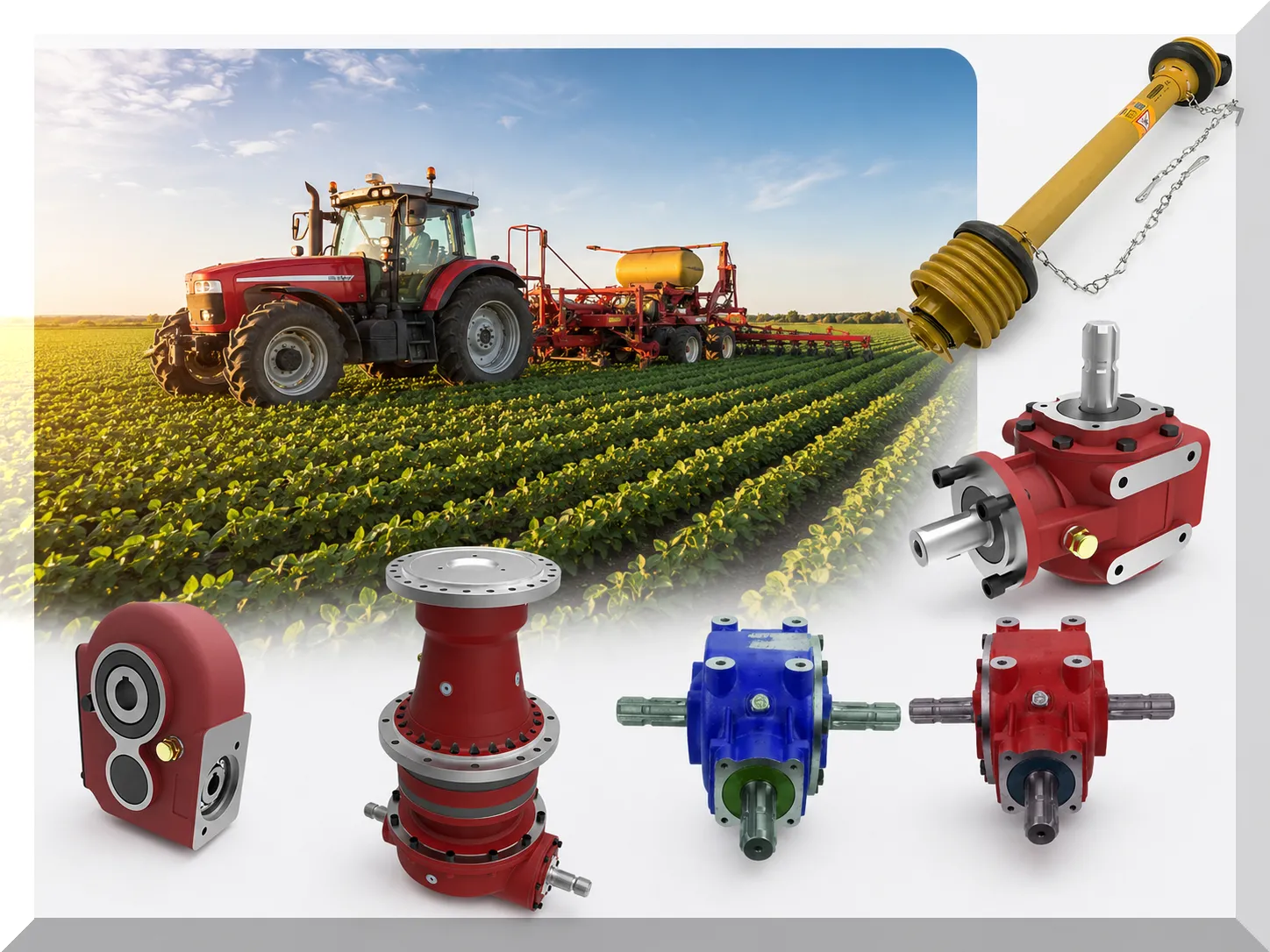
PTO shaft and agricultural gearbox — round baler PTO HP demand comes from flywheel acceleration, belt tension during baling, and pickup drive

Component 1 — ~40% of total
Flywheel Acceleration
The flywheel requires a burst of HP every time the PTO engages and during the initial loading of each new crop charge. This momentary peak demand can be 1.5–2× the average sustained demand for 0.5–2 seconds. The flywheel then releases stored energy to smooth the peak, but the tractor must have enough engine reserve to supply the burst without stalling. This is why underpowered tractors “lug” when entering a dense windrow — the burst demand exceeds the engine’s HP-at-load operating point.

Component 2 — ~50% of total
Belt Tension / Chamber Work
The sustained power to drive belts against growing bale resistance is the largest continuous HP demand component. As the bale grows and approaches the density gate trigger, the chamber pressure increases and the HP demand rises. At maximum bale density setting in high-moisture alfalfa, this sustained demand approaches or reaches the baler’s rated maximum — leaving minimal reserve margin. Baling at reduced density settings reduces this component significantly, which is why an underpowered tractor may bale adequately at 80% of maximum density but struggle at maximum.

Component 3 — ~10% of total
Pickup Drive
The pickup tine reel drive (either ground-driven or PTO-driven depending on baler design) adds a baseline continuous HP demand that increases with crop throughput rate. In heavy, dense windrows at high speed, pickup HP demand can double from light windrow conditions. Ground-driven pickups consume no PTO HP directly but create draft load — adding to tractor drawbar HP demand rather than PTO HP demand. When operating in heavy windrow conditions, this distinction affects how you manage throttle: all power to the rear wheels (ground-driven pickup) vs. all power through the PTO shaft.

PTO HP Requirements by Round Baler Class
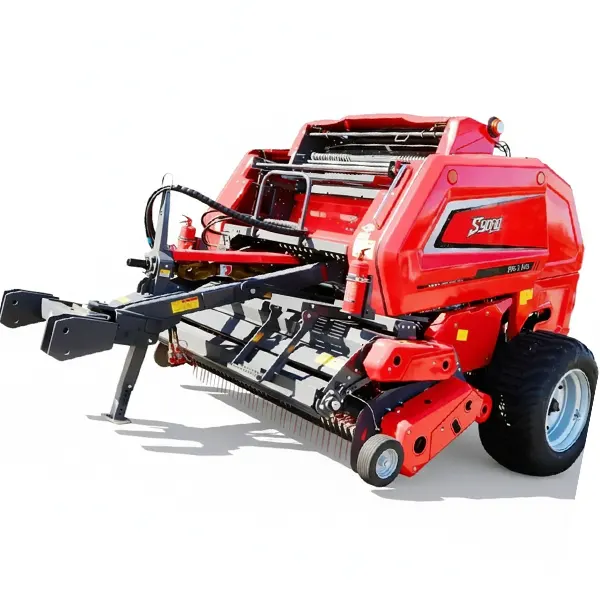
9YG-2.24D round baler — requires 55–75 PTO HP for consistent performance across alfalfa and grass hay crops

Baler Class Bale Format Min. PTO HP
(light conditions)
Recommended PTO HP
(full operation)
Engine HP
equivalent
Typical use
Compact / Small Farm 4×3.5 ft or 4×4 ft 25–30 35–45 45–60 25–75 acres, hobby farm, straw, light grass
Standard Mid-Size 4×5 ft 40–50 55–70 70–90 50–200 acres mixed hay, standard commercial operation
Commercial 5×5 ft 55–65 70–90 90–115 150–500+ acres alfalfa/grass, custom baling
High-Capacity 5×6 ft or 4×6 ft 75–90 95–120+ 120–155+ Large-scale commercial, silage baling, heavy corn stover

“Min. PTO HP (light conditions)” is the absolute floor for thin, dry windrows at reduced density settings. “Recommended PTO HP (full operation)” is the target for comfortable operation across the full range of crop conditions without reserve depletion. Always match to recommended, not minimum.

Crop Conditions That Increase HP Demand Above Baseline

The rated minimum HP for a baler is established under test-stand conditions with a consistent medium-density windrow of dry grass hay. Real-world conditions regularly exceed that baseline. If any of the following apply to your operation, add 15–25% to the baseline HP requirement when selecting your tractor.

🌿
High-Moisture Alfalfa (18–22%)
Wet crop is heavier and requires more compression force to achieve target density. HP demand increases 20–30% versus dry hay at the same density setting.
🌾
Heavy First-Cut Windrows
First cutting alfalfa at 2.0+ t DM/acre produces windrows where the baler chamber fills rapidly — peak HP demand spikes as the density gate is hit every 30–40 seconds rather than every 60–90 seconds.
⛰️
Hilly or Rolling Terrain
Climbing slopes adds draft HP demand that comes directly from the same engine as PTO HP. A 6% grade adds 15–20% HP to forward motion, reducing what’s available at the PTO shaft.
🔩
Pre-Cut Knife Systems Active
Active chopper knife banks add 8–20 HP demand depending on the number of knives deployed and crop volume passing through the cutting zone. Disable knives on thin windrows to recover HP margin.
📦
Maximum Density Setting
Increasing density setting by 20% from baseline typically adds 12–18 HP demand. Operating at rated maximum density continuously is not recommended unless the tractor has 25%+ HP margin above the baler’s recommended rating.
🌡️
High Altitude Operation
Engine HP decreases approximately 3% per 1,000 ft above sea level in naturally aspirated engines. At 6,000 ft elevation, you lose approximately 18% of rated engine HP — significant for operations in Colorado, Wyoming, or Utah mountain valleys.

Worked Example: Calculating the Right Tractor for a Specific Baler

Scenario: 150-acre irrigated alfalfa operation in Idaho at 4,500 ft elevation. Three cuttings per year. First cutting at 20–22% moisture in dense windrows. Planning to purchase a 5×5 ft round baler.

1
Baseline baler PTO HP requirement: 5×5 commercial class baler — recommended 70–90 PTO HP. Use 80 PTO HP as midpoint target.
2
Add crop condition factor: High-moisture first cutting alfalfa = +25% HP demand. 80 × 1.25 = 100 PTO HP adjusted target.
3
Add altitude factor: 4,500 ft = -14% naturally aspirated engine HP. Add 14% to the PTO target to compensate: 100 × 1.14 = 114 PTO HP needed from the tractor at altitude.
4
Convert to engine HP: PTO HP ÷ 0.85 = 114 ÷ 0.85 = 134 engine HP minimum. For 20% operating margin: 134 × 1.20 = 161 engine HP recommended tractor.
Result: This operation needs a tractor rated at 160–180 engine HP (turbocharged) or 175–200 engine HP naturally aspirated to bale first-cut alfalfa at 4,500 ft elevation without reserve depletion. A tractor rated 120 engine HP would be significantly underpowered.

Warning Signs Your Baler Is Underpowered for the Conditions
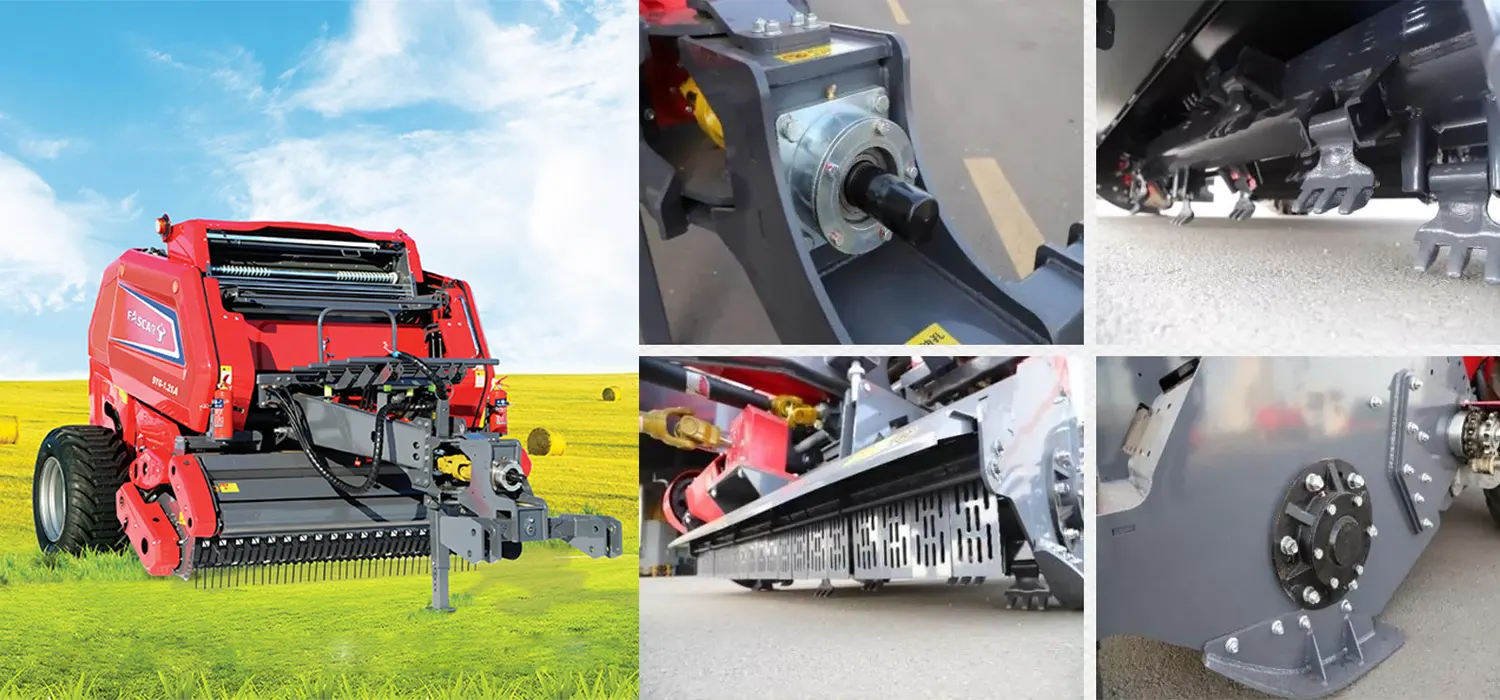
round baler drive system — underpowering symptoms include belt slippage, shear bolt failures, and inconsistent bale density visible in the forming chamber

These are the observable symptoms of an HP-limited baling operation. Each one costs you money in reduced throughput, bale quality loss, or premature component wear. Recognizing them early lets you adjust operating conditions before the deficit causes mechanical damage.

Symptom What it means mechanically Consequence if ignored
Engine RPM drops noticeably when entering dense windrow Engine is at or near load limit; flywheel demand exceeds engine surplus power Belts may slip during HP sag; density inconsistency in first 20% of each bale
Shear bolts failing more than 2–3 times per season Each dense-windrow event pushes the PTO torque above the shear bolt design limit Repeated shear events wear the flywheel hub bore; costly hub replacement after season
Burning rubber smell in normal baling conditions Belts are slipping on rollers because HP is insufficient to maintain belt speed at load Belt glazing and accelerated wear; belt replacement interval cut in half
Unable to achieve rated bale weight at maximum density setting Tractor cannot maintain PTO RPM at maximum chamber pressure; effective density lower than set Consistent under-weight bales; pricing/yield loss in commercial sale
Tractor radiator temperature rising above normal during baling Engine operating near peak load output continuously; thermal headroom is consumed Engine derates (turbodiesel HP protection) reducing actual HP further; risk of overheating damage in hot weather

Matching foragebaler.com Models to Your Tractor HP

The following models cover the full range of commercial round baling operations. If you know your tractor’s PTO HP, use this as a starting point — then account for the crop condition factors above before finalizing. For the complete ROI analysis showing whether your tractor-baler combination justifies ownership versus custom baling, see the baler investment analysis. For detailed tractor compatibility checks covering hitch category, PTO spline type, and hydraulic requirements, the baler-to-tractor matching guide covers every connection point.

9YG-1.0C / 9YG-1.0
30–45 PTO HP
4×5 ft compact chamber. 25–100 acre operations. Grass hay, straw, light alfalfa. Compact utility tractor compatible. Ground-driven pickup option.
9YG-1.25 / 9YG-1.25A
45–65 PTO HP
4×5 ft standard chamber. 75–200 acre operations. Full alfalfa and grass capability. Spring-tooth pickup standard. Net wrap system.
9YG-2.24D S9000 Series
65–90 PTO HP
5×5 ft commercial chamber. 150–500+ acre operations. High-density alfalfa, silage, custom baling. Available in Base, Classic, and Advanced configurations.

HP Matching FAQs

My tractor is rated 85 engine HP. Can I safely run a 5×5 baler?+
An 85 engine HP tractor delivers approximately 70–75 PTO HP. A 5×5 baler’s recommended PTO HP is 70–90. You are at the lower edge of the recommended range — adequate for light conditions (dry grass, straw, thin alfalfa windrows) but without reserve margin for heavy first-cut alfalfa or high-moisture conditions. At sea level in dry climates baling moderate alfalfa windrows at moderate density settings, this combination works. In humid climates baling heavy first-cut alfalfa at maximum density, you will experience regular HP shortfall symptoms. The safest approach: test the combination on your lightest crop first, then progressively load the system. If you observe engine RPM sag when entering a heavy windrow, your combination is at the limit for that crop and condition.
Does a turbocharged tractor produce more PTO HP at altitude than a naturally aspirated one?+
Yes, significantly. A turbocharged engine maintains close to rated HP up to approximately 3,000–4,000 feet altitude by compressing the thinner air to near sea-level density before combustion. Above that point, even turbocharged engines begin to derate, but at a much slower rate than naturally aspirated engines. A rule of thumb: turbocharged agricultural diesels lose approximately 1–1.5% HP per 1,000 ft above 4,000 ft, compared to 3% per 1,000 ft for naturally aspirated engines. At 7,000 ft elevation — common in Colorado’s San Luis Valley hay production area — a naturally aspirated 100 HP engine is effectively producing 79 HP, while a turbocharged 100 HP engine might still produce 93–96 HP. For high-elevation operations, turbocharging is not optional; it is a fundamental HP preservation tool.
Does running a smaller baler on a larger tractor cause any problems?+
Over-powering a baler does not typically cause mechanical problems with the baler itself — the baler’s PTO input shaft, gearbox, and drive train are designed to handle peak torque events, not continuous over-torque, and a larger tractor simply means more power reserve available during those peak events. The one concern with a significantly over-sized tractor (more than 2× the baler’s recommended HP) is ground speed: a larger, heavier tractor will produce significantly higher draft and forward momentum, potentially baling at speeds that exceed the windrow’s ability to feed the pickup uniformly, resulting in plugging or slug-feeding rather than continuous smooth flow. The practical solution is to operate a large tractor at reduced throttle (80–85% of full PTO RPM) when running a small baler — this reduces effective HP, maintains full PTO speed for baler function, and reduces ground speed to the appropriate range.
How does the PTO shaft rating relate to HP requirements?+
The PTO shaft must be rated for the torque load corresponding to the HP being transmitted. At 540 RPM, the formula is: torque (lb-ft) = HP × 5,252 ÷ RPM. At 75 PTO HP and 540 RPM: torque = 75 × 5,252 ÷ 540 = 729 lb-ft. The PTO shaft connecting your tractor to the baler must be rated for at least this sustained torque. Standard 1-3/8″ 6-spline 540 RPM PTO shafts are typically rated for 70–90 PTO HP at the rated RPM. If you are operating a baler at 85+ PTO HP, confirm that your PTO shaft is rated accordingly — many older or compact shaft designs are rated for only 50–65 PTO HP. The PTO driveline component specifications on agriculturalgear-boxes.com provide torque ratings by shaft diameter and spline count for direct verification.
What happens to bale quality when the tractor is underpowered?+
The first and most consistent effect is bale density variation. When the engine sags on RPM during dense windrow entry, the belts briefly reduce speed relative to the rollers — allowing the bale core to expand slightly before belt speed recovers. This produces a softer core in every bale formed under HP-limited conditions, even if the bale reaches the target diameter. The second effect is belt slip events — momentary belt-to-roller slippage when HP demand spike exceeds available PTO torque — which not only produce density inconsistency but also glaze belts over time, accelerating wear. The third effect is reduced throughput: the operator unconsciously reduces speed to avoid RPM sag symptoms, producing fewer bales per hour than the baler is capable of. Combined, these effects can reduce commercial hay revenue by 8–15% compared to proper HP matching.
Should I match to the minimum or recommended HP rating for my baler?+
Always target the recommended HP, not the minimum. The minimum HP rating is established under controlled test conditions — consistent medium-density dry windrow, sea level, moderate temperature, no grade. Real hay operations rarely operate under these ideal conditions simultaneously. The recommended HP incorporates a 20–30% operating margin above the peak test-condition demand, providing the reserve that absorbs crop density variation, weather-related moisture changes, momentary windrow surges, and the natural load variation of the baling cycle. Operating at the minimum HP rating means operating with zero margin — any deviation from test conditions depletes the margin and produces the HP-deficit symptoms described above. Plan for recommended HP as your baseline, then add the crop condition factors relevant to your specific operation.

foragebaler.com round balers — HP requirements documented and matched to tractor specifications before purchase confirmation

Tell Us Your Tractor HP and We’ll Confirm the Right Baler

Share your tractor model, PTO HP rating, primary crop, and elevation. We’ll verify the HP match for each baler model and tell you exactly which configuration gives you the right operating margin for your conditions.

Ask Our Team

Editor: Cxm