
Pourquoi le teff présente un avantage structurel en NSC par rapport à toutes les autres cultures fourragères courantes
Teff (Eragrostis tefLe teff est une graminée annuelle de saison chaude originaire des hauts plateaux éthiopiens, où elle est cultivée pour ses grains depuis des millénaires. Aux États-Unis, la production de foin de teff a débuté dans les années 2000 comme culture de niche destinée à l'alimentation équine, et son utilisation n'a cessé de croître entre 2010 et 2020. Cette croissance s'explique par la prévalence du syndrome métabolique équin (SME) et des troubles de l'insulinorésistance chez les chevaux domestiques, qui ont engendré une demande constante de foin à faible teneur en glucides non structuraux (GNS). La pérennité de cette culture du teff s'explique par des facteurs structurels, et non uniquement par des pratiques culturales.
| espèces de foin | Plage typique de NSC | NSC sous stress | Sans danger pour les chevaux EMS ? | CP au stade du foin |
|---|---|---|---|---|
| herbe de teff | 5–10% | 6–12% | Habituellement ✓ | 8–15% |
| gazon des Bermudes | 6–14% | 8–18% | En général, on teste d'abord. | 8–14% |
| Timothée | 8–18% | 12–26% | Nécessite des tests | 7–11% |
| Dactyle | 10–20% | 14–28% | Nécessite des tests | 10–15% |
| Luzerne | 8–16% | 10–20% | Avec des tests ; problème Ca:P | 18–24% |
La faible teneur en glucides non structuraux (GNS) du teff n'est pas principalement le fruit d'une stratégie de gestion ; elle résulte de sa voie photosynthétique C4 et de son métabolisme. Graminée de saison chaude originaire des hauts plateaux éthiopiens, le teff a évolué dans des conditions limitant l'accumulation de fructanes (glucides hydrosolubles) dans ses tissus. Contrairement aux graminées de saison froide, il n'accumule pas de fructanes lors de périodes de stress dû au froid ou de croissance printanière rapide, et sa teneur naturelle en GNS est inférieure à celle de toute autre graminée de saison chaude au même stade de croissance. Ainsi, un exploitant gérant du foin de teff n'a pas besoin de programmer la coupe avec précision pour cibler une période de faible teneur en GNS : la culture est intrinsèquement pauvre en GNS sur toute sa période de récolte, offrant une plus grande flexibilité de gestion que d'autres espèces et un produit de qualité que les propriétaires de chevaux peuvent acheter en toute confiance.
Sélection variétale du teff : les variétés disponibles et leurs implications pour la production
Le paysage variétal du teff pour la production de foin aux États-Unis est plus simple que ne le pensent de nombreux producteurs et moins différencié en termes de qualité fourragère que pour les graminées vivaces. Les recherches menées par les universités agricoles montrent systématiquement que les pratiques culturales (date et hauteur de coupe, fertilité du sol) ont un impact plus important sur la qualité du foin de teff que le choix de la variété dans la plupart des contextes de production américains. La principale différenciation variétale réside entre les types précoces et tardifs, ce qui influe sur la durée de la saison de production et l'adaptabilité régionale.
Semences de teff les plus répandues dans les circuits d'approvisionnement agricole américains. Caractéristiques agronomiques homogènes d'une région à l'autre. Bien documentées par les services de vulgarisation agricole. Qualité du foin au stade de l'épiaison : teneur typique en protéines brutes (PB) de 10 à 14 % et en glucides non structuraux (GNS) de 6 à 10 %. Convient pour 2 à 3 coupes par saison dans la plupart des régions de production américaines. C'est le choix idéal pour les producteurs de teff débutants : données de performance disponibles, filières d'approvisionnement établies et densités de semis bien définies.
Atteint le stade de montaison 5 à 10 jours plus tôt que la variété Tiffany, permettant une première coupe plus précoce et potentiellement une coupe supplémentaire en fin de saison dans les régions nordiques où la saison de croissance est plus courte. Données limitées issues d'essais universitaires américains comparant cette variété à Tiffany. Le rendement par coupe est généralement inférieur de 10 à 15 % à celui des variétés standard. Idéale pour les producteurs du nord du pays (Colorado, Nebraska, Iowa, nord de l'Illinois) où la durée de la saison de croissance limite la production totale des variétés tardives.
Les variétés de teff à nervure centrale brune et à teneur réduite en lignine ont montré un potentiel prometteur en termes de digestibilité améliorée lors d'essais limités. Cependant, en 2025-2026, aucune semence de teff BMR n'était commercialisée à grande échelle sur le marché américain du foin. Il convient de ne pas confondre les arguments marketing de certaines semences de teff « spéciales » avec la génétique BMR validée commercialement : avant de payer le prix fort pour des semences de variétés vantant une teneur réduite en lignine ou une digestibilité améliorée non étayées par des essais au champ répétés, il est recommandé de consulter les données d'essais universitaires.
Implantation du teff : densité de semis, calendrier et les 30 premiers jours critiques
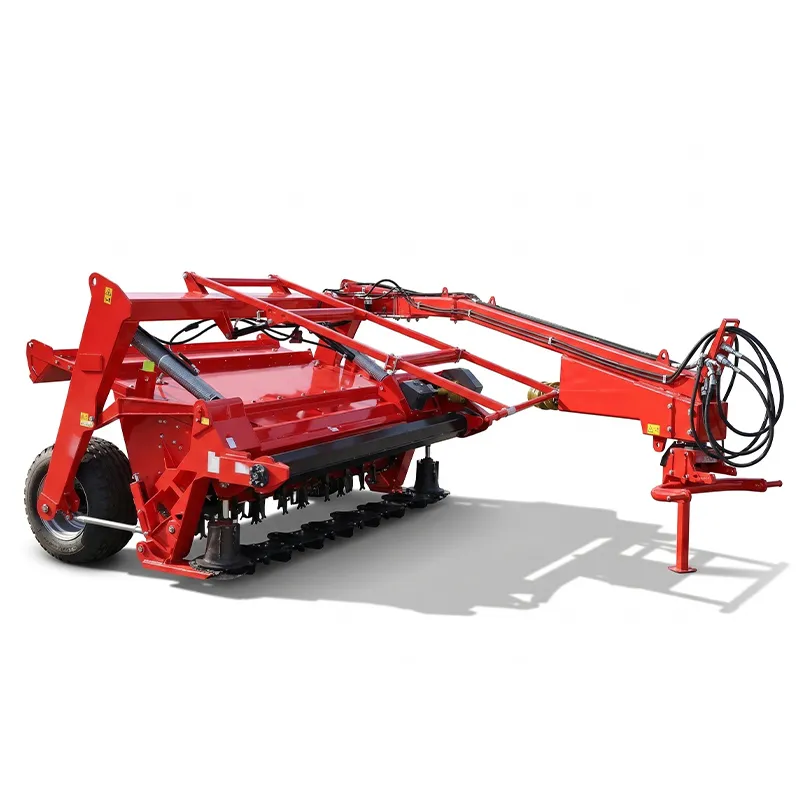
L'implantation du teff est l'aspect le plus complexe de la production de foin de teff pour les agriculteurs habitués aux cultures à grosses graines. Avec environ 1,3 million de graines par livre, les graines de teff sont si fines qu'elles pourraient passer à travers une salière. Par conséquent, un semoir à céréales standard, calibré pour la luzerne ou les graminées, sursemera considérablement le teff. Un seul passage mal calibré peut multiplier par cinq la densité de semis prévue, entraînant un gaspillage de semences coûteuses et une levée trop dense qui verse avant la première coupe.
Taux de semis cible : 0,25 à 0,5 lb de semences vivantes pures (SVP) par acreDe nombreuses recommandations de vulgarisation agricole indiquent une fourchette de 0,5 à 1,0 lb/acre, mais la dose la plus faible est généralement suffisante et plus économique avec des semences coûtant entre $3 et $6/lb. À 0,5 lb/acre, vous semez environ 650 000 graines par acre, ce qui est largement suffisant pour obtenir un peuplement compétitif si la germination et les conditions du lit de semences sont bonnes.
Température minimale du sol : 65 °F (Il s'agit de la température du sol à 5 cm de profondeur, et non de la température de l'air.) En général, cela signifie qu'il faut semer au plus tôt fin mai dans la majeure partie du Midwest et des Grandes Plaines, et mi-juin dans les États du nord. À des températures du sol inférieures à 18 °C, la germination est irrégulière et lente, ce qui permet aux jeunes pousses de mauvaises herbes de sortir de terre avant le teff et de dominer la culture avant que celui-ci n'ait pu fermer son couvert.
Profondeur de semis : maximum ¼ de pouce. Les graines de teff ne peuvent germer à plus de 1,25 cm de profondeur. Un contact ferme avec le sol est essentiel ; il est donc important de rouler ou de tasser la terre après le semis. Le semis à la volée suivi d'un tassement est efficace sur les petites surfaces où un semoir de précision n'est pas disponible, à condition qu'il pleuve ou qu'il y ait irrigation dans les 3 à 5 jours suivant le semis.
Période de coupe : Saison à 2 ou 3 coupes et qualité à chaque étape
Le calendrier de coupe du teff est déterminé par deux facteurs interdépendants : le délai entre le semis et la première coupe (généralement 45 à 60 jours selon la température et la variété) et l’intervalle de repousse entre les coupes suivantes (25 à 35 jours). Dans la plupart des régions productrices des États-Unis, un semis entre le 20 mai et le 1er juin permet une première coupe à la mi-juillet et deux coupes supplémentaires en août et septembre avant que le risque de gel n’interrompe la croissance, soit trois coupes au total. Un semis plus tardif (mi-juin) ne permettra que deux coupes. Dans le sud profond (zone 8 et plus), quatre coupes sont possibles à partir d’un semis effectué fin avril.
Séchage du teff : la culture fourragère commerciale à séchage le plus rapide – et la fenêtre de séchage la plus étroite
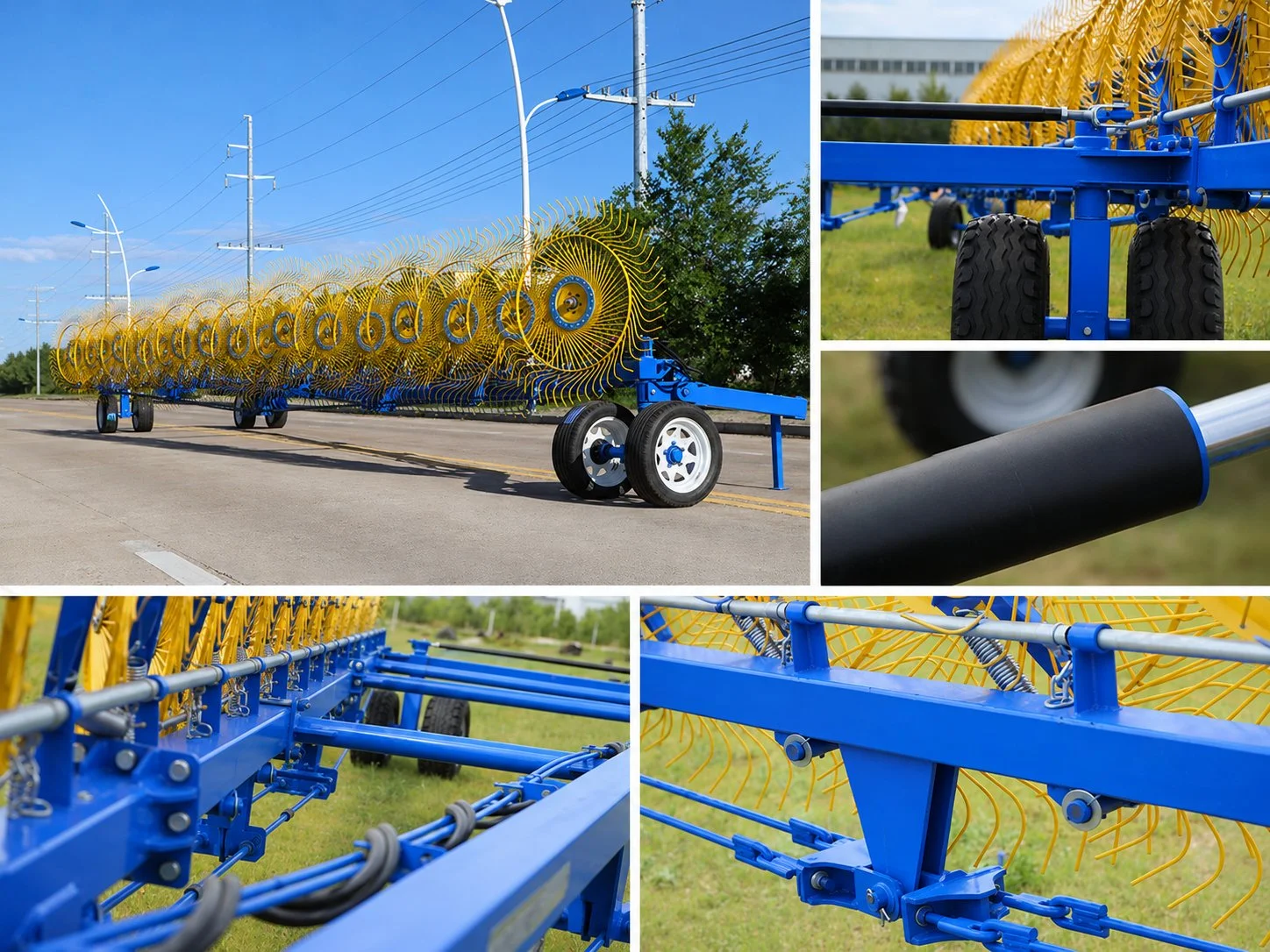
Les tiges ultrafines du teff — les plus fines de toutes les cultures fourragères commerciales — créent un paradoxe : cette même caractéristique qui rend le foin tendre, appétissant et apprécié des chevaux le rend aussi dangereusement rapide à sécher et susceptible de s’émietter de façon catastrophique lorsqu’il est pressé trop sec. Comprendre ce comportement au séchage est la connaissance opérationnelle la plus importante pour les producteurs de foin de teff qui n’ont travaillé auparavant qu’avec de la luzerne ou du chiendent.
Quatre heures après la coupe : 35–45%
Huit heures après la coupe : 22–30%
Entre 14 et 18 heures après la coupe : 14–17% (fenêtre de pressage)
20 à 22 heures après la coupe : 10–12% (séchage excessif, risque d'éclatement des feuilles)
Plus de 24 heures après la coupe : <10% (ne pas mettre en balles)
Le fanage est contre-productif pour le teff dans la plupart des conditions. Le teff séchant très rapidement, la matière atteint le seuil critique de fragilité (taux d'humidité inférieur à 18%) avant même que la plupart des agriculteurs n'envisagent le fanage. À ce stade, l'agitation par les dents de la machine provoque une fragmentation importante des tiges et l'égrenage des feuilles, au lieu d'améliorer la circulation de l'air. Si le fanage est absolument nécessaire (andain dense en conditions humides), il convient de le réaliser dans les 1 à 2 heures suivant la coupe, lorsque la matière est encore souple. Après 4 heures, les tiges sont déjà partiellement sèches et le fanage à une vitesse de vitesse habituelle entraîne une perte de qualité.
Réglages de la presse à balles pour le teff : Pourquoi vos réglages pour la luzerne sont inadaptés à cette culture
Les tiges fines et la faible densité apparente du teff posent un problème de pressage inverse à celui du chiendent ou des résidus de maïs : l’andain paraît volumineux et dense, mais son poids au mètre cube est relativement faible. De ce fait, si la presse est réglée pour des cultures plus denses, le capteur de densité et le système de ressorts réagissent incorrectement. Un opérateur qui presse un andain de teff avec des réglages pour la luzerne produit généralement des balles de taille apparemment correcte, mais trop légères et fragiles ; ces balles se déformeront pendant le stockage et perdront leur couche extérieure dès la première semaine.
Augmenter la tension du ressort de densité 15–25% au-dessus du réglage de la luzerne
Les fines tiges du teff se compressent relativement facilement, mais contrairement à la luzerne, leurs feuilles ne forment pas une masse dense et imbriquée. Pour obtenir une densité de balle adéquate (8 à 10 livres par pied cube, soit 500 à 628 livres pour une balle de 4 x 5 pieds), la tension des ressorts est plus élevée que pour une balle de luzerne de même volume. Le signal de densité de la presse, basé sur le poids, se déclenche plus tôt pour le teff, car la matière se comprime contre les parois des rouleaux sans avoir atteint sa densité optimale. La tension supplémentaire des ressorts compense ce phénomène en exigeant une compression plus importante avant que la balle ne se dilate complètement.
Utilisez des balles de 4×4 plutôt que de 4×5 ou 5×5.
Une balle de teff 4×4 bien compressée pèse entre 180 et 250 kg, un poids facilement maniable pour les écuries sans chargeuse compacte, ce qui correspond parfaitement au profil des acheteurs de foin de teff de qualité supérieure. Une balle de teff 5×5 de densité équivalente pèse entre 360 et 410 kg, ce qui n'est pas beaucoup plus lourd et nécessite davantage de matériel pour être déplacée à l'écurie. Les exploitations équines, principal marché du foin de teff, privilégient presque systématiquement les balles plus petites ; le format 4×4 est parfaitement adapté à leur matériel et à leur mode de gestion.
L'emballage en filet est non négociable pour le teff
Une balle de teff ficelée présente une fragilité structurelle différente de celle des balles de luzerne ou de chiendent. Les tiges fines offrent peu de structure interne pour résister à la compression localisée au niveau des ficelles, ce qui provoque une déformation de la balle en forme de tonneau ou de cacahuète dès la première semaine de stockage, la matière entre les ficelles migrant vers l'extérieur. Le filet d'enrubannage exerce une contention continue sur toute la circonférence de la balle, maintenant ainsi sa forme et empêchant le détachement de la couche extérieure, un problème récurrent lors du stockage des balles de teff ficelées. presses à balles rondes utilisé dans la production de teff, confirmer que le système d'emballage en filet peut appliquer des couches d'emballage adéquates (minimum 2 couches complètes se chevauchant recommandées pour les cultures à tiges fines).
Ralentir la vitesse d'entrée pour les andains de teff
Le teff arrivé au stade de montaison complète et présentant une humidité adéquate (16–18%) forme un andain relativement lourd et dense, plus dense au mètre que ne le suggère le faible poids unitaire des tiges, car les fines tiges se tassent fortement. Pénétrer dans cet andain à la vitesse normale pour la luzerne (8–10 km/h) peut surcharger le pick-up et provoquer un repli de la matière sur les dents au lieu d'un levage propre. Il est conseillé de pénétrer dans les andains de teff à une vitesse de 5–6 km/h et de surveiller attentivement l'engagement des dents du pick-up lors des premiers passages. Les spécifications de la transmission de la prise de force, qui influent sur la vitesse d'avancement du pick-up à différentes vitesses d'avancement, sont détaillées dans le document suivant : spécifications des composants de la boîte de vitesses agricole et de la prise de force.
Tests et documentation NSC : la norme du marché équin qui justifie les prix premium
![L'engagement de qualité et les normes de documentation de foragebaler.com — Les producteurs de foin de teff qui fournissent une analyse complète de leur fourrage, incluant les glucides solubles dans l'eau (GSE) et l'amidon (les deux composants des glucides non structuraux [GNS]), pour chaque lot, bénéficient de la prime que les acheteurs de chevaux à métabolisme élevé sont prêts à payer ; les producteurs qui affirment que leurs analyses de teff sont faibles sans documentation ne peuvent accéder aux prix que justifient les analyses documentées.](https://foragebaler.com/wp-content/uploads/2025/11/why-choose-us-1.webp)
La prime de marché du foin de teff — qui peut atteindre 2 à 3 fois le prix du foin de fléole des prés de qualité équivalente — est entièrement justifiée par les données relatives à la teneur en glucides non structuraux (GNS) fournies par une analyse fourragère. Sans analyse incluant spécifiquement les valeurs de glucides solubles dans l'eau (GSE) et d'amidon, le vendeur ne dispose d'aucun fondement documenté pour son affirmation concernant la GNS, et les acheteurs de chevaux atteints de troubles métaboliques n'ont aucun fondement documenté pour leur achat. Cette analyse est indispensable pour obtenir un prix plus élevé ; elle justifie à elle seule la différence de prix.
- Humidité (au moment de l'échantillonnage)
- Protéines brutes (PB)
- ADF et NDF (indicateurs de digestibilité)
- Glucides hydrosolubles
- Amidon (NSC = WSC + Amidon)
- Énergie digestible (ED) pour les chevaux — utiliser une formule pour chevaux, et non pour bovins
- Teneur en cendres (indicateur de contamination du sol)
Prélevez des échantillons de chaque lot séparément – ne combinez pas les échantillons provenant de coupes différentes, de champs différents ou de dates de coupe différentes. La teneur en glucides non structuraux (GNS) peut varier de 3 à 5 points de pourcentage entre des lots provenant du même champ coupés à deux semaines d'intervalle. Utilisez un carottier à foin pour prélever au moins 20 carottes réparties aléatoirement dans le lot, combinez-les en un seul échantillon et soumettez-le dans les 48 heures, réfrigéré. Le guide d'interprétation des analyses de fourrage – incluant la lecture des valeurs de glucides solubles dans l'eau (GSE) et d'amidon et le calcul de la GNS – se trouve dans le [référence manquante]. Guide d'analyse des fourrages et des résultats des tests de foin.
Circuits de commercialisation et prix : qui paie quoi pour le foin de teff certifié
Le foin de teff se divise essentiellement en deux catégories de marchés : les acheteurs de foin pour chevaux, qui privilégient la documentation relative à sa faible teneur en glucides non structuraux (GNS), et tous les autres. Le marché des « autres » – élevage bovin, bétail en général, négoce de matières premières – rémunère le foin de teff au même prix que le foin de graminées de qualité équivalente, ce qui ne compense en rien la complexité de sa gestion et les coûts annuels de semis qu’il requiert. La rentabilité de la production de teff repose entièrement sur l’accès au marché équin à des prix élevés. Si votre région ne dispose pas d’une densité de marché équin suffisante pour vendre le teff à $150+/tonne, la production de foin de teff n’est pas rentable.
| Type d'acheteur | Fourchette de prix par tonne | Documentation requise | Notes |
|---|---|---|---|
| propriétaires de chevaux atteints de EMS/fourbure | $180–$230 | Test NSC requis | La plupart sont prêts à payer le prix le plus élevé ; signent souvent des contrats réguliers si la qualité est constante. |
| Écuries pour chevaux atteints de troubles métaboliques | $160–$210 | Test NSC + cohérence des lots | Acheteurs en gros ; la régularité par lot est plus importante que le prix unitaire du lot. |
| propriétaires de chevaux en général (chevaux faciles d'entretien) | $130–$175 | Test utile mais non obligatoire | Paye pour la marque de teff, pas spécifiquement pour la documentation NSC |
| Animaux d'élevage / produits de base | $60–$90 | Aucun | Ce marché ne justifie pas la rentabilité de la production de teff ; il est donc déconseillé de l’utiliser comme canal principal. |
Le protocole de stockage qui permet de conserver le foin de teff de qualité optimale tout au long du cycle de vente — en préservant sa couleur verte, en minimisant les pertes des couches externes et en garantissant la précision des analyses fourragères du lot à la vente — est au cœur du processus de stockage. Guide de stockage des balles rondes et de perte de matière sèche.
L'économie du foin de teff : quand le coût annuel des semis est justifié
Le principal inconvénient économique du foin de teff — et la raison pour laquelle il demeure une culture spécialisée plutôt qu'une culture remplaçant le chiendent ou la fléole des prés dans la production commerciale — réside dans le fait qu'il s'agit d'une culture annuelle qui nécessite un réensemencement chaque année. Contrairement à la luzerne (productive pendant 5 à 8 ans) ou au chiendent (10 à 15 ans), l'investissement total nécessaire à l'implantation du teff est consacré à une seule saison de production et doit être renouvelé au même coût l'année suivante.
Préparation du lit de semences : $30–$55
Opération d'ensemencement : $12–$20
Engrais (minimal — teff à faible apport) : $20–$45
Coupe, ratissage, mise en balles (3 coupes) : $75–$120
Tests (3 lots à $25) : $75
Terrain (bail ou coût d'opportunité) : $60–$150
Coût total : $275–$465/acre
La culture du teff est économiquement justifiée lorsque : (a) vous entretenez une relation commerciale établie avec un fournisseur de foin équin qui paie régulièrement plus de $160/tonne, (b) votre région manque d’alternatives fiables de foin à faible teneur en glucides non structuraux (le teff peut être la seule option à faible teneur en glucides non structuraux dans les régions humides où la teneur en glucides non structuraux du bermudagrass est variable), ou (c) vous utilisez le teff pour diversifier les risques de production en complément des cultures fourragères pérennes plutôt que comme monoculture principale. Les exploitations qui produisent du teff en association avec du bermudagrass ou de la luzerne tirent parti de la flexibilité annuelle du teff pour répondre à la demande du marché sans consacrer une superficie de peuplement pérenne à une seule catégorie de qualité.
FAQ sur le foin de teff

Réglages de la presse à balles pour la production de foin de teff
Indiquez-nous la taille de balle souhaitée, le nombre de coupes prévues et votre marché cible (acheteurs de chevaux EMS, écuries de pension ou marché équin en général). Nous confirmerons le réglage du ressort de densité, la configuration du filet d'enrubannage et les paramètres de vitesse de ramassage permettant d'obtenir des balles de teff homogènes et commercialisables avec votre système de production.
Éditeur : Cxm


