ページを選択

2025 Price Guide · New and Used · Total Cost of Ownership

How Much Does a Square Baler Cost? 2025 Price Guide

Purchase price is only the beginning. A square baler that costs $18,000 new may cost $2,000–$3,500 per year to operate, maintain and insure — and may generate $15,000–$40,000 per year in hay revenue for the right operation. This guide gives realistic price ranges for new and used machines, breaks down the true cost of ownership and calculates the acreage where purchasing beats custom baling on economics.

Covers: new machine prices · used market · ownership cost · break-even acreage · feature upgrade costs · where to buy

New Small Square Baler Prices: 2025 Reference Ranges

New small square baler prices in 2025 range from approximately $8,000–$12,000 for compact entry-level models to $28,000–$40,000 for fully equipped shredder-plus-fan flagship models. The primary drivers of price within the category are pickup width, the presence and stage count of shredder mechanisms, touchscreen monitor systems and the fan-cleaning system.
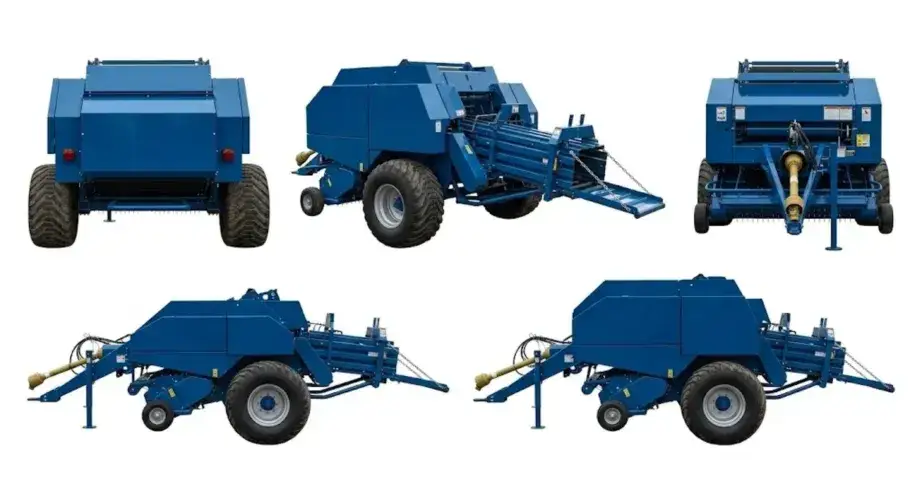
9YF series square baler lineup showing all five models from the compact 9YF-1700 entry model at 40 horsepower minimum to the 9YFS-2-2 flagship with dual shredder and negative-pressure fan system at 99 horsepower minimum — the price difference across the range reflects pickup width shredder stage count fan system and monitor equipment with each feature adding a measurable price increment above the previous model

モデル 主な特徴 Min HP (PTO) Indicative New Price
9YF-1700 1,700mm pickup · spring-tooth · standard 40馬力 $8,500–$12,000
9YF-1900 1,900mm pickup · spring-tooth · standard 50HP $10,000–$14,500
9YF-2200 2,200mm pickup · spring-tooth · standard 50HP $12,500–$18,000
9YF-2200S 2,200mm · hammer-claw · single shredder · touchscreen 99馬力 $20,000–$28,000
9YFS-2.2 2,200mm · hammer-claw · dual shredder · fan system 99馬力 $26,000–$40,000

Price ranges are indicative 2025 U.S. market estimates for the 9YF series. Actual pricing varies with dealer location, shipping and any optional accessories. Contact us directly for a current price on your specific model and configuration.

What Drives Price Differences Between Models

The Four Feature Upgrades and What Each Adds

ピックアップ幅

Going from 1,700mm to 2,200mm pickup adds approximately $2,000–$4,000 to the base machine cost. The wider pickup covers more field per hour and reduces total baling time, but requires either the same or slightly higher tractor HP. For operations above 100 acres, the wider pickup typically pays back through labour time saved within 2–3 seasons.

ハンマークローピックアップ

The upgrade from spring-tooth to hammer-claw pickup — which occurs between the 9YF-2200 and 9YF-2200S — is bundled with the shredder mechanism on all 9YF models. You cannot add hammer-claw pickup without also gaining the shredder. The combined pickup-plus-shredder upgrade from 9YF-2200 to 9YF-2200S adds approximately $7,000–$12,000 and requires jumping from a 50HP minimum tractor to a 99HP minimum tractor.

Dual Shredder + Fan System

The 9YFS-2.2 adds a second shredder stage and the negative-pressure fan cleaning system over the single-shredder 9YF-2200S. This upgrade adds approximately $5,000–$10,000 to the machine cost. The fan system is the relevant purchase decision specifically for export-grade hay or premium horse hay where ash content is a measurable quality criterion.

Touchscreen Monitor

The handheld colour touchscreen monitor standard on the 9YF-2200S provides real-time bale cycle feedback, density monitoring and fault indication. For operators baling mixed crops with variable density conditions, this operational visibility reduces missed knots and inconsistent density that go undetected until bales are already in the field. Estimated value contribution: $1,500–$3,000 toward the overall machine price difference.

Used Square Baler Market: What to Expect
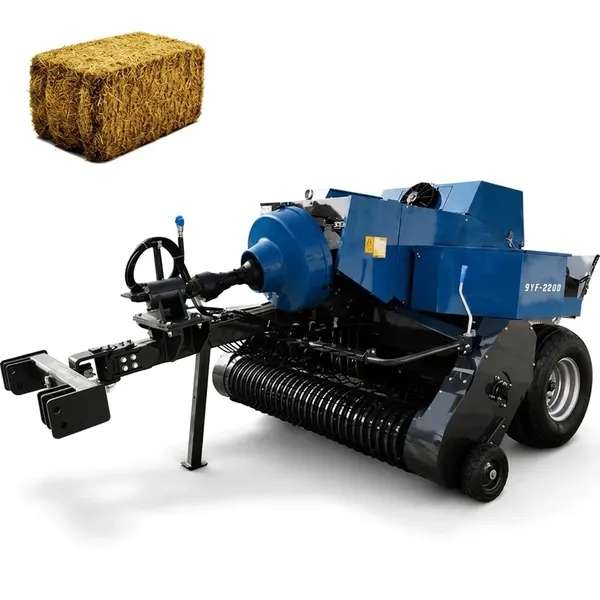
9YF-2200 square baler showing the mid-range model most commonly found on the used baler market with 2200mm spring-tooth pickup and 50 horsepower minimum tractor requirement — used 9YF models retain reasonable market value because of their straightforward knotter mechanism and widely available replacement parts but buyers should conduct a full knotter inspection and run a 20-bale test before committing to any used square baler purchase

Used Machine Value by Age

Small square balers depreciate at a meaningful rate in the first 3–5 years and then hold value relatively well into the 8–15 year range if properly maintained — because the knotter mechanism, plunger and chamber are designed to last substantially longer than the initial amortisation period with appropriate servicing. A 5-year-old 9YF-2200 in good condition with documented maintenance typically trades at 50–65% of its original new price. A 10-year-old machine in good condition may trade at 30–40% of new price.

Age of Machine Typical Value as % of New Key Inspection Priority
1–3 years 70–85% Confirm warranty status; verify bale count if available
4~6歳 50–65% Full knotter inspection; bill hooks, knife, cam follower
7–10 years 30–45% Chamber wear strips; gearbox oil and bearing condition; frame weld inspection
10–15+ years 15–30% Full mechanical inspection; budget for major service; parts availability check

The Used Machine Risk Premium

Buying a used square baler always carries an unknown repair cost that the purchase price does not reveal. A machine that looks good in photos may have a worn cam lobe, a chipped bill hook or a gearbox with degraded oil — none of which are visible without a thorough inspection and field test. Budget an additional $500–$1,500 for a pre-purchase inspection and a knotter parts refresh as a standard assumption when evaluating used machines. A used baler priced at $6,000 with a $1,200 inspection and parts budget is a real cost of $7,200 — compare this carefully against a new entry-level model at $9,000 with a full warranty.

True Cost of Ownership: The Numbers Beyond Purchase Price

Annual Operating Cost Breakdown

コストカテゴリー Entry Model (9YF-1700) Mid-Range (9YF-2200) Shredder Model (9YF-2200S)
Depreciation (15-yr straight line) $600–$800/yr $900–$1,200/yr $1,500–$2,000/yr
Annual maintenance and parts $200–$500/yr $350–$700/yr $600–$1,200/yr
Twine cost (3,000 bales/yr) $900–$1,500 $900–$1,500 $900–$1,500
Insurance $80–$150/yr $120–$220/yr $180–$320/yr
Total annual ownership cost $1,780–$2,950 $2,270–$3,620 $3,180–$5,020

Estimates assume average use of 3,000 bales per season, covered storage, well-maintained condition and no major unplanned repairs. Tractor fuel is not included — add approximately $0.08–$0.15 per bale for tractor fuel depending on engine size and local fuel prices.

Owning vs Custom Baling: The Break-Even Calculation

When Does Buying Beat Custom Baling?

Custom baling rates in the U.S. for small square baling range from $0.40–$0.80 per bale or $30–$60 per acre depending on region and operator. At $0.55 per bale, an operation producing 5,000 bales per year spends $2,750 on custom baling. At a total annual ownership cost of $2,500 for a 9YF-1700, the break-even point is approximately 4,500–5,000 bales per year — a threshold many modest hay operations clear within 2–3 cuttings of 80–100 acres.

However, the economic case for ownership includes a benefit that the pure cost comparison misses: scheduling control. A custom baling operator is not available on your schedule — they serve multiple customers and may not be available the afternoon your hay reaches ideal moisture. The cost of baling hay at 20% moisture because the custom operator was not available on the correct day is often larger than the cost difference between owning and using custom baling. Operations that have experienced a heated hay lot due to scheduling delays with a custom operator almost universally purchase their own machine at the first opportunity.
Break-Even Estimate by Operation Size
Under 80 acres / year: Custom baling typically remains the lower-cost option when the pure cost comparison is used. Buy only if scheduling reliability or the premium market opportunity justifies the ownership cost at lower volume.
80–150 acres / year: Break-even zone. A 9YF-1700 or 9YF-1900 ownership cost typically matches or beats $0.55/bale custom rates at this acreage. Scheduling control provides additional value.
150+ acres / year: Ownership is typically the clear economic choice. At $0.55/bale, 7,500 bales per year generates $4,125 in custom baling cost — well above the annual ownership cost of any standard model in the 9YF range.

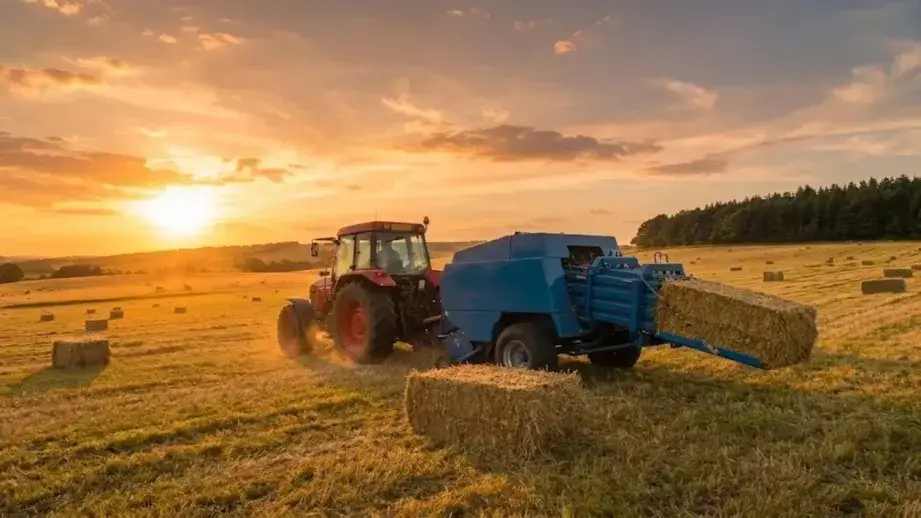
small square bales produced by the 9YF series showing the 460 by 360mm format that commands premium prices in the horse and retail markets — a well-managed small square baling operation producing 5000 to 8000 bales per season at horse hay prices generates enough revenue to recover the machine purchase cost within 2 to 4 seasons

Can the Right Baler Pay for Itself Through Custom Work?

Offering custom baling services to neighbouring farms is one of the most effective ways to accelerate machine payback. A 9YF-2200 producing 2,000 bales per season for the owner and 3,000 bales per season for neighbours at $0.55 per bale generates $1,650 in custom income — enough to cover most of the annual maintenance cost and a meaningful portion of the depreciation. Custom work also keeps the machine in active service, which is better for mechanical condition than seasonal idle storage.

The practical limit of custom baling income is the baler production capacity in the available seasonal window and the operator time available. A single-operator small square baler in a 6–8 week peak season can realistically complete 15,000–25,000 bales total across own and custom work with good scheduling. At $0.50–$0.60 per bale on custom work, this represents $7,500–$15,000 in annual custom income — which changes the economics of machine ownership substantially even for modest acreage operations.

Where to Buy: Dealer, Direct and Auction Compared
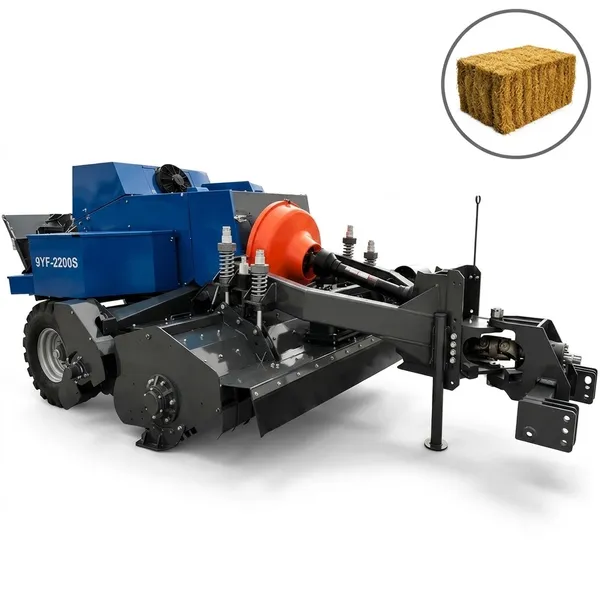
9YF-2200S square baler with single shredder and touchscreen monitor showing the mid-to-upper range model available from authorised dealers and direct from manufacturer — dealer purchase provides local service support and parts availability while direct manufacturer purchase typically offers more competitive pricing for well-established models with known specifications

Direct from Manufacturer / Importer

Typically the lowest purchase price for the same specification. The trade-off is proximity of service support — technical questions and parts sourcing go through the manufacturer or a national distributor rather than a local dealer. For buyers who are comfortable with their own maintenance and troubleshooting capability, direct purchase from the manufacturer offers the best per-dollar value on the machine.

Local Farm Equipment Dealer

Higher purchase price than direct but provides local service access — a technician who can come to your farm during the baling season, a parts counter with common wear items in stock and the ability to inspect the machine in person before purchase. For first-time baler buyers or operations without in-house mechanical capability, the dealer service premium is often worth the additional cost.

Farm Auction (Used)

Farm auctions (live and online platforms like Purple Wave, Machinery Pete and Ritchie Bros.) offer used square balers at market-driven prices without dealer markup. The risk: limited inspection opportunity, no warranty and no recourse on hidden faults. Attend and inspect in person, bring the operator manual for the specific model and run the knotter by hand if possible before bidding. Do not bid from photos alone on a complex mechanism like a square baler.

PTO and Driveline Specifications for Square Baler Setup
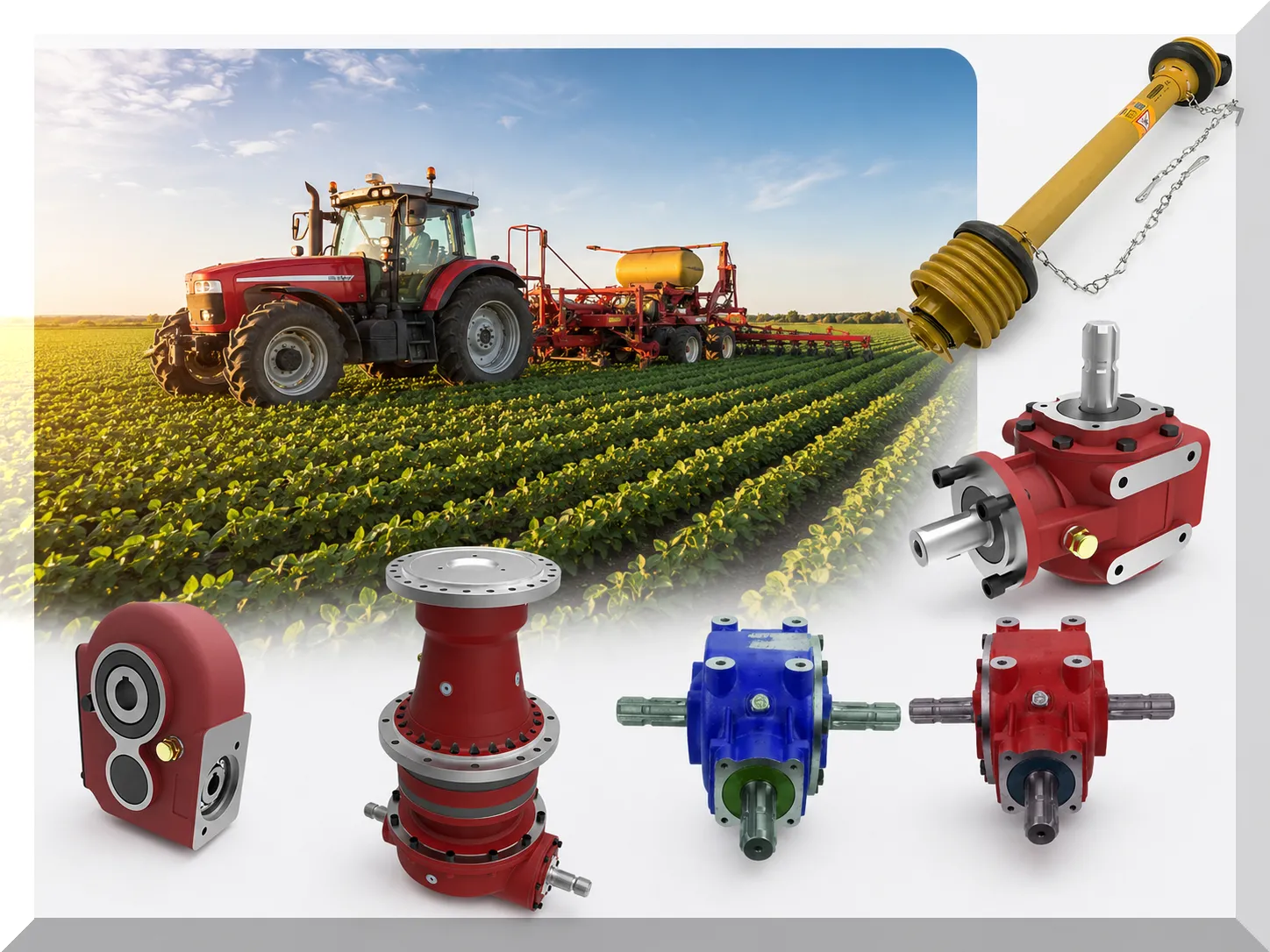

agricultural gearbox and PTO shaft component specifications for connecting the 9YF series square balers to tractors across the 40 to 140 horsepower range covering all five models in the lineup

Gearbox torque ratings and PTO shaft standards for all 9YF models: 農業用ギアボックスおよびPTOシャフトの仕様

The correct PTO driveshaft length and CV joint specification is part of the total machine setup cost — an incorrectly sized shaft causes premature gearbox wear. Full specifications for all power classes: PTOドライブシャフトとCVジョイントのサイズガイド.

Frequently Asked Questions — Square Baler Cost

Is a cheap Chinese-made square baler worth buying?+
The question of value in entry-level imported square balers comes down to parts availability and manufacturer support, not just purchase price. A $6,000 square baler that produces reliable bales for 10 years with readily available parts is good value. The same machine that requires custom-made parts or is no longer supported by the manufacturer after 3 years represents a high hidden cost. Before purchasing any low-price imported baler, verify that the importer or manufacturer can supply knotter bills, knife blades, cam followers, twine guides and PTO shafts within a reasonable lead time — these are the parts that fail in service and must be available during peak baling season. The 9YF series from foragebaler.com maintains parts availability as a core commitment alongside the machine itself, which is a substantive part of the value at the purchase price.
How much does baler twine cost per season?+
Baler twine for small square balers uses approximately 4–6 metres per bale (two ties per bale, 2–3 metres per tie). At a mid-range twine cost of $0.25–$0.35 per bale for polypropylene twine purchased in volume, a 5,000-bale season costs $1,250–$1,750 in twine. Premium twine (higher knot strength for high-density bales) costs more per metre and raises this to $0.35–$0.50 per bale. Buying in full-pallet quantities (typically 20–24 spools per pallet) typically saves 10–20% versus buying individual spools at the farm supply store. Budget $1,000–$2,500 per season in twine depending on volume and quality class.
What financing options are available for a new square baler?+
Several financing pathways are commonly used for agricultural equipment purchases in the $10,000–$40,000 range. Farm Credit Services (FCS) and AgDirect offer agricultural equipment loans specifically designed for this purchase category, with competitive rates and flexible terms for qualifying farm operations. Many equipment dealers offer manufacturer-backed financing programs with promotional rates. The USDA Farm Service Agency (FSA) Microloan program extends up to $50,000 with simplified application for small farm operations. For the smallest operations, farm equipment financing through local agricultural banks with an existing relationship is often the most accessible path. Compare the effective annual percentage rate — not just the monthly payment — across financing options, and verify whether the loan allows early payoff without penalty if the machine pays back faster than the loan term.
Is the 9YF-2200S shredder model worth the extra cost over the 9YF-2200?+
The 9YF-2200S is worth the additional cost in two specific scenarios. First, if your primary baling crops include corn stover, sorghum stalks, cotton residue or late-season thick-stemmed alfalfa — the shredder provides a measurable bale density improvement that translates to more bale weight per acre and better shape stability in storage. Second, if you need the hammer-claw pickup for mat-contact crop recovery (paddy rice straw, lodged wheat, post-combine traffic areas) — and this pickup requires the shredder as a package on the 9YF-2200S. For standard alfalfa, grass hay and wheat straw in clean elevated windrows, the 9YF-2200 at 50HP minimum provides equivalent bale quality without the additional machine cost or the 99HP tractor requirement. The shredder upgrade is a clear yes when the crop requires it, and unnecessary expense when the crop does not.
How many acres do I need to justify buying a 9YF-2200 vs a 9YF-1700?+
The 9YF-2200 costs approximately $3,000–$5,000 more than the 9YF-1700 and offers a 300mm wider pickup — 2,200mm vs 1,700mm — which translates to approximately 23% fewer passes per acre at the same forward speed. The time saving is the primary value: at 150 acres per season, the 9YF-2200 saves approximately 8–12 hours of baling time per season compared to the 9YF-1700 (depending on field layout and typical forward speed). At an imputed operator value of $25–$40 per hour, this is $200–$480 in time value per season — suggesting the $3,000–$5,000 price premium would take 6–25 seasons to pay back in time savings alone. However, for operations regularly baling above 80–100 acres in tight weather windows, the faster field coverage of the 9YF-2200 provides a meaningful practical benefit in completing the field before moisture conditions change. The wider model is justified more by operational flexibility in time-limited baling conditions than by pure cost arithmetic.
Can I write off a square baler purchase on my taxes?+
Agricultural equipment purchases are generally eligible for Section 179 immediate expensing or bonus depreciation under current U.S. tax code, allowing qualifying farm businesses to deduct the full purchase price in the year of purchase rather than depreciating it over the asset life. This can significantly improve the after-tax economics of a baler purchase in a profitable year. The specific treatment depends on your business structure, income level and current tax year rules — consult with a tax professional familiar with agricultural operations before making the purchase decision based on tax treatment, as the rules change periodically. As a general principle, the after-tax cost of a $15,000 baler for a farm in the 25–30% effective tax bracket is approximately $10,500–$11,250 when immediate expensing is available — which changes the break-even acreage calculation meaningfully in favour of ownership.
What is the resale value of a 9YF square baler after 10 years?+
A well-maintained 9YF-2200 with documented service history, complete manuals and good mechanical condition at 10 years old typically commands 30–40% of its original new price in the secondary market — approximately $4,000–$6,000 for a machine that cost $13,000–$15,000 new. The key factors that preserve resale value are: comprehensive maintenance records (annual service, pre-season knotter rebuilds), original parts used for all replacements, and a clean visual condition with no bodywork damage or frame rust. Machines with missing guards, bent pickup fingers, cracked frames or undocumented modifications sell at a significant discount to the same-age machine in documented condition. For purposes of the total cost of ownership calculation, the residual value at year 10 effectively reduces the net depreciation cost from the purchase by $4,000–$6,000 — a meaningful input into the long-term economics of ownership.
Are there any hidden costs I should budget for in the first year of ownership?+
First-year ownership typically involves several one-time costs beyond the machine purchase price that are worth budgeting in advance. A complete first-season twine supply: $800–$1,500 for 20–25 spools depending on volume. A PTO driveshaft if not included with the machine: $200–$600 depending on tractor hitch-to-PTO distance. A good probe-type hay moisture meter if not already owned: $80–$200. A digital platform scale for bale weight calibration: $100–$180. Spare knotter parts (knife blades, 2 sets; a spare bill hook pair): $60–$150. A grease gun and the correct grease specification: $25–$50. Total first-year non-machine costs: $1,265–$2,680. Planning for these before purchase rather than discovering them one at a time after the machine arrives avoids the frustrating experience of being ready to bale and missing a key consumable on the first day of operation.

Get a Current Price on the Right Model for Your Operation

All five models in the 9YF square baler range are available with current pricing. Tell us your tractor HP, primary crop and annual acreage and we will confirm which model fits and provide a current quote.

編集者: Cxm