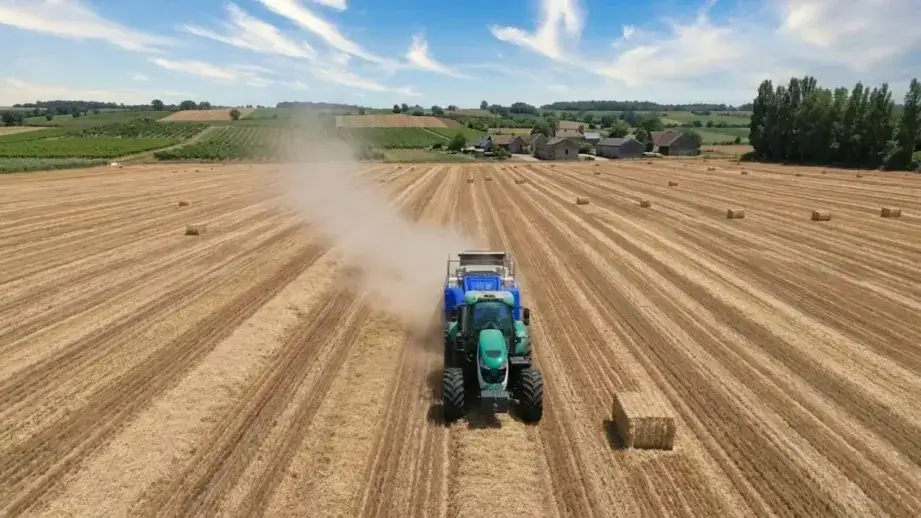
The Two Controls That Determine Bale Weight
Plunger Load — The Density Control
The plunger load adjustment controls how much compression force the plunger applies to the material before the bale reaches its trip length and the knotters engage. Higher plunger load means the plunger pushes harder, compressing more material into the same bale length — producing a denser, heavier bale. Lower plunger load means less compression per unit length — a lighter, less dense bale of the same dimensions.
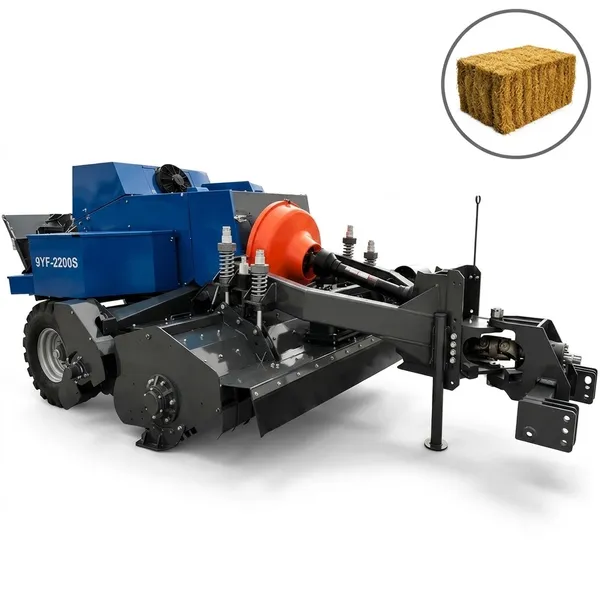
On most small square balers, the plunger load is adjusted via a tension spring arrangement on the bale chamber walls — tightening the spring increases the force required to advance material through the chamber, which in effect increases the density before the trip fires. The operator manual for your specific 9YF model gives the adjustment method and the range available. This is the setting to change when your bales need to be heavier or lighter without changing bale length.
Star Wheel Trip Position — The Length Control
The star wheel is a toothed wheel that counts incoming crop material by rotating as material pushes past it. When the star wheel completes a set number of rotations, it trips the knotter mechanism and the bale is tied off. Adjusting the trip position — how many rotations of the star wheel are required before the trip fires — changes the bale length. More rotations before trip = longer bale = heavier bale per unit bale. Fewer rotations = shorter bale = lighter bale per unit bale.
Bale length affects total bale weight because a longer bale simply contains more material. Both the plunger load and the star wheel position work together to determine the final bale weight: you can reach the same target weight with multiple combinations of density setting and bale length. In practice, most operators set bale length first (to match market preferences for bale dimensions) and then adjust plunger density to reach the target weight at that length.

How Density Affects Weight, Shape Stability and Market Value
Light bales are easy to carry by hand — suitable for retail buyers who pick up individual bales and customers who handle hay without equipment. Lower density bales show more shape variation between units and can deform in tall stacks where lower bales carry the weight of those above. In very dry straw, a low-density setting produces the lightest possible bale for decorative and bedding markets.
The most commercially versatile weight range for most markets. Firm enough to retain rectangular shape through handling and stacking, light enough for single-person carrying in most conditions. The target range for horse hay retail, feed store supply and general small livestock markets. Both rope ties hold securely at this density without the knotter over-stressing the twine.
Maximum storage efficiency — more tonnes per unit of barn space, fewer bales per truckload for the same crop weight delivered. High-density bales are preferred in commercial operations where weight-based pricing is standard and manual handling is assisted by equipment. At very high density, verify that twine strength rating is adequate — over-dense bales can cause twine breakage at the knot point if twine is not rated for the compression load.
Retail Market Settings: Feed Store and Farm Stand Buyers
What Retail Buyers Expect
Feed store buyers and farm stand customers purchase small square bales by the unit — they pay per bale regardless of exact weight. In this market, bale appearance and a consistent, predictable weight are the quality signals that drive repeat purchases. A bale that looks firm, has neat rectangular corners, clean rope ties and feels satisfyingly solid in the hand signals quality to the retail buyer even before they open it.
The optimal retail setting in grass hay or straw typically produces bales in the 20–28kg range. Below 18kg, the bale can feel insubstantial for the price asked. Above 32kg, customers begin to struggle with carrying and the higher weight per bale may reduce impulse purchases at farm stands where customers carry bales to their car without a cart. For decorative straw specifically — pumpkin patches, farm market displays — the lighter end of the range (16–22kg) is often preferred because the customer is carrying and placing the bale by hand in display arrangements.
Setting for Retail Consistency
For retail operations, consistency matters as much as absolute weight. A feed store that stocks your hay prefers bales in a tight 2–3kg weight range over bales that range from 18–30kg from the same cutting. Consistent bale weight builds customer confidence — buyers who notice that your bales are predictably 23–25kg will pay a premium for that reliability. Calibrate your settings at the start of each cutting and weigh 10 consecutive bales across representative windrow sections before committing to the full field — this identifies setting adjustments needed to reach your target range before hundreds of bales are produced at the wrong weight.
Horse Hay Settings: What Equine Buyers Value

The equine market has specific weight preferences driven by daily farm management realities. Most horse boarding stable staff carry bales from storage to individual stalls by hand — a standard daily routine that becomes difficult if bales regularly exceed 30kg. The preferred weight range for most horse hay customers is 18–28kg, with 20–26kg being the most commonly requested range in direct-sale relationships.
Horse buyers also evaluate bale firmness — a bale that holds its shape after the rope is cut and spread on the stall floor stays tidy during the feeding period and reduces waste from horses spreading loose hay around the stall. At standard to slightly above-standard plunger density in grass or alfalfa, the bale retains its rectangular shape after rope removal and spreads evenly without collapsing into a loose pile.
For premium horse hay destined for performance horse or boarding barn buyers who test hay analytically, consistent bale weight per cutting also supports consistent moisture and quality documentation — a 24kg bale from the same field produced consistently throughout the season suggests a controlled, quality-conscious production process that builds buyer confidence.
Livestock and TMR Settings: Maximizing Density for Feed Efficiency
For commercial livestock operations using small square bales as a fiber source in total mixed rations (TMR) or as dry lot hay, higher bale density provides measurable economic benefits: more tonnes per unit of barn storage space, fewer bales per truckload for delivery, and less handling labor per unit of dry matter distributed. In these operations, bale weight per unit is not a handling concern because loader equipment is used for all bale movement.
Setting the plunger load to the maximum comfortable range for the crop type — typically producing 28–40kg bales in alfalfa or corn stover — maximises these benefits. Verify that your twine is rated for the density level you are producing: bale twine for small square balers is typically rated at 110–165kg knot strength; at high density in heavy alfalfa or corn stover, use twine at the higher end of the strength rating to prevent breakage at the knot under full bale compression load.
At very high density settings, the plunger frame and knotter drive mechanism are under higher peak loads. This does not damage a well-maintained machine in its rated crop range but does make the daily pre-session knotter inspection more important — worn bill tips that might tie reliably at standard density can begin missing at high density because the higher compression load changes the timing window for knotter engagement slightly.
Straw Bale Settings: Bedding and Decorative Markets
Wheat and barley straw baled for bedding, decorative display or garden mulch applications has different weight preferences than hay. Bedding straw for horse stall use is typically baled at moderate density — the bale needs to spread easily when the rope is cut and the straw shaken loose for stall preparation. Over-dense straw bales resist this shaking process and require more labor to distribute evenly. A density setting producing 16–22kg straw bales at standard wheat straw moisture is appropriate for bedding applications.
For decorative display straw — pumpkin patches, farm stands, holiday display — the target is a bale that looks full and attractive when stood upright, maintains its shape without support and can be picked up easily by one person. The 14–20kg range suits this market well. At very low plunger density, straw bales can feel insubstantial and may not hold their shape reliably when stacked — test a full pallet of bales at your intended density setting to verify that bales in the middle of the pallet (under load from above) maintain their shape over a 2–3 week display period.

How Crop Moisture Changes the Optimal Setting
Wetter Hay Weighs More Per Bale at the Same Setting
The same plunger load and star wheel trip position produces heavier bales in wetter crop than in drier crop. A bale length setting that produces 22kg bales in alfalfa at 15% moisture produces approximately 24–25kg bales in alfalfa at 19% moisture — because each bale contains the same compressed volume but more water weight. This is not a settings problem; it reflects the field condition.
The practical implication: if you are calibrating settings early in the morning when windrow moisture is higher from overnight humidity, the calibration bales will be heavier than bales produced in the afternoon when the same windrow has further dried. Calibrate your settings in conditions representative of the typical baling window for your operation — usually mid-afternoon in most hay-producing regions. Adjusting the star wheel to produce slightly shorter bales in wet conditions prevents the weight from climbing above your buyer target range.
The Moisture-Density Interaction in Different Crops
Grass hay at 18% moisture compresses differently from the same grass at 14% moisture — the higher moisture makes the stems more pliable, allowing the plunger to achieve slightly higher density at the same load setting. Corn stover shows a larger moisture-density interaction because the stem rigidity changes substantially between 14% and 20% moisture. For stover baling, calibrate settings at the moisture level you plan to maintain throughout the baling session rather than at the start of the pass when moisture may be higher from morning conditions.
Knotter Tension and Density: Why Both Must Move Together
When you increase the plunger density setting, the force on the rope at the knot point increases proportionally — the same rope ties a bale at higher compression load than it tied at lower compression load. If the rope tension in the knotter is not adjusted upward when the density increases significantly, the loop on the bill will slide before the knife cuts, producing a missed knot even on a knotter in perfect mechanical condition.
The rule: after any significant plunger density increase (more than one step change on the spring adjuster), verify that the knotter tension setting is still within the appropriate range for the new density. Check both knotters independently — equal tension on both sides remains the requirement regardless of the absolute setting. The simplest verification is to pull the rope ties on five consecutive bales at the new density and confirm that the knots tighten when pulled rather than sliding.
PTO Shaft and Gearbox Reference

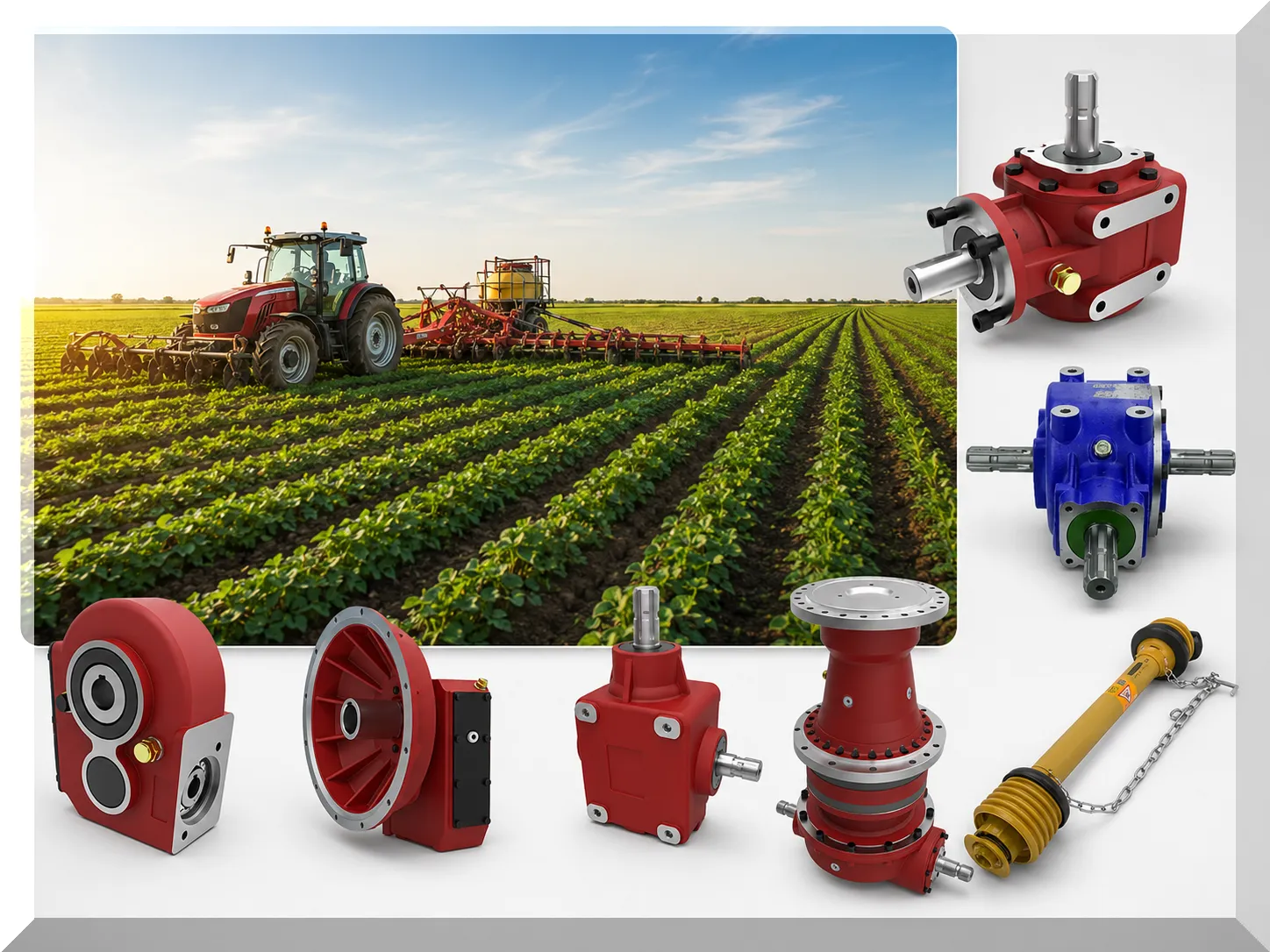
Gearbox torque ratings and PTO shaft standards: 農業用ギアボックスおよびPTOシャフトの仕様
Driveshaft length, CV joint angle and slip clutch specifications for balers in the 40–140HP range: PTOドライブシャフトとCVジョイントのサイズガイド.
Verifying Your Settings: The First-10-Bale Calibration Run

Every baling session on a different field, different cutting stage or different weather condition warrants a calibration run before full production. The procedure is simple: set the machine, bale a representative 50–80m windrow section at normal forward speed, stop and weigh at least 5 consecutive bales (10 is better for statistical confidence). Average the weights. If the average is within your target range and the knots pass the pull test, proceed to full production. If the average is outside your target range, adjust one variable (plunger load or star wheel position) by one increment, run another 5 bales and recheck.
Change one variable at a time. Adjusting both the plunger load and the star wheel simultaneously makes it impossible to know which change produced the weight result — making further adjustments a trial-and-error process rather than a systematic calibration.
The calibration run also verifies bale shape: a correctly set bale should hold its rectangular cross-section after ejection from the chamber. Bales that bow or show a banana shape indicate either a non-uniform windrow feed or a plunger that is applying uneven pressure across the chamber width — a mechanical issue rather than a settings issue that requires inspection before the full field run.
Frequently Asked Questions — Square Bale Density and Length Settings
Get the Right Square Baler for Your Market
Five 9YF models — from the 40HP compact 9YF-1700 to the fan-equipped 9YFS-2.2 — all producing the same 460×360mm format with adjustable density and length. Tell us your market and tractor HP and we will recommend the right model.
アメリカ・エバーパワー・フォレージ・ベーラー・イクイップメント社 · 1401 21st ST STE R, Sacramento, CA 95811
Editor:Cxm