Troubleshooting Guide · 9YQ Net Wrap System · Updated August 2026
Round Baler Net Wrap Problems
Net wrap faults on a round baler are production-stopping events — a bale that exits the chamber without complete net coverage cannot be safely ejected or stored. The five most common net wrap problems on the 9YQ series are: not feeding, breaking during application, applying off-center, knife not cutting cleanly、 そして unraveling after ejection. Each has a specific cause and repair path. This guide covers all five in sequence with field diagnosis steps and repair procedures.
Covers: complete fault diagnosis table · repair steps for each fault · knife blade replacement schedule · net roll tension calibration · preventive maintenance checklist
5 Net Wrap Faults — Quick Reference
1. Net not feeding → roll empty or holder not engaged
2. Net breaking mid-wrap → tension too high or damaged roll
3. Net off-center → roll loaded incorrectly or spreader bar bent
4. Knife not cutting → dull blade or debris in knife track
5. Net unraveling after ejection → too few wraps or cut not clean
How the 9YQ Net Wrap System Works — Component Overview
Understanding the net wrap mechanism sequence prevents incorrect diagnosis and unnecessary component replacement. The system operates in three phases after the bale-full sensor triggers:
1
Arm Extension Phase: The wrap arm mechanism extends toward the bale chamber inlet. This arm positions the net leading edge at the correct entry point for the rotating bale to grip and pull the net off the roll.
2
Net Wrap Phase: The rotating bale pulls the net from the roll. The net roller applies controlled tension (from the roll holder spring or brake system). The bale rotates the specified number of times while the net is applied — typically 2.5–3.0 full rotations for standard grass hay bales.
3
Cut and Retract Phase: After the specified number of rotations, the knife blade engages the net between the roll and the bale, cutting the net cleanly. The wrap arm retracts. The bale chamber opens and the bale ejects.
A fault at any phase produces a specific observable symptom. Diagnosing which phase failed determines the correct repair approach.
Complete Fault Diagnosis Table
| 症状 |
最も可能性の高い原因 |
Secondary Causes |
First Check |
| Net does not feed at all |
Empty roll or roll holder not properly engaged with the holder pins |
Wrap arm did not fully extend; net leading edge tucked back under roll |
Open the net wrap door. Inspect roll. Pull the leading edge of net to confirm it is free and 80–100mm is exposed for the bale to grip. |
| Net breaks during application |
Roll brake/tension too high, creating more tension than net tensile strength |
Damaged or partially torn net roll from moisture; debris wedged in net path |
Reduce roll brake tension by one position. If still breaking, inspect roll for moisture damage (dark wet sections at the roll edge). |
| Net applies off-center on bale |
Roll loaded off-center on the roll holder — roll is not fully seated against both side plates |
Spreader bar bent or misaligned; roll width narrower than bale chamber width |
Confirm roll is pushed fully inward on the holder until both flanges contact the side plates. Reposition and retry. |
| Knife does not cut net |
Dull knife blade — blade no longer cuts polymer net cleanly under operating tension |
Hay debris or a crop stem wrapped around knife actuator preventing engagement; knife actuator spring worn |
Inspect knife blade edge with baler stationary and PTO off. Run fingertip across blade — a sharp blade has a fine uniform edge; a dull blade shows visible rounding or notching. |
| Net unravels from ejected bale |
Insufficient wrap cycles — too few rotations before knife fires |
Knife cut not clean (partial cut leaving a weak point); bale ejected before arm fully retracted |
Increase wrap count by one rotation in the operator menu. Inspect the cut edge on a sample of net — a clean cut leaves a straight transverse edge; a partial cut leaves a ragged, angled tear. |
Fault 1: Net Wrap Not Feeding
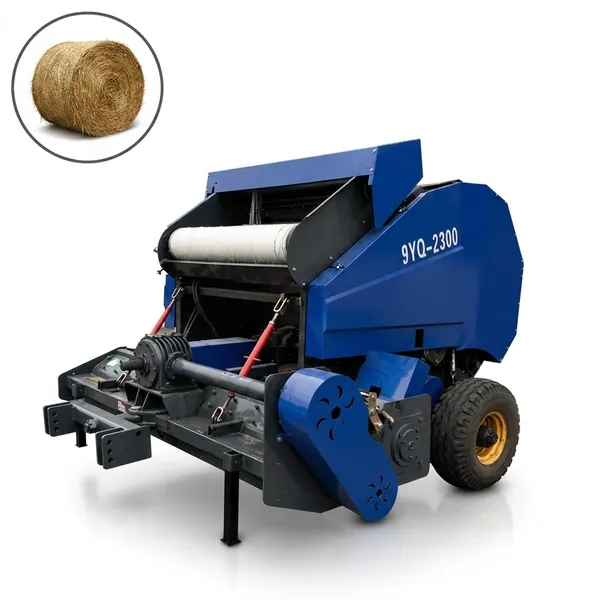
Cause A — Empty Roll: The simplest cause. Net roll runs out during a session. The wrap arm extends but no net is available to feed. Confirm by opening the net wrap compartment door and observing the empty core holder. Load a fresh roll, pull 80–100mm of leading edge through the net guide and position it at the entry slot.
Cause B — Leading Edge Tucked Under Roll: After the previous bale was wrapped and cut, the remaining leading edge of net on the roll may be pressed against the roll surface by door closing force or gravity. When the wrap arm extends for the next bale, this edge is not free for the bale to grip. Open the door, locate the leading edge and pull 80–100mm free.
Cause C — Wrap Arm Mechanism Not Extending: The wrap arm is driven hydraulically or mechanically from a PTO cam. If the arm does not fully extend to the bale inlet position, the net leading edge is not presented correctly. Inspect the arm linkage for a broken return spring, bent arm or hydraulic connection fault (on hydraulic systems). Operate the wrap function manually with the machine stationary and observe the full arm extension travel.
Fault 2: Net Wrap Breaking During Application
Cause A — Roll Brake Tension Too High: The roll brake or friction pad applies back-pressure to the roll during feeding, which creates the net tension needed for the wrap to apply tightly around the bale. If the brake tension exceeds the net tensile strength — which decreases when the net is slightly damp or is a lighter-weight roll than normal — the net breaks. Reduce brake tension by one setting at a time and test with a new roll. For standard 9YQ net wrap rolls: brake tension should be at the minimum setting that still applies the net firmly without sagging loops visible on the bale face.
Cause B — Moisture-Damaged Net Roll: Net wrap rolls stored outdoors or in a damp shed absorb moisture into the polyethylene fibres over time. Wet fibres have lower tensile strength than dry fibres — a roll that performed correctly when purchased may break at the same brake tension after a wet storage period. Inspect the roll — moisture-damaged net typically shows dark discoloration at the roll edge and a slightly tacky feel. Replace with a dry roll from covered storage.
Cause C — Debris in Net Path: Hay stems, twine fragments from previous bales or accumulated field debris can wrap around the net guide rollers or obstruct the feed path, creating a sudden tension spike that breaks the net. Inspect and clean all guide rollers and the net entry slot before each session and after any net break.
Fault 3: Net Wrap Applying Off-Center
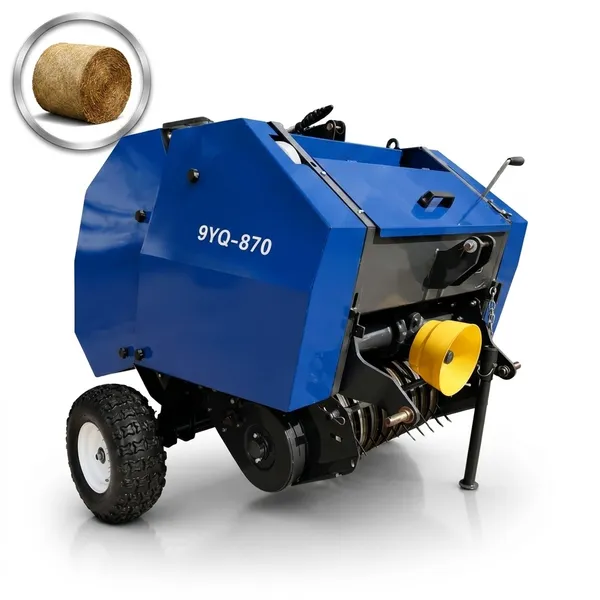
Cause A — Roll Not Fully Seated on Holder: The roll holder has two end flanges or pins that locate the roll centrally in the bale chamber width. If the roll is loaded with one or both flanges not fully engaged, the roll can shift sideways during the wrap cycle, producing off-center coverage. Correct loading: push the roll fully inward until both end flanges are fully engaged with the holder side plates, then confirm the roll rotates freely without lateral movement.
Cause B — Spreader Bar Damaged or Misaligned: The spreader bar guides the net across the full bale width as it feeds. A bent spreader bar or one with a missing guide end allows the net to bunch toward one side. Inspect the spreader bar with the machine stationary: it should be straight and parallel to the bale chamber axis. Straighten any bend with a pipe wrench (if minor) or replace if severely deformed.
Cause C — Non-Standard Net Roll Width: Net rolls must match the bale chamber width specification for the specific 9YQ model. A narrow-width roll (intended for a smaller baler) loaded in a wider bale chamber will not cover the bale cylinder to both edges. Confirm the net roll width matches the chamber specification in the operator manual before purchasing consumables.
Fault 4: Knife Not Cutting Net — Blade Inspection and Replacement
The net wrap knife is the most frequently replaced wear item in the net wrap system. The blade must cut through polyethylene net under the tension applied by the rotating bale in a single, fast engagement. A blade that is not sharp enough fails to sever the net — the bale continues to rotate while trailing the uncut net, eventually stalling the mechanism or ejecting with net attached to the following bale.
Annual Blade Replacement Standard
Replace the knife blade at the start of each baling season regardless of apparent condition. Net wrap knife blades cost $15–$40 per blade and prevent the production and quality losses from failed cuts. Annual replacement on a 1,000-bale season operation: $15–$40 per year versus multiple failed bale events per session with a dull blade.
Mid-Season Blade Inspection
At the midpoint of the season (approximately 500 bales): inspect the blade edge with the PTO off and implement isolated. Run a fingernail across the blade edge — a serviceable blade shows a continuous fine edge; a blade due for replacement shows visible rounding, notching or flat sections. Replace at this point rather than at failure.
Knife Actuator Debris
The knife actuator mechanism (the linkage that swings the blade into the cut position) can be jammed by hay stems, old net fragments or crop material. Inspect the actuator travel with the machine stationary — the knife should swing freely through the full engagement arc without resistance. Clear any debris from the actuator path and from the knife mounting channel.
Fault 5: Net Unraveling from Ejected Bale
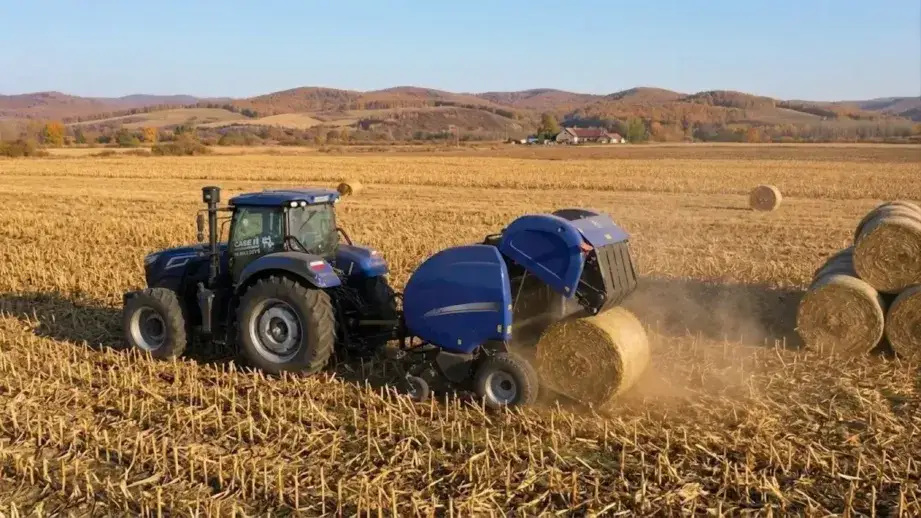
Cause A — Insufficient Wrap Cycles: The operator or factory setting specifies the number of bale rotations during net application. If set too low (fewer than 2.5 rotations), the net leading edge overlaps by less than one full revolution — insufficient to lock the net tail under the following layer. Increase the wrap count in the operator display or factory adjustment by 0.5 rotations and test.
Cause B — Partial Knife Cut: A partial cut leaves a ragged edge rather than a clean transverse separation. The ragged edge has a tab that the first ground contact unravels — the net peels from the bale as it rolls to its storage position. Inspect the net edge on any unraveling bale: a clean cut shows a straight edge; a partial cut shows an angled tear with a pointed tab. Replace the blade.
Cause C — Bale Ejected Before Arm Retracted: If the arm retraction sequence is slower than the door opening sequence (a timing issue on older machines or after spring wear), the arm may still be partially extended when the bale begins to roll out, catching the net and pulling it. Inspect arm retraction speed — it should complete before the bale chamber door reaches full open position.
Net Roll Tension Calibration Procedure
Net roll tension (the back-pressure applied by the brake or friction pad) determines wrap tightness. Too little tension produces a loose wrap that slides on the bale face during storage — gaps allow moisture penetration. Too much tension breaks the net. The correct tension setting varies by net type, roll diameter (tension increases as roll diameter decreases with use) and bale crop.
Standard Tension Calibration Method
1.Set the brake tension to the middle position on the adjustment scale.
2.Bale one complete bale and observe the wrap. The net should apply flat against the bale surface with no sagging loops visible between the bale cylinder wall and the net face.
3.If sagging loops are visible: increase tension by one position. If the net breaks during application: reduce tension by one position.
4.The correct tension is the minimum setting that produces a flat, non-sagging wrap without breakage.
5.Re-calibrate when switching to a new net roll brand or weight specification — different net materials have different tensile strength characteristics.
Annual Net Wrap System Maintenance Checklist
| アイテム |
Frequency |
Specification / Action |
| Knife blade |
Annual (pre-season) |
Replace regardless of apparent condition. Use manufacturer-specified blade only. |
| Knife actuator travel |
Pre-season + mid-season |
Clear debris from actuator channel. Confirm spring force is sufficient — actuator should snap into position without resistance. |
| Roll holder pins and flanges |
プレシーズン |
Inspect pins for wear or bending. A worn pin allows lateral roll movement that causes off-center application. Replace worn pins immediately. |
| Spreader bar alignment |
プレシーズン |
Confirm straight, parallel to bale chamber axis. Any visible bend: straighten or replace before the season. |
| Net guide rollers |
Pre-season + after each net change |
Clear accumulated crop fibres from rollers. Rollers should spin freely by hand. A seized roller causes net path friction that increases break risk. |
| Wrap arm mechanism |
プレシーズン |
Grease arm pivot points. Confirm full extension and retraction travel with machine stationary. Arm should complete full travel in under 3 seconds. |
| Net roll storage |
Year-round |
Store net rolls in a covered, dry location off the ground. Moisture-damaged rolls are the most common cause of in-season net breakage. Unused rolls opened mid-season should be stored with the open end sealed with plastic bag. |
PTO Drive Faults That Cause Net Wrap Timing Problems
Net wrap timing faults are not always caused by the wrap mechanism itself. The wrap arm extension, wrap count and knife engagement are all timed to the PTO cam cycle — when the PTO speed fluctuates below the rated 540rpm (due to insufficient tractor HP, a worn driveshaft CV joint or a slipping PTO clutch), the cam timing shifts relative to the intended cycle. This can cause the knife to fire early (before sufficient wraps), late (after too many wraps) or with insufficient force (partial cut). Before replacing wrap mechanism components for a timing-related fault, verify that the tractor is maintaining 540rpm PTO speed consistently through the baling cycle. PTO shaft CV joint condition guide: PTO driveshaft maintenance and CV joint inspection guide for round baler timing faults.
Frequently Asked Questions — Round Baler Net Wrap Problems
Why does my net wrap keep breaking at the start of each bale?+
Net wrap breaking consistently at the start of the wrap cycle — within the first half rotation of the bale after the net grips — is typically caused by roll brake tension that is too high for the net specification. The bale grips the net leading edge and begins to pull. If the brake resists with more force than the net can sustain, the net breaks at the bale-roll junction before any useful wrap is applied. Step one: reduce brake tension by one or two positions and test. Step two: if breakage continues at minimum brake tension, inspect the roll for moisture damage — dark edge discoloration, clumping of fibres or a tacky feel indicates moisture-weakened net. Replace with a fresh roll from dry storage. Step three: check whether the current net specification (weight per unit area) is appropriate for the bale diameter and crop — light-weight net rolls intended for small bale diameters (870mm) will break at the brake tension appropriate for larger diameter (1,950mm) bale wrap.
How many layers of net wrap are needed for outdoor storage?+
For outdoor storage of dry hay bales: 2 layers of net wrap is the standard specification — 2.5 bale rotations during wrapping ensures the net overlaps itself by at least one full layer over the entire bale cylinder. This provides the UV resistance and physical durability for 4–8 months of outdoor storage under normal weather conditions. For outdoor storage in high-UV environments (the Southwest US, high elevation), where the plastic degrades faster: increase to 3 layers (approximately 3.5 rotations). For silage bales intended for plastic film wrapping over the net: 1 layer is sufficient — the stretch film provides the primary weather barrier and the net is only needed to give the stretch film a surface to grip on the bale cylinder. Never use net-only wrapping (without stretch film) for silage — net alone does not provide the anaerobic seal required for silage fermentation.
Can I use any brand of net wrap in the 9YQ baler?+
The 9YQ series accepts standard net wrap rolls of the correct width for the bale chamber specification. Net wrap is a commodity product and multiple brands are compatible — the key specification is roll width (matching the bale chamber width) and roll weight/grade (heavier grade net provides more UV resistance and physical durability for long-term outdoor storage). The most common specification issue with aftermarket net is roll width that is slightly narrower than the bale chamber — producing incomplete end coverage on the bale cylinder. Verify roll width specification matches the chamber specification in the 9YQ operator manual before purchasing. For operations in high-humidity environments: UV-stabilised net with a minimum 12-month outdoor UV rating is preferable to standard (6-month rated) net.
How do I know when the net roll is about to run out?+
The remaining roll level can be estimated by the visible diameter of the roll through the net wrap compartment inspection window (if fitted) or by a brief inspection at each operational stop. Standard 9YQ net roll specifications: a 1,800m (1.97km) roll at 2.5 wraps per bale covers approximately 300–400 bales on a 9YQ-1250 (1,250mm bale diameter, approximately 3.93m circumference per bale rotation × 2.5 = 9.8m per bale). As the roll nears the end, the remaining visible core expands in proportion — when the cardboard core is visible through the remaining net, approximately 50 bales of net remain. Mark the floor or use a roll-counter if available. Keep one fresh roll in the tractor cab at all times to enable an immediate roll change without returning to the farm shed.
Why is the net wrap covering only one end of the bale and not the other?+
One-sided coverage with bare cylinder visible on the opposite bale end is the classic off-center loading symptom. The roll has drifted to one side during the wrap cycle because it was not fully seated on the holder when loaded. Remove the roll, inspect the holder pins and flanges for wear (a worn pin no longer locates the roll centrally), then reload the roll fully inward until both flanges engage. If the issue persists with correct loading, inspect the spreader bar — a spreader bar that is bent toward one end causes the net to migrate to that end during application, leaving the opposite end uncovered. Alternatively, if you are using net wrap from a different brand or specification, the roll end flanges may have a different diameter that does not engage correctly with the 9YQ holder — confirm roll specification compatibility.
Should I use net wrap or twine on a 9YQ round baler for outdoor storage?+
Net wrap is strongly recommended for any round bale stored outdoors for more than 30 days. The dry matter loss data consistently favours net wrap: twine-tied bales stored outdoors lose 15–25% DM over 6 months compared to 5–10% for net-wrapped bales in the same conditions. The financial saving of $4–$9 per bale over a season of outdoor storage far exceeds the net wrap material cost of $0.90–$1.50 per bale. Twine-tied bales are acceptable for: bales consumed within 2–4 weeks of production; bales stored indoors in a covered barn; operations in very dry climates (annual rainfall below 250mm) where outdoor weathering is minimal. For all other outdoor storage scenarios, net wrap provides a return on material cost that makes it the economically rational choice regardless of the bale market — cattle, horse or dairy.
My baler ejects the bale before the net is fully cut. What causes this?+
Premature ejection — the bale chamber door opens before the knife has completed the cut — is most commonly a sequence timing fault rather than a knife fault. The bale chamber door opening is triggered by the same control system as the knife engagement, and if these two signals are out of correct sequence, the door may open before or simultaneously with the knife engagement rather than after it. Check the following: (1) On hydraulic systems — confirm hydraulic pressure is sufficient for both the knife actuator and the door opener simultaneously; if pressure is marginal, one function may lag. (2) On mechanical cam systems — inspect the cam profile for wear that has shortened the dwell time between knife engagement and door release. (3) On electronic control systems — check for any fault codes in the operator display that indicate a sensor fault on the knife position confirmation switch. If the door is opening before the knife fires on every bale: this is a systematic fault requiring service investigation. If it only occurs on some bales: the knife is engaging but failing to cut cleanly (partial cut), and the controller interprets the cut as complete — replace the blade.
How do I remove old net wrap from the bale chamber rollers?+
Net wrap accumulation on the bale chamber rollers is a routine maintenance issue — net wrap strands that are not fully cleared from the chamber after bale ejection wind around the rollers over multiple bale cycles. Left uncleared, accumulated net wrap can seize a roller bearing, cause uneven bale formation or jam the chamber. Procedure: PTO off and tractor key removed before working inside the chamber. Open the bale chamber door fully. Use a long-blade knife or hook blade to cut through the accumulated net layers on each roller, then pull the cut sections free by hand. Work from the large-diameter rollers inward. Check the rollers for rotation — all rollers should spin freely after net removal. Net accumulation rate depends on the cleanliness of the knife cut: a sharp knife cutting cleanly leaves minimal net stub that can accumulate. A dull knife leaving long tails increases accumulation rate. Annual blade replacement reduces chamber roller accumulation significantly.
Experiencing a Net Wrap Problem Not Covered Here?
Describe the exact symptom and when it occurs in the bale cycle and our technical team will identify the cause and recommend the correct repair for your 9YQ round baler.
アメリカ・エバーパワー・フォレージ・ベーラー・イクイップメント社 · 1401 21st ST STE R, Sacramento, CA 95811
編集者: Cxm