
Why Dairy Alfalfa Is a Separate Market Category — Not Just Better Hay
Dairy nutrition is precision nutrition. A dairy cow producing 80+ lbs of milk per day is a high-performance ruminant whose ration must deliver precise energy density, protein quantity, protein quality, and fiber digestibility within narrow limits. Feed that fails any of these parameters directly reduces milk production, milk fat, or cow health — consequences the dairy operator measures in real-time through milk meter data and monthly milk quality reports. This tight feedback loop makes dairy operators among the most demanding hay buyers in the market, and it is exactly what drives the premium pricing structure.
The Dairy Alfalfa Specification Grid: What Every Number Means for Milk
| Specificatie | Minimum (milking cows) | Target (high-production) | Why it matters for milk |
|---|---|---|---|
| RFQ (Relative Forage Quality) | 150 | 165–185+ | Higher RFQ = higher dry matter intake and energy density; 10 RFQ points = ~0.5 lb milk/cow/day |
| ADF (zuur-detergentvezel) | <32% | <28% | Lower ADF = higher energy digestibility. ADF above 35% reduces NEL significantly below dairy requirements |
| NDF (Neutrale Detergentvezel) | <42% | <38% | NDF regulates rumen fill — high NDF limits dry matter intake. Must be balanced against the dairy cow’s minimum effective fiber requirement (~28% NDF from forages) |
| NDFD (30-hr NDF digestibility) | >48% | >52% | How digestible the fiber is — more important than NDF level alone. RFQ incorporates NDFD; RFV does not. This is why dairy buyers prefer RFQ over RFV |
| CP (Crude Protein) | >18% | 20–24% | High CP alfalfa reduces supplemental protein cost in the TMR. Every percent of CP in the hay offsets $0.05–$0.10/lb of protein supplement cost |
| ADICP (Heat-damaged protein, % of CP) | <10% | <7% | The fraction of crude protein bound to cell wall by heat — nutritionally unavailable to the cow even though it appears on CP analysis. High ADICP hay “tests well” but performs poorly in the cow |
Heat Damage (ADICP): Why Storage and Baling Decisions Destroy Protein Value
ADICP (Acid Detergent Insoluble Crude Protein) is the fraction of crude protein that has been chemically bound to cell wall material through the Maillard reaction — the same browning reaction that creates a crust on bread. In hay, it is triggered by biological heating in the bale during storage. Once the Maillard reaction has occurred, the protein is permanently unavailable to rumen microorganisms regardless of how good the total CP appears on analysis.
Cutting Stage and Timing for Maximum RFQ Achievement
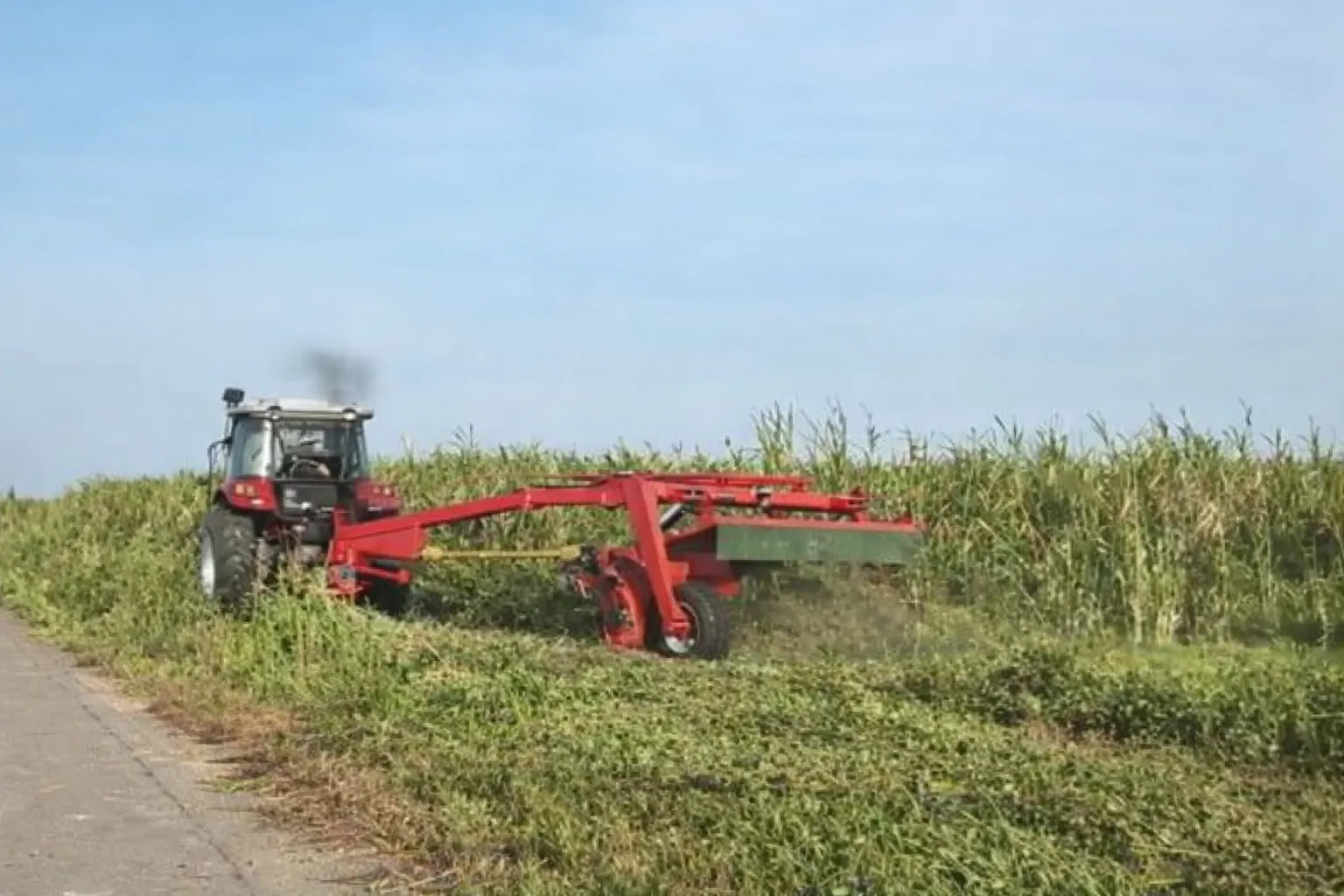
Cutting maturity is the single largest determinant of alfalfa hay quality — larger than conditioning equipment, drying management, or baling technique combined. Research from multiple state extension programs consistently documents that each day of delay in cutting past the optimal window (10% bloom) costs approximately 2–4 RFQ points. Moving from 10% to 40% bloom (a delay of 7–10 days in typical summer conditions) costs 15–25 RFQ points — the difference between dairy-spec and cattle-grade hay on the same field.
Walk the field and count stems in a representative 10-square-foot area. Count the total stems and the stems showing at least one open purple/blue flower. When 10% of stems show an open bloom, it is time to cut. This field assessment takes 5–10 minutes and should replace calendar-based cutting schedules entirely for dairy market production. The daily quality monitoring investment — 10 minutes per field per day during the growth period — is worth $30–$80 per ton on the resulting hay price.
Afternoon cutting (1–4 PM) produces alfalfa with higher water-soluble carbohydrate (WSC) content because photosynthesis has been running all day. Higher WSC correlates with slightly better 30-hour NDFD and lower NDF percentage. The effect is measurable but modest — 1–3 NDFD points typically. The more significant timing consideration is weather window management: morning cuts allow more drying time on the first day, reducing rain-contact risk. Weigh both factors before committing to a specific daily cutting time.
The full alfalfa cutting frequency system — including the root carbohydrate recovery cycle, fall dormancy cutoff rules, and the 3-cut vs 4-cut vs 5-cut economics — is in the Richtlijnen voor maaifrequentie en levensduur van alfalfa-planten. The mowing and conditioning settings that preserve leaf retention and maximize drying rate at each cutting are in the Kwaliteitsgids voor maaien en bemesten. The mower-conditioner gearbox and PTO driveline specifications are in Specificaties van componenten voor landbouwversnellingsbakken en aftakas-aandrijflijnen.
How TMR Nutritionists Evaluate an Alfalfa Hay Lot
Understanding how the dairy nutritionist evaluates your hay lot — what they look for, what makes them accept or reject, and what makes them pay the premium — is the most valuable perspective a hay producer can develop for accessing the dairy market consistently. The nutritionist is building a ration for cows that produces a specific amount of milk at a specific composition every day. Any ingredient that varies from what was formulated creates either a production response or a cost variance that they are accountable for explaining.
The nutritionist reviews the forage test report for RFQ, ADF, NDF, NDFD, CP, ADICP, moisture, and ash. Any value outside acceptable range disqualifies the lot regardless of visual appearance. A clean-looking hay lot with 14% ADICP will be rejected or heavily discounted. A slightly yellow lot with RFQ 175 and ADICP 5% will be purchased.
Color (bright green indicates early cutting and minimal carotene oxidation), aroma (sweet-green smell vs caramel/burned smell that signals ADICP), leaf retention (leafy hay has higher CP and NDFD), dustiness (excessive dust indicates mold spore load or over-drying), and moisture feel (pull a handful and feel for cool clamminess that indicates moisture above 14%).
An often-underrated factor: how consistent is this producer’s hay lot-to-lot? A nutritionist who has incorporated a producer’s alfalfa as a fixed ingredient at 8 lbs/cow/day needs that hay to test within ±10 RFQ points of the value used in the ration formulation. Producers who deliver consistent quality command better relationships and better prices than those who are premium one lot and marginal the next.
Bale Density and Storage: The Upstream Quality Protection System
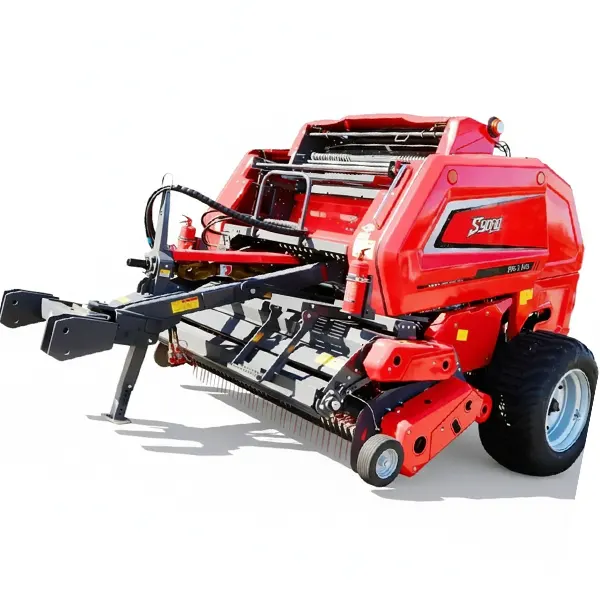
The quality you achieve at cutting is the ceiling — baling and storage can only preserve or reduce it, not improve it. For dairy-specification alfalfa, baling density and storage conditions are critical because even a 5°F increase in peak bale temperature during storage incrementally advances the Maillard reaction that creates ADICP. The production goal is to get the hay from the field to the feedbunk with the minimum possible ADICP accumulation above its baseline level at cutting.
Set the baler to maximum density for all dairy-spec alfalfa. Higher density (12–14 lbs/cu ft) limits inter-particle air space that supplies oxygen to aerobic microorganisms. Research shows that density above 12 lbs/cu ft at 14–16% moisture produces significantly lower peak bale temperatures than density below 10 lbs/cu ft at the same moisture level. For dairy hay, every tenth of a percentage point saved in ADICP is worth $3–$8/ton in the premium market.
Covered storage is standard, not optional, for dairy-quality alfalfa. Ground contact moisture infiltrates the outer bale layer and raises local moisture above the 14% threshold even when core moisture is correct. A concrete pad or gravel pad under net-wrapped bales in covered storage produces the lowest ADICP accumulation rates during storage. Round bales stored outdoors on bare ground can accumulate 3–5% additional ADICP above covered storage levels over a 6-month period — that is the difference between ADICP 5% and ADICP 10% from identical hay at baling.
How bale density affects feeding efficiency, storage DM losses, and bale shape stability through the storage period is in the Richtlijn voor dichtheid en voerkwaliteit van ronde balen.
Dairy Alfalfa Pricing: How to Command and Sustain the Premium
Base market price: $130–$160/ton. No premium, high competition, price-taker market.
$180–$220/ton. Entry-level dairy premium. Requires documented forage test.
$230–$280/ton. Consistent premium buyers will contract for annual supply. Highest-margin hay market accessible without export logistics.
Prices vary significantly by region, season, and drought conditions. These ranges are illustrative; confirm current regional market rates through USDA AMS hay price reports or local hay market contacts before pricing a specific lot.
- Send the forage test report before price discussion — lead with data, not appearance
- Offer consistent lot quality (±10 RFQ points between deliveries)
- Provide ADICP on every test (most producers don’t — it differentiates you immediately)
- Offer delivery documentation with baling date and cutting number
- Variable quality between loads (the nutritionist’s biggest pain point)
- Delivering without a forage test, expecting the buyer to do testing
- Moisture above 14% on delivered hay
- Price renegotiation at delivery without a legitimate quality basis
Dairy Alfalfa Production FAQs
Get Baler Configuration Guidance for Dairy-Grade Alfalfa Production
Tell us your alfalfa acreage, current typical RFQ range, primary cutting number (1st, 2nd, 3rd), and storage method. We confirm the baler density settings and storage recommendations that minimize ADICP accumulation and protect your dairy-market quality on every lot.
Redacteur: Cxm


