USDA NOP — Organic Certification for Hay Producers
Organic Hay Certification: USDA NOP Requirements Guide
The organic hay market pays $40–$80/ton above conventional in most U.S. markets — a premium that has grown every year since 2018. Getting there requires a 3-year transition, an approved Organic System Plan, and records that prove prohibited-substance-free management. This guide covers every requirement from the first transition year through first certified-organic sale, including what the USDA inspector examines and where compliance failures most commonly occur.
See Transition Timeline
Why the Organic Hay Market Premium Is Real — and Growing
Organic hay is not a niche curiosity in the 2025 forage market. The U.S. certified organic livestock and dairy sector has expanded continuously for two decades, and every certified organic dairy, beef, and poultry operation must source certified organic feed. Organic dairies — which represent the fastest-growing segment of the organic food market — typically carry 150–500 cows, and each cow requires 15–20 lbs of organic forage daily. This creates a sustained, documented demand for certified organic hay that is structurally unable to be satisfied by conventional production. The price premium exists because organic hay supply has consistently trailed organic hay demand, and that gap shows no sign of closing.
$40–$80
Per-ton premium for USDA-certified organic alfalfa hay above conventional equivalent in the Northeast and Great Lakes — a premium that directly translates to $8,000–$16,000/year in additional revenue on 50 acres at 4 tons/acre production
80+
USDA-accredited certifying agents currently operating in the United States — a network that provides geographic coverage and a competitive market in certification services for most major hay production regions
36 months
The mandatory transition period before the first certified organic harvest — a significant investment in producer time and foregone premium that must be weighed against the 5–10+ year value of the certified organic market access that results
Market segments driving organic hay demand
Certified organic dairy is the largest single organic hay buyer: each organic dairy requires roughly 6–8 tons of certified organic forage per cow per year, and they typically sign season-long or multi-year supply agreements. Certified organic beef operations (including grass-fed organic programs) represent a growing secondary buyer. Certified organic horse hay for premium equestrian operations is an emerging premium niche paying the highest per-ton prices in most markets. Each segment has different quality specifications, preferred species, and contract terms that producers entering the organic market should research before committing acreage to a specific crop.
What drives the persistent supply shortage
Three factors keep organic hay supply structurally below demand: the 3-year transition investment prevents rapid supply response to price signals; yield constraints from organic management (typically 10–25% below conventional under comparable conditions) mean that organic acreage produces less per acre; and the management complexity that organic certification requires selects for producers willing and able to invest significant time in compliance — a smaller pool than those willing to grow conventional hay. This structural supply constraint is why the premium has sustained and grown, and why entering the organic market now — rather than waiting for prices to “stabilize” — is a strategically sound decision for producers who can meet the management requirements.
The 3-Year Transition: A Visual Timeline of What Happens When
The 36-month transition is not simply “wait 3 years without using synthetic chemicals.” It is an active period of documentation, system-building, and management adjustment that determines whether the transition results in a fully functional, certification-ready organic operation — or 3 wasted years that fail inspection because the records don’t support the claims. Understanding what must happen in each phase of the transition prevents the most common compliance failures.
YEAR 0
Pre-transition
Document the baseline and select your certifier. Gather field history records for the past 3+ years: any synthetic fertilizer applications, herbicide applications, pesticide use, and biosolid applications with dates and product names. Prepare to provide this history to your certifier. Begin the certifier selection process (compare fees and regional knowledge); submit your initial application and draft Organic System Plan. The clock for your 36-month transition starts from the last date a prohibited substance was applied to each field.
YEAR 1
Months 1–12
Approved practices only — begin record-keeping system. Use only permitted fertilizers (compost, rock phosphate, lime) and no synthetic herbicides or pesticides. Implement your weed management plan using cutting frequency, cultivation, and competitive variety management. Keep receipts for every input purchased and records of every field operation. This hay can be sold as “transitional” in some markets at 5–15% premium above conventional — a modest but real revenue contribution during the transition.
YEAR 2
Months 13–24
Continue practices, refine the OSP, establish buyer relationships. Maintain all organic management practices and records. Receive your first inspection visit from the certifier (typically happens in year 2 for producers who applied in year 0). Begin marketing discussions with organic dairies and brokers — the 2-year advance notice gives buyers time to plan for your certification and potentially enter into a preliminary purchasing commitment. Refine your OSP based on inspection feedback.
YEAR 3
Months 25–36
Final inspection and certification application. Submit the formal certification application with your complete 3-year record package. Annual inspection verifies that practices match OSP. Upon receiving the organic certificate, the first certified organic harvest can be sold at the full organic market price. Continue all record-keeping — organic certification is not a one-time achievement; it requires annual renewal with documentation review.
YEAR 4+
Certified
Certified organic hay — full market premium access. All production from certified fields qualifies for the organic premium price. Annual renewal requires: updated OSP if practices change, annual inspection, and continued record-keeping. Annual certification fee ($400–$1,200 typical) is the ongoing cost. USDA NRCS cost-share programs may offset up to 75% of this annual certification fee for eligible producers.
What restarts the transition clock: Any application of a prohibited substance to a certified or transitioning field — even inadvertent drift from a neighboring conventional field, or application of a product that contains prohibited substances without the producer’s knowledge — may restart the 36-month clock for that field. This is why buffer zones and input documentation are both essential from the first day of transition. If drift contamination is a realistic risk from neighboring operations, document your buffer strip management and consider testing for residues to create a defensible record.
USDA NOP Prohibited and Permitted Substances: The Decision Framework
The USDA NOP’s National List of Allowed and Prohibited Substances is the definitive reference for every input decision in an organic operation. For hay producers, the relevant categories are fertilizers, pest and weed control materials, and equipment lubricants. The framework below covers the most commonly encountered situations — when in doubt, always consult your certifier before applying any substance to an organic field.
PROHIBITED — cannot use under any circumstances
- All synthetic nitrogen fertilizers (urea, anhydrous ammonia, DAP, MAP, ammonium nitrate)
- All synthetic herbicides (glyphosate, 2,4-D, dicamba, clethodim, all synthetic herbicides)
- All synthetic insecticides (organophosphates, pyrethroids, neonicotinoids)
- All synthetic fungicides
- Sewage sludge or municipal biosolids
- GMO seed and any GMO input material
- Synthetic soil amendments not on the NOP National List
PERMITTED — approved for organic use
- Compost meeting NOP time/temperature standards (131°F for 15 days in windrow systems)
- Naturally mined minerals: rock phosphate, gypsum, lime, greensand, sul-po-mag
- Approved biological pest controls: Bacillus thuringiensis (Bt), beneficial insects
- Pheromone traps and monitoring tools
- Plant-based materials: pyrethrin (with restrictions), neem oil (with restrictions)
- Compost teas meeting NOP aerated standards
- Legume-grass rotations and cover crops for fertility management
- Food-grade mineral oil for equipment lubrication on hay-contact surfaces
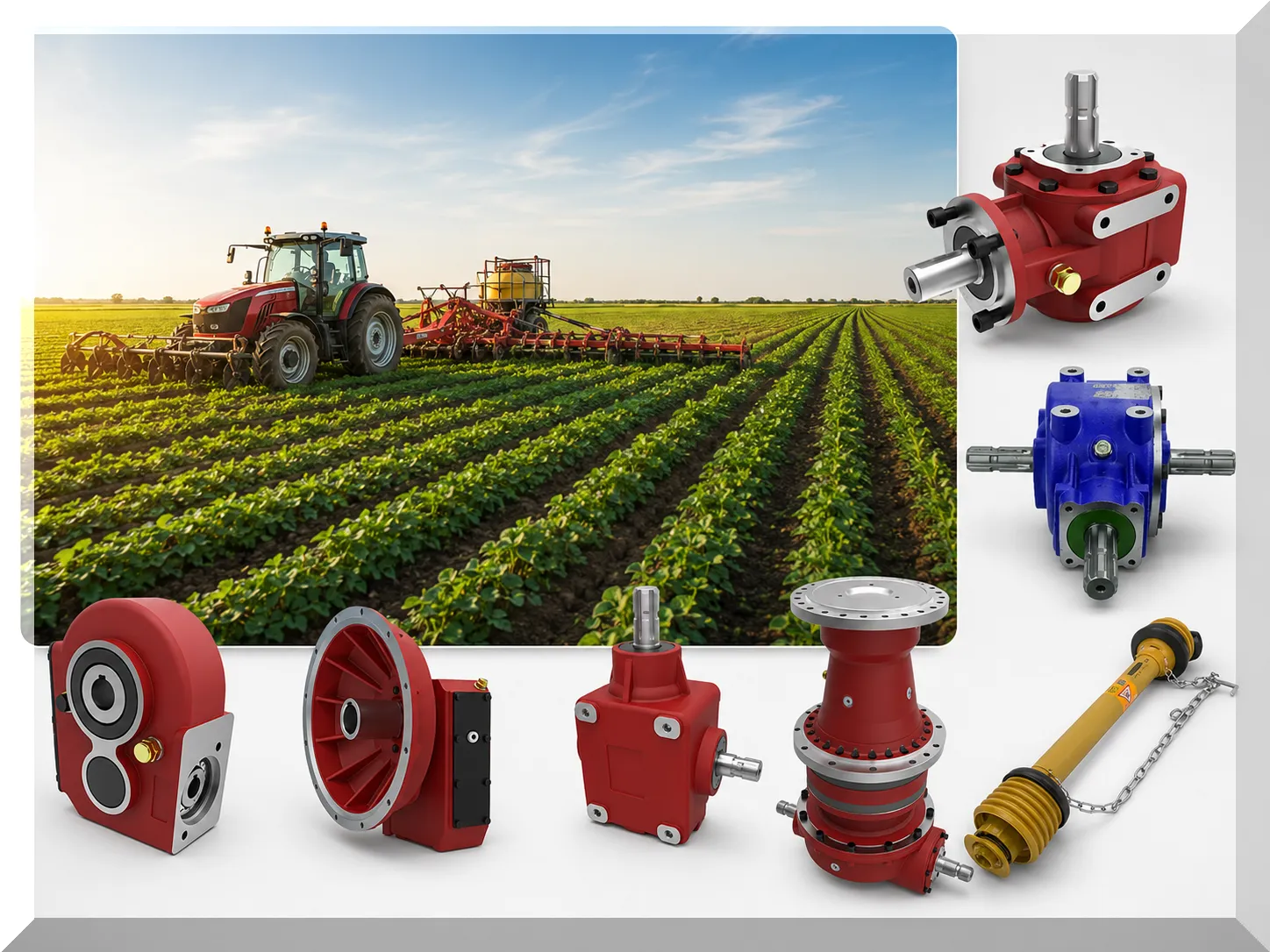
The equipment lubricant question — frequently misunderstood: USDA NOP requires that lubricants used on equipment parts that contact hay must be food-grade (NSF/H1 rated). This applies primarily to: pickup tine pivot points, bale chamber roller bearing seals, and any lubrication points where oil could drip onto hay as it passes through the machine. Standard petroleum-based chain oil on an enclosed chain drive that does not directly contact the crop is generally not restricted. Consult your certifier for clarification on your specific baler model. The baler manufacturers’ food-grade lubricant compatibility specifications and NSF-H1 approved lubricant options are noted in the
agricultural gearbox and PTO driveline component documentation for equipment operating in certified organic systems.
Choosing a USDA-Accredited Certifier: Process, Cost, and What to Expect
USDA does not certify organic operations directly — it accredits private and state-run certifying agents who conduct the inspections, review the Organic System Plans, and issue the organic certificate on their own authority under USDA oversight. Choosing a certifier is one of the most consequential early decisions in the transition process, because the certifier’s requirements, communication style, and local knowledge will significantly affect the quality of your experience through a multi-year certification relationship.
Certifier selection criteria
Regional presence (inspector who knows your production region, local pest challenges, and regional crops); annual certification fee (ranges from $400 for small operations to $1,500+ for larger operations; compare 3 certifiers before committing); application processing time (some certifiers have 3–6 week turnaround on OSP review; others take months); quality of OSP review feedback (certifiers who provide specific improvement comments are more valuable than those who simply approve or reject). Well-regarded certifiers for Northeast and Great Lakes hay producers include MOSA, Pennsylvania Certified Organic, and Northeast Organic Farming Association (NOFA) certifiers. Pacific Northwest producers commonly use Oregon Tilth or CCOF.
The Organic System Plan (OSP)
The OSP is the written foundation of your organic certification. It must describe: each field under organic management with acreage, location, and field history; every practice applied to each field (tillage, seeding, fertilization, pest management, harvesting); every input material used with brand name, manufacturer, and certifier approval status; equipment used and its cleaning protocol if shared with conventional operations; harvest, handling, and storage procedures; and your plan for preventing contamination from prohibited substances. The OSP is not a static document — it must be updated whenever practices change, and the certifier must approve any substantial change before implementation.
What the annual inspection covers
Annual inspections typically take 2–4 hours for a hay operation. The inspector reviews: all input purchase receipts and application records; field boundary maps and buffer zone documentation; seed purchase records (preference for organic or untreated seed); equipment cleaning logs if applicable; sales records (buyer identity, quantity, date, certificate presented); and the fields themselves for any sign of prohibited substance application. An organized record system shortens inspection time significantly. Inspectors are evaluating compliance, not advising on management — questions about what is and is not permitted should go to your certifier’s staff, not the inspector during the visit.
Record-Keeping: The Documentation System That Makes Certification Renewable
The most common reason organic certifications are delayed, suspended, or revoked is inadequate record-keeping — not intentional violations. Producers who implement approved practices correctly but fail to document them face the same outcome as producers who use prohibited substances: loss of certification status. Record-keeping for an organic hay operation is not burdensome if it is integrated into daily workflow from the start; it becomes burdensome only when producers try to reconstruct records retroactively before an inspection.
ORGANIC HAY RECORD-KEEPING REQUIREMENTS — COMPLETE CHECKLIST
Field and Input Records
☐ Purchase receipt for every input (fertilizer, seed, pest control material, lubricant) — retain for 5 years minimum
☐ Field application log: date, field identity, material applied, rate, equipment used, applicator name — for every field operation
☐ Seed purchase receipts with lot number — document “organic” or “untreated” status
☐ Soil test records by field (annual tests demonstrate fertility management rationale)
Harvest and Sales Records
☐ Harvest log: date, field, cutting number, estimated quantity, bale count, bale ID system
☐ Sales invoices: buyer name, address, quantity, date of sale, organic certificate number presented to buyer
☐ Load tickets or scale tickets for truckload sales
☐ Separate storage records if organic and conventional hay are stored in proximity (lot identification, physical separation documentation)
Equipment Records (for shared equipment only)
☐ Equipment cleaning log: date, equipment cleaned, cleaning method, person performing cleaning — for any baler, rake, mower, or hauling equipment used on both organic and conventional crops
☐ Custom operator certificates: if you hire a custom baler, obtain a copy of their organic system plan or a certificate confirming equipment compliance
The organic record-keeping system integrates directly with the crop insurance documentation practices that support hay operation risk management. The field-level yield and management records required for organic certification overlap significantly with the records required for the hay crop insurance and loss documentation guide — maintaining a single comprehensive field record system serves both purposes.
Organic Weed and Pest Management: What Actually Works Without Prohibited Substances
The transition from synthetic to organic weed and pest management is the aspect of organic hay certification that most intimidates conventional producers — and the aspect where expectations most frequently diverge from reality. The good news: most cool-season hay crops under correct management do not require synthetic herbicide to maintain adequate stand quality. The honest news: achieving equivalent weed control without herbicide requires more intensive management attention, and some weed pressure is unavoidable in transition years before the organic management system is fully established.
Cutting frequency — the primary weed tool
Orchardgrass cut every 28–35 days in summer and alfalfa cut at 1/10 bloom maintain canopy densities that suppress most annual and biennial weeds from establishing. A competitive perennial legume or grass stand is the best long-term weed management strategy available without herbicides. Stand establishment quality — documented in the stand establishment guide — determines the baseline weed competitiveness of the organic operation. A thin stand allows weed entry; a full stand at the target plant density largely prevents it.
Alfalfa weevil without insecticide
The rescue cut is the primary tool: cutting alfalfa at the first sign of larval hatch (when larvae are at 1st–2nd instar, before significant defoliation) removes the larvae’s food source and exposes them to desiccation and predation. Timing the rescue cut correctly — typically in early May in the mid-Atlantic and Midwest — is more important than any spray timing. Insect-resistant varieties where available provide additional protection. Beneficial insect habitat (flower strips adjacent to hayfields) supports parasitic wasp populations that naturally regulate weevil populations. Organic operations that correctly time their first cutting experience similar weevil damage to conventional operations with good spray timing.
Yield expectations in transition vs certified years
Transition years (1–3) typically show 10–20% yield reduction from conventional baseline in the first year as the nitrogen fertility adjustment takes effect; yield recovers as the compost and organic fertility program builds soil organic matter and nutrient cycling. By years 4–6 of certified organic management, well-run organic operations in adequate-precipitation regions typically achieve 80–90% of their conventional yield baseline on equivalent species and stand quality. In the arid West where most organic hay exports originate, organic alfalfa yield is more constrained by irrigation management and fertility, but the market premium more than compensates for the yield reduction.
Market Access: Where Organic Hay Commands Its Best Price by Species
Not all organic hay reaches the same premium market — the price differential between a commodity organic sale and a contracted organic dairy supply agreement can be $25–$40/ton on the same certified-organic hay. Understanding which market segment values which species and quality level is essential for capturing the full economic return from the certification investment.
| Hay species |
Organic premium (above conventional) |
Primary organic buyer |
Quality specification priority |
| Alfalfa (certified org.) |
$50–$80/ton |
Organic dairies; organic beef finish |
CP ≥18%, RFV ≥150, NDFD documentation preferred |
| Grass-legume mix |
$40–$65/ton |
Organic dairies; organic stocker |
CP ≥14%, NDF 45–58%, consistent quality across lots |
| Orchardgrass (boot stage) |
$35–$55/ton |
Organic dairy fiber; organic horse |
CP 11–14%, soft leaves, green color; NSC test for horse market |
| Timothy (boot stage) |
$40–$65/ton |
Organic horse; export (Japan organic) |
Highest visual quality standard; soft fine stems; premium packaging |
| Grass hay (general) |
$25–$40/ton |
Organic beef; organic small ruminant |
Minimum CP 8%, free of weeds and mold; certified organic certificate required per lot |
Accessing organic dairy contracts — the highest-value channel for most producers — requires consistent quality documentation, reliable supply volume, and established relationships with organic dairy operators or organic commodity brokers. Direct marketing to organic dairies within 50 miles typically yields the best per-ton price; selling through organic hay brokers reduces per-ton price by $10–$20 but requires less buyer relationship investment. For custom baling services that supply organic hay producers, the organic compliance requirements for shared equipment are in the custom baling service startup and pricing guide.
Is Organic Certification Worth It? The Break-Even Economics
The honest economic answer: for producers with 30+ acres of hay, good soil fertility management skills, and access to the organic dairy market, organic certification delivers positive returns on a 5–8 year horizon in most production regions. For producers with under 20 acres, limited organic buyer access, or operations that depend heavily on synthetic herbicide for weed control, the economics are less favorable. The analysis below uses a 50-acre operation as the reference case.
| Cost / Revenue item |
Years 1–3 (transition) |
Years 4+ (certified) |
| Annual certification cost |
$600–$900 |
$600–$900 |
| Yield penalty (10–20% below conventional) |
–$1,500–$3,000 |
–$500–$1,500 (reduces as soil improves) |
| Premium revenue (50 ac × 4 tons × premium/ton) |
$0–$2,000 (transitional premium) |
+$8,000–$16,000 |
| USDA NRCS cost-share (certification, practices) |
+$1,500–$3,000 (if eligible) |
+$450–$675 (75% of cert. fee) |
| Net annual position vs conventional |
–$900 to –$2,500/year |
+$6,000–$14,000/year |
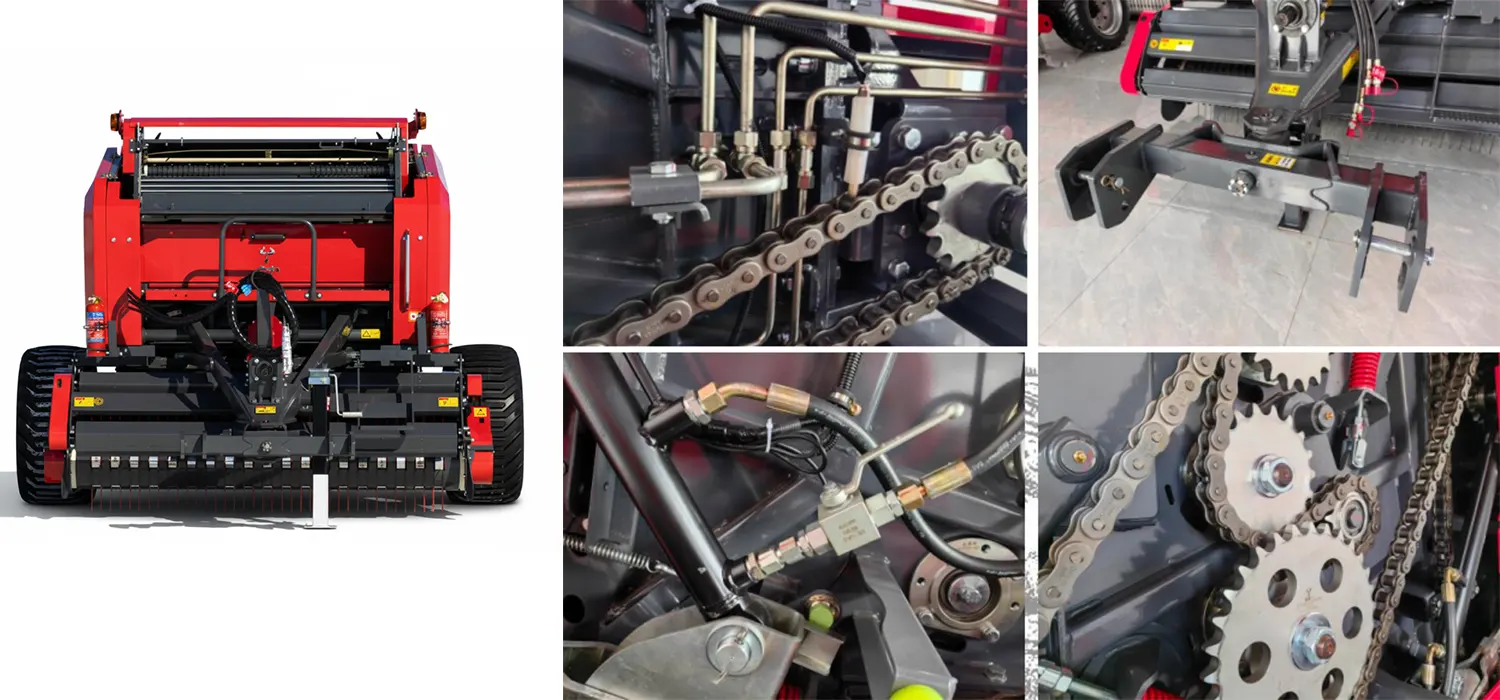
The round baler investment for organic operations: Organic certification does not require new equipment. The same round baler that produces conventional hay produces organic hay — what changes is the documentation of lubricants used and the cleaning protocol if the baler is shared between organic and conventional operations. The
round baler models configured with food-grade lubricant compatibility and the documentation package for organic system compliance are available through our product line. Net wrap and twine: standard synthetic net wrap and twine are permitted under NOP as hay-contact packaging materials — no specialized organic wrap is required.
Organic Hay Certification FAQs
How long does it take to get USDA organic certification for hay?+
The minimum required period is 36 months (3 years) of documented prohibited-substance-free management before the first certified organic harvest. This 36-month clock starts from the last date a prohibited substance was applied to each specific field — not from the date you submit your application or decide to pursue certification. If a field has been managed without synthetic herbicides, fertilizers, or pesticides for the past 5 years but you have no documentation proving it, you will still need to provide 3 years of documented clean management from the point where records begin. Producers who have been farming without prohibited substances for several years but haven’t been keeping records often find they must restart the documented transition — which underlines the importance of beginning record-keeping as soon as you consider pursuing organic certification, even if you don’t apply for 2–3 more years. In practical terms, a producer who starts transition from a conventional field with current prohibited substance use should plan for first certified organic sale approximately 3.5–4 years from the decision date, accounting for transition management plus certifier application processing time.
Can I use any fertilizer on organic hay fields?+
No synthetic fertilizers are permitted under USDA NOP. The permitted fertility inputs are: compost (must be produced through a process that achieves specific time-temperature standards to ensure pathogen reduction); naturally mined minerals including rock phosphate, gypsum, lime, greensand, and sul-po-mag; blood meal, bone meal, and feather meal (permitted with some application restrictions); and plant-based materials. Legumes in the hay stand provide biological nitrogen fixation — alfalfa-grass mixed stands derive most of their nitrogen needs from the alfalfa’s root nodules, making the fertility management requirement significantly simpler than for a pure grass stand. A hay stand that includes 30–40% legume fraction typically does not require supplemental nitrogen input in organic management, provided P, K, and pH are maintained with permitted materials. Before applying any fertilizer product, verify that it is on the NOP National List and that your certifier has approved it — some products marketed as “natural” or “organic” contain synthetically processed components that are not NOP-compliant.
What happens if my neighbor sprays herbicide near my certified organic field?+
Drift contamination from neighboring conventional fields is a real risk that organic certification does not protect against automatically. Your responsibilities are: (1) document your field boundaries clearly and identify fields adjacent to conventional operations in your OSP; (2) maintain adequate buffer strips (typically 50–100 feet or more depending on the risk level and your certifier’s requirements) between your organic field edges and adjacent conventional application areas; (3) notify your certifier immediately if you believe drift has occurred; (4) do not market the potentially affected crop as organic until testing confirms it is below the prohibited substance detection threshold. Certified organic status is based on management practices, not solely on residue testing — but if a certifier-required residue test finds prohibited substance residues, the affected field will typically be returned to transition status. Proactive neighbor communication about your organic operation and their spray timing can significantly reduce drift risk — most conventional farmers are willing to coordinate spray timing when they know their neighbor holds organic certification that could be affected.
Can I hire a conventional custom baler to bale my organic hay?+
Yes, with documentation requirements. NOP allows organic producers to use conventional service providers — including custom balers — as long as the equipment is cleaned of prohibited substance residues before use on the organic crop. In practice, the cleaning requirement for a round baler moving from conventional to organic hay is typically: remove all visible crop residue from the bale chamber and pickup; flush lubricant points that contact the crop with food-grade lubricant if needed. Your certifier will specify the cleaning protocol required for your specific OSP. The key documentation requirement: obtain a written statement from the custom baler operator confirming that the equipment used on your organic fields was cleaned as required before use, and retain that statement in your records. Custom operators who serve organic producers regularly will be familiar with this requirement; first-time organic field work may require educating the operator about the documentation need. Custom baling service operations that serve organic producers and the equipment compliance requirements for organic operations are covered in your certifier’s operator guidance.
Are there USDA financial assistance programs to help with organic transition costs?+
Yes — USDA provides several cost-share programs specifically supporting organic transition, administered through the Natural Resources Conservation Service (NRCS) via EQIP (Environmental Quality Incentives Program). The EQIP Organic Initiative provides cost-share payments for specific conservation practices applicable to transitioning organic operations; payment rates vary by state and practice. The Organic Certification Cost-Share Program (OCCSP) reimburses up to 75% of certification costs (up to $750 per certification scope) per year for certified organic and transitioning producers — this is a direct offset of the annual certification fee. Applications are made through your local NRCS office; funding is allocated annually and varies by state, so earlier application in the fiscal year increases your probability of receiving the full payment. The Whole-Farm Revenue Protection (WFRP) crop insurance product includes specific provisions for organic operations that recognize the premium price of organic commodities — this is relevant to the hay crop insurance programs that apply to organic operations.
Can some fields on my farm be organic while others are conventional?+
Yes — “parallel production” (farming some fields organic and some conventional) is specifically addressed in USDA NOP regulations. It is permitted provided you can demonstrate a clear system for preventing commingling (mixing) of organic and conventional hay during harvest, storage, and sale. Key requirements: organic and conventional fields must be clearly identified with field maps; organic and conventional hay must be stored and sold separately with distinct lot identification; any equipment used on both types must be cleaned and documented as described above; and sales records must clearly distinguish which sales are organic (at the certified organic price) and which are conventional. Some certifiers impose additional requirements for parallel production operations — review your certifier’s specific protocols during the application process. The most common compliance failure in parallel production is inadequate lot identification that makes it impossible to verify which bales came from which fields at the time of sale.
Editor: Cxm