
Red Clover’s Role in U.S. Hay Systems: Why It Persists Despite Its Complications
Red clover (Trifolium pratense) has been a fixture in Northeast and Midwest hay systems for over a century, and its persistence is not accidental. It fills a specific agronomic and economic niche that alfalfa cannot occupy: the short-rotation, lower-pH-soil, limited-capital situation where alfalfa’s requirements for high pH, high fertility, and multi-year stand investment create barriers that red clover simply doesn’t share. It is not a substitute for alfalfa in production-optimized systems; it is the better choice in systems where alfalfa’s requirements cannot be met at reasonable cost.
The two complications that come with red clover — bloat risk for cattle and slaframine risk for horses — are real and require genuine management attention. They are also both manageable and, in the case of dry hay (as opposed to fresh grazing), largely resolved by the drying process itself for the bloat concern. The objective of this guide is to give producers an accurate, technically grounded picture of both risks and the specific practices that manage each one — not to overstate the risk (which causes producers to avoid a legitimate crop) or minimize it (which causes real livestock health problems).
Cutting Timing: First Bloom as the Non-Negotiable Quality Trigger
Red clover quality follows a predictable decline curve from bud stage through full bloom that closely parallels alfalfa’s — except that red clover reaches the 25% bloom trigger (the point of optimum quality-yield balance) 5–10 days earlier in its growth cycle than alfalfa reaches 10% bloom under the same temperature conditions. This faster progression means the cutting window is narrow. A field assessment at the beginning of the week that shows 10% bloom may be at 30–40% bloom by the end of the week during warm spring or summer weather.
| Bloom stage | Visual indicator | CP | NDF | Yield | Market and safety |
|---|---|---|---|---|---|
| Bud stage | Heads swelling; no open flowers | 19–24% | 36–44% | 40–55% | Premium dairy; yield penalty is significant — only justified for high-value markets |
| 25% bloom (optimum) | First flowers open across ≈25% of heads | 17–22% | 38–48% | 70–80% | Dairy and premium cattle; optimal stand persistence |
| 50% bloom | Half of flower heads open | 14–18% | 44–54% | 85–95% | Cattle and beef; slaframine risk begins increasing with longer bloom duration |
| Full bloom | All heads open; seed development beginning | 12–16% | 50–60% | 95–100% | Cattle only; stand life penalty from seed carbohydrate drain; increased R. leguminicola risk |
| Post-bloom / seed set | Brown spent flowers; seed pods forming | 10–14% | 56–66% | Max | Straw-quality roughage; stand severely weakened; do not use as feed-quality hay |
Frothy Bloat in Cattle: The Safety Issue That Defines Red Clover Hay Management
Frothy bloat from red clover is a serious and potentially fatal livestock health event that is genuinely more dangerous than alfalfa bloat in the same management circumstances. This is not a marginal difference — red clover has been consistently shown in university research to cause more severe bloat and at lower intake levels than alfalfa under fresh-grazing conditions. The mechanism is specific, the risks are predictable, and the management protocols that eliminate the risk for dry hay are well established.
The mechanism involves the relative concentrations and types of soluble proteins in red clover versus alfalfa. Red clover has a lower concentration of polyphenol oxidase (PPO) — the enzyme that breaks down the soluble proteins responsible for stable foam formation — than birdsfoot trefoil (which has high PPO and very low bloat risk) and also somewhat lower than alfalfa. The result is that a given quantity of red clover in the rumen produces more stable foam per unit of dry matter intake than an equivalent quantity of alfalfa. This difference is biologically meaningful: operations that manage alfalfa bloat risk adequately may find those same protocols insufficient for red clover.
Poloxalene (sold as Bloat Guard and generic equivalents) is a surfactant that breaks up the stable foam in the rumen before it can accumulate to life-threatening pressure. It is available as blocks, boluses, top-dressings on grain, and water additives. For operations that graze red clover or feed red clover baleage, poloxalene should be provided continuously during the period of red clover consumption — not just when bloat is suspected. Blocks provide inconsistent dosing because cattle do not lick them predictably at the required rate. Water-based delivery (poloxalene in the water supply) or top-dressed grain (at the labeled rate per head per day) provides more consistent dosing. Note: poloxalene is a management aid, not a guarantee — it reduces but does not eliminate bloat risk at high consumption rates.
Slaframine and Horses: The Slobbers Syndrome Explained Accurately
Slaframine is a mycotoxin produced by the fungus Rhizoctonia leguminicola, which infects red clover (and to a lesser extent, white clover and other clovers) under conditions of high humidity, dense canopy, and warm temperatures. Horses that consume slaframine-containing hay experience excessive salivation — the “slobbers” syndrome — as a result of slaframine’s conversion in the rumen to a compound that stimulates salivary gland activity. The syndrome is alarming to observe but is generally not acutely dangerous to otherwise healthy horses.
Affected horses salivate excessively — drooling from both sides of the mouth, often soaking the chest and front legs. Feed intake typically decreases because the horse’s experience of eating is significantly altered. In lactating mares, milk production may temporarily decrease. Symptoms appear within 1–4 days of beginning consumption of slaframine-containing hay and resolve within 3–7 days of removing the red clover from the diet. The condition itself is not fatal and does not leave permanent effects in the great majority of cases, but the stress and reduced feed intake during the episode may affect condition in horses already at maintenance nutritional balance.
Slaframine contamination is highest in red clover hay cut late (at or past full bloom, when the canopy is dense and the stand has experienced significant leaf senescence), cut in wet weather with inadequate curing time, or produced in conditions of prolonged high humidity during the growing season. Cutting at 25% bloom, which opens the canopy before conditions favor R. leguminicola proliferation, and ensuring adequate field drying reduce but cannot completely eliminate slaframine risk in years with high fungal pressure. Fungicide seed treatment at establishment reduces initial infection levels but does not prevent re-infection from soil inoculum in established stands. The practical recommendation for horse operations: avoid marketing red clover hay to horse buyers without disclosure of the slaframine risk, and avoid including red clover as a primary hay source in horse feeding programs where other species are available.
Drying Challenges: Why Red Clover Is Harder to Cure Than Alfalfa
Red clover at cutting stage has a stem structure that is hollow, relatively large in diameter, and significantly more moisture-retentive than alfalfa stems. The leaf-stem moisture differential in red clover hay is greater than in alfalfa or most grasses — the leaves can reach baling moisture 12–18 hours before the stem interior does. This creates a systematic risk: operators who bale on leaf surface moisture readings or visual appearance consistently bale red clover at 20–25% stem core moisture, producing hay that heats severely within the first week of storage, develops mold, and loses a significant fraction of the CP that made it worth producing in the first place.
Heavy roller conditioning at maximum pressure for the conditioner model is the single highest-impact drying management step for red clover. The hollow stem must be physically split open for moisture to escape from the interior. Unconditioned red clover on a clear June day with good airflow takes 60–96 hours to reach 14% core moisture; conditioned red clover under the same conditions takes 36–54 hours. This 24–36 hour difference frequently determines whether a weather window accommodates the full cure or produces an overly moist bale. Set the conditioning roller gap at the maximum closing force recommended for alfalfa — red clover stems require at least this pressure and benefit from slightly more.
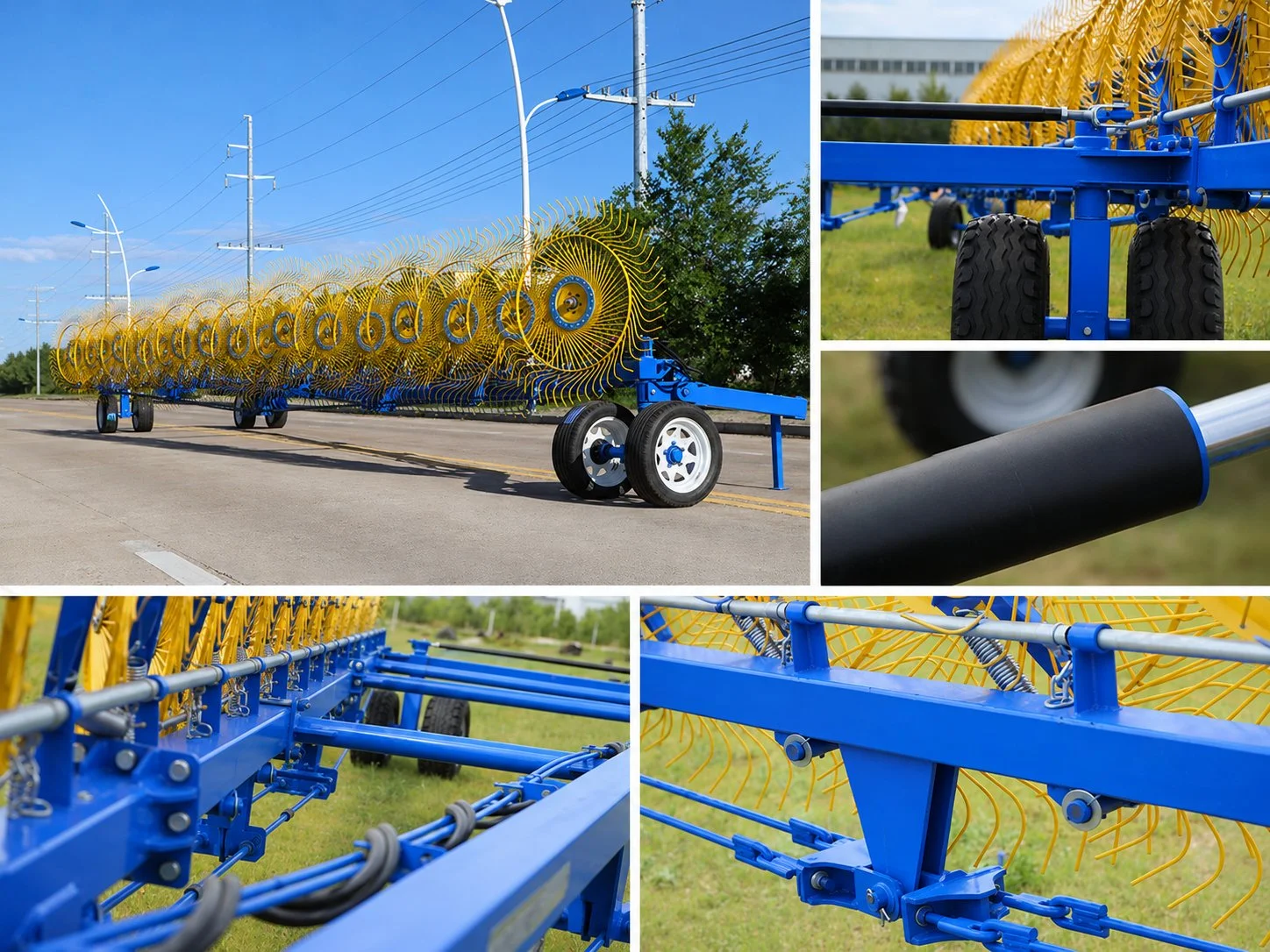
Red clover’s three-leaf compound leaflet structure shatters readily when the petiole (leaf stem) dries below 35–40% moisture. Each lost leaf is lost crude protein — the leaves contain 70–75% of the plant’s CP. A hay crop that started with 20% CP may test 16% CP if significant leaf loss occurred during raking. Rake red clover at 45–50% moisture (when the stems are still pliable but the upper leaf surface is partially dry) to minimize shatter. A gentle finger-wheel rake is preferred over a rotary bar rake for red clover, which the bar rake tends to beat more aggressively. The windrow formation and raking moisture protocol that preserves leaf retention is in the hay quality improvement guide.
Target: 14–17% core moisture (measured with a long-probe insertion meter at the windrow center, not surface). Red clover baled above 18% moisture develops internal mold significantly faster than alfalfa at the same moisture level because the higher soluble protein content provides an excellent substrate for mold growth. A red clover bale at 20% moisture may develop visible surface mold and a musty smell within 7–10 days in warm storage — a serious quality and safety problem for dairy buyers. Storage management that prevents this outcome is in the round bale storage and dry matter loss guide.
Red Clover vs Alfalfa: When Each Is the Right Choice
Red clover and alfalfa are not interchangeable in all situations. Each has genuine advantages over the other in specific contexts, and producers who understand this distinction make better establishment decisions and achieve better economic returns. The comparison below is honest about both advantages and limitations.
| Factor | Red Clover | Alfalfa | Decision factor |
|---|---|---|---|
| Minimum soil pH | 5.8 | 6.5–6.8 | Fields below pH 6.2 without lime investment: red clover advantage is decisive |
| Stand life | 2–4 years | 5–8 years | Permanent hay fields: alfalfa; 2–3 year rotation: red clover |
| CP at 25%/10% bloom | 17–22% | 18–24% | Similar at optimum cutting — both qualify for dairy mid-lactation |
| Bloat risk (fresh) | High | Moderate | Operations without bloat management protocols: alfalfa preferred |
| Slaframine risk | Present | Absent | Horse-market operations: alfalfa; beef/dairy without horses: red clover acceptable |
| No-till establishment | Good | Moderate | No-till or reduced-till systems: red clover establishes more reliably |
| Premium market access | Dairy/cattle only | Dairy, cattle, horse | Diversified hay markets including horses: alfalfa; primarily dairy/cattle: red clover viable |
Baler Settings for Red Clover’s Dense, Heavy Windrow
A full-canopy first-cutting red clover stand at 25% bloom creates a windrow that is among the heaviest per linear foot of any cool-season legume or grass hay crop — heavier than orchardgrass windrows, heavier than most alfalfa windrows, because the trifoliate leaf canopy collapses into a dense mat that both the raking and baling systems must process. Operators who have baled primarily alfalfa and switch to first-cutting red clover without adjusting settings encounter pickup overloads and incomplete bale formation in the first field passes.
Density spring: 10–15% above alfalfa setting
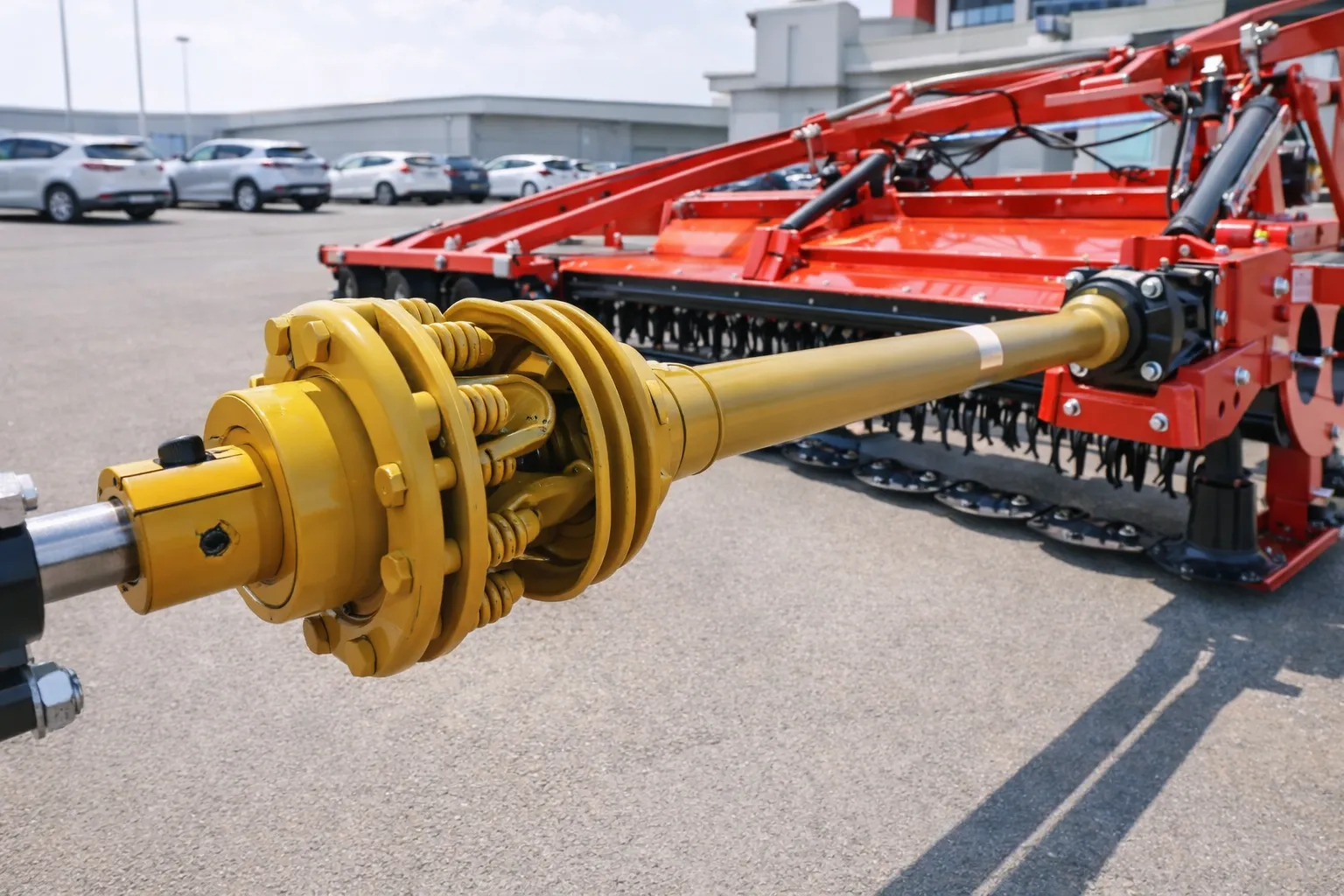
Red clover’s dense leafy structure produces a bale that achieves its diameter target before adequate density has been reached if the spring is set for alfalfa. A well-compressed 4×5 red clover bale should weigh 650–900 lbs; if your bales are consistently below 600 lbs at 4×5, the density spring needs to increase. For PTO drive specifications at increased density loading, see agricultural gearbox and PTO driveline component specifications.
Ground speed: 2.5–3.5 mph in dense first-cut windrows
First-cutting red clover requires the lowest baling ground speed of any common cool-season legume. The leafy, interlocked windrow requires more time per foot for the pickup to fully engage and separate. Start the first pass 30% slower than your alfalfa speed and increase if the pickup is clearing cleanly without resistance.
Net wrap: required for dairy-market red clover
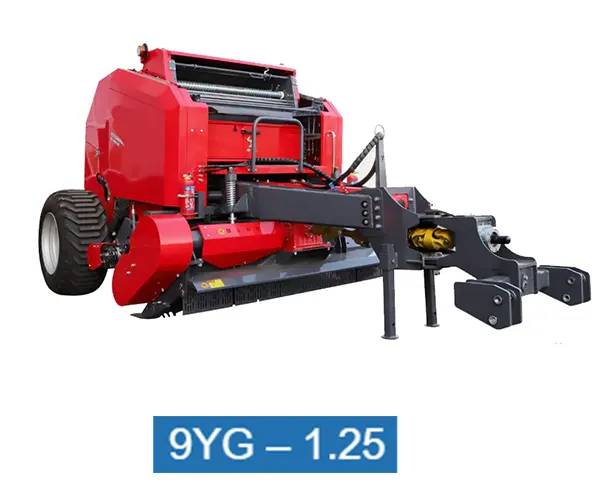
The leaf fraction that delivers 70–75% of red clover’s CP sheds from twine-wrapped bales during any handling after baling. For dairy-market sales where the buyer is paying specifically for the CP content, this leaf loss directly reduces the value of the product being delivered. Net wrap maintains continuous bale restraint that retains the outer leaf layer. For local cattle markets where visual quality and tested CP are less critical to the transaction, twine-wrapped bales are economically adequate, but for any market where CP is the primary value driver, net wrap is the correct specification. Round baler models with net wrap systems suited to legume hay production are in our round baler models.
Market Channels: Where Red Clover Hay Reaches Its Best Economic Return
Red clover hay’s market is primarily defined by two facts: it is well-suited to dairy and beef cattle markets, and it is poorly suited to horse markets. Producers who manage to these market boundaries extract the best economic value from their red clover acreage. Producers who attempt to cross-market red clover into horse markets without disclosure or without managing the known risks create warranty and relationship problems that exceed any short-term price premium they might capture.
$140–$200/ton for boot-to-25%-bloom with full forage test documentation (CP, NDF, NDFD, ADICP). CP 17–20% and NDF 40–48% at 25% bloom meets most dairy mid-lactation specifications as an alfalfa complement or partial substitute. The NDFD of boot-stage red clover (55–65%) is competitive with first-cut alfalfa. Provide forage test before delivery; consistent lot quality is the primary relationship factor.
$100–$145/ton for 25%-to-50%-bloom quality. Beef cattle operations in the Northeast and Great Lakes purchase red clover hay as a primary winter roughage. Basic forage test acceptable for this market. Volume consistency and proximity are often more important than quality premium. Red clover’s higher CP than most grass hay at equivalent stages makes it nutritionally superior roughage for beef cattle without requiring premium documentation.
If selling to horse buyers, disclose the slaframine risk in writing before the transaction. Some horse owners are aware of the risk and specifically want red clover because their horses are not sensitive to slaframine or they manage exposure by limiting red clover to a fraction of the total diet. These buyers exist and will pay fair prices. Marketing red clover hay to general horse buyers without disclosure is the scenario that creates the livestock health and business relationship problems.
Red Clover Hay Production FAQs
Get Baler Settings for Red Clover Hay Production
Tell us your red clover stand type (pure stand or mixed with orchardgrass/timothy), target cutting stage, target bale size, and primary market (dairy or beef cattle). We confirm the conditioning roller pressure, density spring setting, and net wrap configuration suited to your specific red clover production system.
Editor: Cxm


