
Why Dust and Soil Contamination Matter in Hay Bales
Two Distinct Contamination Sources
Hay bale impurities come from two sources that behave differently and affect different aspects of bale quality. Fine soil particles — introduced when the pickup contacts the ground surface — contribute to the ash content of the hay, reduce digestibility, increase abrasive wear on dental surfaces of grazing livestock and, in accumulating quantities, can introduce soil-borne pathogens into feed. Field dust and chaff — shed from the crop itself during baling — are primarily a respiratory concern, generating airborne fine particulate when the bale is opened and shaken apart for feeding.
Both sources are present to some degree in every field-baled product regardless of machine type. The question is how much of each source makes it into the finished bale and whether that impurity load crosses thresholds that matter to specific markets. In the vast majority of commodity hay and straw markets — beef cattle, general livestock, bedding — these impurity levels are tolerated without quality penalties. In horse hay, dairy and export markets, they are evaluated directly or their effects are felt as health outcomes or ration responses.
Ash Content: The Quantitative Measure
Forage analytical laboratories report ash content as a standard result in basic hay analysis — it is the percentage of dry matter remaining after sample combustion at 550 degrees Celsius. A pure grass hay sample would test at approximately 6–8% ash from plant minerals alone. Hay samples with above 10–12% ash contain soil contamination beyond what the crop naturally provides. Horse hay buyers and dairy nutritionists who submit hay to laboratories occasionally flag ash content above 10% as a quality concern — it indicates enough soil in the sample to affect either nutritional value (dilution of organic matter by inorganic mineral) or feeding quality (abrasive dental wear, pathogen load, palatability reduction). Fan-cleaned bales from the 9YFS-2.2 consistently test lower ash content than non-cleaned bales from the same field and windrow, because the fan removes a meaningful proportion of fine soil particles before they reach the compression chamber.
How the Negative-Pressure Fan System Works
The Mechanism
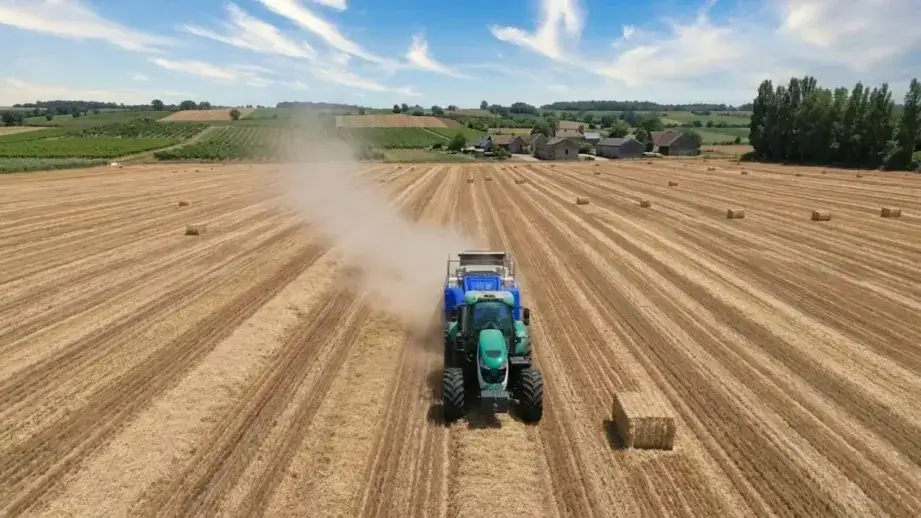
The negative-pressure fan on the 9YFS-2.2 is a dedicated centrifugal fan unit positioned in the material flow path between the pickup and the shredder stages. As crop material passes through the fan zone, the fan draws air upward through the material stream at a controlled velocity. Particles lighter than the crop stems and leaves — fine soil dust, chaff fragments, weed seeds and field debris under approximately 2mm in the smallest dimension — are suspended in the airflow and carried away from the material stream through a clean windrow outlet at the side of the machine. The heavier crop material (stem and leaf) falls through the airflow zone and continues into the shredder and compression stages essentially unchanged in volume.
The principle is gravity and density separation driven by airflow — the same physical process used in grain cleaning and seed processing, applied to the hay baling material stream. Adjusting the fan speed changes the airflow velocity through the material zone, which changes the cutoff point between what the fan lifts out and what passes through: higher fan speed lifts lighter and slightly heavier particles, increasing impurity removal but also carrying out some fine crop leaf material; lower fan speed removes only the finest and lightest impurities while leaving more crop leaf in the stream.
What the Fan Removes — and What It Does Not
- Fine soil dust particles under 2mm from pickup ground contact
- Chaff fragments and fine crop debris shed during the baling pass
- Light weed seeds and field debris below the crop material density
- Fine sand from sandy-soil fields carried in on the crop surface
- Some proportion of fungal spore-bearing fine material
- Larger soil clods and debris above the airflow separation threshold
- Fungal mold established within the crop stem material
- Moisture — the fan does not dry the hay
- Endophytes or other plant-incorporated toxins
- Fine crop leaf material at aggressive fan settings (can be lost)
Horse Respiratory Health and Low-Dust Hay
Recurrent Airway Obstruction and Hay Dust
Recurrent airway obstruction (RAO) in horses — previously known as heaves — is a hypersensitivity condition of the lower airway triggered primarily by fine organic dust particles in the horse environment. Hay dust is the dominant source of these particles in stable conditions. Horses with RAO show increased respiratory effort, chronic cough and reduced exercise tolerance when exposed to dusty hay; in severe cases, the condition is debilitating and expensive to manage with medication.
Hay dust comes from multiple sources — fine chaff, fungal spores, mite allergens and soil particles all contribute to the total airborne particle load when a bale is opened for feeding. The negative-pressure fan on the 9YFS-2.2 removes a meaningful portion of the fine particulate from the source material before baling, reducing the total dust load in the finished bale. The result is measurably less airborne dust when the fan-cleaned bale is opened and shaken apart for feeding, compared to a direct-compression bale from the same field.
Important context: for horses with severe clinical RAO under veterinary management, soaking hay in water for 15–30 minutes before feeding is the standard recommended practice — water absorption collapses airborne particles regardless of source. Fan-cleaned bales are a meaningful improvement in hay dust reduction for the general horse market; they are not a substitute for soaking in clinically managed cases. For horse hay operations producing for the premium market, fan-cleaned bales allow a genuine low-dust product claim supported by the mechanism of production rather than just an assertion.
Dairy and TMR Operations: How Lower Ash Content Improves Ration Quality
Soil Contamination in TMR Rations
Total Mixed Ration (TMR) dairy operations use hay or straw as a fiber source mixed with other ration ingredients in precise proportions. Soil contamination in the hay or straw component introduces inorganic ash that dilutes the organic dry matter of the ration — effectively reducing the nutritive value per tonne of ration mixed. A hay sample at 12% ash versus 8% ash contains 4% less organic dry matter per unit of dry matter analyzed, which changes the effective energy and protein contribution of that ingredient to the ration calculation.
Dairy nutritionists who use forage analysis data to balance TMR rations are aware of this dilution effect and account for it when ash content is reported. Hay with consistently low ash content (below 9% in grass or alfalfa) is easier to formulate around because its organic dry matter contribution is more predictable. Fan-cleaned bales from the 9YFS-2.2 contribute to this consistency by removing a portion of the soil-derived ash before the crop is compressed.
Additionally, soil contamination in TMR increases the pathogen load available to fermentation processes in the mixing wagon and storage environments. Lower soil input reduces this pathogen load — a minor consideration in well-managed operations but one that contributes to the overall quality argument for clean hay in intensive dairy systems.
Export Markets: Bale Cleanliness Standards
International Hay Market Quality Requirements
U.S. alfalfa and grass hay exports — primarily to Japan, South Korea, China and the United Arab Emirates — are evaluated against specifications that often include ash content and visual appearance standards. Japanese dairy buyers, for example, have historically maintained rigorous ash content specifications for imported hay, rejecting lots above threshold levels due to the soil contamination implications for intensive dairy cow health programs. The U.S. alfalfa export market to these destinations rewards consistent low-ash product with price premiums and long-term buyer relationships.
Fan-cleaned bales from the 9YFS-2.2 are positioned for exactly this market segment — producers who grow and bale premium alfalfa for export need to demonstrate low ash content across the lot. While fan cleaning alone does not guarantee specification compliance (field conditions, pickup height and soil type all contribute to final ash content), it measurably reduces the soil-derived ash fraction compared to non-cleaned bales from the same field.
Export buyers who conduct bale inspections at the receiving end also evaluate visual appearance — the presence of visible soil particles, dark-colored material and debris in the opened bale is a quality signal that affects negotiated pricing even when formal ash testing is not part of the inspection protocol. Fan-cleaned bales present visually cleaner when opened, which supports price negotiation in spot-market transactions.
Fan Setup, Adjustment and Seasonal Maintenance
Fan Speed and Material Type
The fan speed setting — typically adjusted via belt drive or variable sheave on the fan unit — determines the airflow velocity through the material zone. The correct setting balances maximum impurity removal against minimum crop leaf loss. In dense, heavy material like alfalfa with thick stems, a moderate fan setting removes dust effectively without carrying fine alfalfa leaf into the clean windrow outlet. In lighter, drier material like dry grass hay, a lower fan setting avoids excessive leaf loss while still removing the coarsest dust and soil particles.
A simple field test: run the machine at the intended fan setting and collect a handful of material from the clean windrow outlet. If the outlet material is primarily soil, dust and chaff with minimal green leaf fraction, the fan setting is appropriate. If the outlet material contains visible green leaf fragments, the fan speed is too high — reduce it to preserve leaf value in the finished bale.
| Crop Type | Recommended Fan Setting | Why |
|---|---|---|
| Dry alfalfa (14–17%) | Moderate | Balance dust removal against small-leaf retention |
| Grass and mixed hay | Low-moderate | Fine grass fragments are lighter than alfalfa leaf — lower setting avoids over-removal |
| Dusty stover or sandy field | High | High dust load justifies aggressive fan setting to maximise soil removal |
| Wheat straw | Moderate-high | Straw has little fine leaf to lose; aggressive fan setting removes maximum dust |
Daily and Seasonal Maintenance
- Daily:Clear the fan inlet screen and outlet duct of material accumulation at each refuelling stop. Fine material can accumulate in the outlet screen during long baling sessions, reducing airflow and fan effectiveness progressively over the day without a visible symptom until performance is substantially reduced.
- Weekly:Inspect the fan drive belt for tension and wear. A slipping belt reduces fan speed below the set point, degrading dust removal effectiveness without a visual indication during operation. Check that the fan shaft rotates smoothly without roughness or noise when turned by hand.
- Pre-season:Clean the full fan housing interior of accumulated fine material from the previous season. Inspect fan blades or impeller for wear, cracking or material buildup that changes the aerodynamic balance. Lubricate fan shaft bearings per the operator manual schedule. Verify that the inlet duct seals cleanly to the material flow zone — gaps in the duct path reduce suction pressure and degrade separation efficiency.
- Cotton season:In cotton-adjacent operations where the fan handles cotton stover or nearby cotton field dust, cotton fibre can wrap around the fan shaft and belt pulleys. Add shaft fibre clearing to the daily maintenance routine during cotton-adjacent baling seasons.
Is the Fan Worth the Investment?
A Market-Based ROI Framework
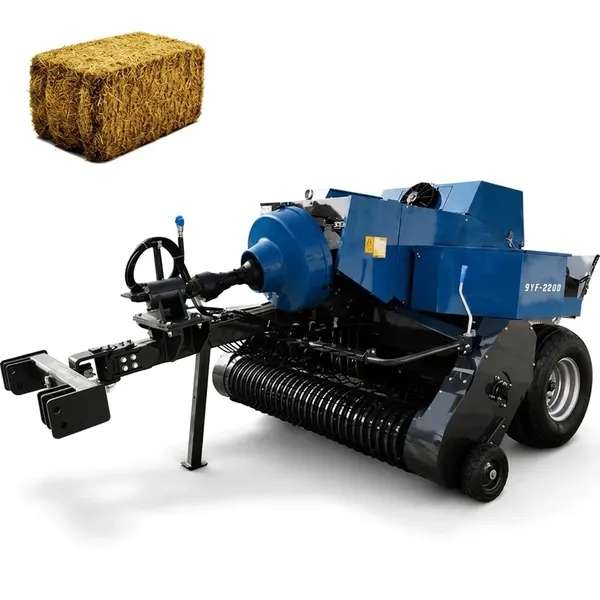
The fan system adds machine cost and maintenance complexity to the 9YFS-2.2 compared to the 9YF-2200S. Whether that cost is justified depends entirely on the market premium available for lower-dust, lower-ash bales in your specific sales channels. A simple framework:
Premium per bale: $1.00–$2.50 for documented low-dust horse or export hay
Annual bales produced: 5,000–15,000
Annual premium revenue: $5,000–$37,500
Annual fan maintenance cost: $200–$600
Net annual fan benefit: $4,400–$36,900
Premium per bale: $0
Annual bales: any volume
Annual premium revenue: $0
Annual fan maintenance cost: $200–$600
Net annual fan cost: $200–$600 (maintenance only)
The fan investment is justified when your primary market is horse hay, export alfalfa or premium dairy hay where buyers pay a documented price premium for lower dust and ash content. For commodity beef hay and standard straw, the fan adds cost without capturing additional market revenue.
PTO Driveline References for the 9YFS-2.2
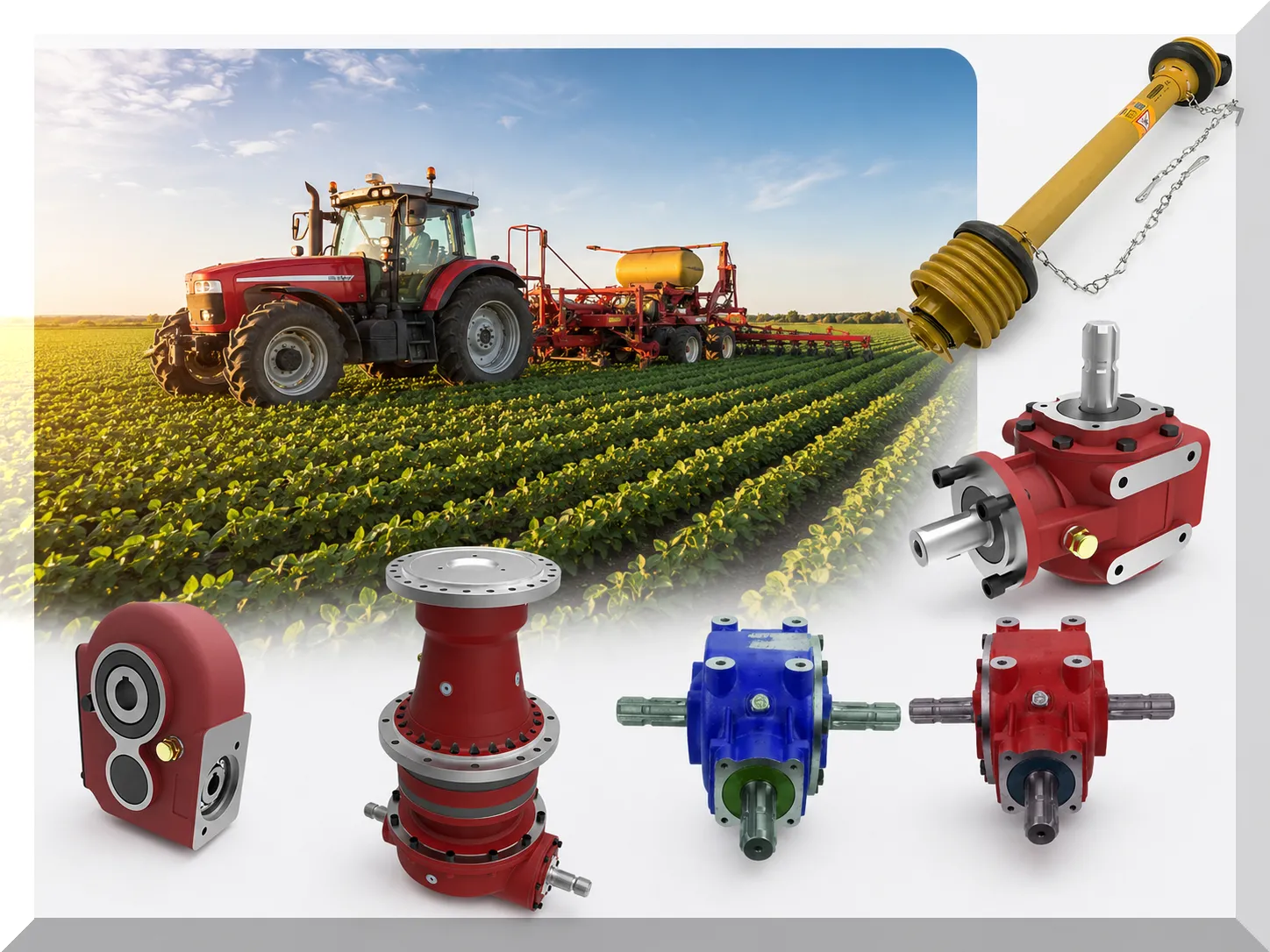
Gearbox torque ratings and PTO shaft standards for the 9YFS-2.2 at 99–140HP: agricultural gearbox and PTO shaft specifications
The fan drive adds a secondary PTO load path — verify that the driveshaft rated torque and length are appropriate for the combined shredder and fan load at 99–130HP. Specifications are covered in the PTO driveshaft and CV joint sizing guide.
Frequently Asked Questions — Square Baler Negative-Pressure Fan
Produce Cleaner Bales for Premium Markets
The 9YFS-2.2 is the only square baler in the 9YF lineup with a dedicated negative-pressure fan for dust and soil removal before bale compression. Tell us your hay market and tractor HP — we will confirm whether the fan system is the right investment for your operation.
America Ever-Power Forage Baler Equipment INC. · 1401 21st ST STE R, Sacramento, CA 95811
Editor:Cxm


