
Why Cotton Stalks Challenge Standard Square Balers
The Physical Characteristics That Cause Problems
Cotton stalks at harvest maturity are woody, branched and thick-stemmed — significantly more rigid than any forage crop and comparable in hardness to dry sorghum at its toughest. After picking, the stalks are also irregular in orientation: some stand erect, others have been flattened by picker head pressure or wheel traffic, and sections of the field show a dense tangle of interlocked stems and branches that resist pickup and feeding uniformly.
Beyond the stalk structure, cotton picking leaves residual lint fibre throughout the field. This fine cotton fibre has two effects on baling equipment: it accumulates around rotating shafts, pulleys and bearings at a high rate, wrapping tightly in a way that accelerates wear and can cause shaft seizure if not cleared daily. It also contaminates the bale material stream, adding a fibre content to the finished bale that can be beneficial (in some biomass applications) or problematic (in feed applications where cotton gin trash residuals are a concern).
The third challenge is debris embedded in the field from the picking operation — wire fragments, gin stand hardware, seed fragments and small equipment parts that were lost during the season or picking process. These embedded objects damage knotter bills, knife blades and shredder components at a higher rate than in clean hay or straw fields. A pre-baling field walk to remove any visible metal debris is standard practice before cotton stalk baling.
Field Preparation Before Baling
The Field Shredder Pass: Usually Required
In most cotton stalk baling operations, a field-mounted shredder or stalk cutter performs a separate pass before the baler enters the field. The field shredder — typically a heavy-duty rotary cutter or flail mower — chops intact cotton stalks into shorter segments (typically 100–200mm) and lays them in a relatively flat residue layer across the field. This field-shredded material is much more manageable for the baler pickup than intact standing or tangled stalks.
Field shredder adjustment is critical for baling performance: too long a shredder segment (above 200–250mm) produces material that tangles in the pickup and resists even feed into the hammer-claw system; too fine a shred (below 50mm) produces a fine dust-like residue that the pickup cannot gather into a consistent windrow. Target segment length for cotton stalk pre-shredding before baling: 80–150mm. After the field shredder pass, rake the shredded material into windrows — a merger or side-delivery rake rather than a rotary rake avoids further shredding of already-processed material.
Moisture Window for Baling
Cotton stalks at low moisture (below 12%) are at maximum hardness — the combination of low moisture and high lignin content makes the stalk material extremely rigid. Baling at this moisture level places maximum load on both the shredder and the plunger, and shredder blade wear accelerates significantly in very-dry cotton. If possible, bale cotton stalks at 14–20% moisture — either shortly after picking before field drydown is complete, or after a light rain event that raises the field moisture without creating muddy conditions that prevent access. At 14–18% moisture, the stalks are measurably easier to shred and compress, reducing shredder blade wear and PTO demand while still producing bales that are dry enough for storage without mold risk.
Pickup System Selection: Hammer-Claw Required
Pre-shredded cotton stalk residue after raking presents as a moderately dense windrow of irregular, partly interlocked segments. A spring-tooth pickup — the system on the 9YF-1700, 1900 and 2200 — can recover this material in well-formed elevated windrows. However, cotton fields regularly have sections where the residue is matted flat from field traffic, where the windrow is irregular or where short stem segments are below the minimum height for reliable spring-tooth engagement.
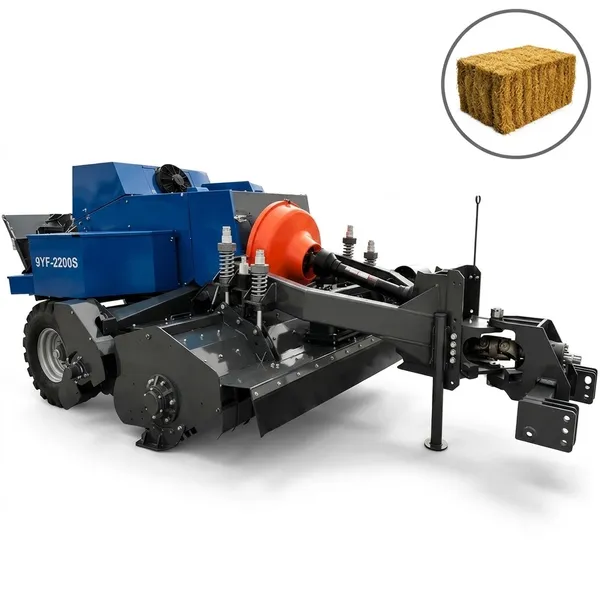
The hammer-claw pickup on the 9YF-2200S and 9YFS-2.2 recovers these ground-contact and irregular sections significantly better than spring-tooth systems — the impact energy of the rotating flails dislodges and lifts material from the soil surface rather than requiring the material to be elevated before tines can engage. For cotton stalk baling where field residue coverage is uneven and sections of flat material are common, the hammer-claw system recovers more total material per pass and reduces the number of secondary raking and re-baling passes needed to clean the field.
Note the shaft-wrapping behaviour of cotton lint: hammer-claw tine shafts collect lint fibre at a higher rate than spring-tooth systems because the rotating drum generates more airflow that moves lint particles toward the shaft. Check and clear the hammer-claw shaft during fuelling stops — clearing lint buildup takes 3–5 minutes per check and prevents the accumulation that leads to bearing damage over a full field day.
What the Baler Shredder Adds for Cotton Stalks
Processing Pre-Shredded Material a Second Time
Even after field pre-shredding to 80–150mm segments, cotton stalk material entering the baler compression chamber contains woody segments that bridge across the 460×360mm cross-section and resist uniform compression. The baler-mounted shredder on the 9YF-2200S breaks these segments further — reducing them to 40–80mm pieces that pack with significantly fewer voids than 100–150mm pre-shredded segments. The resulting bale is denser, heavier per unit length and more shape-stable in the stack.
The benefit is measurable: in cotton stalk conditions, single-stage shredder bales from the 9YF-2200S consistently produce 15–25% higher density than the same pre-shredded material compressed without a baler-mounted shredder. At the same plunger length setting, this density improvement means fewer bales for the same field area (the baler processes the same weight of material in each bale, which simply weighs more per unit length) — which reduces the number of bale-handling operations needed to clear the field.
Fan Cleaning Benefits for Cotton Stalk Bales
The 9YFS-2.2 adds a negative-pressure fan between the pickup and shredder stages — and cotton stalk conditions are one of the clearest use cases for this feature. Pre-shredded cotton stalk residue carries a high load of fine cotton field dust, soil particles from the picking operation and, depending on regional practice, residual gin stand dust from pre-field processing. The fan removes this fine particulate from the material stream before compression.
For cotton stalk bales destined for markets where ash content or fibre cleanliness matters — mushroom substrate producers, biomass processing facilities that test ash content — the fan-cleaned bales from the 9YFS-2.2 consistently test lower in soil-derived ash than non-cleaned bales from the same field. For cotton stalk bales sold for feed or bedding, the fan also reduces the lint-and-dust cloud generated when the bale is opened and broken apart, which is relevant for operations where workers handle large volumes of cotton stalk bales in enclosed spaces.
In cotton stalk conditions, the fan outlet screen requires particularly frequent clearing — cotton lint accumulates on the screen at a higher rate than in any other crop, potentially reducing fan effectiveness within a single field session. During cotton stalk baling, clear the fan outlet screen at every refuelling stop rather than the standard once-per-day schedule.

Tractor Power Requirements for Cotton Stalk Baling
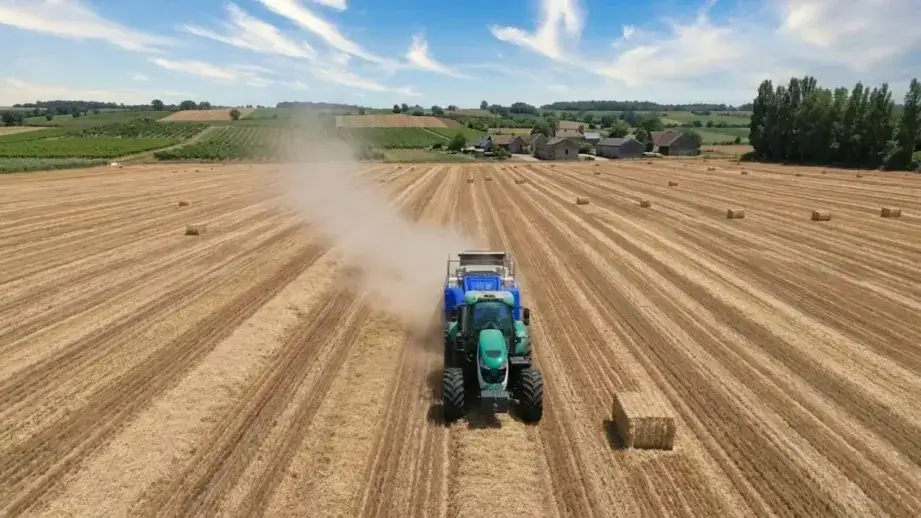
Cotton stalk baling with a hammer-claw and shredder-equipped square baler is one of the highest PTO-demand operations in the 9YF range. The 9YF-2200S minimum is 99HP PTO, but cotton stalk conditions in practice typically require 110–125HP PTO for sustained operation at normal forward speed without engine labouring at peak shredder load events.
Factors that increase PTO demand in cotton stalk conditions above the minimum specification:
For the 9YFS-2.2 in cotton stalk conditions, a tractor producing 120–140HP at the PTO provides comfortable operating reserve across the range of density variation typical in cotton fields. This power class (130–150HP engine) is a standard commercial row crop tractor in U.S. cotton-producing regions and the appropriate pairing for serious cotton stalk baling operations.
Wear Rates and Maintenance in Cotton Conditions
Components Under Accelerated Wear in Cotton Stalk Baling
| Bileşen | Cotton Condition Wear Rate | Inspection Interval |
|---|---|---|
| Shredder blades | High — abrasive soil, embedded debris | Every 100–150 hours |
| Hammer-claw tine tips | Moderate-high — ground contact in uneven residue | Every 80–120 hours |
| Knotter bills and knives | Moderate — debris impact risk, cotton fibre tangling | Every 50–80 hours |
| Shaft bearings (all) | High — cotton lint wraps around shafts and seals | Clear lint daily, lubricate every 30–40 hours |
| Fan outlet screen | Very high — lint accumulates rapidly (9YFS-2.2 only) | Clear at every refuelling stop |
Budget significantly more maintenance time and consumables cost for cotton stalk baling compared to hay or straw. A conservative estimate: maintenance parts cost (blades, tines, belts) for a cotton stalk season will run 2–4 times the equivalent hay season cost for the same number of operating hours. Factor this into the economics of cotton stalk baling before committing to a season program.
Markets for Cotton Stalk Bales
Where Cotton Stalk Bales Find Buyers
Cotton stalks have reasonable energy content per tonne of dry matter. Biomass power plants and pellet facilities in cotton-producing regions purchase stalk bales as a fuel supplement. Price per tonne varies with local energy market pricing and competing biomass supply; margins are typically lower than feed or specialty markets but volumes are large.
Shredded cotton stalk bales used as dry lot bedding for beef cattle and horses in regions where straw supply is limited or expensive. Cotton stalk bedding is more abrasive than straw for prolonged contact — suitable for cattle but requires monitoring for equine applications. Bedding market pricing is typically between straw and corn stover pricing.
Cotton stalk material is used in some oyster mushroom substrate mixes as a cellulose source. This market is small in volume but pays premium prices per tonne for clean, low-ash material — where the fan-cleaned 9YFS-2.2 bales provide a genuine quality advantage. Target buyers: small-scale specialty mushroom producers in Gulf Coast and Arizona cotton-producing areas.
Shredded and baled cotton stalks distributed on fields as a soil amendment, then incorporated by tillage. The baling step allows controlled distribution of residue on target fields rather than burning or plowing the full field mat. This is primarily a cost-management option for growers who need the field cleared for the next crop with minimal burning.
PTO Driveline References for Cotton Stalk Baling

Gearbox torque ratings and shaft standards for high-demand cotton stalk baling: tarımsal şanzıman ve PTO şaftı özellikleri
The high torque variability in cotton stalk conditions — from light lint sections to dense stalk sections — places shock-load demands on the PTO driveshaft that make correct slip clutch rating essential. See the PTO tahrik mili ve CV mafsalı boyutlandırma kılavuzu for applicable specifications.
Frequently Asked Questions — Cotton Stalk Baling
Cotton Stalk Baling Equipment Recommendation
Cotton stalk baling demands the 9YF-2200S (single shredder, hammer-claw, 99HP minimum) or the 9YFS-2.2 (dual shredder, fan, 99HP minimum) — not the standard spring-tooth models. Tell us your tractor HP and your cotton acreage and we will confirm the right model for your operation.
America Ever-Power Forage Baler Equipment INC. · 1401 21st ST STE R, Sacramento, CA 95811
Editör:Cxm


