
The U.S. Hay Export Market: Who Buys, What They Pay, and Why Asia Drives the Premium
U.S. hay exports represent approximately $600 million to $1.2 billion annually depending on crop conditions, exchange rates, and competition from Australia and other suppliers. The price premium exists because Japan, South Korea, and Taiwan face land constraints and climate limitations that prevent them from producing adequate domestic forage for their dairy and equine industries. Japan alone supports 1.3 million dairy cattle and a significant equestrian sector — both entirely dependent on imported forage for a significant fraction of their nutrition. This structural dependency makes Asian hay buyers among the most reliable and premium-paying customers available to U.S. producers.
| Destination | Primary hay species demanded | Volume (est.) | End use | Key quality priority |
|---|---|---|---|---|
| Japan | Timothy (premium); alfalfa (dairy) | Largest | Dairy, equestrian | Bright green color, zero regulated weeds, ≤14% moisture |
| South Korea | Alfalfa (primary); timothy | Large | Dairy, beef | CP ≥18%, moisture ≤14%, consistent lot quality |
| Taiwan | Timothy; alfalfa | Moderate | Dairy, equestrian | APHIS certification; weed-free documentation preferred |
| UAE / Saudi Arabia | Alfalfa (primary) | Growing | Dairy | Halal-compatible documentation; moisture ≤14% |
| China | Alfalfa | Variable | Dairy | Pesticide residue documentation; complex and shifting regulations |
USDA APHIS Phytosanitary Certification: The Step-by-Step Process
A phytosanitary certificate is an official government document certifying that a plant product meets the importing country’s pest and disease exclusion requirements. For U.S. hay exports, the certificate is issued through a coordinated process between USDA APHIS headquarters and State Departments of Agriculture — the producer applies through the state, the state conducts inspection, and the certificate is issued with USDA federal authority behind it.
Contact your State Plant Regulatory Official (SPRO)
Each state has a designated SPRO responsible for phytosanitary certificates. This is your primary point of contact — not USDA federal offices. Find your SPRO through the National Plant Board (www.nationalplantboard.org) or your state department of agriculture’s website. Establish the contact before you have an imminent shipment, as first-time applications require an initial setup that takes longer than repeat applications.
Submit the application package — before the hay is loaded
The application requires: destination country and specific importer; species identification of hay being exported; field of origin information; harvest date; quantity (bale count and estimated weight); storage location for inspection access. Important: the certificate applies to a specific lot — you cannot apply for a certificate for “hay I might export sometime.” The certificate must correspond to an identified lot ready for shipment. Cost: $50–$150 depending on state, paid at application.
State inspector examines the lot
The state inspector visually examines representative samples from the lot for regulated pest presence, weed seeds, and crop identity. For Japan-bound hay, the inspector specifically looks for regulated weed species on Japan’s quarantine list. Hay with visible flowering weeds or seed heads present in the bales will be failed. For lots with any doubt, lab analysis of seed content may be requested. Keep the lot accessible and unloaded until inspection is complete.
Certificate issued — with specific conditions endorsed
The completed phytosanitary certificate bears the USDA APHIS federal shield and the state signature. It specifies the lot it covers, the destination country, any treatment applied (fumigation if required), and any additional declarations required by the destination country. The original certificate must accompany the shipment; retain a copy for your records. The certificate is not transferable — the lot it certifies cannot be split and sold to a different buyer under the same certificate.
Compile the complete documentation package
Beyond the phytosanitary certificate, most Asian buyers require: independent forage analysis (CP, moisture, ADF/NDF from an accredited lab); a weight certificate (scale ticket from a certified commercial scale); certificate of origin (from the local USDA Farm Service Agency office or state department of agriculture); and for weed-free certified shipments, the weed-free certificate. Assemble all documents into a single package — original plus copies — to travel with the shipment and be presented at destination port customs.
Country-Specific Requirements: Japan, South Korea, Taiwan, and the UAE
Every importing country maintains its own Plant Protection Law and pest exclusion list. A phytosanitary certificate that satisfies South Korea’s requirements may not satisfy Japan’s more stringent standards. Matching your documentation package to the specific destination country’s requirements — not just the generic APHIS certificate — is the compliance competency that separates reliable export suppliers from those who encounter port refusals.
| Country | Regulatory authority | Key prohibited items | Moisture limit | Notable additional requirements |
|---|---|---|---|---|
| Japan | MAFF Plant Protection Division | Wild oat, dodder (Cuscuta spp.), broomrape (Orobanche), witchweed (Striga), 25+ additional regulated weed species | ≤14% | Green color premium; port inspection by MAFF; fumigation may be required if any regulated pest found; repeated rejections can result in supplier suspension |
| South Korea | Animal and Plant Quarantine Agency (APQA) | Similar to Japan list; slightly fewer regulated species; specific pests vary by import permit conditions | ≤14% | Import permit required by Korean buyer; permit conditions specify treatment requirements |
| Taiwan | Bureau of Animal and Plant Health Inspection | Quarantine pests and weeds; less restrictive than Japan for most species | ≤15% | APHIS certificate typically sufficient with standard weed-free documentation |
| UAE/Saudi Arabia | Ministry of Climate Change / MOCCAE | Noxious weed seeds; specific pest exclusion list per import permit | ≤14% | Certificate of origin required; some shipments require residue testing documentation; growing buyer segment |
Weed-Free Hay Certification: State Programs and Their Export Value
Weed-free hay certification is a state-administered program (not a federal USDA program) that certifies hay fields and their production as free from specified noxious weed species. The certification is separate from the APHIS phytosanitary certificate but is often required in addition to it for certain destination countries, interstate transport to public lands, and premium domestic horse markets. For export purposes, weed-free documentation provides a second layer of assurance to the importing country’s inspectors beyond the APHIS certificate.
The most widely recognized and developed state weed-free programs are in western states where noxious weed spread through hay transport is a documented land management concern: Wyoming (one of the most rigorous programs, widely accepted by export buyers and federal land managers); Montana; Colorado; California; Idaho; Oregon; Nevada. Each state maintains its own noxious weed list and inspection standards, though most have reciprocal recognition agreements with neighboring states. For export to Japan and Korea, western-state weed-free certification is particularly valuable because it addresses the specific weed species most commonly on Japanese quarantine lists — wild oat, leafy spurge, spotted knapweed.
Field inspection by a state-certified inspector before harvest; inspection covers the entire field for any regulated noxious weed presence. Annual inspection required. Cost: $20–$75 per inspection depending on field size and state. Certificate issued after passing inspection; a separate “Weed-Free Certificate” accompanies the hay in transport and sale. Bale tags or labels may be required for certified lots. Premium value in hay markets: $10–$25/ton above non-certified hay in western domestic markets; recognized as a significant quality differentiator in export markets where the certification history reinforces APHIS certificate credibility.
Container Specifications: Matching Bale Size to Container Capacity
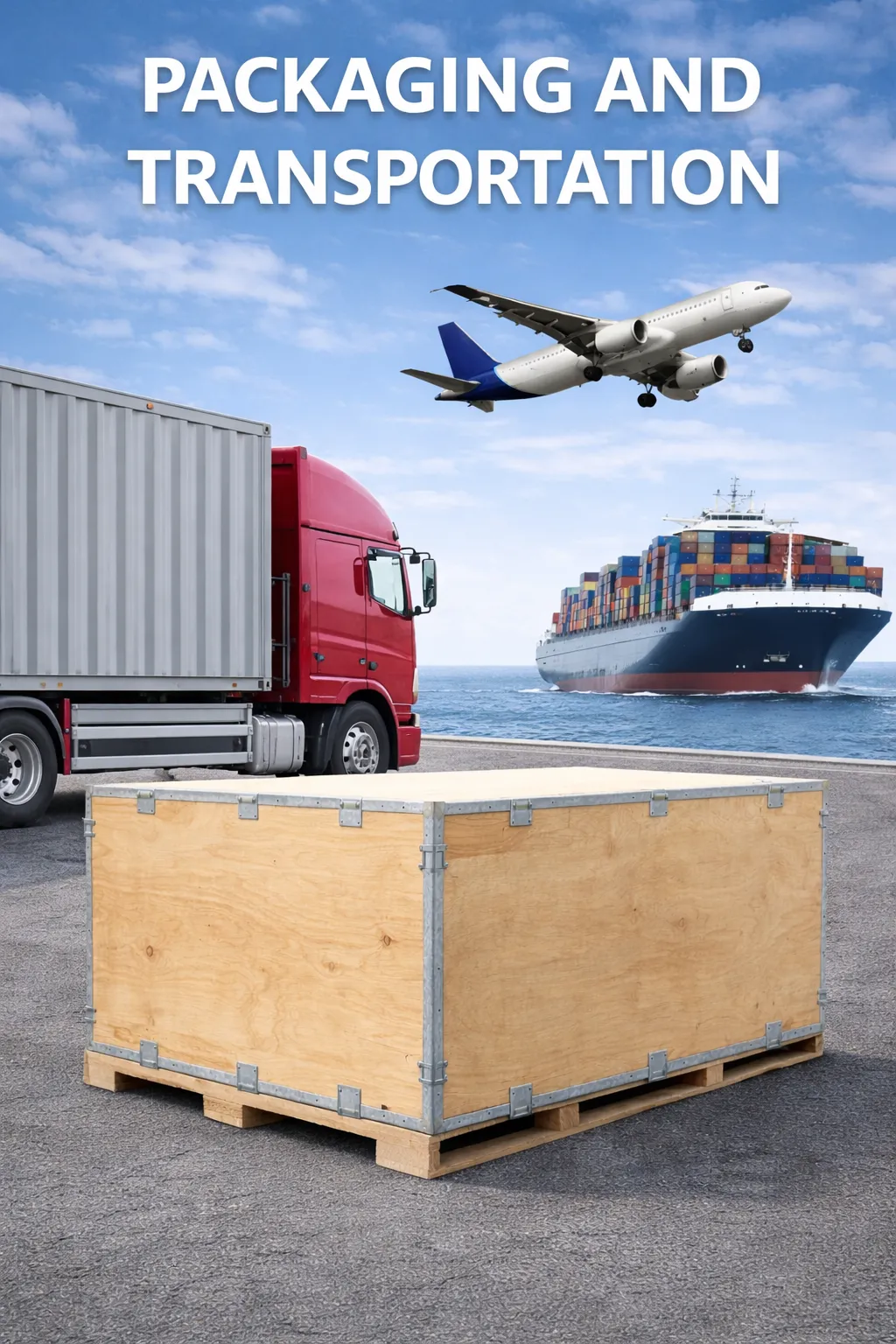
One of the most preventable sources of export logistics problems is a bale size mismatch with the shipping container. A bale that is 2 inches wider than the container loading plan accommodates cannot be mechanically loaded in the planned configuration — which may require hand-stacking, reduce the number of bales per container, or in extreme cases, require rebaling. This is a problem that should never arise, because the solution is straightforward: confirm container internal dimensions before establishing the season’s bale size target.
Max payload: 47,900 lbs (varies by truck regulation at destination)
Typical hay capacity: 18–22 metric tons
4×4 bale loading: 2 bales wide × 2 bales high × 8 rows = 32 bales × ~600 lbs = ~19,200 lbs
4×5 bale loading: 1 bale wide × 2 bales high per tier, requires careful planning
Max payload: 47,900 lbs (same as 20-foot; more volume, same weight limit)
Typical hay capacity: 18–22 MT (weight limited, not volume limited)
Most common for: commercial export operations optimizing cube utilization
Note: 40-foot containers are not always available at all ports; confirm availability with your freight forwarder
The timothy and oat hay species that dominate the Japanese premium horse market require specific bale presentation standards beyond container fit. The timothy hay production specifications that Japanese buyers request are in the timothy hay production and baling guide. For operations that produce oat hay for export, the cutting timing and baling specifications for export-grade oat hay are in the oat hay production and baling guide.
Working With an Export Broker: Commission Structure, Role, and Selection Matrix
An export broker provides market access and logistics management that would require years of relationship-building and significant operational infrastructure to replicate independently. For most U.S. hay producers entering export markets, a good broker is the practical path to the first container — and the broker relationship is worth investing in beyond the initial transaction.
Production Standards for Export-Quality Hay
Export hay quality standards begin in the field — not at the inspection point. Hay that fails APHIS inspection or port inspection because of weed contamination, excessive moisture, or poor color is hay that was managed incorrectly during the production season. The production standards that export buyers require are higher than most domestic markets in every quality dimension.
Zero tolerance for regulated weeds is the standard for Japan-bound hay. This requires: stand establishment using certified clean seed in weed-free soil; cutting frequency that prevents any weed from reaching seed production stage; raking techniques that do not introduce weeds from field margins; and storage practices that prevent wind-blown weed seed contamination. Export-grade stands should be on ground that has not had documented infestations of regulated species (wild oat, dodder, broomrape) for a minimum of 3 years.
Maximum 14% moisture for Japan and Korea; some premium horse market lots specify ≤12%. Moisture management for export is more exacting than for domestic hay because hay that re-absorbs moisture during container transit — due to condensation from temperature differentials crossing the Pacific — can arrive above spec even if it was within spec at loading. Field drying to 12–13% rather than 14–16% provides the moisture safety margin. The round baler models with inline moisture sensors provide continuous measurement confirmation during baling to prevent high-moisture bales from entering the export lot.
Minimum density target: 60 lbs/cubic foot. Container loading efficiency is directly related to bale density — under-dense bales waste container cubic capacity and reduce the number of tons shipped per container, increasing per-ton ocean freight cost. All bales in an export lot must be within ±2 inches of the target dimensions — mechanical container loading cannot accommodate variable bale sizes. Set density spring to produce consistent bale weights within ±5% of the target weight across the entire harvest day, not just the first few bales.
The domestic and export pricing context — where export premiums compare to domestic markets for timothy, oat, and other hay species — is in the hay market pricing and elevator grading guide.
The Export Economics: When the Numbers Work — and When They Don’t
The export premium is real but it is shared among multiple intermediaries and offset by real incremental costs. The net economics depend on scale, species, production region, and whether you are selling FOB (producer pays to U.S. port) or through a broker who handles logistics. The analysis below uses timothy hay exports to Japan as the reference case — the highest-margin commodity export in U.S. hay trade.
| Item | $/ton (timothy, Japan horse market) | Notes |
|---|---|---|
| CIF Japan price (buyer pays) | $320–$380 | Japanese horse market premium segment; PNW or Great Lakes timothy |
| Less: Ocean freight (USA → Japan) | –$90–$130 | Varies by origin port, container size, and market conditions |
| Less: Broker commission (10% of FOB) | –$20–$28 | FOB price ≈ CIF minus freight; 10% of FOB ≈ $20–$28/ton |
| Less: APHIS certificate + weed-free cert | –$3–$6 | Per-ton cost spread across 20 MT container |
| Less: Domestic port/drayage costs | –$8–$15 | Transport to port, container stuffing, handling |
| = Net FOB price to producer | $180–$220 | Compare to domestic timothy: $175–$230/ton. Export premium: $0–$30/ton |
| Export premium over domestic sale | +$0–$45/ton | Premium is real but modest per ton; scales to $0–$9,000/year on a 200-ton export program |
Hay Export Documentation FAQs
Get Export Bale Specifications for Your Round Baler
Tell us your target export destination (Japan, South Korea, or UAE), hay species (timothy, alfalfa, or oat hay), target bale size for container loading, and PTO tractor horsepower. We confirm the density spring setting and bale dimension tolerances that produce consistent export-compliant bales for your target market.
Editor: Cxm


