
The Belt System’s Role: Why Belts Are the Single Most Important Component
In a variable-chamber round baler, the belts form the walls of the bale chamber itself — they are simultaneously the structural element that contains the forming bale, the drive element that rotates the bale, and the compression element that builds density. Every function of the bale chamber depends on the belts performing correctly. In a fixed-chamber design, the belts drive the rollers that rotate the bale, and their condition determines how efficiently the chamber’s mechanical energy is transferred to the forming bale. In both designs, belt deterioration directly and immediately affects bale quality and baler reliability.
Belt Types and Construction: What Your Baler’s Belts Are Made Of
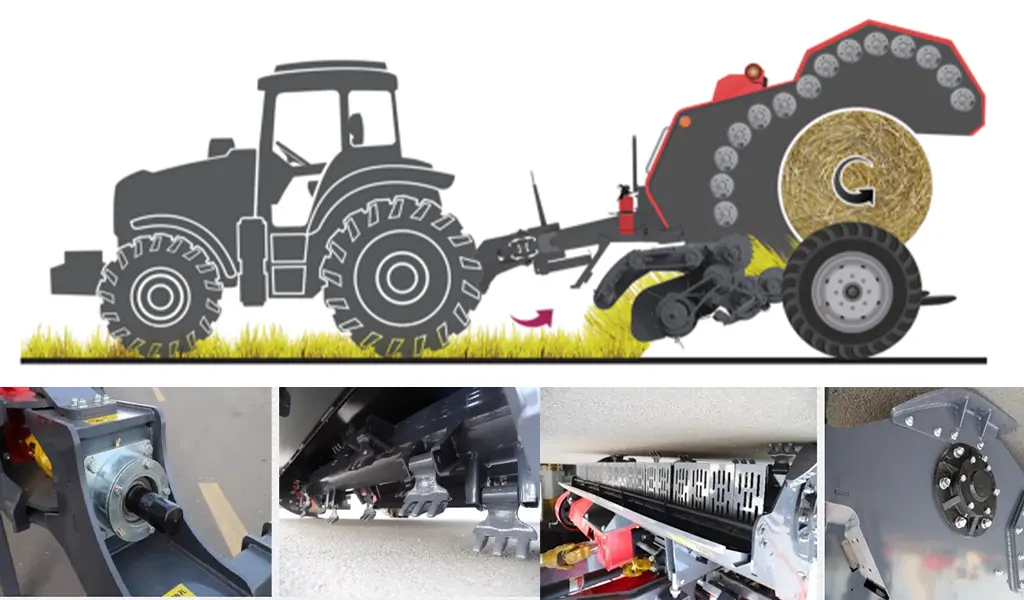
Round baler belts are multi-layer constructions designed to flex repeatedly through small-radius roller paths while maintaining the tensile strength to compress crop material at high pressure. The critical construction layers are the tensile member (which resists elongation and determines belt life), the rubber cover (which provides grip on the crop and wear resistance against rollers), and the carcass (which provides structural body and flexibility).
Steel cord belts have a tensile member made from high-tensile steel cables embedded in rubber. They are stiffer than textile-cord belts, elongate very little over their service life, and maintain more consistent tension. Most OEM round baler belts in commercial balers are steel-cord construction. They do not “creep” (gradually elongate under sustained tension) the way textile belts do, making elongation measurement more accurate over a service season.
Textile-cord belts use polyester or nylon cords as the tensile member. They are more flexible and lighter than steel-cord belts, and they elongate more over their service life — requiring more frequent tension adjustment and more careful elongation monitoring. They are more forgiving of minor tension misalignment and are common in lighter-duty balers. Elongation measurement is essential for textile-cord belt management because they stretch more predictably (and faster) than steel-cord belts.
The outer rubber cover provides grip on the crop material. Different compound formulations are used for different crops — smooth or fine-textured covers for grass hay; cleated or textured covers for heavy or wet silage material. Cover wear (where the surface compound wears thin exposing the carcass fabric) reduces grip efficiency and accelerates wear at the exposed zones. Inspect cover thickness at all roller contact points annually.
Belt Elongation Measurement: The Definitive Wear Standard
Elongation is measured as the percentage increase in belt length relative to the new-belt specification. A belt that was 3,000mm when new and measures 3,060mm after one season has elongated 2.0% — the replacement threshold. This measurement is objective, repeatable, and unaffected by the appearance of the belt surface, making it the most reliable wear indicator regardless of the belt’s visual condition.
Access the measurement zone. Open the tailgate fully and rotate the belt by hand until a belt lace (splice joint) is accessible at a point where the belt runs flat — typically at the lower belt guide rollers or on the flat run between two rollers. Mark the belt at the lace point with chalk for reference.
Mark a measurement section. From the lace, count forward 20 belt links (or use a tape to mark a specific reference distance per your baler’s manual — some specify measuring across 10, 12, or 20 links). Mark the endpoint with chalk.
Measure the section length. Use a rigid steel tape (not a flexible cloth tape, which produces inconsistent readings). Measure between the chalk marks and record the measurement to the nearest millimeter.
Compare to new-belt specification. Find the new-belt measurement for the same section length in the baler’s operator manual. Calculate: (measured length − new length) ÷ new length × 100 = elongation percentage. If elongation exceeds 2.0%, the belt is past the replacement threshold.
Measure all belts. Repeat on every belt in the baler. If any single belt exceeds 2.0%, replace the full belt set — not just the one belt. Mixed-elongation belt sets produce uneven tension distribution that causes the same density and tracking problems as uniformly worn belts.
Visual Inspection: What to Look for at Each Service Check
| Inspection point | What to check | Action threshold |
|---|---|---|
| Belt surface cover | Rubber compound thickness at roller contact zones — presses finger into cover; if fabric feel is detectable, cover is thin | Replace when cover fabric visible at any contact point |
| Belt edges | Look for fraying, rubber crumbling, or carcass cord exposure at belt edges — caused by belt tracking against guide flanges | Significant fraying: investigate tracking before replacement |
| Splice / lace condition | Check mechanical lace clips for bent or missing clips; check vulcanized splices for separation or cracking at the joint perimeter | Any lace clip damage: replace or repair before harvest |
| Belt tracking | Run the baler empty at idle PTO and observe belt path — each belt should track centered on all rollers without lateral drift | Visible lateral drift: adjust tracking before baling |
| Rubber cracking (surface) | Fine surface cracks (crazing) are normal aging; deep cracks that penetrate the carcass indicate UV degradation or chemical exposure | Deep cracks to carcass: replace proactively |
Belt Tension and Tracking: The Setup Parameters That Control Wear Rate
Correct belt tension is the most important operational variable for belt service life. Over-tension causes accelerated tensile member fatigue — the belt works harder to flex through the roller path and fatigues faster. Under-tension causes belt slippage on drive rollers, which generates heat, wears the surface cover, and in extreme cases causes splice failure from the repetitive impact as the belt slips and catches.
Most variable-chamber balers have a tension spring adjustment that sets the compression force on the forming bale. The spring is typically set at the manufacturer’s standard position for most hay and adjusted tighter for maximum density. As belts elongate over the season, the effective spring position changes — the same spring setting that was correct at the start of the season may be effectively looser as the belt stretches. This is why density gradually declines through the season even without any deliberate adjustment change. When density decline is noted, measure elongation before adjusting tension — adjusting tension on over-worn belts is a temporary fix that masks the replacement need.
Belt tracking is adjusted by changing the angle of one or more guide rollers relative to the belt path. A belt that tracks to the left is corrected by angling the adjustment roller to move the belt path rightward. The procedure: run the baler unloaded at idle, observe which direction each belt drifts, and make small incremental adjustments (1/4 turn of the adjustment bolt) — large single adjustments typically overcorrect. Allow 30–60 seconds for the belt to respond to each adjustment before evaluating the result. Never operate the baler with visibly mis-tracked belts — sustained edge contact against flanges destroys belt edges within hours.
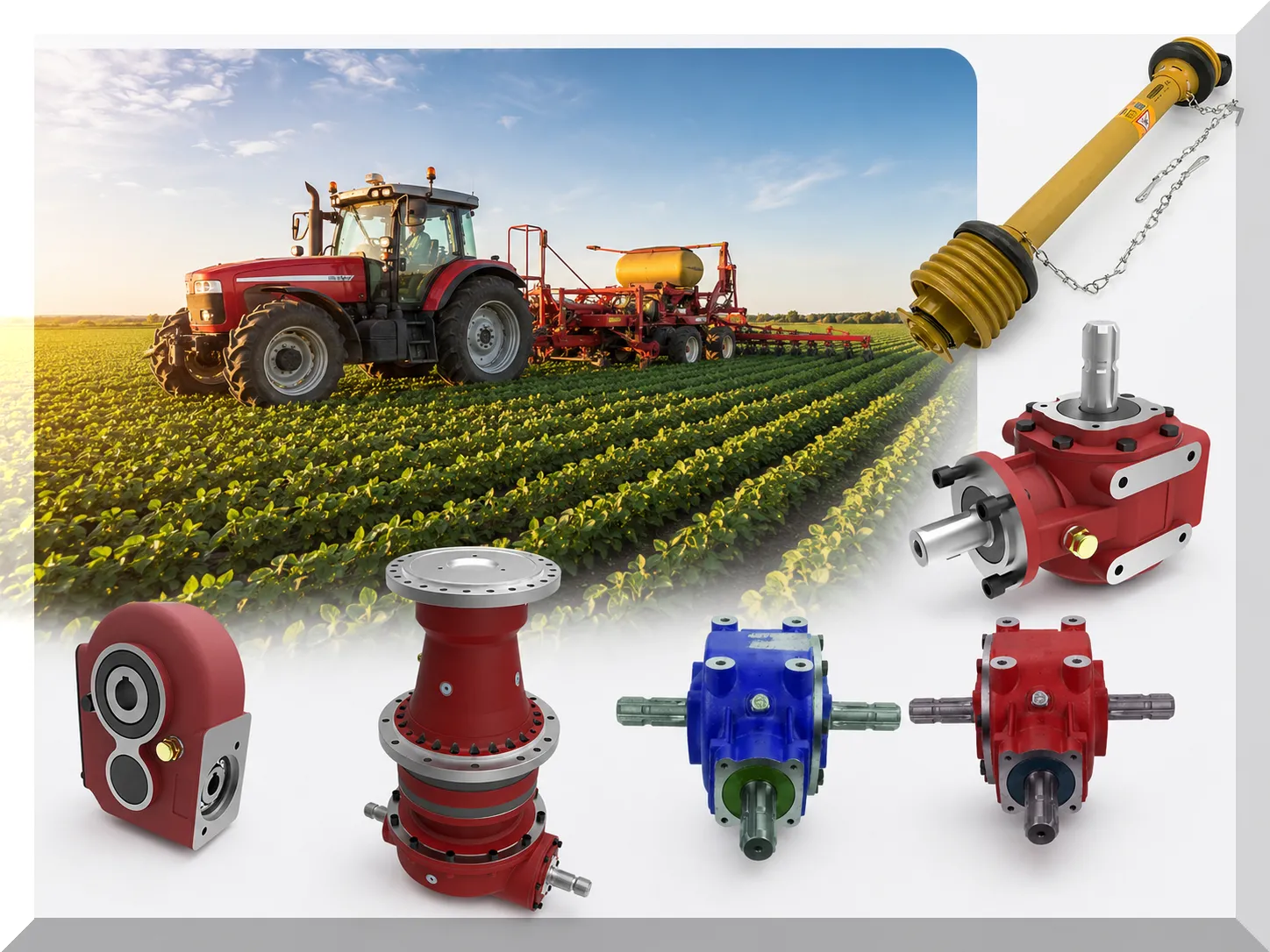
The complete seasonal maintenance checklist covering all belt, chain, and bearing service intervals is in the round baler seasonal maintenance checklist. Belt-related causes of bale density problems, bale shape irregularity, and wrapping failures are in the round baler troubleshooting guide. The gearbox and PTO driveline components that drive the belt system are in agricultural gearbox and PTO driveline component specifications.
Replacement Timing and Procedure: Getting the Decision and the Work Right
The ideal belt replacement event is in March or April — before the first cutting begins. Measuring elongation in February and ordering replacement belts immediately ensures they are on hand before the season opens. The cost of planned off-season replacement: parts + 4–6 hours labor in a warm, unhurried shop environment. The cost of emergency mid-harvest replacement: emergency parts markup + lost production + possible custom baling cost for the delayed window. The financial difference routinely exceeds $3,000–$5,000 per emergency event.
When replacing belts, replace every belt in the baler as a complete matched set — even if some belts are within the acceptable elongation range. Mixed-elongation belt sets cause uneven tension distribution across the bale width, producing density variation, tracking problems, and accelerated wear on the new belts (which take more load than the old elongated belts alongside them). The cost savings from replacing “only the bad ones” is consistently outweighed by the problems that mixed-condition sets create.
New belts undergo a “break-in” elongation period — typically 0.3–0.5% elongation in the first 200–400 bales as the rubber compound and tensile member settle under tension. Re-check elongation after the first 200 bales and confirm tracking is stable. Tension adjustment after break-in is normal and expected. Beyond the break-in period, elongation should slow substantially for the remainder of the belt’s service life.
Extending Belt Service Life: Operating Practices That Matter
Belt Maintenance FAQs

Get Belt Specifications and Replacement Timing for Your Baler Model
Tell us your baler model, current belt elongation measurement, and annual bale count. We confirm whether your belts need immediate replacement and provide the correct belt specification for your model so you are prepared before harvest begins.
Ediror: Cxm


