
Why Most Custom Baling Operations Undercharge — and How to Stop
The standard pricing approach in custom baling is to look at what neighbors are charging per bale and set your rate at or slightly below that number to stay competitive. This approach captures market rates but completely ignores whether the market rate actually covers your costs. In regions where custom baling rates have been stagnant for years while fuel, equipment, and labor costs have risen, the market rate may be significantly below break-even for a properly capitalized operation.
The correct approach is to build your price from your cost structure upward, then compare to market rates — not the other way around. If your cost-based price is above market rates, you have three options: reduce costs, increase volume to spread fixed costs further, or exit the market. If your cost-based price is below market rates, you have a competitive advantage. Either way, knowing your actual cost per bale is the foundation of a sustainable custom baling business.
The Cost Per Bale Formula: Building Your Price From the Ground Up
There are seven cost categories in custom baling. Missing any one of them understates your true cost and produces a price that appears profitable in the short term while consuming your equipment’s residual value without compensation.
| Cost category | How to calculate | Typical range | $/bale at 2,000 bales/season |
|---|---|---|---|
| Equipment depreciation | Purchase price × 15% ÷ annual bales | $2–$5/bale | $2.10–$3.75 |
| Interest / financing cost | Average loan balance × interest rate ÷ annual bales | $0.50–$2/bale | $0.60–$1.80 |
| Fuel | Diesel price × gal/hr × hrs/bale | $1.20–$2.40/bale | $1.20–$2.40 |
| Consumables (net wrap, shear bolts) | Annual consumable spend ÷ annual bales | $2–$3.50/bale | $2.00–$3.25 |
| Repairs and maintenance | Historical or 5% of equipment value ÷ annual bales | $0.70–$2/bale | $0.70–$1.75 |
| Labor (operator time) | Hours/bale × market wage rate | $1.50–$3.50/bale | $1.50–$3.25 |
| Overhead (insurance, storage, admin) | Annual overhead cost ÷ annual bales | $0.50–$1.50/bale | $0.50–$1.25 |
Total cost per bale: $9.48 | At 20% profit margin, price = $11.37/bale
Route Density: The Profitability Variable Most Custom Balers Ignore
Route density — the number of bales per mile of travel between customers — is the variable that determines whether your actual realized cost per bale matches your theoretical cost per bale. A custom baling route where 10 customers are clustered within a 5-mile radius produces dramatically lower travel cost per bale than a route where 10 customers are spread across a 25-mile radius. The baling work at the field is the same; the travel time is not.
Target: 15+ bales per travel mile for profitable custom baling
Low density: <8 bales/mile — travel cost per bale exceeds field efficiency gains
High density: 25+ bales/mile — maximum profitability per hour of operation
Example: 2,000 bales from customers spread over 400 total travel miles per season = 5 bales/mile. At 30 mph average travel speed, that is 13.3 hours of travel. At $25/hr operator + $0.80/mile fuel = $652 in travel cost, or $0.33/bale in travel alone. A dense route of 2,000 bales in 100 travel miles = 20 bales/mile = $163 travel cost = $0.08/bale. Same baler, same output, $0.25/bale lower cost from route geography alone.
Building a dense route requires deliberately targeting customers within a tight geographic cluster rather than accepting any customer within driving range. The short-term revenue temptation of taking a distant customer’s 50 bales for the same per-bale rate is often less profitable than declining and waiting to fill that time slot with a customer closer to your route core. This is a difficult business discipline but the most impactful one in custom baling economics.
Startup: Equipment Selection for a Custom Baling Business
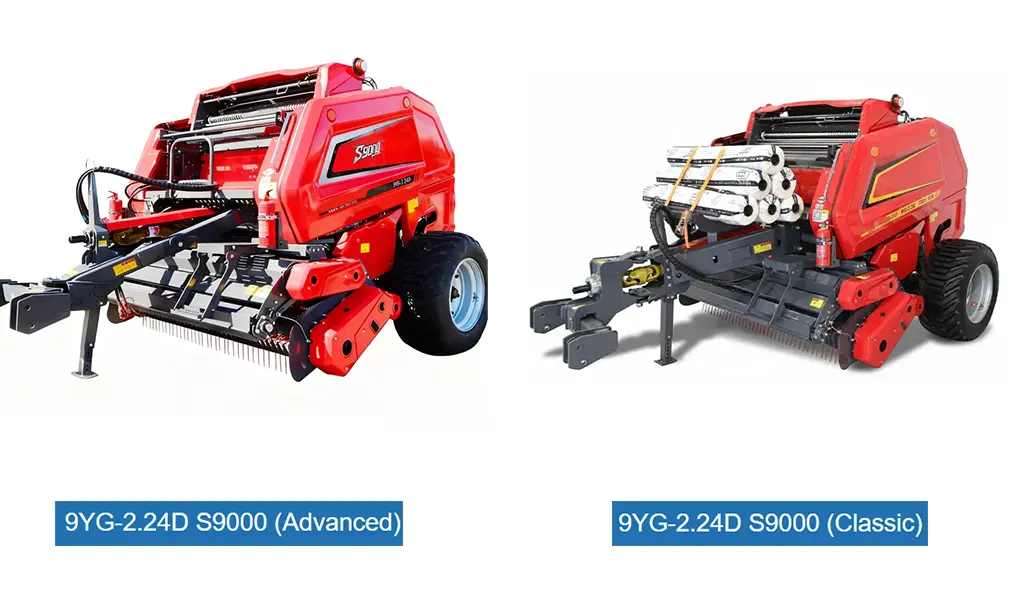
The baler choice for a startup custom baling operation should be driven by the bale specification your target customer base requires — not by what you can find cheapest. A customer who sells hay to an elevator expects a specific bale size and minimum bale weight. A customer who feeds dairy cattle may specify a dense, pre-cut bale. Buying equipment that cannot meet those specifications, even at lower cost, limits your market to customers who accept whatever you produce.
New equipment eliminates the unknown-history risk of used machines — you know the service history, you have full warranty coverage, and you have the manufacturer’s technical support network behind you. For a startup that cannot afford a mid-season breakdown to ruin a customer’s harvest window, new equipment reliability is worth the price premium. New balers also qualify for Section 179 first-year expense deduction, which can significantly reduce the after-tax cost in the first year. The full tax treatment analysis is in the Section 179 deduction guide for hay equipment.
A well-maintained used baler with documented service history and current-season inspection by a qualified mechanic can deliver equivalent performance at 50–70% of new cost. The risk is unknown wear — belts, bearings, and chains that appear functional may fail within 500 bales. Mitigate this: require a pre-purchase inspection by your mechanic, not the seller’s; request the bale count history; and budget $800–$1,500 for belt replacement and bearing inspection before the first customer season. A used baler that passes a rigorous pre-purchase inspection with a known-good service history is often the most economical startup choice.
The full investment analysis — including financing scenarios, breakeven bale count, and the 5-year net return comparison between new and used equipment purchases — is in the baler ROI investment analysis. The gearbox and PTO shaft specifications that determine maximum field operation speeds and sustained HP capacity are in agricultural gearbox and PTO driveline component specifications.
Customer Acquisition and Retention: Building the Route That Pays
Custom baling customers make their annual baling decision based on two factors in order of importance: availability when they need you, and quality/consistency of bales produced. Price matters, but most hay producers accept a moderate premium for a baler operator they can count on over a cheaper operator who may be unavailable when the weather window is right.
Contact each customer by April 1 to confirm approximate cutting dates and bale volumes for the coming season. This early scheduling allows you to identify date conflicts, plan route sequences, and confirm you have adequate equipment capacity for the peak period. Customers who know you are planning around their schedule are more likely to be loyal customers long-term.
When weather or equipment issues delay a scheduled customer, call before the scheduled day — not after missing it. Customers who receive a proactive update manage their situation; customers who discover a missed baling window by finding an operator who did not show up lose trust immediately. Even if the update is “we’re delayed 2 days,” the communication itself is the relationship-maintaining action.
Customers selling to a commercial elevator need bales that consistently meet the elevator’s minimum weight and size specifications. A custom baler who delivers 950-lb bales to an elevator requiring 1,000 lb minimum creates a problem for the customer — regardless of the per-bale rate charged. Know your customer’s bale specification requirements and confirm your equipment settings achieve them before starting each customer’s field. This single practice generates more repeat customers than any pricing strategy.
Break-Even Analysis: How Many Bales You Need Before You Profit
The break-even calculation determines the minimum annual bale volume at which your business covers all costs at your target price. Below this volume, you are consuming equipment value without compensation. Above it, every additional bale generates profit.
Example: Fixed costs (depreciation + interest + insurance) = $5,200/season
Variable cost = $5.64/bale (fuel + consumables + labor + repairs)
Price = $11.50/bale
Break-even = $5,200 ÷ ($11.50 − $5.64) = $5,200 ÷ $5.86 = 888 bales/season
Below 888 bales: operating at a loss.
From 888 to ~1,200 bales: thin profit margin.
Above 1,200 bales: meaningful profit contribution per additional bale.
This calculation reveals why volume matters so dramatically in custom baling: fixed costs are the same whether you bale 500 or 2,000 bales per season. Every bale above break-even contributes $5.86 to profit in this example. A second-year operator who grows from 1,000 to 1,500 bales adds $2,930 in profit from the volume increase alone — without any price change.
Structuring Your Pricing for Different Service Levels
Custom baling operators who offer multiple service levels — basic bale-only vs. bale-plus-count vs. bale-plus-move-to-edge — command higher revenue per customer and retain more customers through service flexibility. Building a tiered pricing structure allows you to serve both the price-sensitive customer who wants the minimum and the service-focused customer willing to pay for convenience.
| Service tier | What is included | Typical premium above base | Time added per bale |
|---|---|---|---|
| Base: bale only | Baling only; bales ejected in field where formed; customer moves bales | — | Baseline |
| Plus: wrap count sheet | Base + written bale count by field section delivered to customer | $0–$0.25/bale | Negligible |
| Plus: net wrap included | Base + operator supplies net wrap (eliminates customer sourcing burden) | +$2.50–$3.50/bale | None (already in operation) |
| Plus: bale to field edge | Base + move each bale to field edge or designated storage site after baling | +$2–$5/bale | +3–6 min/bale (requires separate transporter) |
| Premium: all-in-field service | Rake (customer’s windrows) + bale + move to edge + apply wrap sticker with lot number | +$6–$12/bale | Significant — requires rake equipment and multiple passes |
Offering net wrap as an included cost (built into your per-bale price) rather than a separate billable item simplifies customer invoicing and eliminates disputes about wrap quality or consumption rate. Most operators who include net wrap in the all-in price find it easier to manage their cost model by sourcing wrap at volume price and building that cost directly into their per-bale rate.
Custom Baling Business FAQs

Get a Baler Configured for Commercial Custom Baling Use
Tell us your target annual bale volume, primary crop, bale specification your customers require, and whether you are starting new or upgrading existing equipment. We recommend the model that delivers the capacity and reliability your custom baling business needs.
Editor: Cxm


