Why the Four Compatibility Parameters All Matter Equally
The most common approach to baler-tractor matching is to look at the baler’s minimum HP requirement and confirm the tractor has enough power. This addresses only one of the four compatibility parameters. A tractor with adequate HP but incorrect PTO shaft speed will either under-drive the baler (540 RPM shaft on a 1,000 RPM baler) or over-speed it. Adequate HP but insufficient hydraulic flow produces a tailgate that cycles slowly, adding seconds to every bale ejection and slowing your field efficiency. And the correct HP and PTO specification but the wrong hitch type can make the combination impractical in the field from a maneuverability standpoint.
Each of the four parameters has a specific test that determines compatibility: HP test, PTO speed confirmation, hydraulic flow measurement, and hitch geometry check. Running all four before purchase eliminates surprises after the equipment arrives.
⚡
Engine HP
Primary power supply
🔄
Velocidad de la toma de fuerza
540 vs 1,000 RPM
💧
Hydraulic Flow
GPM for tailgate speed
🔗
Tipo de enganche
Drawbar vs 3-point
HP Requirements: Minimum, Recommended, and Peak Demand
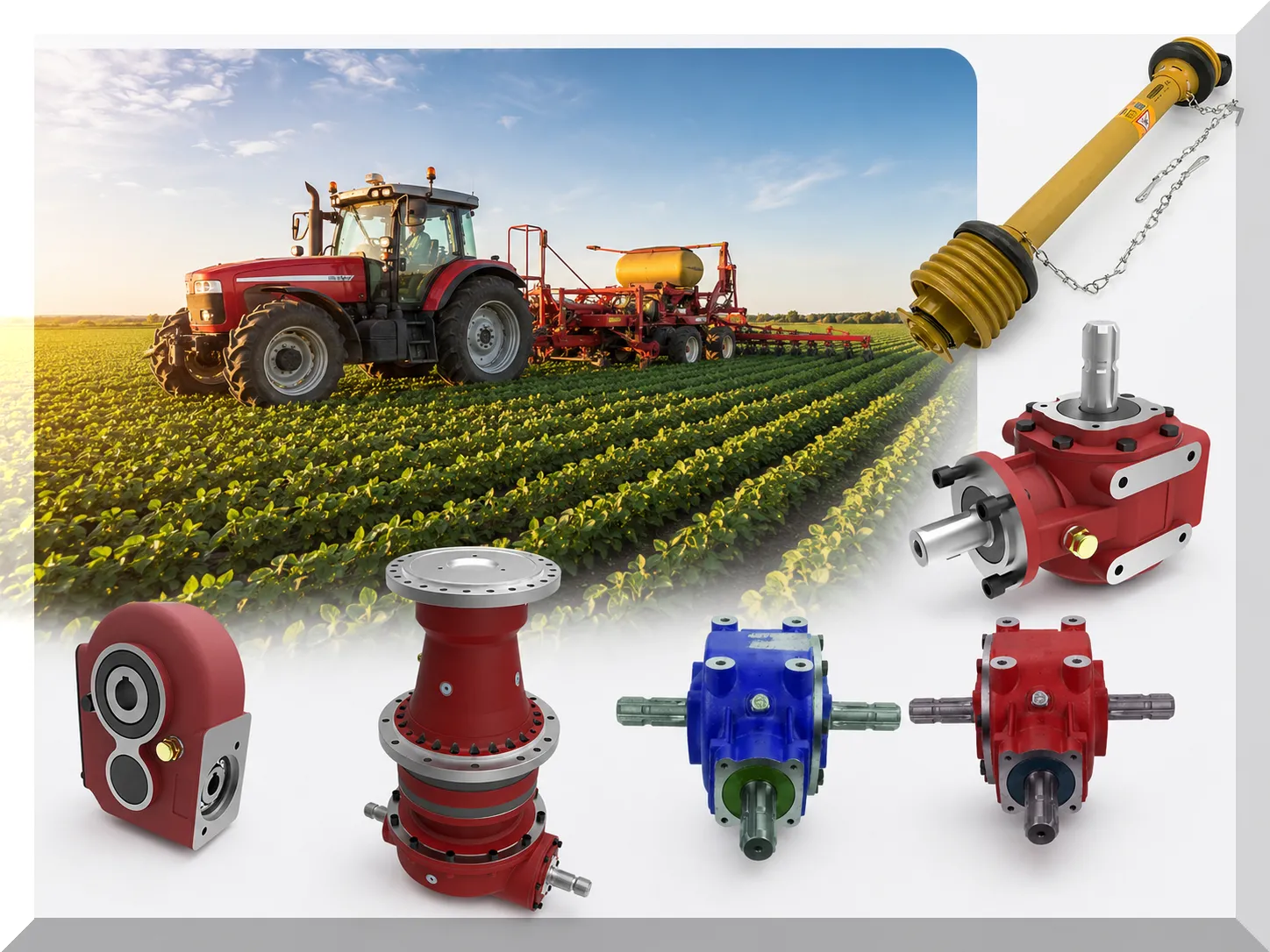
Baler HP specifications use three different numbers that are often confused: minimum rated HP (the absolute floor below which the baler cannot operate at all), recommended HP (the level at which the baler operates at rated density and speed in average conditions), and peak demand HP (the instantaneous maximum HP required during the hardest part of the bale formation cycle). The peak demand number is the one that matters most for tractor selection, because it is the load that determines whether the engine will lug or the baler will operate below its rated density.
| Baler type / size |
Minimum HP |
HP recomendado |
Peak demand HP |
Notas |
| Small baler (4×4, light-duty) |
30 HP |
40–55 HP |
65–80 HP |
Compact utility tractor class; suitable for hobby farms, small livestock operations |
| Mid-size baler (4×5, standard) |
50 CV |
65–90 HP |
100–120 HP |
Most common commercial baler size; covers most farm tractor classes from 70–120 HP |
| Large baler (5×5 or 5×6) |
75 HP |
100–130 HP |
140–165 HP |
High-yield silage and straw baling requires sustained HP at full density in heavy windrows |
| Any size + pre-cut knife system |
+10 HP |
+15 HP |
+20–25 HP |
Pre-cut knife engagement adds 10–20% HP requirement to all categories above; size tractor to include knife system demand |
The safety margin rule: Always select a tractor with at least 20% HP above the baler’s recommended HP for your primary crop in average windrow conditions. This 20% buffer absorbs peak demand events without engine lug and allows you to increase density settings or operate in heavy windrows without degraded performance. A tractor right at the recommended HP minimum will perform adequately in light conditions but will lug in first-cut alfalfa at maximum density — exactly the conditions where maximum density value is highest.
PTO Shaft: Speed, Length, and Angle Compatibility
The PTO shaft connection between tractor and baler must match on three parameters: rotational speed (540 vs 1,000 RPM), shaft series (based on torque rating), and operating length (must maintain correct U-joint engagement angle at full turning radius). All three affect performance and safety.
PTO Speed: 540 vs 1,000 RPM
Most round balers in the 30–80 HP category specify 540 RPM PTO; most balers in the 80 HP+ category specify 1,000 RPM PTO. A 1,000 RPM baler connected to a 540 RPM tractor runs the entire drive system at roughly half the design speed — pickup speed is halved, bale chamber roller speed is halved, and net wrap knife speed is halved. The baler cannot form a proper bale at half-speed. Always confirm PTO speed specification on both tractor and baler before purchase.
Economy PTO: some modern tractors offer a 540E (economy) setting that delivers 540 RPM at lower engine RPM for fuel savings on light loads — not suitable for baling, which is a high-load continuous application.
PTO Shaft Series and Torque Rating
Agricultural PTO shafts are designated by series (Series 3, 4, 5, 6, 7, 8) based on their maximum torque capacity. The tractor’s PTO output torque rating must match or exceed the baler’s maximum input torque. Under-rated shafts fail at the U-joint cross-and-bearing under peak baling load — typically with a loud clunk and sudden loss of drive. The baler’s operator manual specifies the minimum PTO shaft series required; confirm this matches the shaft included with the baler or that you are sourcing. The complete torque rating framework by PTO shaft series is documented in Especificaciones de los componentes de la caja de cambios y la transmisión de la toma de fuerza (PTO) agrícolas.
Hydraulic Flow Requirement: The Often-Missed Specification
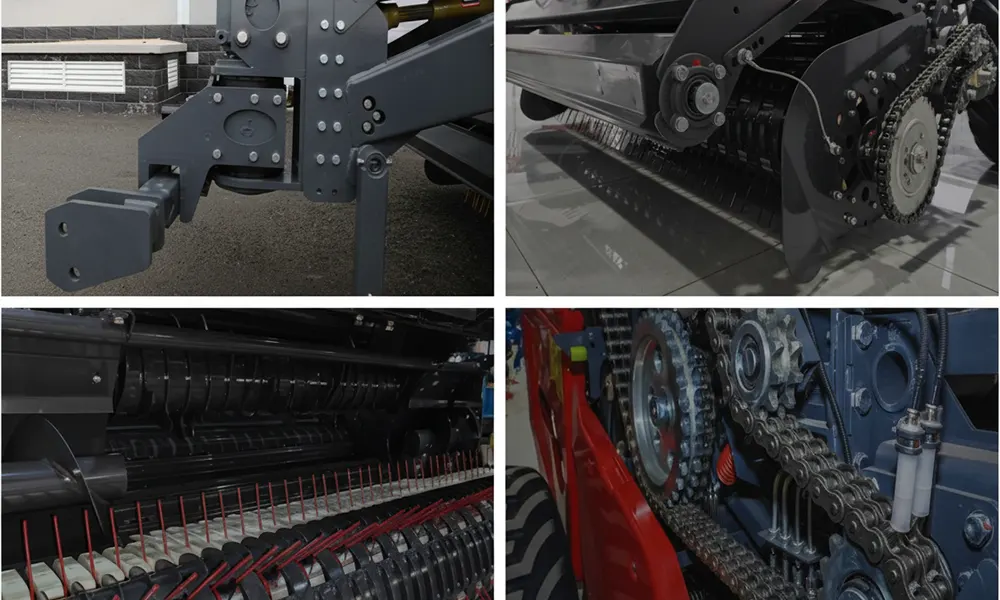
The baler’s tailgate cylinder requires a specific hydraulic flow rate to open and close at its design speed. If the tractor’s hydraulic pump does not deliver the required flow at the remote output, the tailgate cycles slowly — increasing the time from bale completion to ejection to formation start on the next bale. On a 500-bale day, a 4-second delay per bale ejection cycle adds 33 minutes of lost baling time. This is a completely preventable inefficiency caused by under-specified hydraulic flow.
Hydraulic Flow Check: Three-Step Process
1
Find the baler’s hydraulic flow requirement in the operator’s manual. Most mid-size round balers require 8–15 GPM at the remote hydraulic outlet for correct tailgate cycle speed. Some models with hydraulic pickup height adjustment or hydraulic density gates require a second remote circuit.
2
Find the tractor’s remote hydraulic flow specification. This is in the tractor’s spec sheet as “remote hydraulic flow” in GPM (gallons per minute). Older tractors (pre-1990) often deliver only 5–8 GPM; modern utility tractors typically 11–18 GPM; modern row-crop tractors 18–25+ GPM.
3
Confirm tractor flow ≥ baler requirement. If tractor flow is below the baler’s minimum, the tailgate will cycle slowly at rated engine speed. This cannot be corrected by adjusting flow control valves — the root cause is the tractor’s hydraulic pump capacity. Either select a different baler with lower flow requirements or a different tractor with higher hydraulic output.
Hitch Connection: Drawbar vs 3-Point and Turning Radius
Round balers connect to the tractor via a single-point drawbar connection — not a 3-point hitch. This is fundamentally different from implements like front-loaders or sprayers and has specific implications for maneuverability and PTO shaft geometry. The drawbar connection allows the baler to turn freely behind the tractor without fixed geometry constraints, which is essential for headland turns.
Drawbar height compatibility
The tractor drawbar height must match the baler’s hitch point height for level baler operation — a baler that runs nose-up or nose-down because of a height mismatch wears pickup tines unevenly and can cause crop flow problems through the pickup transition zone. Standard agricultural drawbar height is 18–20 inches from the ground. Confirm both the tractor drawbar height and the baler hitch point height are compatible before hooking up.
Turning radius and PTO shaft angle
On tight headland turns, the PTO shaft angle at the U-joints increases. If the U-joint operating angle exceeds its rated limit (typically 15° for standard joints), the shaft experiences velocity variation — it speeds up and slows down once per revolution — generating torsional vibration that shortens U-joint life and creates baler drive irregularity. Always check that your tightest headland turn keeps the PTO shaft within its operating angle specification. Measure: with tractor and baler in the tightest turn you make, check the angle between tractor PTO output axis and baler input shaft axis. It should be below 15° at all positions.
Compatibility Verification: The Pre-Purchase Checklist
From the Tractor Spec Sheet
- Engine HP (and PTO HP if listed separately)
- PTO speed: 540, 1,000, or both
- Remote hydraulic flow rate (GPM)
- Number of remote hydraulic circuits available
- Drawbar height from ground (inches)
- Maximum drawbar pull rating (lbs)
From the Baler Spec Sheet / Manual
- Minimum and recommended tractor HP
- Required PTO speed (540 or 1,000 RPM)
- Required hydraulic flow rate (GPM)
- Number of remote hydraulic circuits required
- Hitch point height specification
- PTO shaft series minimum requirement
Confirm Before Purchase
- Tractor HP ≥ Baler recommended HP + 20% buffer
- Tractor PTO speed = Baler required PTO speed
- Tractor hydraulic flow ≥ Baler required flow
- Tractor has enough remote circuits for baler functions
- Drawbar heights compatible (within 1 inch)
- PTO shaft angle within limit at tightest field turn
For the full baler selection framework — covering chamber type, pickup width, net wrap vs twine, and price-tier evaluation — the Guía del comprador de empacadoras de balas redondas provides the complete decision framework. The chamber type comparison — fixed vs. variable — that determines which design is matched to your crops and markets is in the fixed vs variable chamber guide.
What Happens When the Match Is Wrong: Recognizable Symptoms
Engine lug at full density
Causa: Tractor HP below recommended for this baler and crop combination. Effect: PTO RPM drops under load, belt speed drops, bale formation slows, bale density reduced. Arreglar: Reduce density setting 15–20%, reduce ground speed, or match with a larger tractor.
Sluggish tailgate cycle
Causa: Tractor hydraulic flow below baler’s minimum requirement. Effect: Tailgate opens and closes 3–6 seconds slower than design spec per cycle; significant lost time over a full day. Arreglar: Cannot be corrected on the same tractor; requires matching with a tractor of adequate hydraulic output.
PTO shaft vibration on turns
Causa: PTO shaft operating angle exceeded during headland turns. Effect: Torsional vibration from velocity variation in the U-joint; accelerated U-joint wear; audible thudding from PTO area on tight turns. Arreglar: Increase headland turning radius to keep shaft angle within limit; or install wide-angle U-joints.
Baler runs nose-up or nose-down
Causa: Drawbar height mismatch — baler hitch point is above or below the tractor drawbar. Effect: Pickup runs at an angle to the ground surface; tine height uneven across the pickup width; crop misaligned at chamber inlet. Arreglar: Adjust tractor drawbar height (if adjustable) or use a drop/rise hitch adapter.
Under-speed pickup and belts
Causa: Tractor PTO running at 540 RPM on a baler designed for 1,000 RPM. Effect: All baler rotational components running at 54% of design speed; pickup moves too slowly to engage windrow; belt speed insufficient for proper bale formation. Arreglar: Only correctable by using a tractor with the correct PTO speed; no adjustment available on the baler side.
Baler-Tractor Matching FAQs
My 75 HP tractor is currently powering a 4×4 baler adequately. Can I use the same tractor to run a new 4×5 baler?+
It depends on the specific models and your crops. A 4×5 baler typically requires 65–90 HP recommended, so 75 HP falls within the specification range for many models. The critical question is what crop and windrow density you are baling. In light-to-medium grass hay windrows, 75 HP is adequate for a standard 4×5 baler. In heavy first-cut alfalfa at maximum density, 75 HP may lug in the formation cycle. Before purchasing, request the baler manufacturer’s HP requirement for maximum density setting in your specific primary crop, and compare that to your tractor’s PTO HP (not just engine HP — PTO HP is typically 82–85% of engine HP). If the baler’s maximum-density HP requirement for your crop exceeds your tractor’s PTO HP by more than 10%, expect to reduce density settings from the machine’s maximum.
Can I use a PTO speed adapter to connect a 540 RPM tractor to a 1,000 RPM baler?+
PTO speed multiplier adapters exist and can mechanically convert 540 RPM output to 1,000 RPM input using a gearbox in the PTO shaft line. These adapters are widely used for operating 1,000 RPM implements with 540 RPM tractors. The limitations: the adapter itself has a torque rating that must exceed the baler’s peak input torque; the adapter adds weight and length to the PTO shaft line, which can create U-joint angle issues on tight turns; and the adapter generates heat during operation that requires cooling — manufacturers typically recommend not running continuously above 80% of the adapter’s rated torque for extended periods. For baling applications where the PTO is under sustained high-torque load continuously, confirm the adapter’s continuous-duty torque rating is at or above the baler’s peak input torque before selecting this solution. A properly rated adapter is a viable solution for occasional use; for high-volume commercial baling, a correctly spec’d tractor is preferable.
How do I know if my tractor’s hydraulic output is adequate without looking at the spec sheet?+
The field test is simple: time the tailgate from the moment you actuate the remote lever to full-open position. A correctly matched tractor opens the tailgate in 2.5–4 seconds. If the tailgate takes 6–8+ seconds to fully open, the hydraulic flow is insufficient. This test can be done on a borrowed tractor before purchase, or on your current tractor before purchasing a baler. For reference, a typical 75 HP utility tractor delivers 11–15 GPM at the remote output — adequate for most mid-size balers. An older 50 HP tractor may deliver only 5–8 GPM, which will produce noticeably slow tailgate cycling on any modern round baler. Measuring actual flow requires a flowmeter inserted in the remote outlet line — available at hydraulic specialty shops for under $100 and useful for a definitive measurement if the spec sheet is unavailable for an older tractor.
Does a newer baler with electronic density control require any special tractor electrical connections?+
Modern balers with electronic monitors, auto-wrap systems, or ISOBUS connectivity require electrical connections to the tractor beyond basic 7-pin trailer lighting connections. ISOBUS-compatible balers (those with a virtual terminal display in the cab) require a tractor with ISOBUS capability (ISO 11783 compliant) and a 9-pin ISOBUS connector. Not all tractors have ISOBUS capability — utility tractors in the 50–80 HP class typically do not; row-crop tractors in the 100+ HP class increasingly do. Non-ISOBUS balers with simpler electronic monitors typically use a 7-pin or 9-pin connector for baler monitor power and sensor signals. Confirm the connector type required on the specific baler you are purchasing and verify your tractor has the compatible socket. The cost of adding a connector adapter is low ($50–$150), but missing this check can leave you with a monitor system that does not function on delivery day.
I own multiple tractors of different HP. Which should I dedicate to the round baler?+
Dedicate the tractor with the best hydraulic flow rate and correct PTO speed — not necessarily the highest HP — to the baler if multiple tractors are within the HP range. A 90 HP tractor with 14 GPM hydraulic output and 540 RPM PTO will outperform a 110 HP tractor with 8 GPM hydraulic output on the same baler, because hydraulic flow determines tailgate cycle speed throughout every baling day. The higher-HP tractor may be better deployed for field work where hydraulic flow is less critical (tillage, planting). If you have a clear HP mismatch — one tractor well above the recommended HP and one below — always dedicate the larger tractor to baling. Running the under-powered tractor on the baler wears both machines faster and reduces output quality.
What is the difference between engine HP and PTO HP, and which number should I use for matching?+
Engine HP is the power output at the flywheel — the gross power the engine produces before any transmission or accessory loads. PTO HP is the power actually delivered at the PTO stub shaft — after the losses through the transmission, the hydraulic pump, and other accessories. PTO HP is typically 82–88% of engine HP. For baler matching, use the PTO HP figure, not the engine HP. A 100 HP engine tractor delivers approximately 85 HP at the PTO. If the baler’s specification says “minimum 80 HP PTO,” an 85 HP PTO tractor has a meaningful but small margin. Baler manufacturers’ HP requirements are stated as engine HP or PTO HP inconsistently across different manufacturers — always confirm which basis is being used and convert to the same basis before comparing. If the manual says “75 HP tractor required” without specifying engine or PTO, assume engine HP and apply the 85% conversion to get the PTO HP the baler actually requires.
Editor: Cxm