Small Farm Guide · Goats · Sheep · Alpacas · Small Ruminant Nutrition
Hay Bales for Goats, Sheep and Alpacas
Small ruminants and alpacas have different hay needs from cattle — and from each other. The right bale size, the correct hay type for each species and an understanding of daily intake rates are the foundation of small farm hay management. This guide covers the specific requirements of goats, sheep and alpacas and explains why the small square bale format is the practical choice for most small farm operations.
Covers: species-specific requirements · ideal bale size and weight · best hay types · daily intake and bale duration · quality standards · storage for small farms · round vs square
Why Small Square Bales Suit Small Livestock Operations
A single round bale typically weighs 300–600kg — more than a small goat herd or alpaca group can consume before spoilage occurs. Small square bales at 16–25kg allow precise daily feeding with minimal waste. A 20kg bale for a group of 8 goats provides roughly 2 days of feed at appropriate rates — consumed before any moisture, mold or contamination can develop in the open bale face.
For small farm producers who grow and bale their own hay: the small square format also simplifies manual handling. A 20kg bale can be moved by one person, stored on simple wooden pallets in a small shed, and distributed without equipment. This practicality advantage over large round bales is decisive for operations where mechanised bale handling is not available or cost-effective.
Goats: Specific Hay Requirements
Goat Feeding Behavior and Hay Selection
Goats are selective browsers — they pick through a hay pile and consume the most palatable leaves and soft stems first, leaving the coarser stalks. This selectivity means waste from a hay feeding station is higher for goats than for sheep or cattle. The practical response: feed smaller quantities more frequently and provide finer-stem hay that goats waste less of.
Goats strongly prefer leafy, fine-stem hay over coarse-stem material. A goat offered a choice between alfalfa and mature grass hay will consume the alfalfa leaf fraction preferentially and waste the coarser grass stems. For most goat feeding scenarios, the ideal hay type is either high-quality grass hay with a high leaf-to-stem ratio, or a grass-legume mix with no more than 30% legume for adult does (higher legume fraction for late gestation and lactation).
| Hay Type |
Suitability |
Notes |
| Grass hay (orchard, timothy, fescue) |
Excellent |
Primary maintenance diet for adult does. Protein 8–12%. Low calcium prevents urolithiasis risk in wethers and bucks. |
| Mixed grass-legume (30–50% legume) |
Good |
Appropriate for late pregnancy and lactation. Protein 14–18%. Avoid feeding pure alfalfa to wethers and bucks long-term. |
| Pure alfalfa |
Limited |
High protein (18–22%) and high calcium can cause urinary tract issues in male goats. Use only during peak lactation in does. |
| Bermudagrass or coastal hay |
Good |
Widely used for meat goats in Southeast. Fine stems reduce selective rejection. Protein 8–12% at correct cutting stage. |
Goat Daily Intake and Bale Duration
Adult doe (55kg): 1.1–1.4kg dry hay per day at maintenance. A 20kg bale at 90% dry matter = 18kg usable. Lasts one doe approximately 13–16 days.
Late gestation doe: 1.5–2.0kg per day. A 20kg bale lasts one doe 9–12 days. Increase legume fraction during last 6 weeks of gestation.
Wether or buck (70kg): 1.2–1.6kg per day. Grass hay only to minimize urinary crystal risk. A 20kg bale lasts approximately 12–16 days per animal.
Group of 8 adult does: 9–11kg per day total. A 20kg bale lasts approximately 1.8–2.2 days. Feed every 2 days to minimize waste.
Sheep: Specific Hay Requirements
Sheep Feeding Behavior and Hay Selection
Sheep are less selective than goats — they eat hay more completely without the stem rejection that goats show. This makes sheep more tolerant of lower-leaf, higher-stem hay than goats, but they still benefit significantly from higher-quality hay in terms of body condition and reproductive performance.
Sheep are more sensitive to high-copper hay than goats — some producers avoid alfalfa hay for sheep because alfalfa can have high copper content depending on soil and variety. Grass hay with 8–12% crude protein is the standard maintenance diet for adult ewes outside of gestation and lactation. For lactating ewes and ewes in late gestation: grass-legume mix or high-quality grass hay above 14% crude protein.
Adult ewe (65kg) — maintenance
1.2–1.6kg dry hay per day. A 20kg bale (90% DM = 18kg usable) lasts one ewe 11–15 days. A flock of 10 ewes consumes a 20kg bale in approximately 1.2–1.5 days.
Lactating ewe
2.0–2.5kg per day. Energy demand doubles during peak lactation. Increase to high-quality grass-legume mix for at least 6 weeks post-lambing. A 20kg bale lasts one lactating ewe 7–9 days.
Lambs
Growing lambs need protein above 14% for frame development. Soft, fine-stem grass-legume hay is preferable to coarse grass hay for lambs. Begin hay introduction at 2–3 weeks alongside creep feed.
Alpacas: Specific Hay Requirements
Alpacas (Vicugna pacos) are modified ruminants with a 3-compartment stomach — physiologically different from goats and sheep in ways that significantly affect their hay requirements. They are adapted to high-altitude Andean grasslands where nutrient density is low and forages are sparse — making them efficient converters of low-energy forage but also highly sensitive to dietary excess.
Critical: Do Not Feed Alfalfa as a Primary Diet for Alpacas
Alfalfa hay fed as the primary diet for alpacas causes hepatic lipidosis and hypervitaminosis D in many animals due to its high protein and calcium content. Alpacas are adapted to low-nutrient forage and their metabolism is not designed to handle alfalfa protein loads. Grass hay (orchard, timothy, meadow grass, fescue) is the correct primary forage. Alfalfa may be fed in small amounts to support late pregnancy and lactation but should not exceed 20–25% of the total forage intake.
Adult alpaca (75kg) — daily intake
1.2–1.8kg dry hay per day (1.5–2.5% body weight in dry matter). A 20kg bale (90% DM) lasts one alpaca approximately 10–13 days — much longer per bale than goats or sheep at the same body weight.
Group of 6 alpacas
7–11kg dry hay per day. A 20kg bale lasts approximately 1.8–2.5 days for a group of 6. Small square bale format is ideal — prevents over-eating and allows fresh bale introduction before spoilage risk from the open face.
Best hay types for alpacas
Timothy at 8–12% CP is the gold standard. Orchard grass, meadow fescue and soft-stem mixed grass are all excellent. Avoid dusty hay or hay with visible mold — alpacas are sensitive to respiratory irritation and develop hypersensitivity pneumonitis from dusty hay.
Ideal Bale Size and Weight by Species
| Species / Size |
Ideal Bale Weight |
Bales per Animal per Month |
Notes |
| Adult doe (50–70kg) |
16–22kg |
2–2.5 |
Maintenance. Double during late gestation and lactation. |
| Adult ewe (60–80kg) |
18–24kg |
2–2.5 |
Slightly heavier bale acceptable — sheep waste less than goats. |
| Alpaca (60–90kg) |
16–20kg |
1.5–2 |
Lower intake than goats or sheep. Lighter bales preferred for exact feeding control. |
| Mixed species small farm (6–10 animals total) |
18–22kg |
3–4 per week for the group |
Standard 20kg bale is the most practical single size for mixed small livestock operations. |
Evaluating Hay Quality for Small Ruminants and Alpacas
Small ruminants and alpacas cannot tolerate dusty, moldy or over-heated hay that cattle might handle without visible consequence. Evaluate every bale before feeding:
VISUAL
Color: green to light gold is acceptable. Tan is acceptable for cattle but borderline for alpacas. Brown or dark tan indicates heating. Black spots indicate mold — do not feed to any small ruminant or alpaca.
SMELL
Smell: fresh hay or slight mustiness is acceptable. A sharp, ammonia-like smell or sour fermentation smell indicates excessive heating or mold — do not feed. Sweet, slightly vanilla-like smell indicates high-quality timothy or grass hay.
DUST TEST
Dust: shake a handful over a dark surface. For alpacas: zero visible dust. For goats and sheep: minimal dust acceptable — visible cloud on shaking is rejected. Dust causes respiratory issues in all three species, with alpacas being most sensitive.
FOREIGN MATERIAL
Debris: check for plastic twine or bailer string pieces, wire fragments, or weeds. Goats consume non-hay material that cattle reject — any plastic or wire contamination is a veterinary emergency risk in goats and alpacas.
WEIGHT CONSISTENCY
Consistent weight: weigh several bales from the same delivery. Variation above 20% from the stated bale weight indicates inconsistent baling — which usually means inconsistent moisture at baling. Heavier-than-expected bales from a stated-moisture lot may have been baled wetter than labelled.
Storage for Small Farm Operations
Small farm hay storage for small ruminants does not require a large purpose-built facility. The practical minimum: a covered structure that keeps bales off the ground (on pallets) and protected from direct rain. The critical issues for small ruminant and alpaca hay storage are:
Off the ground: store on wooden pallets or concrete platforms minimum 100mm off the ground. Ground contact causes bottom-bale moisture absorption from concrete or soil, leading to mold in the base layer of even a well-cured bale.
Airflow: do not push bales against a solid wall on more than two sides. Airflow around the stack is particularly important for bales stored above 16% moisture — airflow dissipates the initial curing heat that otherwise builds in a tightly stacked group.
Rodent exclusion: cats or rodent traps in the hay storage area prevent rodent nesting in bales. Rodent-contaminated bales can cause serious disease in small ruminants and alpacas — listeriosis, toxoplasmosis and leptospirosis have all been linked to rodent contamination of stored hay.
Season planning: for a 10-animal mixed operation consuming 3–4 bales per week: annual storage requirement is approximately 160–200 bales. At 20kg each, total weight is 3,200–4,000kg — a 15-tonne utility trailer load or 3–4 farm delivery loads. Plan purchasing timing to fill storage before winter when hay availability and price are most favorable.
Round Bales vs Small Square Bales for Small Ruminants
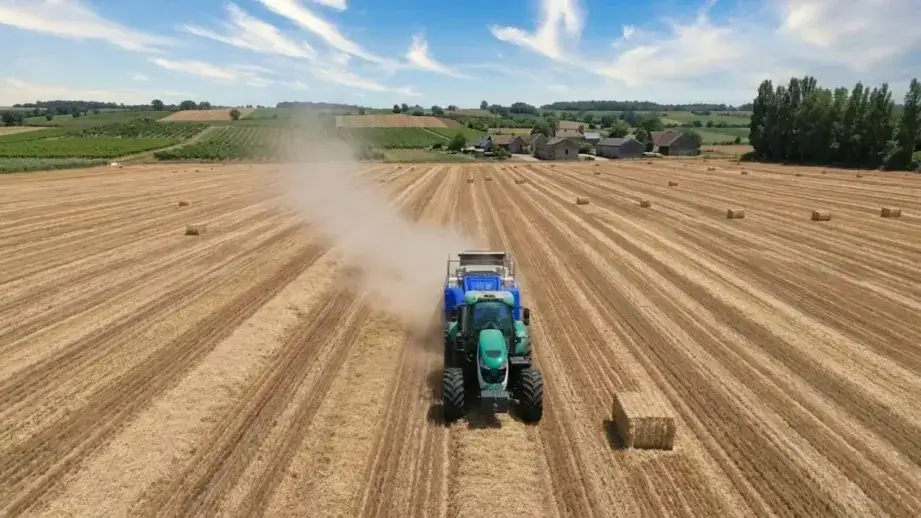
Small Square Bales (18–24kg)
Best for: flocks and herds of under 20 animals; hand-feeding operations; mixed species operations; operations without bale spear or round bale handling equipment; situations where daily feeding precision matters.
Advantages: manual handling (no equipment needed); fresh hay every 1–3 days prevents spoilage; easy to evaluate quality before feeding; suitable for all ages including young stock.
Round Bales (300–600kg)
Best for: herds of 20+ animals where one round bale is consumed in 2–3 days; operations with round bale feeders and tractor handling; when labor cost reduction is the primary driver.
Disadvantages for small operations: a 400kg round bale lasts 10+ days for a flock of 10 sheep — the exposed face molds before the bale is consumed. Requires bale feeder to limit waste. Not practical without handling equipment.
Small Farm Baler — Own Your Own Production
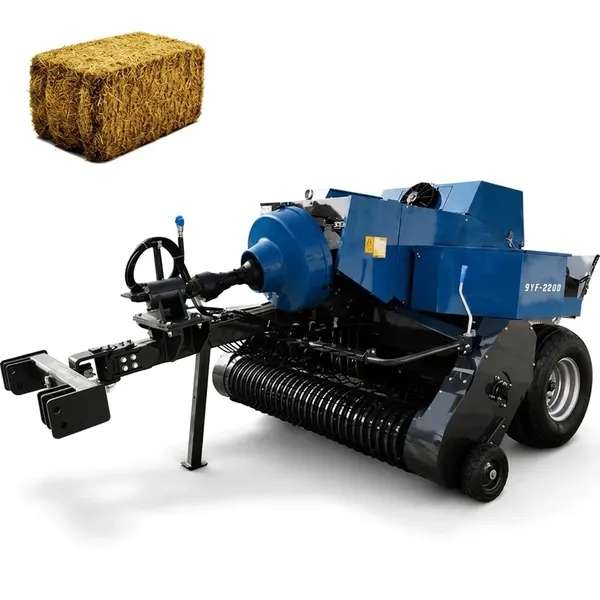
Small farm operators who grow hay for their own goats, sheep or alpacas gain quality control that purchased hay cannot match. The 9YF-1700 and 9YF-1900 are designed for small farm scale — lower power requirements and appropriate for properties with 5–30 acres of hay ground. CV joint specifications: PTO driveshaft and CV joint sizing guide.
Frequently Asked Questions — Hay for Goats, Sheep and Alpacas
How much hay do I need to store for 10 goats over a 6-month winter?+
For 10 adult does at maintenance over 180 days: 10 goats × 1.2kg per day × 180 days = 2,160kg dry hay. At 90% dry matter in a 20kg bale: 18kg usable per bale. You need approximately 120 bales at 20kg each, or 2,400kg of bale weight. Add 15–20% buffer for waste and bales fed during late gestation at higher rates: total storage target 140–145 bales. At 20kg each, this requires approximately 2.9 tonnes of bale storage — fitting on roughly 15–20 wooden pallets in a single layer with two layers stacked. Plan your storage structure around this requirement before purchasing the season supply.
Can goats and sheep share the same hay?+
Yes — goats and sheep can share the same hay with some caveats. The primary concern is that copper requirements differ significantly: goats need 15–25 ppm copper in the diet; sheep are extremely sensitive to copper toxicity at levels above 10–15 ppm. This becomes relevant when the hay is very high in copper (common with some legumes and certain soil types) and when mineral supplements are also being provided. For most grass hay with typical copper levels, sharing is not a problem. The practical issue is competitive feeding behavior: goats typically dominate sheep at a shared hay feeder. Provide enough feeder space (minimum 40cm per animal) and consider separate feeding areas if dominant goats are displacing sheep before they consume their required daily amount.
My goats waste about 30% of the hay I put out. How do I reduce waste?+
Goat hay waste at 30% is above the acceptable range of 15–20% and can typically be reduced by: (1) Using a hay feeder with a narrow opening that prevents goats from pulling hay out in large mouthfuls and letting it fall to the ground. A metal or PVC hay feeder with openings sized for goat heads reduces waste from 30% to under 15% in most cases — this is the single highest-impact waste reduction action. (2) Reducing the amount offered per session — provide 10% above daily requirements rather than a full open bale. Goats offered unlimited access to a bale begin to play with and soil the hay rather than eating it. (3) Purchasing finer-stem hay — coarse-stemmed hay has a higher proportion of stems that goats reject after eating the leaves. Finer-stem grass or grass-legume mix reduces the proportion of rejected material.
Is alfalfa hay safe for alpacas in any amount?+
Alfalfa in small amounts — up to 20–25% of total hay intake — is generally safe for most alpacas and is often recommended during late pregnancy and early lactation when protein demand increases. The risk is from alfalfa as the primary or sole diet. The high protein (18–22%), high calcium and high energy in alfalfa overloads the alpaca metabolic system that is designed for low-nutrient Andean grassland forage. Chronic over-feeding of alfalfa causes: adipose liver disease (hepatic lipidosis), abnormal mineral metabolism from calcium overload, and obesity that creates birthing difficulties in females. Use alfalfa as a protein supplement in small quantities during specific production periods — not as the base diet. For most alpaca producers: a mix of 80% grass hay and 20% alfalfa during normal production, increasing to 60% grass / 40% alfalfa in the last 60 days of pregnancy.
Can I use the same baler settings for small ruminant hay as for horse hay?+
Yes — the baler settings for small ruminant hay are essentially the same as for horse hay of the same crop type, since the quality standards are similar and the bale size is the same. The only potential difference: if you want to produce lighter bales for alpaca feeding precision — for example 15–17kg per bale instead of 20–22kg — reduce the density spring setting to produce shorter, lighter bales. You do not need to change any other settings to produce goat, sheep or alpaca hay versus horse hay on the same machine — the quality factors are managed at the field and curing stage, not at the baler. The bale format (460×360mm cross-section) is the same for all markets; only the bale weight (density setting) and the crop being baled change.
What causes head pressing or circling behavior in goats after changing to new hay?+
Head pressing, circling, or apparent blindness in goats after a hay change are neurological signs that require immediate veterinary assessment — do not attempt to diagnose or treat without professional input. These signs can indicate polioencephalomalacia (thiamine deficiency, often triggered by diet changes), listeriosis (commonly from moldy or soil-contaminated hay), or liver disease from sudden diet changes. If these signs appear: stop feeding the new hay immediately, contact your veterinarian, and preserve a sample of the hay that was being fed for laboratory analysis if requested. This is not a baler or hay quality question that can be answered by a hay equipment guide — it is a veterinary emergency. The connection to hay is that moldy, soil-contaminated or very high-protein hay can trigger all three of the conditions above in susceptible animals. Prevention: inspect every bale before feeding to small ruminants and alpacas and reject any bale with visible mold, unusual smell or heavy soil content.
How do I calculate how many bales to purchase for a whole season?+
Use this formula: (number of animals × daily intake per animal × number of feeding days) ÷ usable dry matter per bale × waste factor. Example for 8 adult goat does over 200 hay-feeding days with 20kg bales at 90% DM: 8 × 1.3kg × 200 = 2,080kg dry matter needed. Each bale provides 18kg usable. Add 20% for goat selectivity waste: 2,080 ÷ 18 × 1.2 = approximately 139 bales. Round to 145 for safety stock. The daily intake figure changes for late gestation (increase by 50%) and lactation (increase by 80%) — factor in the number of animals in these states and the duration for an accurate full-season calculation. If your flock includes both does and wethers with different intake rates, calculate each group separately and sum.
Is second-cut hay better than first-cut hay for small ruminants?+
Second-cut grass hay is often preferred for small ruminants and alpacas because: the stems are finer and softer than first-cut (which has the thickest stems of the season); the leaf proportion is typically higher; and the protein is often slightly elevated from the faster regrowth of the second flush. For goats that reject coarser stems: second-cut timothy or orchard grass shows noticeably lower rejection rates than first-cut from the same field. For alpacas: second-cut grass hay at 10–14% protein is nearly ideal. The main drawback: second-cut yield is lower than first-cut, so purchasing requires either higher per-bale price or advance ordering. First-cut hay is not wrong for small ruminants — the coarser stems are simply wasted at a higher rate. If budget is the primary constraint, first-cut hay at a lower per-bale price fed in a well-designed waste-minimizing feeder can match the total cost of second-cut fed without a feeder.
Find the Right Baler for Your Small Farm Operation
The 9YF series includes entry-level models sized for small farm hay production for livestock and own-use operations. Tell us your hay acreage and animal numbers and we will recommend the right model.
Editor: Cxm