Improving hay making workflow efficiency is not primarily about running faster — it is about system balance — it is about identifying where in the four-step sequence time is being lost and eliminating those gaps. The same acreage can take 2 days or 5 days to complete depending on how well the mow-ted-rake-bale steps are sequenced to each other and to the weather window. This hay making workflow guide gives you the planning framework, the bottleneck analysis method, and the specific tool for each phase of the sequence.
The Full Hay-Making Sequence — What Happens in What Order and Why
A complete hay making workflow for efficient hay production has five steps, of which one is conditional. The steps must occur in a specific order because each one produces the physical state that makes the next step possible. Understanding the minimum time between steps — and what controls that minimum — is the foundation of efficient hay production scheduling.
Hay-Making Workflow Timeline — Operational Day Planning (Warm, Clear Conditions)
Day 0
AM
Day 0
PM
Day 1
AM
Day 1
PM
Day 1.5
eve
Day 2
AM
Day 2
PM
Day 3
AM
Day 3
PM
1. Mow
Mowing all acreage
2. Ted (opt.)
If needed — thick windrows / damp conditions
3. Rake
Rake at target moisture
4. Bale
Bale at 15–20% moisture
5. Store/Wrap
Move to storage or wrap
Timeline assumes conditioned mowing, warm weather (25°C+), and dry conditions throughout. Cold or overcast weather extends each curing phase by 30–60%. Rain at any step resets the curing clock from the point of re-wetting.
The minimum time between mowing and raking (Step 1 to Step 3) is not fixed — it is a function of crop type, mowing method, and weather. In warm, clear conditions with a conditioned mower on alfalfa, the minimum effective gap is 18 to 24 hours. Without conditioning, it extends to 30 to 48 hours on the same crop. The critical rule: the hay production efficiency of the whole mow rake bale system is determined by the slowest step — and that step changes at different operation scales.
Mowing Phase Planning — The Acreage-Ahead Calculation
The hay making workflow mowing phase requires planning the amount of acreage to cut relative to the rake’s daily capacity. The fundamental constraint: you cannot rake acreage faster than it dries, and you cannot let acreage dry past the optimal raking moisture window. This creates a planning target called the mow-ahead limit: the maximum number of acres you can cut before the first cut acres are ready to rake.
Mow-Ahead Limit Calculation
Raking window = 6 hours/day at 8 km/h with 9 m rake = 4.3 acres/hour × 6 = 26 acres/day rakeable
Drying time = 20 hours before first mowed acres are ready to rake
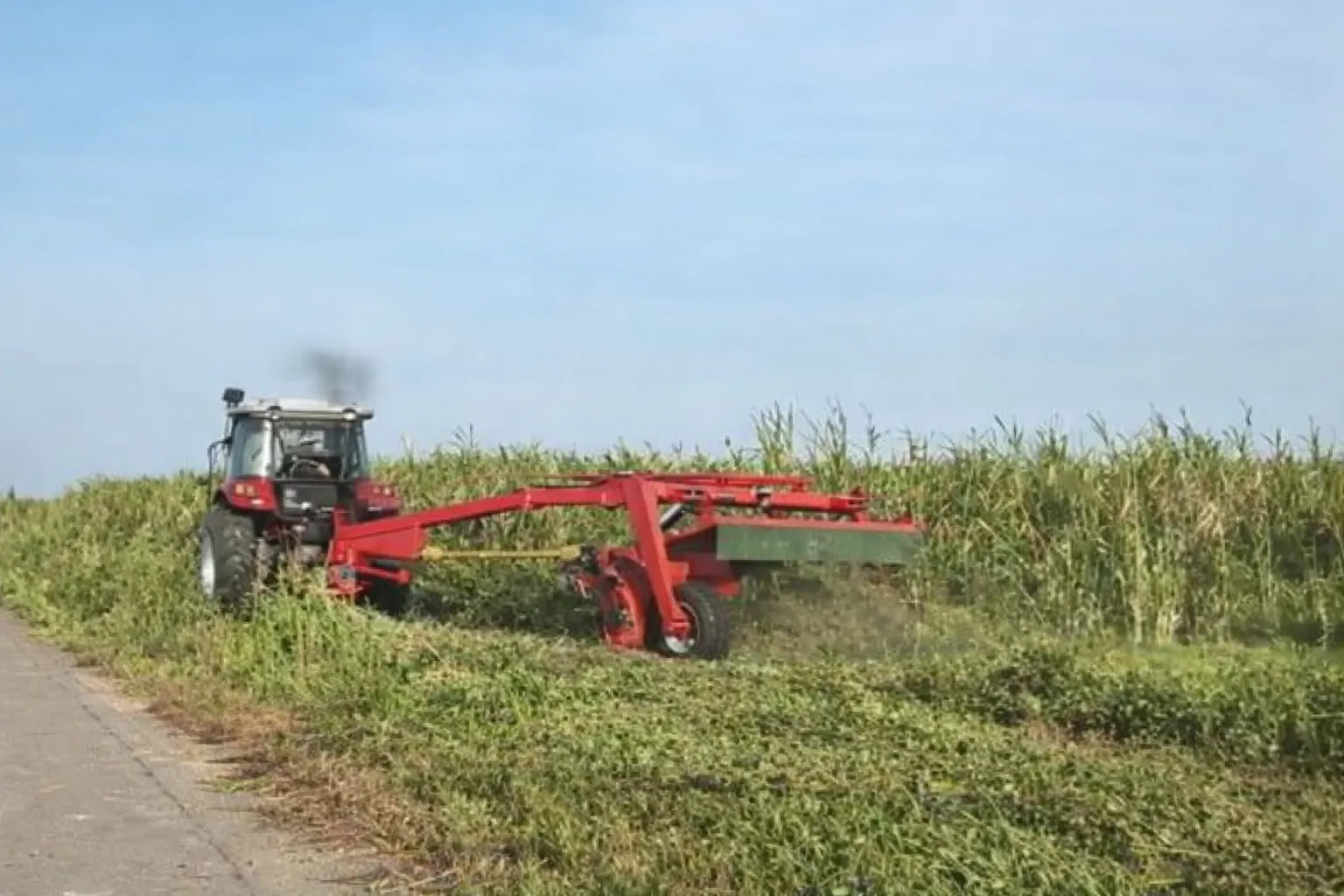
Mowing rate = 2.5 m mower at 9 km/h = 2.25 acres/hour × 8 hours = 18 acres/day mowable
Result: 18 acres mowed on Day 0 → 18 acres ready to rake on Day 1 morning. Mower keeps pace with rake — no queue backup. If mowing rate exceeded 26 acres/day, acreage would queue up past the optimal raking window → quality loss.
For large operations where a single day’s mowing exceeds the rake’s daily capacity, the practical solution is to start mowing in a field priority order that staggers the drying readiness: mow Field A on Day 0 morning, Field B on Day 0 afternoon, Field C on Day 1 morning. By the time Fields A and B are ready to rake, Field C has had time to start drying without waiting in a “ready to rake but baler queue is full” backup position.
Bottleneck Identification — Which Step Is Slowing Your Whole System?
In any hay production efficiency system, the slowest step determines the output rate of the entire system — regardless of how fast the other steps run. In hay making, the bottleneck step depends on the specific equipment widths and daily capacity at each stage. Identifying your bottleneck is the first step in making a targeted improvement rather than buying capacity you don’t need.
Daily Throughput by Step — Where Is Your Bottleneck? (Example: 50-acre field)
Mowing (2.5 m disc mower, 9 km/h, 8 hrs)
18 acres/day — adequate
Raking (9 m V-rake, 8 km/h, 6 hrs)
26 acres/day — adequate
Baling (9YG-1.25A at 3 min/bale, 8 bales/acre, 6 hrs)
15 acres/day ⚠ BOTTLENECK
15 acres/day ← limits system output
Implication: Even though the mower and rake can each handle 18–26 acres/day, the baler at 15 acres/day means cut acres will accumulate faster than they can be baled. After 3 days, 9 acres of raked windrows are waiting — past their optimal baling moisture window if weather is warm. The fix is not a faster mower or rake — it is increasing baler throughput (upgrade model or reduce bale cycle time) to close the bottleneck.
The corrective action for each bottleneck type differs. A mowing bottleneck is fixed by increasing mower working width or adding a second mower. A raking bottleneck is fixed by wider rake or fewer passes per field. A baling bottleneck — the most common constraint at mid-scale — is fixed by reducing bale cycle time (higher-throughput baler model, less dense windrow per pass) or extending daily baling hours.
Weather-Window Planning — Building the 3-Day Cutting Decision
No hay harvest scheduling system survives contact with the weather without a clear decision framework. The “3-day rule” is the most widely used planning heuristic in U.S. hay production: before starting any cutting, confirm at least 3 consecutive days of dry weather in the 7-day forecast. But the 3-day rule is a minimum — not a guarantee — and different crops and moisture targets require different weather windows.
| Crop / End Use |
Min. Dry Days Needed |
Acceptable Forecast Risk |
Rain-Recovery Approach |
| Silage / haylage (50–65% moisture target) |
1 day |
High — bale same day, wrap immediately |
No recovery needed — wrap before rain reaches dry target |
| Grass hay (18–22% baling moisture) |
2–3 days |
Moderate — 30% rain chance on Day 2 acceptable |
Re-rake after drying resumes; bale if moisture returns to target within 24 hrs |
| Alfalfa hay (14–18% target) |
3–4 days |
Low — 20%+ rain chance on any day = wait |
Rake to merge windrows after rain; leaf loss increases — harvest as Grade 1 rather than Premium if delayed >1 day |
| Premium dairy alfalfa (12–15% target) |
4–5 days |
Very Low — clear 5-day window required |
Any rain event resets to Grade 1 at best — consider silage if 5-day window cannot be confirmed |
Forecast source: NOAA 7-day point forecast at your GPS coordinates. Use hourly probability of precipitation (PoP) rather than daily totals — a 20% PoP on any individual hour during your curing window is the relevant threshold, not daily average PoP.
Multi-Tractor vs Single-Tractor Workflow Design
The single-tractor and multi-tractor hay making approaches are not just about equipment count — they represent fundamentally different workflow architectures with different time-to-complete profiles and different failure modes when weather or equipment issues arise.
Single-Tractor Sequential
Day 0 AM: Attach mower → Mow all acreage → Park mower
Day 1 AM: Attach rake → Rake all windrows → Park rake
Day 1-2 PM: Attach baler → Bale all windrows
✔ Minimum capital — one tractor
✔ Simple — no coordination required
△ Implement swap time: 30–60 min per change
✘ Cannot mow and rake simultaneously — sequential delay increases weather risk
Two-Tractor Parallel
Day 0: T1 mows Field A → T2 rakes Field B (previous cutting)
Day 1: T1 mows Field B → T2 rakes Field A (now dry)
Day 1-2: T1 continues → T2 switches to baling Field A
✔ Parallel steps compress total cutting time by 30–50%
✔ Weather risk window narrows as total elapsed time shrinks
✔ T2 can be smaller/lower HP tractor (rake and transport)
△ Requires coordination to avoid conflicts
Equipment Selection for Workflow Fit: Three Matched System Examples
The right equipment configuration for hay making workflow and hay production efficiency is the one where mowing capacity, raking capacity, and baling throughput are balanced at your specific annual acreage. Below are three matched system configurations from our lineup that illustrate balanced setups at small, mid, and large scale.
Small — 50–100 acres/season
Compact System
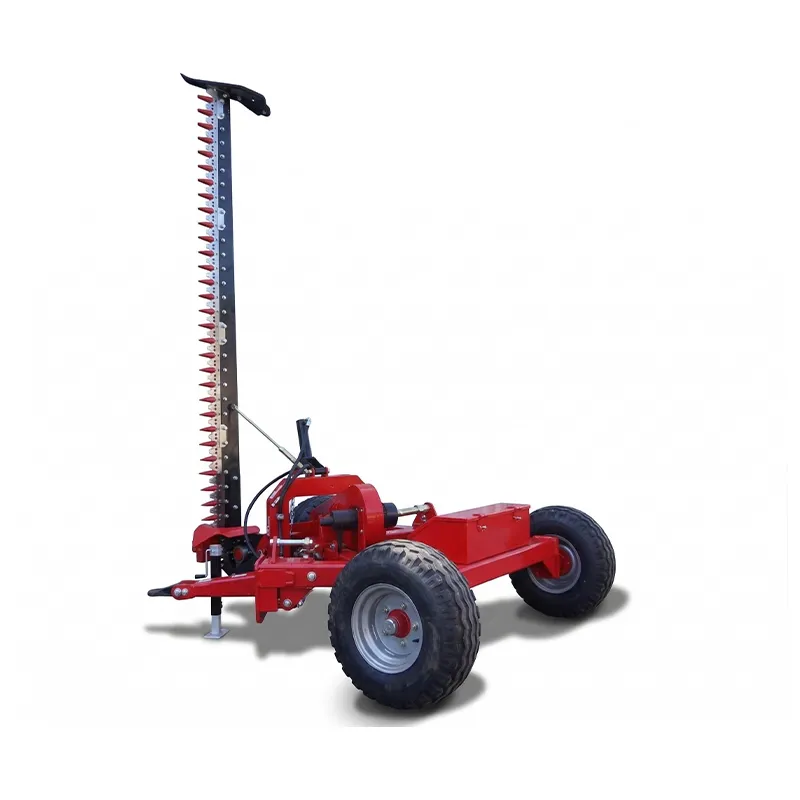
Mower: 9GD-2.5 (2.5 m disc)
Rake: 9LZ-6.0 (6 m, 2 passes = 5 m effective)
Baler: 9YG-1.0C or 9YG-1.25
Tractor: 40–55 kW, single unit
All three steps can be completed in 2 days on 50 acres. Single-tractor sequential workflow is efficient at this scale.
Mid-Scale — 150–300 acres/season
Balanced System
Mower: 9GD-2.5 + conditioner
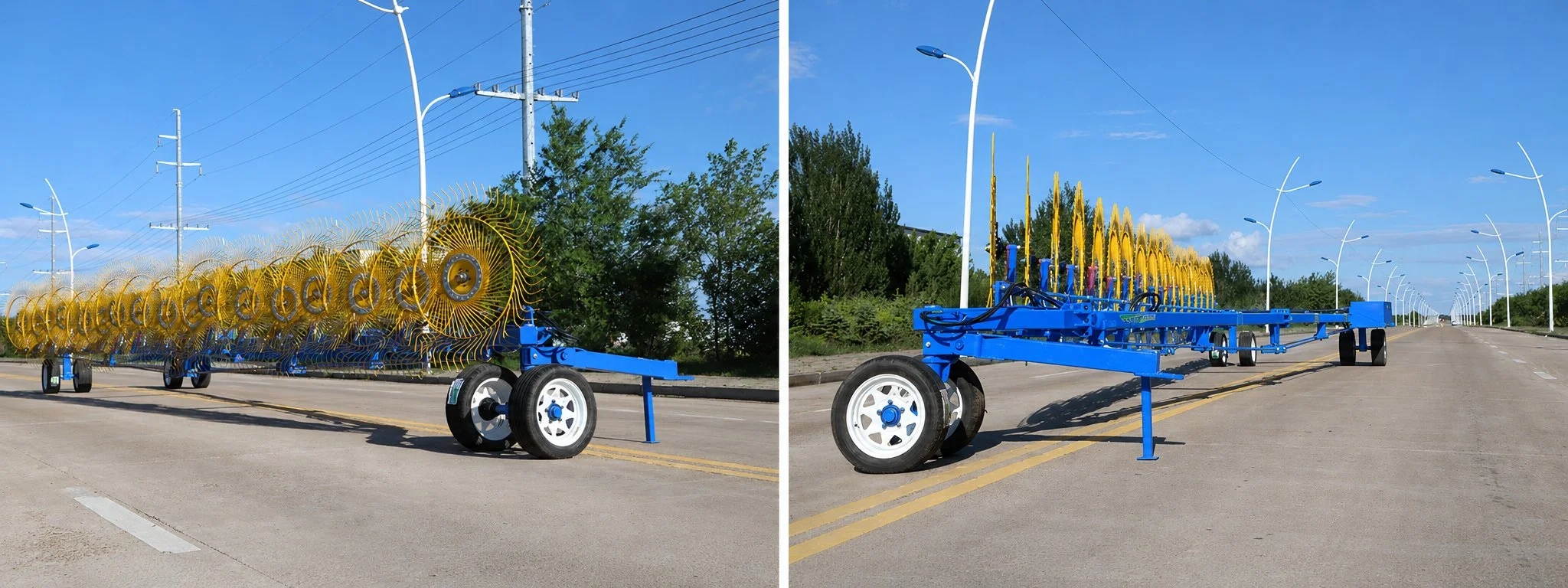
Rake: 9LZY-9.0 (9 m, 15-wheel)
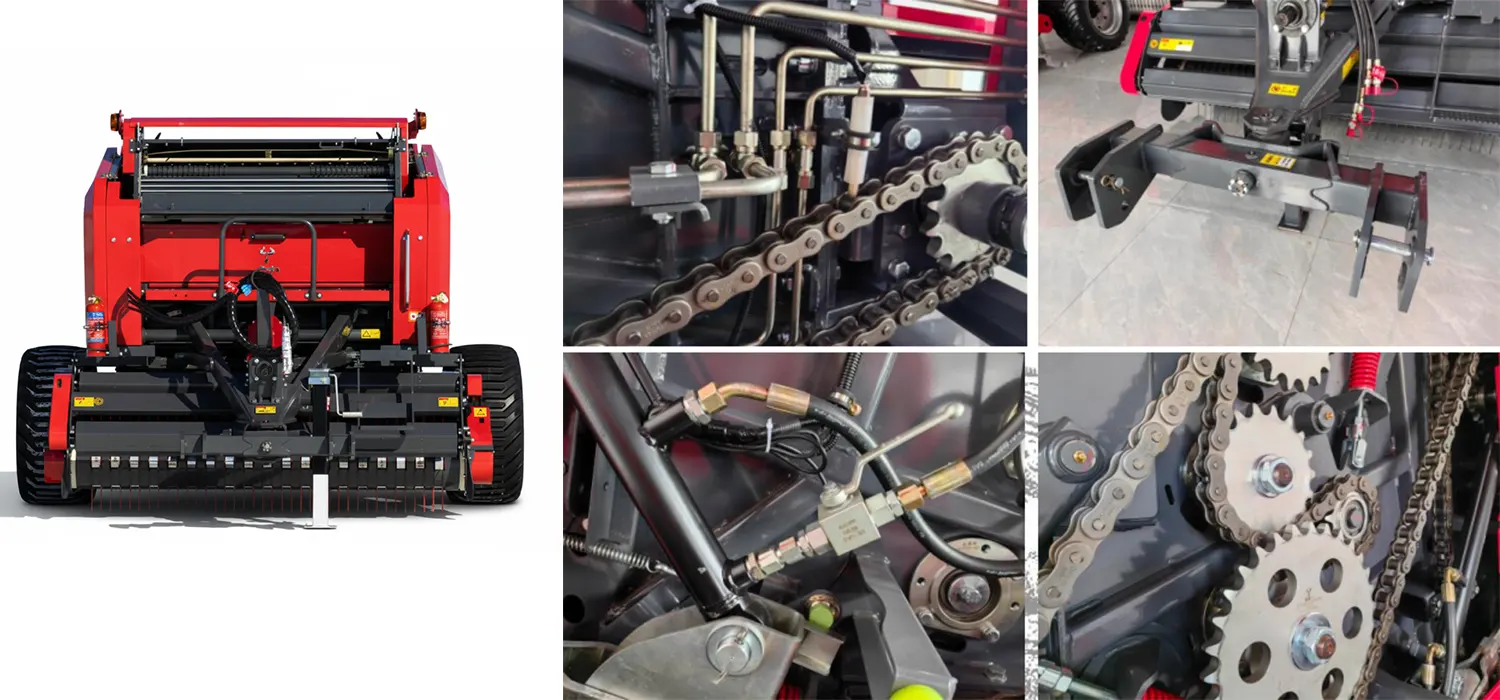
Baler: 9YG-1.25A commercial
Tractor: 55–75 kW primary + 35 kW secondary
Two-tractor parallel reduces 150-acre cutting from 4 days to 2.5 days — crucial for narrow weather windows.
Commercial — 400+ acres/season
High-Volume System
Mower: 9GS-5.0 (5 m suspension disc)
Rake: 9LH-12 (12 m horizontal) or 9LZD-9.0 (17-wheel)
Baler: 9YG-2.24D commercial class
Tractor: 75+ kW primary, dedicated baling tractor
Three separate tractor-implement combinations running simultaneously. Baler is the throughput bottleneck — 9YG-2.24D maximizes daily bale output to keep pace with mowing and raking capacity.
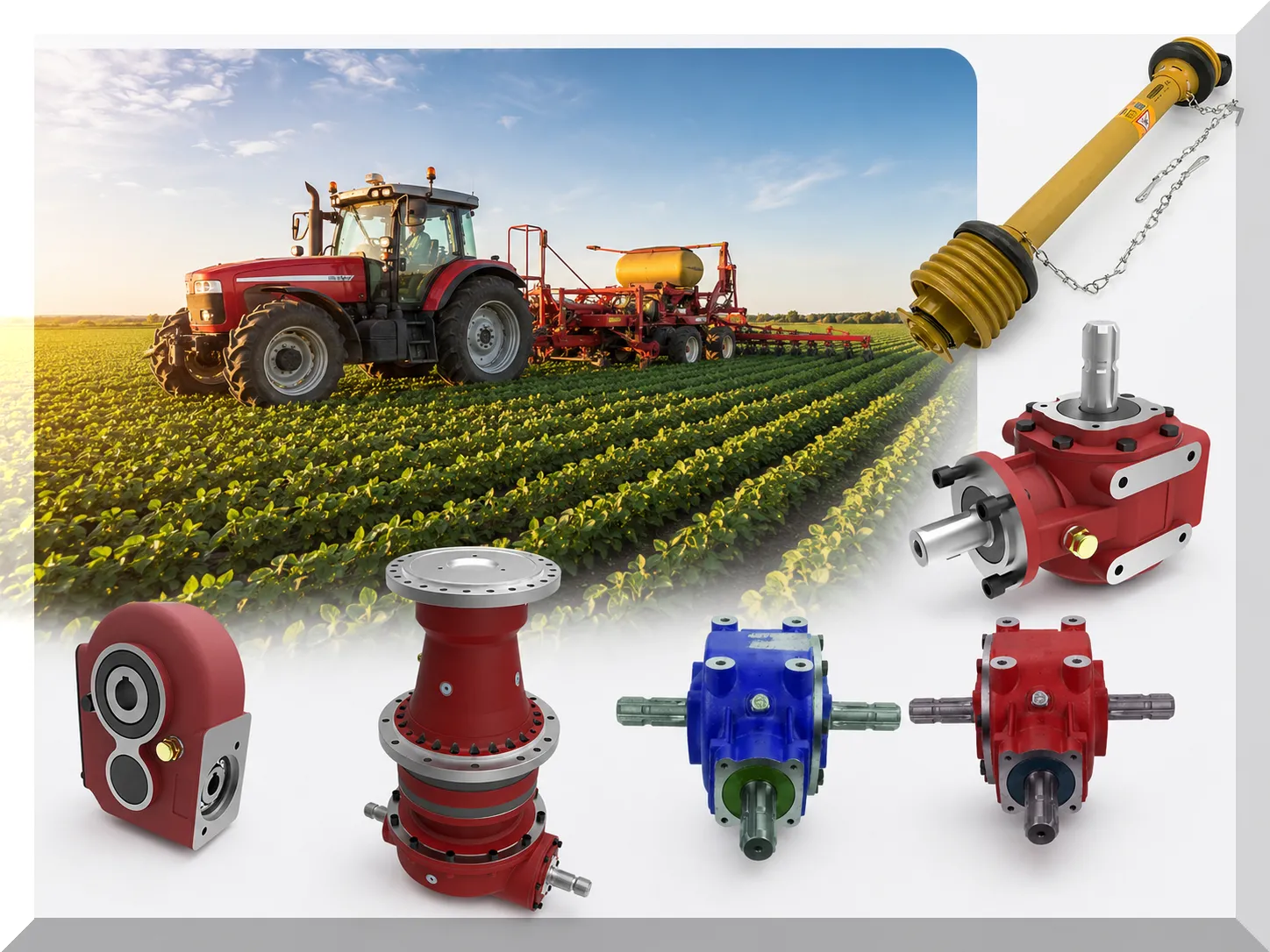
Our full hay rake range — from the 6 m 9LZ-6.0 to the 12 m 9LH-12 horizontal rake — is sized to pair with these system configurations at each scale. Matching rake width to mower width eliminates the most common source of workflow inefficiency: a rake that requires 4 passes per field when 3 passes would clear it if the ratio were correct. Our U.S. team works through the width-matching calculation at time of equipment selection. The agricultural gearboxes driving each step — mower conditioner, rake disc hubs, and baler chamber — must all be matched to the tractor HP delivering to each implement to avoid under-torque events that create downtime at peak harvest pace.
Frequently Asked Questions: Hay Making Workflow
How early in the morning should I start mowing for the best workflow?+
Start mowing after dew evaporates — typically 8:30 to 10:00 AM on clear days, later on cool or cloudy mornings. Mowing in standing dew is mechanically acceptable for the mower, but creates two workflow complications: (1) dew-wet crop does not flow cleanly through conditioner rollers, reducing conditioning effectiveness; (2) the dew adds 3 to 6 percentage points of surface moisture to the crop at cut time, extending the time to reach baling moisture and effectively pushing the rake timing back 1 to 2 hours on a warm day. In practice, starting at 9 AM instead of 7 AM on a clear summer day costs 2 mowing hours but recovers more than that in conditioning effectiveness and timing predictability for the rake pass the following morning.
Should I mow and rake in the same direction, or does it matter?+
Mowing and raking in the same direction is standard practice and is recommended for two reasons. First, it allows the rake to follow the mower’s swath pattern, which places the rake at the same track spacing as the mower without requiring independent field alignment — reducing the chance of unraked strips at swath edges. Second, raking in the same direction as mowing means the rake is always moving toward a fresh windrow rather than across previous rake tracks, reducing the chance of picking up old material or combining windrows from previous passes unintentionally. The exception is when the mowing and raking directions would both place traffic on the same tire track, creating compaction in a concentrated zone — in that case, raking in the opposite direction distributes traffic across the field more evenly.
My baler can’t keep up with what the rake produces in a day. Is it better to slow the rake down or bale longer hours?+
Both options work — but the choice depends on where you are in the weather window. If you have 3 or more days of dry weather remaining and the raked windrows are still above 20% moisture: slow the rake to match the baler’s daily output. The windrows will continue drying at an acceptable rate without quality risk. If the weather window is closing and you need to bale before the next rain event: extend baling hours to consume the raked acres. The second option adds operator fatigue and evening dew risk (baling above 20% moisture in the evening), but it clears the field before a quality loss event. The fundamental solution is to match the rake’s daily capacity to the baler’s daily capacity at the planning stage — the bottleneck diagram above is the tool for this.
Can I mow the same field on two consecutive days to match the baler’s capacity better?+
Yes — splitting a single field into two half-day mowing events is a common and effective workflow strategy for balancing capacity across all three steps. Mow the north half of the field on Day 0 morning and the south half on Day 0 afternoon. By Day 1 morning, the north half is 24 hours ahead in drying — ready to rake while the south half is still 12 hours behind. This staggers the raking and baling workload across both halves of Day 1 and Day 2, keeping the baler running continuously rather than waiting for the south half to reach baling moisture after the north half is already complete. The stagger also reduces the risk of the entire field coming due at exactly the same time as a rain system moves in.
What is the most common hay making workflow mistake that costs quality?+
The most common hay making workflow quality-costing mistake is raking too late — specifically, waiting until the next morning to rake hay that was ready by late afternoon the previous day. This happens when the operator finishes mowing and does not have time to start raking on the same day, so the entire field sits overnight and through the next morning in the swath rather than in a formed windrow. The difference matters because: (1) a flat swath dries more slowly than a formed windrow on the ground — the flat material blocks air from reaching the bottom layer, while a windrow allows air circulation beneath it; (2) overnight dew re-wets the outer crop surface, and a subsequent warm morning’s UV-driven drying from a flat swath is less efficient than the same drying in a windrow. The net result is 4 to 8 additional hours in the field before baling moisture is reached — during which additional respiration losses occur. Rake in the late afternoon when possible rather than waiting for the next morning.
How do I plan the hay harvest scheduling sequence when I have multiple fields at different crop stages?+
Multiple fields at different cutting stages require a hay harvest scheduling priority matrix: rank fields by (1) quality urgency — fields that will be past late-bud stage in 2 or fewer days take absolute priority regardless of size; (2) logistics — cut fields closest to storage first if transport is a bottleneck; (3) size — larger fields should be started earlier in the weather window because they take longer to complete, leaving less buffer if weather changes on Day 3 or 4. Build a simple table with field name, current stage, days to quality deadline, and acreage. Sort by quality deadline first, then by logistics. Review the table each morning of the cutting period and adjust the day’s mowing priority if any field has moved faster toward deadline than expected.

Complete Hay System — California Warehouse
Tell Us Your Acreage, Tractor HP, and Weather Window — We Balance the System
Mower, rake, and baler widths matched to eliminate the bottleneck at your scale. All three implement classes in stock at the California warehouse. Direct factory pricing, same-day parts dispatch, and tractor HP verified before any model ships.
✔ Width-Matched System
Mower : rake : baler balanced
✔ All 3 Implement Classes
Mowers, rakes, balers in stock
✔ Bottleneck Analysis
Your acreage + HP + timing reviewed
Build Your Matched Hay System
Editor: Cxm