ベーラーのトラブルシューティングリファレンス

Net Wrap Failures: Diagnose and Fix Every Application Problem

A net wrap failure during peak harvest is not just an inconvenience — it is a bale you cannot move, cannot stack reliably, and may not be able to sell. This guide covers every failure type in the wrapping cycle, gives you the specific component to inspect for each one, and explains which failures need a part replacement vs. which need only an adjustment.

診断を開始する

How the Net Wrap System Works — and Where It Can Fail

The net wrap cycle on a round baler is a four-step mechanical sequence: (1) a sensor or counter signals that the bale has reached full diameter; (2) the wrap arm or feed roller advances the net from the roll into the pickup intake; (3) the net feeds into the baler and wraps around the rotating bale for a preset number of revolutions; (4) a knife or cutting bar severs the net at the trailing edge. Each of these four steps can fail independently — and most failures have a specific mechanical fingerprint that points to the component responsible.

The critical point is that net wrap failures are almost never random. A wrap that works reliably one bale and fails the next is almost always caused by inconsistency in crop entry (windrow variation or bale shape affecting the sensing trigger), not by a defective mechanical component. A wrap that fails consistently at the same point in every bale is a mechanical or adjustment issue. Distinguishing between these two patterns is the first step in any wrap failure diagnosis.

Diagnosis rule of thumb: If the same failure happens in the same position in every bale → mechanical/adjustment cause. If the failure is intermittent with no pattern → sensing/triggering cause. If the failure only appears on the first bale after loading a new roll → feed path threading issue. Three different failure patterns; three different diagnostic paths.

The Five Net Wrap Failure Categories at a Glance

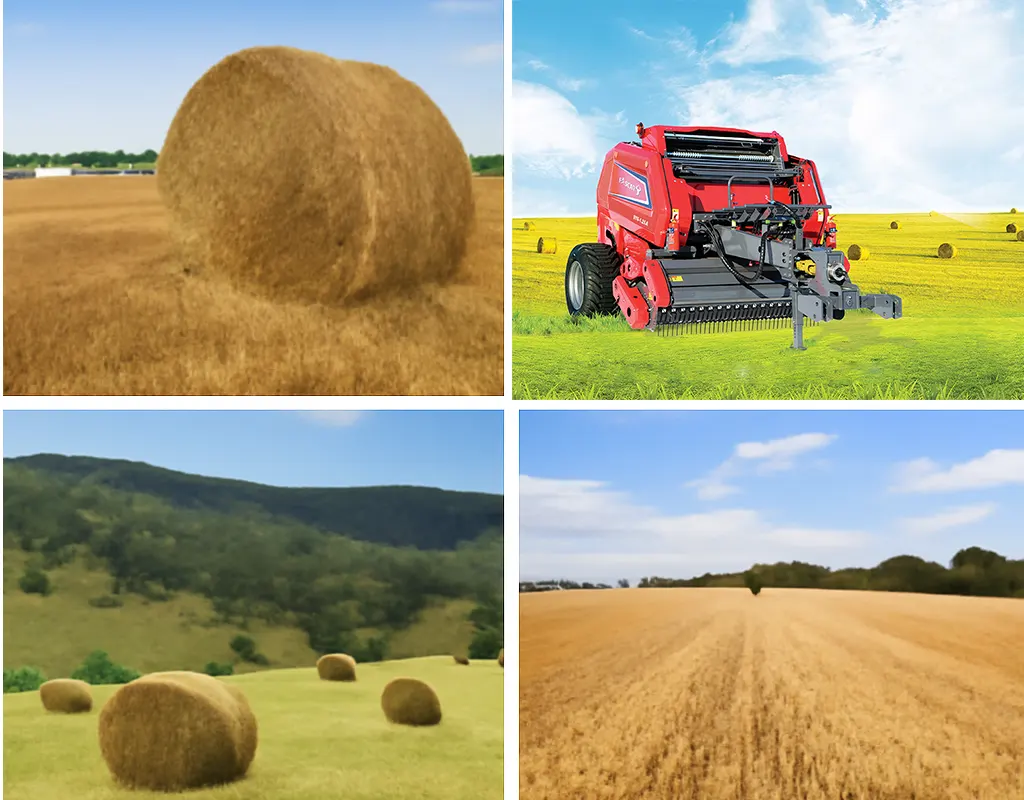
round baler applying net wrap to a formed bale — net wrap application failures fall into five distinct categories each with specific mechanical root causes

Failure category What you observe Most common cause Urgency
1 — Wrap Won’t Start Full bale; baler signals complete; net never feeds into intake Broken trigger mechanism, depleted roll not detected, arm actuator failure High — bale cannot be ejected cleanly
2 — Wrap Won’t Cut Net wraps correctly but continues wrapping after target count; knife doesn’t engage or tears rather than cuts Dull/damaged knife, knife cam timing off, knife actuator not completing stroke High — over-wrap wastes net; bale may not eject
3 — Incomplete Coverage Bale ends bare or thin; net width narrower than bale width; coverage breaks mid-wrap Wrong net width, centering misaligned, net tension too high causing tear Medium — bale stores poorly; shoulder weathering
4 — Net Tears During Application Net feeds, contacts bale, then tears before completing wrap cycle Bale surface with protruding stub stems, feed roller pressing too hard, net too thin for crop Medium — typically resolvable without stopping
5 — Wrap Loosens in Storage Net is tight at ejection but loose or partially off after 2–7 days of storage Insufficient wraps applied, high-moisture bale settling, net UV degradation Low (post-harvest) — increases storage DM loss

Diagnosing Start and Cut Failures: The Mechanical Sequence

When the Net Won’t Start

The net wrap start sequence is initiated by one of two mechanisms depending on baler design: a mechanical actuator linked to the density gate (the gate opening at full bale pressure triggers the wrap arm), or an electronic sensor (bale diameter sensor or rotation counter reaching a preset value sends a signal to an electric actuator). Both mechanisms have specific failure points:

Mechanical Actuator Systems
  • Check the connecting rod between density gate and wrap arm — a bent, cracked, or disconnected rod prevents the gate motion from transmitting to the arm
  • Inspect the wrap arm pivot bearing — a seized pivot prevents arm extension even when the actuator fires
  • Verify the roller or cam that advances the net from the roll is engaging — worn cam follower is the most common single-part failure
  • Confirm the net roll holder is correctly seated — a shifted roll prevents the feed roller from contacting the net surface
Electronic Actuator Systems
  • Check the bale diameter sensor / proximity switch — a damaged sensor or one with crop residue blocking the sensing face will not trigger the wrap sequence
  • Inspect the actuator wiring harness for cuts or corrosion at the connector — field vibration breaks wires at harness bends near the moving tailgate hinge
  • Test the electric motor or solenoid that drives the wrap arm — listen for the actuator sound when the baler signals wrap start (it should be audible); silence means no signal reaching the actuator
  • Reset or replace the bale counter if it is reading incorrectly — a counter frozen at a wrong value never triggers the wrap sequence

When the Net Won’t Cut

Cutting failures account for more in-season net wrap complaints than starting failures. The cutting mechanism typically consists of a fixed or rotating knife that moves through the net at the end of the wrap cycle. Three components are involved: the knife edge itself, the knife actuator (cam, spring, or electric), and the knife guard clearance relative to the bale surface.

Knife Diagnosis Procedure — 3 Minutes in the Field
  1. Stop the baler and disengage PTO. Wait for all rotation to stop completely.
  2. Open the wrap system access panel (typically on the left side of the baler, behind the net roll housing).
  3. Manually advance the knife through its cutting stroke by hand — feel for resistance. A correctly operating knife should move through its full arc with moderate resistance and return cleanly to the home position by spring force.
  4. Inspect the knife edge. Run your thumbnail across the edge — a sharp knife catches the thumbnail firmly; a dull knife slides without catching. Any visible nicks or rolled edge = replacement needed.
  5. Check knife-to-anvil clearance. A net knife that has drifted out of contact with the anvil bar will not cut — it will deflect the net rather than shear it. Clearance should be 0.5–1.5mm depending on the baler specification.

Coverage Failures and Net Tearing: Causes That Are Often Misdiagnosed

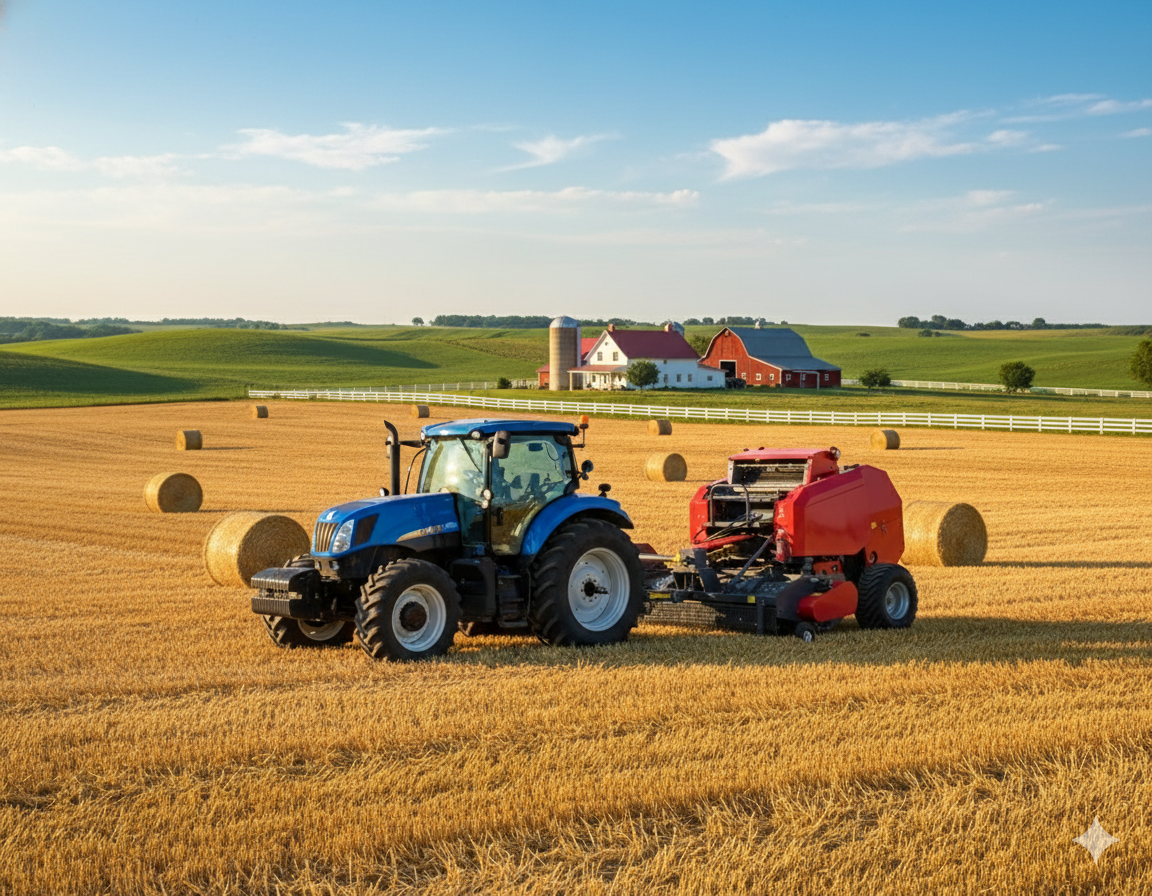
round baler net wrap applied to bale — coverage failures show as bare bale ends, inconsistent overlap, or net tears that expose the bale surface to weathering

Coverage failures are the most commonly misdiagnosed net wrap problem because operators often blame the wrap product when the actual cause is a machine adjustment issue. A bale with uncovered ends looks like a net-width problem — and it might be — but it might equally be a miscentered arm, a tension setting that is shearing edge threads before the wrap reaches the bale ends, or a bale that is forming non-cylindrically due to pickup alignment issues.

Bare ends only; center wrapped
Net width is narrower than the bale chamber. Measure the bale width at the widest point and compare to the net roll specification. For a 48-inch wide chamber, you need at minimum 48-inch net; 51-inch is preferred to provide overlap coverage at the shoulders.
One end covered, one end bare
Net roll is not centered in the holder, or the feed arm enters the intake off-center. Check the net roll holder alignment relative to the baler centerline. A roll shifted 2 inches to one side produces a corresponding shift in where the wrap seats on the bale.
Net tears at one edge consistently
The feed tension on one side is higher than the other — caused by uneven brake pressure on the net roll holder brakes (if equipped), or a burr on one edge of the feed guide that is catching edge threads. Inspect the net feed path edge guides for sharp edges or burrs from crop debris impact.
Net tears across full width mid-wrap
The bale surface has a protruding element — a stub stem, a piece of baler twine wrapped around the bale, a rock fragment embedded in the bale surface — that catches the net as it passes. Also check for a bent tailgate component that creates a point contact on the net during the wrap pass.
Net bubbles or sags on bale surface
Net tension is too low during application — the net is not stretched taut against the bale surface. Increase the net roll brake tension slightly to add resistance to net withdrawal from the roll. Excessive sag also results from net denier too low for the crop type (heavy wet silage crop needs stronger net).

Why Net Wrap Loosens After Ejection — and How to Stop It

A bale that leaves the chamber wrapped tightly but arrives at the storage site partially unwrapped represents a failure mode that is easy to overlook during baling (since everything looked correct at ejection) and costly to discover later. Two mechanisms cause post-ejection wrap loosening:

Bale Settling / Diameter Reduction

High-moisture hay bales (above 20% moisture) continue to lose moisture through respiration after baling. As the hay dries, the bale diameter decreases slightly — and if the decrease is sufficient, the wrap that was taut on a 48-inch bale becomes loose on a 46.5-inch bale. This effect is most pronounced in the first 14 days after baling and is most severe in dense, high-moisture legume bales.

Fix: Bale at lower moisture (<18%) or add one additional wrap revolution
Insufficient Wrap Revolutions

The number of wrap revolutions determines the overlap percentage and the number of net-to-net contact points that create the interlocking mesh grip. Standard recommendation is 2 full revolutions minimum for dry hay; 3 revolutions for outdoor long-term storage; 4+ revolutions for bales that will be handled multiple times or transported long distances. A wrap count set at minimum on a baler that is slightly out of adjustment may actually deliver 1.5 revolutions rather than 2.

Fix: Increase wrap count setting by 0.5–1 revolution; verify with physical count

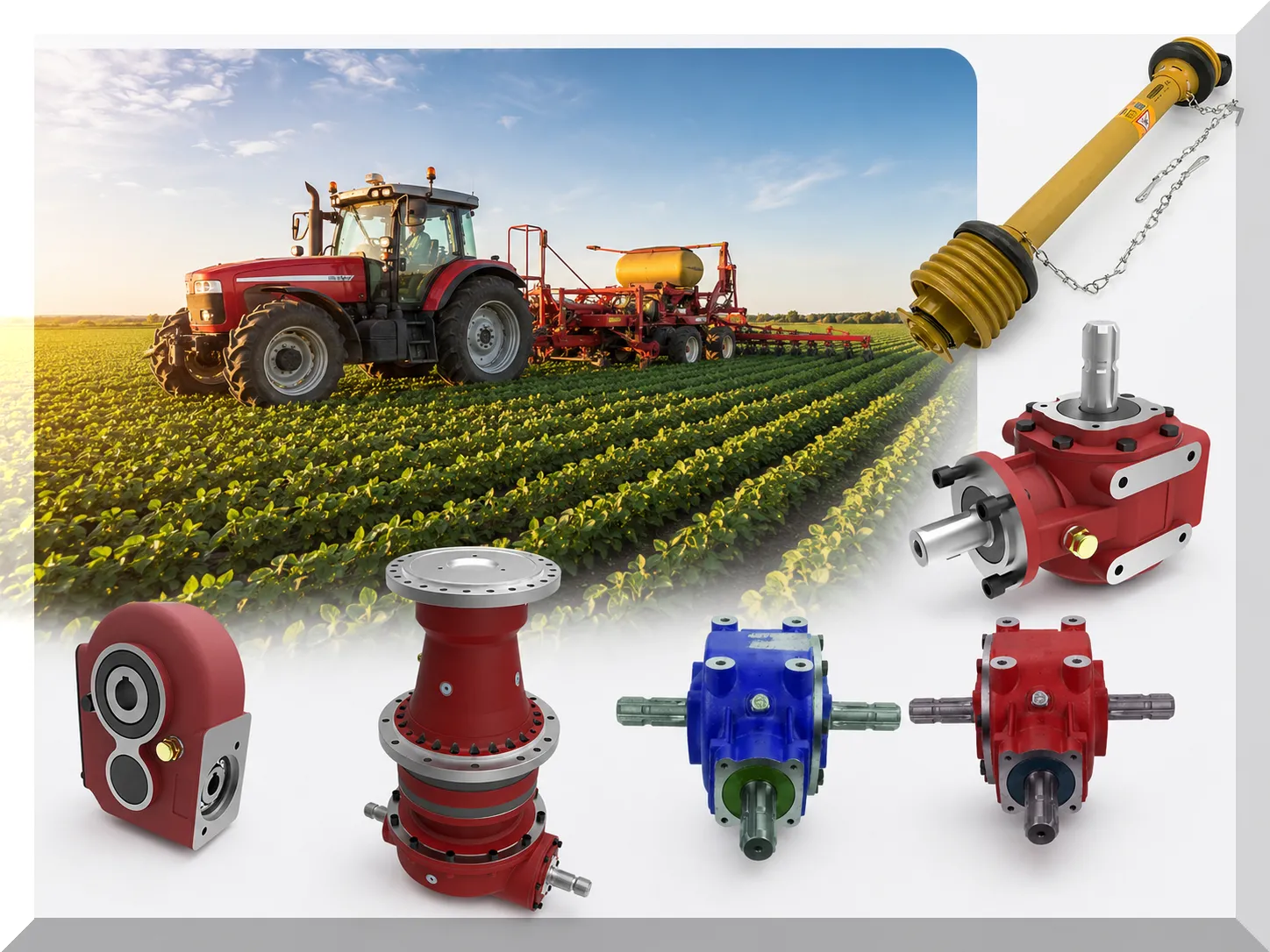
For the technical specifications on net wrap denier, UV stabilization class, and overlap settings that determine application quality from the product side, the ネットラップの選択ガイド covers every specification parameter. For the wear items in the net wrap system — knife blades, feed rollers, arm actuator components — and their replacement intervals, the baler wear parts guide provides the full inspection schedule. The 農業用ギアボックスおよびPTO駆動系部品 on the net wrap system’s drive mechanism should be confirmed for correct torque capacity when replacing the wrap arm actuator or drive cam assembly.

農業用ギアボックスとPTOシャフト

Fast-Track Diagnosis: What the Bale Tells You

Before touching any mechanical component, study the bale that failed. The pattern of the failure on the bale surface is diagnostic information — it tells you whether the problem is in the start sequence, the wrap path, or the cut sequence.

round baler net wrap applied to commercial hay bale — post-ejection inspection of wrap pattern identifies start, coverage, tension, and cut failures

?1
Bale has no net at all → Problem is in the Start sequence
The wrap cycle never initiated. Check the trigger mechanism (mechanical actuator rod or electronic sensor). Common: actuator connecting link disconnected, electric motor not receiving voltage, empty-roll sensor falsely detecting empty roll.
?2
Bale has wrap but a long trailing tail of net → Problem is in the Cut sequence
The wrap fed correctly but the knife did not engage, or engaged but did not cut cleanly. Inspect the knife edge and the knife travel to confirm it completes its full cutting stroke. A tail longer than 6 inches suggests the knife never engaged; a tail of 2–4 inches suggests a dull knife that tore rather than cut.
?3
Bale has wrap on the barrel but bare ends → Problem is Width or Centering
Net fed and cut correctly but did not cover the full bale width. Measure net roll width vs. bale chamber width. Check the centering bar position. Confirm the feed arm is entering the intake at the correct lateral position.
?4
Wrap has a gap or bare strip on the cylinder face → Net Tear mid-application
Net started and would have cut correctly, but tore across its width during the wrap cycle. Inspect the bale surface for anything protruding; check the feed path for a sharp edge; verify net denier is appropriate for the crop type being baled.
?5
Wrap looks correct on fresh ejection; loose after 3–7 days → Post-ejection loosening
The wrap system functioned but the wrap count or bale moisture combination is allowing loosening. Increase wrap revolutions by 1 and reduce baling moisture below 18% for bales that will be stored outdoors more than 2 weeks.

Pre-Season Net Wrap System Maintenance Checklist

Most in-season net wrap failures are preventable with a 20-minute inspection at season start. Run through this list before the first bale of every new season — not after the first failure.

Knife System
  • Test knife sharpness (thumbnail test)
  • Verify knife travel completes full arc
  • Check knife-to-anvil clearance: 0.5–1.5mm
  • Replace knife if edge has nicks or rolled sections
Feed Path
  • Inspect guide rollers for flat spots or frozen rotation
  • Run fingers along all net guide edges — no burrs
  • Clean crop residue from the entire feed path
  • Check thread guide fingers for bending
Actuator and Sensors
  • Test manual trigger: arm extends and retracts freely
  • Inspect sensor face: clean of crop debris
  • Check electrical connectors: no corrosion or cracked insulation
  • Verify bale counter resets correctly on new roll load
Net Roll System
  • Verify roll holder centering vs. bale chamber centerline
  • Check brake tension: roll should have slight drag, not spin free
  • Thread test roll: feed net manually through full path
  • Confirm net width matches chamber specification

Net Wrap FAQs

My baler’s wrap sequence works on the first bale but fails on subsequent bales. What causes intermittent starting?+
Intermittent starting failures that happen after the first bale of a roll are almost always tension-related: the net roll brake is set too light and as the roll diameter decreases (with each bale drawn off), the feed roller slips on the smaller-diameter roll surface rather than advancing the net. As the roll grows smaller and lighter, the slip worsens. The fix is to slightly increase the net roll brake tension — add 1/4 turn to the brake adjuster and retest across 5–10 bales. If the intermittent failure disappears, the tension was the cause. If it persists, check whether the feed roller surface is worn smooth (should have a textured or knurled surface for grip).
How many net wrap revolutions should I use for different storage situations?+
The standard industry recommendations: 1.5–2 revolutions for dry hay used within 30 days; 2–3 revolutions for outdoor stored dry hay stored 1–6 months; 3–4 revolutions for hay bales that will be transported on a wagon or flatbed truck; 4–5 revolutions for bales handled with a bale spear multiple times (spear holes in the net reduce intact coverage). For silage bales (haylage), net wrap is typically not used alone — film wrapping replaces net wrap as the primary seal. If using net as an under-layer beneath silage film wrap, 2–3 net revolutions before film application is the standard practice. Each additional wrap revolution uses roughly 1.8–2.2 feet of net and costs $0.015–$0.025 in additional net consumable per bale — trivial compared to the DM loss prevention value.
Does net wrap brand quality actually matter, or is the cheapest functional product acceptable?+
Net wrap quality matters significantly for long-storage applications (over 60 days outdoor) and for bales that will be transported or handled multiple times. The two critical quality variables are UV stabilization class (how long the net retains its strength in direct sunlight — standard is 12–18 months, premium products extend to 24+ months) and transverse tear strength (resistance to tearing across the net width when a bale stub stem contacts the wrap during application). A lower-cost net with inadequate UV stabilization becomes brittle and crumbles at storage site by month 8 or 9 in a sunny climate, leaving bales unprotected for their remaining storage life. For operations storing bales for 3–5 months in temperate climates, the cost difference between standard and premium UV net is small relative to the quality assurance benefit.
The net cuts cleanly but the trailing edge lifts off the bale before it can grab. Why?+
The trailing edge of the net must be pressed against the rotating bale surface for approximately 1/4 to 1/2 revolution after the knife cuts, so the net-to-net adhesion of the overlapping layers secures the cut edge before the bale stops rotating. If the tailgate opens too quickly after the cut — or if the cut occurs too early in the wrap cycle relative to bale ejection timing — the trailing edge never gets this securing press. Check the tailgate opening delay: the baler should allow at least 1/4 of a bale revolution after the knife fires before the tailgate begins to open. An electronic timing adjustment (on modern balers with programmable delay) or a mechanical cam adjustment (on older balers) changes this interval. Increasing the wrap count by 0.5 revolutions also helps, as the trailing edge has more net-to-net contact to grip against.
Can I run different brands of net wrap on the same baler without adjustment?+
Generally yes, as long as the net width and core diameter are compatible with your baler’s net roll holder. Most modern balers accept net rolls on a 2-inch or 3-inch cardboard core, and net widths are fairly standardized (48 inches and 51 inches are the dominant sizes for U.S. round balers). However, net wrap products have different thicknesses and stretch characteristics that affect how the feed roller engages the roll surface. A thinner, softer net may require slightly more brake tension to prevent slipping; a stiffer net may require slightly less. When switching brands mid-season, run 5–10 test bales with the new product before assuming no adjustment is needed. The knife cut cleanness can also change — some net materials cut more cleanly than others at a given knife sharpness level.
How do I properly dispose of used net wrap to avoid environmental and machinery problems?+
Used net wrap is polypropylene plastic and should not be burned — the smoke contains hazardous compounds and burning is restricted or illegal in most U.S. states. Landfill disposal is the most common current practice; some regions have agricultural film recycling programs that accept net wrap as part of a broader plastic film collection. The practical concern on the farm is that net wrap scraps must be kept away from hay and machinery — net wrap threads in hay cause digestive obstruction in cattle (particularly calves), and net wrap fragments pulled into mower or tractor intake systems can wrap around drive shafts and cause failures. Establish a dedicated waste bag or tote in the cab for net wrap scraps removed from bale equipment, and dispose of it in sealed bags rather than loose in the field environment.

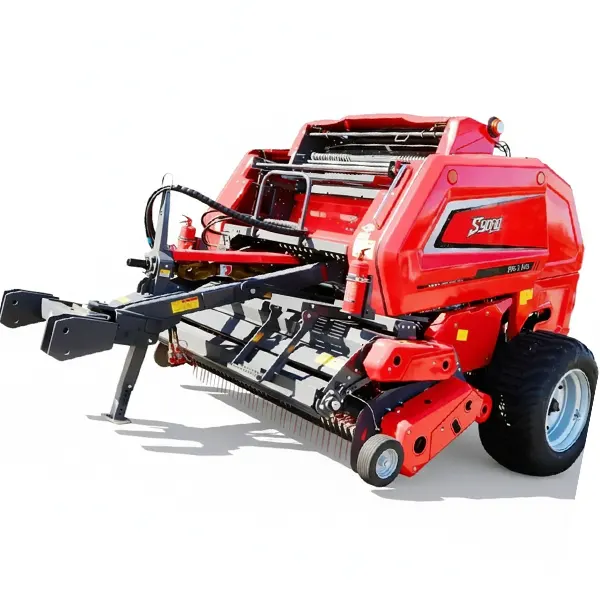
foragebaler.com round balers — net wrap system calibration and documentation provided with each unit before delivery

Need Help Diagnosing a Specific Net Wrap Problem?

Tell us your baler model, the failure category (start / cut / coverage / tear / storage loosening), and any pattern you’ve observed. Our technical team will confirm the specific component and adjustment for your situation.

Get Wrap System Support

編集者: Cxm