Agronomic Guide

Alfalfa Stand Establishment: Seeding Rates, Weed Control, and the First-Cut Decision

Alfalfa establishment is the investment that pays dividends for 5 to 8 years. Get the seeding window, depth, and first-cut timing right — or spend the next 3 cuttings recovering from thin stands, weed pressure, and premature harvest.

Get an Equipment Recommendation

Alfalfa establishment requires more precise management in the first 12 months than any subsequent year of stand production. The alfalfa establishment decisions made in seeding week — variety selection, seeding date, depth, inoculation, and companion crop choice — determine the stand density that will be harvested for the next 5 to 8 years. Errors in establishment cannot be fully recovered; they become a production ceiling that limits every cutting until the stand is terminated. This guide covers the establishment decisions that have the most impact on long-term stand performance.

Seeding Window by Region — Getting the Calendar Right

alfalfa stand establishment seeding window — spring and late summer planting dates by U.S. region

Alfalfa establishment can occur in spring or late summer, with each window having different advantages and risks. The choice of seeding window is primarily determined by your region’s soil temperature pattern and weed pressure — spring seedings in the northern Midwest avoid the worst summer annual weed pressure but require a longer pre-harvest period; late summer seedings in most U.S. regions establish with lower weed competition but require adequate frost-free days for root carbohydrate storage before winter dormancy.

Alfalfa Seeding Window by U.S. Region
地域 Spring Window Late-Summer Window Preferred Window + Why
中西部北部(ミネソタ州、ウィスコンシン州、ミシガン州) Apr 15 – May 10 Aug 1 – Aug 20 Late summer preferred — lower weed competition; allows 6–8 wks root establishment before frost
Great Plains (NE, KS, OK) Mar 20 – Apr 30 Aug 10 – Sep 1 Either — spring in northern areas; late summer in southern areas where spring dries quickly
Northeast (PA, NY, OH) Apr 1 – May 15 Aug 1 – Aug 25 Spring preferred in high-rainfall areas where late-summer drought risk is significant
California / Pacific NW Feb 15 – Apr 1 Sep 1 – Oct 1 Late summer/fall under irrigation — avoids summer heat establishment stress; dominant system in CA
Southeast (AR, TN, VA) Feb 15 – Mar 31 Aug 15 – Sep 15 Late summer strongly preferred — avoids summer annual weed competition that overwhelms spring stands

Seeding Rate, Depth, and Inoculation — The Three Variables Most Commonly Wrong

alfalfa seeding rate and depth — establishment practices for successful stand density

Seeding rate: The standard drilled seeding rate for alfalfa establishment is 15 to 18 pounds per acre (pure live seed basis). Broadcasting requires 20 to 25 pounds to compensate for lower seed-to-soil contact. Over-seeding above 22 pounds with drilling is not beneficial — it increases seedling competition within the establishing stand and does not improve final stem density. Under-seeding below 12 pounds produces thin initial stands that are susceptible to weed pressure in the establishment year.

Seeding Depth — Soil Cross-Section and Germination Response
Too Shallow (<1/4 inch)

⚠ seed here
Seed desiccates in soil surface crust before root emerges. Germination erratic. Stand gaps throughout field.
Correct (1/4 to 3/8 inch)

✔ seed here
Consistent soil moisture at seed zone. Radicle contacts moist soil immediately. Target germination 85%+.
Too Deep (>3/4 inch)

seed here
Seedling exhausts carbohydrate reserves before reaching soil surface. Emergence poor. Thin stands with inconsistent vigor.

Inoculation: Alfalfa requires Rhizobium meliloti inoculant for nitrogen fixation unless the field has supported alfalfa in the past 3 to 5 years. Uninoculated alfalfa on a field without a Rhizobium soil population depends entirely on soil nitrogen, producing yellow, nitrogen-deficient plants that never reach productive stand density. Pre-inoculated seed from the dealer is convenient but has a limited shelf life after opening — use within 24 hours of opening the seed bag and keep inoculated seed out of direct sunlight and above 30°C, which kills the Rhizobium on the seed surface.

Stand Density Assessment — How to Count and When to Worry

alfalfa stand establishment density assessment — stem count method for stand evaluation

Stand density assessment is the key management check performed before the first cutting and again each spring for the life of the stand. The standard method in U.S. alfalfa production is the stem count: count the number of stems per square foot across a representative sample of 10 to 20 quadrat locations in the field.

5~8
stems/ft²
Excellent stand
No action needed
3~5
stems/ft²
Marginal stand
Monitor closely
<3
stems/ft²
Poor stand
Consider reseeding

Weed Control in the Establishment Year

The establishment year is the period of maximum weed vulnerability because the alfalfa canopy has not yet closed to shade out competing species. Three weed management strategies apply in the seeding year:

Clipping for weed competition: When annual broadleaf weeds overtop the alfalfa seedlings, clipping the weed canopy at 4 to 5 inches height removes the weed’s light competition without damaging the alfalfa crown below. This is the most universally applicable establishment-year weed management tool. Clip when weeds are 6 to 8 inches tall and alfalfa is 3 to 4 inches — before weeds reach seed maturity. Do not clip below 4 inches in the establishment year, as this height removes the developing alfalfa crowns along with the weed tops.

Pre-emergent herbicides: Several pre-emergent grass herbicides (EPTC, trifluralin) are registered for use at alfalfa seeding and provide effective control of summer annual grasses that would otherwise compete during the establishment period. Timing is critical: apply at or before seeding and incorporate before germination. Confirm current label status and local registration before purchasing — herbicide registrations change and vary by state.

Companion crop management: Small grain companion crops (oats, barley seeded with alfalfa) provide a physical barrier to weed establishment and reduce soil erosion risk during establishment. The trade-off: companion crops compete with alfalfa for moisture and light. Harvest the companion crop at small grain heading — do not leave it past maturity. In drought years, eliminate the companion crop entirely: the moisture competition from even a sparse oat stand can reduce alfalfa seedling survival by 20 to 40% in a dry establishment summer.

First-Cut Decision: When to Take It and How to Take It Safely

alfalfa first cut timing and cutting height — establishment year harvest management for stand persistence

The first harvest of an establishing alfalfa stand is the highest-risk event of the entire stand life for stand persistence. Cutting too early removes the plant before it has stored adequate root carbohydrate reserves for recovery — the seedling root system, established only 8 to 12 weeks before the first cut, has minimal carbohydrate reserve compared to a mature 2-year-old stand. Cutting too early in the establishment year is the primary cause of thin stands going into winter that do not recover to productive density in Year 2.

Timing Indicator Cut? 理由
10% bloom AND ≥8 weeks since seeding AND ≥4-inch cutting height used ✔ Yes All three conditions together indicate adequate root carbohydrate reserve and crown development for safe first harvest
10% bloom but only 5–6 weeks since seeding ⚠ Delay Root system is too immature even at bloom stage — wait 2 more weeks regardless of top growth
9 weeks since seeding but no bloom visible ⚠ Check for bud If late-bud visible (not yet open), it is acceptable to harvest for quality — root system is adequate by Week 9 in most conditions
Weed pressure requires cutting at Week 6–7 ⚠ Clip only Set mower at 4–5 inches to clip weeds only — do not harvest below 4 inches in the establishment year under any circumstances

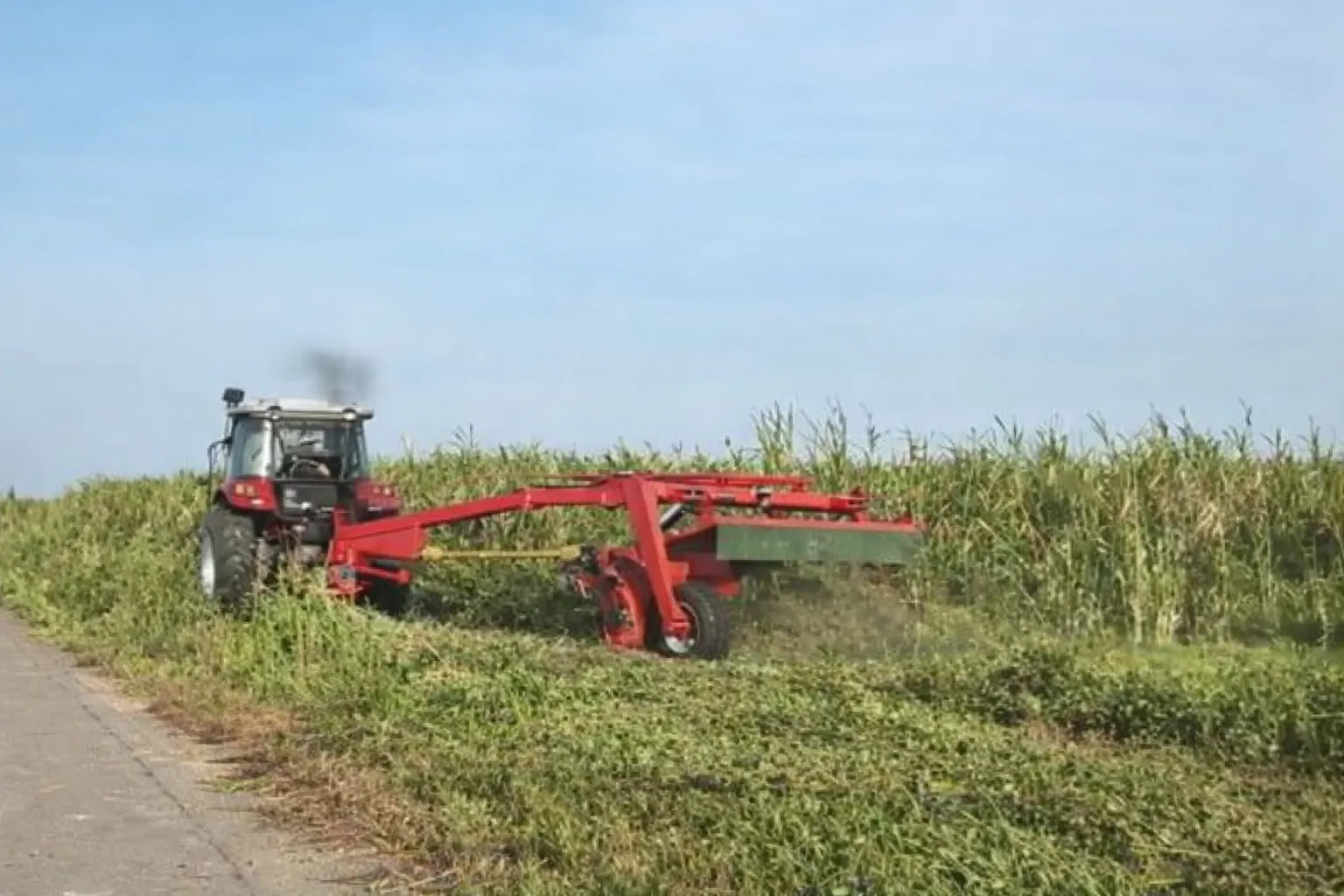
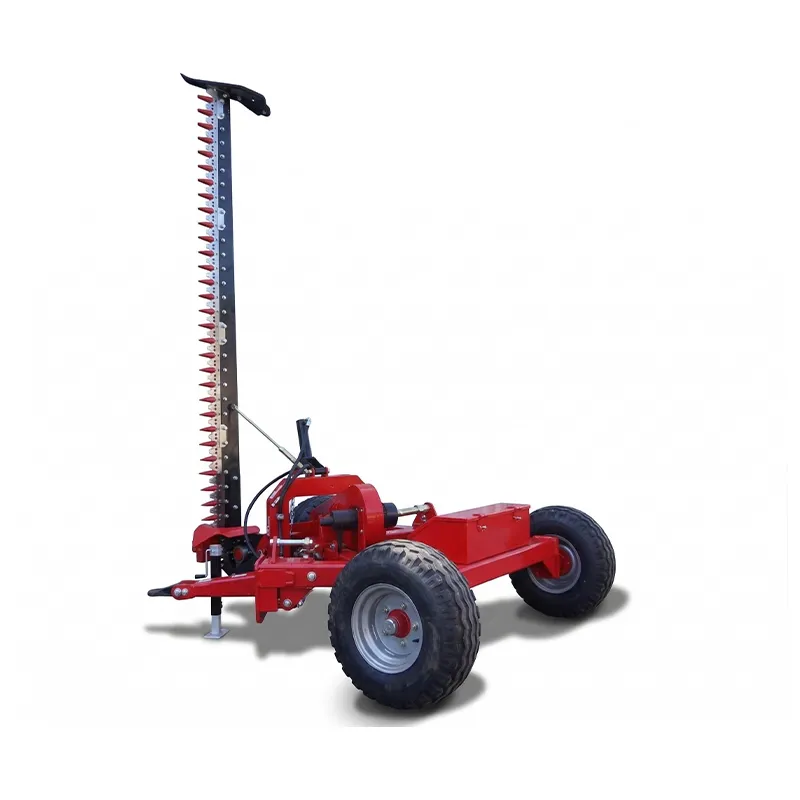
A 4-inch minimum cutting height is the most critical single management rule for the establishment year. The 4-inch rule protects the basal meristem (crown bud zone) from direct harvest — for context on how this cutting height affects forage analysis results in Year 2. The 4-inch rule — this zone contains the axillary buds that drive the next stand’s regrowth. Cutting below 4 inches removes these buds and reduces the next cutting’s yield potential by 15 to 25%. Our mower lineup includes cutting height adjustments for establishment-year management.

alfalfa establishment support — hay equipment and stand management for alfalfa program

Frequently Asked Questions: Alfalfa Stand Establishment

How long does alfalfa establishment take before the first full production cutting?+
Alfalfa establishment via spring seeding in the Midwest typically reaches first full production cutting in Year 2 (the following spring or early summer). In Year 1, typically one carefully timed harvest is taken late in the growing season after the stand has had 8 to 10 weeks to establish. Late-summer seeded alfalfa skips Year 1 harvest entirely — the seedling stand overwinters and produces its first full harvest the following spring. In the Southwest and California under irrigation, establishment is faster — 8 to 12 weeks from seeding to first cut is achievable in warm conditions with adequate irrigation.
My alfalfa seedlings are turning yellow 3 weeks after emergence. What is causing this?+
Yellowing alfalfa seedlings at 2 to 4 weeks after emergence most commonly indicate nitrogen deficiency from failed Rhizobium inoculation. If the seed was not properly inoculated, or if the inoculant was applied to seed left in direct sun or exposed to herbicide residues, the Rhizobium population on the seed surface may be dead. Without Rhizobium, the seedling depends on soil nitrogen — which is typically adequate for the first 2 to 3 weeks from soil organic matter mineralization, then becomes limiting. Check the root system of 3 to 4 plants: healthy inoculated plants at 3 to 4 weeks will show small pink-to-red nodules on lateral roots. Absence of nodules confirms failed inoculation. Options: apply liquid Rhizobium inoculant to the soil surface with irrigation water if available, or accept reduced establishment-year yield and rely on natural nodulation as soil Rhizobium populations build. Nitrogen fertilizer application is not recommended — it suppresses natural nodulation. Our U.S. team can help match the right mowing equipment for your alfalfa program; baler and mower drive systems, including 農業用ギアボックス, should be inspected before the first production cutting.
What soil pH does alfalfa require for successful establishment?+
Alfalfa requires soil pH of 6.5 to 7.5 for optimal establishment and nitrogen fixation. Below pH 6.0, aluminum and manganese become more soluble and reach phytotoxic concentrations in many soils — seedling root growth is suppressed and Rhizobium survival is reduced. Above pH 7.8, calcium binding can limit phosphorus and potassium availability. Test soil pH at least 6 months before planned seeding — lime applications require 3 to 6 months to fully change soil pH, and surface applications to no-till fields can take longer. Target pH 6.8 to 7.2 at the time of seeding. Soil pH correction is the highest-return investment per dollar in preparing a field for alfalfa establishment.
How do I tell if my establishment-year stand is good enough to keep for Year 2?+
Use the stem count method in late August or early September: count stems in 10 randomly selected 1-square-foot quadrats and average. If the average is 4 stems/ft² or above, the stand is worth keeping for Year 2 — it will likely fill in to adequate density as surviving plants develop larger crowns with more stems per plant. If average is below 3 stems/ft², consider reseeding — the stand will likely not reach economic production density in Year 2 even with optimal management. Also check for spatial distribution: a stand averaging 4 stems/ft² but with 80% of those stems in one third of the field and 20% in the other two thirds has a distribution problem that yield maps will show clearly in Year 2. Patchy thin stands may be worth spot-reseeding in the thin areas rather than full reseeding.
Can I frost-seed alfalfa in early spring before the ground is workable?+
Frost seeding (broadcasting seed on frozen or snow-covered ground in late winter) works for alfalfa in some regions, particularly the Upper Midwest where freeze-thaw cycles work the seed into the soil surface. Success rates are variable (60 to 80% of stand potential vs 90%+ from drilled seeding) and depend heavily on soil surface condition and spring moisture. The risk is poor seed-to-soil contact if the soil surface does not go through adequate freeze-thaw cycles after seeding. Frost seeding is most appropriate for renovating thin existing stands where the cost of full establishment is not justified — not for primary establishment of a new field. If using frost seeding for renovation, apply at the high end of the seeding rate (20 to 25 lb/ac broadcast) and plan for a stand count assessment in June to determine if the renovation succeeded.
How many years should I expect from a well-established alfalfa stand?+
A well-established alfalfa stand on properly pH-corrected soil with appropriate variety selection for your region should produce economically viable yields for 5 to 7 years in most Midwest and Northeast conditions, and 7 to 12 years under irrigation in the West. Stand life is primarily limited by: root crown rot from repeated early cutting (autotoxicity compounds from decaying old root material), winter injury on varieties not suited to your winter severity zone, and traffic damage at high cutting frequency. Alfalfa autotoxicity — the suppression of new alfalfa seedlings by chemicals released from established alfalfa root tissue — prevents successful overseeding into thin established stands and requires complete stand termination and field rotation before re-establishment on the same ground. Plan stand rotation accordingly when the stand drops below 3 stems/ft².

Match Your Mowing Equipment to Your Alfalfa Program

Alfalfa Program Equipment — California Warehouse

Mower-Conditioner, Rake, and Round Baler Matched to Your Alfalfa Market and Stand Size

Our team confirms establishment-year cutting height settings, recommends mower models for first-cut equipment, and matches the full mow-rake-bale system to your target RFV grade. Direct factory pricing, California warehouse, same-day parts.

Get an Equipment Recommendation

編集者: Cxm