اختر صفحة
Drought Management — Emergency Forages and Production Decisions

إنتاج التبن في أوقات الجفاف: استراتيجيات السنة الجافة والأعلاف

Drought changes every hay production decision simultaneously — species selection, cutting timing, stand management, and quality testing all shift when your county hits D2 or D3. This guide covers what drought does to forage quality and stands, which emergency summer annuals fill a gap in 45–60 days, how to make the alfalfa recover vs terminate decision, and the CRP emergency haying process most producers don’t know exists.

See Species Drought Ranking

How Drought Changes Every Hay Production Decision at Once

Drought does not create a single hay production problem — it creates multiple simultaneous problems that interact in ways that make each one harder to solve. Yield collapses and quality often declines at the same time, creating a double penalty. Alfalfa stands that producers would normally manage for persistence must sometimes be terminated because the drought has already killed 60% of the crowns. Emergency forages that could theoretically fill the gap require moisture to establish — the one thing drought doesn’t provide. Understanding these interactions, rather than treating each problem in isolation, is the foundation of effective drought hay management.

40–70%
Typical yield reduction in established cool-season hay stands during severe drought (D3) conditions — meaning a field that produces 4 tons per acre in a normal year may produce 1.2–2.4 tons in a severe drought year even if the stand survives
45-60 يومًا
Days from seeding to first harvest for the fastest emergency summer annual forages (pearl millet, sorghum sudangrass) under adequate moisture — the window that determines whether an emergency planting can provide meaningful hay before the worst feeding shortage period
D2–D3
USDA Drought Monitor severity levels (Severe to Extreme Drought) that trigger CRP emergency haying authorizations and county-level drought disaster designations — the thresholds producers should watch to time assistance applications correctly
The quality paradox of drought-year hay

Drought-stressed hay frequently tests within or above normal CP ranges — because water stress concentrates dry matter and protein percentage can appear adequate by analysis. However, the same drought stress that concentrates CP also accelerates lignification of the stem structure, elevates ADF and NDF beyond normal ranges, and reduces the NDFD (48-hour neutral detergent fiber digestibility) that determines actual energy availability. A drought-year alfalfa bale that tests 19% CP and 34% ADF may look fine on the protein line but has significantly lower energy value than the 18% CP, 28% ADF bale from the same field in a normal year. Always evaluate drought-year hay by the full forage test panel — CP alone is an incomplete picture.

The nitrate and prussic acid risk that drought creates

Drought stress causes two distinct chemical safety issues in hay that do not occur at normal moisture levels. Nitrate accumulation: cool-season grasses and small grains under drought stress fail to convert soil nitrates to protein, allowing nitrates to build up in stem tissue to levels that cause methemoglobinemia in cattle consuming the hay. Prussic acid (hydrocyanic acid): sorghum species under drought stress or wilting accumulate cyanogenic compounds that convert to prussic acid when the plant is damaged. Both risks require specific testing of drought-stressed hay before feeding — a standard forage analysis does not screen for either. Routine feeding without testing drought-stressed sorghum hay or drought-stressed cereal hay is how livestock casualties occur.

Drought-Tolerance Ranking: Which Hay Species Survive and Produce

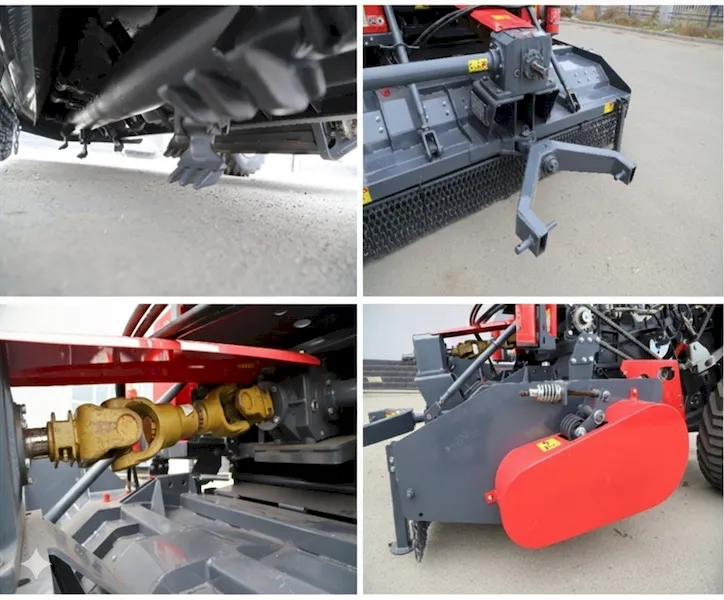
round baler structural view — the drought year creates a specific baler management challenge because drought-stressed hay crops often produce sparse, fragile windrows that are lighter than normal-year windrows from the same field at the same growth stage; pickup systems calibrated for normal-year windrow density may run too fast for the structural integrity of drought-stressed material that breaks apart when the tines contact stems weakened by moisture stress

Species drought tolerance is not a single characteristic — it reflects a combination of rooting depth, water use efficiency, ability to enter physiological dormancy without dying, and recovery rate when moisture returns. The ranking below reflects documented agronomic performance under U.S. production conditions, not laboratory stress tolerance measurements. In practice, the most drought-tolerant species are those with the deepest root systems and the most evolved adaptation to the drought patterns of their native or primary production environment.

Rank صِنف Drought mechanism Stand response to D3 drought Special consideration
1 Native prairie grasses Deep roots, C4 photosynthesis, evolved dormancy Dormant but survive; recover with rain CRP enrollment; see native grass hay guide
2 Bermudagrass C4, deep rhizome system, semi-dormancy Reduced production; stand survives Primary Southern drought forage
3 حشيشة الذرة الرفيعة السودانية C4, efficient water use, rapid growth Produces with limited moisture ⚠ Prussic acid risk when stressed
4 البرسيم Deep taproot (up to 20 ft), dormancy mechanism Crown survival varies; assess before replanting Do not cut stressed stands — depletes root reserves
5 عشب الفستوكة الطويلة Endophyte-enhanced stress tolerance Reduced yield; stand mostly survives Better drought tolerance than orchardgrass
6 عشب البستان Fibrous roots; moderate dormancy Dormant; partial stand loss possible Northeast and PNW stands more resilient than Transition Zone
7 تيموثي Shallow roots, limited stress tolerance Significant stand loss in severe drought Highest replacement cost after drought event
8 Red clover Tap root but limited depth vs alfalfa Major stand loss; stand life shortened Short stand life means drought frequently eliminates older stands permanently

The native grass species that provide the foundation of drought-resilient forage systems in the Great Plains and Midwest are covered in detail — including their harvest timing and quality profiles — in local university extension guides for native grass species management.

Emergency Summer Annual Forages: 45–60 Days from Seeding to Harvest

Emergency summer annuals provide the fastest path from bare ground to baled hay of any production option available in a drought year. The critical caveat that applies to all of them: they require moisture for germination and establishment. These are not crops for fields that are receiving zero rainfall — they are crops that can produce in limited-moisture conditions if the producer can get them through the 10–14 day germination and establishment window. Planting into dry soil and then waiting for rain is a viable strategy only if rainfall is forecast within 10–14 days and soil temperatures are above 65°F.

Pearl millet — safest emergency option
Days to harvest: 45–55 from seeding
معدل البذر: 20–25 lbs/acre
Yield potential: 3–6 tons/acre first cutting
CP at boot: 12–16%
Critical advantage: NO prussic acid risk — unlike all sorghum species, pearl millet contains no cyanogenic compounds. Safe for all livestock including horses and dairy. Also no phytoestrogen concerns that make grain sorghum problematic for breeding livestock. Pearl millet is the emergency forage of choice for horse operations and for operations that cannot afford the delay required by prussic acid management protocols.
Sorghum sudangrass — highest yield option
Days to harvest: 45–60 from seeding
معدل البذر: 25–35 lbs/acre
Yield potential: 4–8 tons/acre first cutting
CP at boot: 10–14%
Prussic acid protocol: Do not cut until plants are 18–24 inches tall; if a drought-breaking rain occurs after the stand has been stressed or wilted, wait 5–7 days before cutting; test the hay for HCN before feeding if any doubt exists. Field drying releases most prussic acid — hay is significantly safer than fresh-grazed material, but testing is still advisable for drought-stressed material. Full protocol in USDA NRCS and university extension resources on sorghum forage management under drought.
Cowpeas — the legume emergency option
Days to harvest: 60–80 from seeding
معدل البذر: 60–80 lbs/acre
Yield potential: 2–4 tons/acre
CP: 18–22% at early pod stage
ميزة: The only emergency forage with legume-level CP; nitrogen-fixing; no prussic acid or nitrate risk; good palatability. Limitation: Slower to harvest-ready than grasses (60–80 days); requires warm soil (above 70°F); challenging to dry (succulent stems and leaves); best baled at 16–20% moisture and fed within 90 days. For operations that need emergency legume-quality hay and can wait 60+ days, cowpeas are the best option.
Crabgrass as an unexpected drought asset: In the Southeast, fields that have been managed for bermudagrass or mixed warm-season grass hay often have established crabgrass (Digitaria spp.) populations in them — a plant widely viewed as a weed that is actually a high-quality hay species under drought conditions. Crabgrass is more drought-tolerant than bermudagrass at soil surface temperatures above 100°F (common in severe summer droughts in Zone 7–8), produces CP 10–16% at early cutting, and is highly palatable to cattle and horses. Operations that have crabgrass as a “weed” in their fields have an emergency hay resource they may not have accounted for in their drought planning. Cut before seed stage (when it reaches 12–18 inches); standard baling settings are adequate.

Alfalfa Stand Decisions: Recover, Push Hard, or Terminate

round baler working in hay field — the alfalfa stand recovery vs termination decision after a major drought is one of the most consequential economic decisions in the drought-affected operation; terminating a stand that would have recovered costs full stand establishment expense; maintaining a stand that will not recover economically wastes the field for another season and delays the productive recovery of the operation

Alfalfa’s deep taproot system (productive roots commonly reach 6–15 feet in established stands, with documented depths to 20+ feet) gives it drought tolerance that most cool-season forages cannot match. However, the crown — the zone at soil surface from which new growth originates — has a different tolerance profile than the root system. A crown that has been through prolonged soil temperatures above 100°F without adequate moisture can die while the deep root system remains alive. The plant cannot regrow from roots alone; crown survival is required. The post-drought stand assessment must evaluate crown condition, not just root depth or surface appearance.

RECOVER
Maintain stand
When: 5+ plants per square foot; majority of crowns show cream/white interior when cut vertically (healthy); active regrowth visible within 14 days of the first 0.5″ rain. Management: Allow the stand to accumulate 6+ inches of growth before cutting; this rebuilds the root carbohydrate reserves depleted by drought stress. Do not force an early cutting to capture tonnage — a stand that is cut when drought-stressed cannot replace root reserves and will go into next season weakened. One fewer cutting during the recovery period is significantly less damaging than cutting at the wrong time.
PUSH
Maximize, then exit
When: 3–4 plants per square foot; mixed crown health (50–60% showing healthy white interior, remainder showing discoloration); some areas clearly dead, other areas with reasonable plant density. Management: Maximize production from the surviving stand through one additional season, managing cutting frequency to maintain stand health in the surviving crowns. Plan for fall renovation with a competitive variety for next season. Do not invest heavily in fertilizer and inputs on a stand you intend to renovate within 12 months.
TERMINATE
Replant or rotate
When: Under 3 plants per square foot in the majority of field; 60%+ of crowns showing brown/black center when cut vertically; no visible regrowth 3+ weeks after the first significant rain. Management: Terminate with tillage or herbicide; do not allow the remaining dying stand to occupy the field while weeds fill the gaps. If it is late in the season for alfalfa establishment, consider planting a winter annual cover crop for fall-spring forage, then establish alfalfa the following fall. Do not replant alfalfa immediately into a drought-killed alfalfa stand without autotoxicity management (ideally wait one year or use rotation).

CRP Emergency Haying: Accessing Conservation Ground Most Producers Don’t Know Is Available

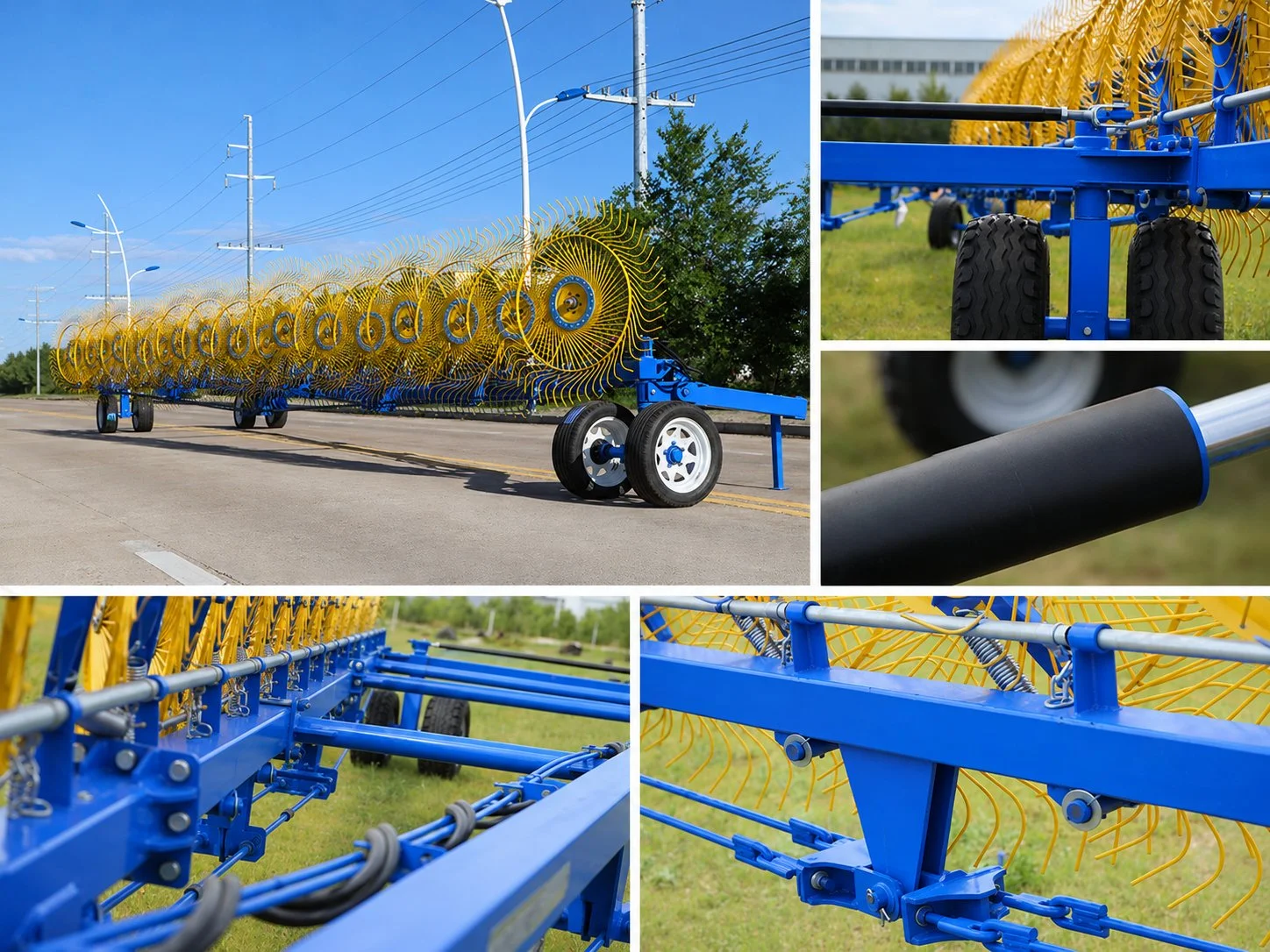
hay rake detail — CRP emergency haying operations use the same raking and windrow formation equipment as conventional hay production, but with specific constraints on what strip widths must remain uncut for wildlife habitat; the rake setup for CRP emergency haying typically requires leaving 10 to 20 percent of each field in uncut vegetation, which means the rake is operated to form windrows that aggregate the cut areas while preserving the required habitat strips

The Conservation Reserve Program (CRP) enrolls approximately 22–25 million acres of highly erodible or environmentally sensitive land on multi-year contracts with USDA Farm Service Agency. Under normal program terms, enrolled land cannot be hayed, grazed, or harvested. However, USDA has standing authority to authorize emergency haying on CRP acres when drought conditions create a documented livestock feed emergency — and producers who have CRP acres or neighbors with CRP acres should understand this authorization process before they need it.

Authorization process

Step 1: USDA must have issued a drought disaster designation or drought-related emergency declaration for your county. Monitor the USDA Drought Monitor (drought.gov) and your local FSA service center for active emergency authorizations. Step 2: The CRP land operator (who may not be the livestock owner) applies to their FSA service center for emergency haying permission for their specific CRP contract acres. Step 3: FSA reviews and issues a written authorization with specific conditions (strip requirements, timing restrictions, documentation required). Step 4: Haying proceeds under the authorization terms. The operator keeps the hay; CRP payment is typically reduced by 25% of the per-acre payment for the authorized area in most emergency authorizations.

What the hay looks like and what it’s worth

Most CRP ground in the Great Plains, Midwest, and Southeast is enrolled as native grass plantings — big bluestem, Indiangrass, switchgrass, sideoats grama, and similar species. Native grass CRP hay cut before seed development (late June to mid-July in most of the Great Plains) produces CP 8–14% with high fiber digestibility and excellent palatability. It is appropriate for maintenance-to-moderate production beef cattle and dry cow operations. For stocker cattle requiring higher CP, it can be supplemented. Price: $85–$130/ton in drought conditions — competitive with conventional hay when conventional hay is $150+/ton in drought markets. The native grass hay production and baling guide covers the cutting timing and baler settings for the species typically found on CRP ground.

Drought-Year Hay Quality: Testing Requirements That Are Not Optional

Drought-year hay requires testing practices beyond the standard forage panel. Two specific safety issues — nitrate accumulation and prussic acid in sorghum species — can cause livestock casualties from hay that appears visually acceptable and may test within normal CP ranges. The standard forage test (CP, ADF, NDF, TDN) does not screen for either hazard. Ordering the additional tests adds $15–$30 to the standard panel cost; failing to order them when the forage type and conditions indicate risk is how producers lose livestock.

Nitrate testing — when required

Order nitrate testing for: any small grain hay (oat, cereal rye, barley, wheat) cut during or within 2 weeks after drought; corn fodder or cornstalks from drought-affected fields; cool-season grass hay cut during active drought stress period; sudan or sorghum hay cut during drought stress. Safe threshold: below 1,000 ppm (0.1%) nitrate-N for unrestricted cattle feeding; 1,000–2,500 ppm: limit feeding and dilute with other forages; above 2,500 ppm: do not feed. Nitrate levels can be reduced 40–60% by allowing hay to field-dry and cure for 4–6 days longer than normal before baling — the extended curing allows biological decomposition of nitrate.

Prussic acid — sorghum hay protocol

All sorghum species (sorghum sudangrass, sudangrass, forage sorghum, grain sorghum) and their hybrids produce cyanogenic compounds under stress. For hay specifically: field drying releases the majority of prussic acid (HCN volatilizes during the drying process). Hay that has dried to 14–17% moisture and has been stored 30+ days is generally safe for beef cattle under standard conditions. However, drought-stressed material cut immediately after a drought-breaking rain event — when the plant has both high accumulated cyanogenic compound and incomplete wilting — should be tested before feeding regardless of storage duration. Full prussic acid protocols for sorghum hay under drought conditions are in the sorghum sudangrass hay production guide.

Over-mature drought-year hay management

Perennial hay stands that drought-stressed producers cut at late-head stage (because the stand was too sparse and weak to justify a boot-stage cutting) produce high-NDF, low-NDFD hay that is nutritionally similar to wheat straw for many classes of livestock. Management: supplement with protein to offset the low CP (typically below 8% in late-head drought hay); limit feeding to 60–70% of total roughage intake; blend with higher quality hay if any is available. Forage additives (inoculants designed for lower-quality roughage) can improve ruminal utilization of drought-stressed over-mature hay by stimulating fiber-digesting bacterial populations. Over-mature drought hay has value as roughage filler but should not be relied upon as the primary nutritional source for stocker or lactating cattle without significant supplementation.

Buying Hay in Drought: Price, Quality Risk, and Distance

Drought-year hay markets are structurally different from normal years in ways that create buying risks not present during normal supply conditions. The same hay shortage that makes hay expensive also creates conditions where sellers may offer marginal or problem hay that they could not sell in a normal market — including hay with nitrate risk, mold from baling too wet, or quality well below what is represented. Buying hay during drought requires higher buyer vigilance, not lower, despite the time pressure of the shortage.

Drought-year buying protocol
  • Test every lot — not as optional, as mandatory. A standard forage test costs $25–$35; it is the only reliable quality verification in a market where visual assessment is even less reliable than usual from drought-stressed crops.
  • Order nitrate testing on any cool-season grass, small grain, or cereal hay from drought-affected regions — add $15–$20 to the standard panel.
  • Inspect for mold before purchase — drought operations often cut hay at higher moisture to capture any biomass, producing moldy bales within weeks.
  • Document the seller’s location and field history for any lot where nitrate or prussic acid risk applies.
Distance and transport economics

Drought rarely affects all regions simultaneously — normal or above-normal precipitation regions often exist within 200–400 miles of severe drought areas. Hauling hay from non-drought regions adds $15–$40/ton in freight depending on distance and load size, but the quality is typically reliable, and the delivered price may be comparable to or below drought-inflated local prices. For large drought-year purchases, negotiating delivered price with a large hay broker who aggregates loads from multiple non-drought production regions produces better terms than purchasing single loads from multiple individual producers. The hay market pricing and regional price variation context is in the hay crop insurance and production economics guide. For PTO and gearbox specifications for custom operations bringing baling equipment to non-drought production regions to source hay, see agricultural gearbox and PTO driveline specifications.

Planning Ahead: Building a Drought Contingency System Before the Next Event

The operations that handle drought years best are those that made contingency decisions before the drought began — not because they predicted it, but because they built operational structures that reduce drought vulnerability as a standard practice. None of the elements below requires a drought forecast; each improves the operation’s resilience in normal years and provides specific drought protection when conditions deteriorate.

DROUGHT CONTINGENCY CHECKLIST — DECISIONS TO MAKE IN NORMAL YEARS
Hay reserve target: 90-day minimum. An operation that enters summer with 90 days of hay at current consumption rates (rather than the bare minimum needed for the next few weeks) has the time to assess drought severity and make decisions before forced buying. Many operations historically carry 30–45 day reserves, which creates forced panic buying precisely when drought-year prices are highest.
Multi-species stand diversity. Operations with 100% of hay acreage in one species (e.g., all bermudagrass or all alfalfa) are more vulnerable than operations with alfalfa, native grass, and bermudagrass in different proportions — because drought affects species differently and a species combination ensures some production continues even in severe drought.
Hay forage insurance: Forage Production or Forage Standing Loss endorsements. USDA Risk Management Agency (RMA) offers forage-specific insurance products that can provide partial indemnification for drought-caused yield losses. Applications must be submitted before the planting date (deadline varies by state and crop). These products cannot be purchased after drought is underway — they must be in place before the growing season. Details on available forage insurance products are through USDA RMA’s official program documentation and your local crop insurance agent.
Emergency baling network contacts. Know now — before drought — which custom baling operators in your area have capacity and equipment appropriate for emergency summer annual crops (pearl millet, sorghum sudangrass). Emergency crops need to be baled within a specific window; discovering that no local capacity is available during that window significantly reduces the value of the emergency planting decision. نماذج مكابس البالات الدائرية suited to warm-season annual forages are available for operations considering equipment investment to serve this demand.
Monitor the USDA Drought Monitor weekly from May through September. The transition from D0 (abnormally dry) to D1 (moderate drought) is the signal to review your contingency plan. The transition from D1 to D2 is the signal to act on contingency options (emergency seeding, CRP application, hay purchasing). Waiting until D3 or D4 to make these decisions means making them when every option is more expensive, less available, and more time-constrained.

Hay Production in Drought FAQs

Which hay crops can still produce in a severe drought year?+
In a D3 (extreme drought) year with limited but not zero precipitation, the most productive species are native prairie grasses and bermudagrass in their adapted regions — both have evolved in drought-prone environments and have root and physiological adaptations that allow continued growth at moisture levels that collapse alfalfa and cool-season grass yields. In D3 conditions, even drought-tolerant species experience 40–60% yield reductions below their normal potential, but production continues. In D4 (exceptional drought) with truly minimal precipitation, essentially all hay production stops regardless of species — the only practical response is accessing stored reserves, purchasing hay from non-drought regions, or significantly reducing herd size. For emergency crops planted during drought, pearl millet and sorghum sudangrass can establish and produce with as little as 8–12 inches of seasonal rainfall (well below normal for most U.S. production regions) but require at least one 0.5-inch rain within 10 days of planting for germination. The practical threshold: if any perennial hay crops in your area are producing green growth, emergency summer annuals are viable; if perennial grasses are fully dormant and brown, the moisture deficit is too severe for emergency annual establishment to succeed without irrigation.
When is it safe to feed hay from drought-stressed sorghum sudangrass?+
Sorghum sudangrass hay that has been cut, properly field-dried to below 18% moisture, and stored for 30+ days loses the majority of its prussic acid content through volatilization during the drying process. Under these conditions, it is generally considered safe for beef cattle and dairy cattle. However, for drought-specifically produced material, three situations require testing before feeding regardless of storage duration: (1) The stand was cut within 7 days of a drought-breaking rain after an extended stress period — the plant’s cyanogenic compound concentration peaks immediately after stress ends and before the plant can metabolize the accumulated compounds; (2) The hay was baled above 18% moisture (wet hay retains more prussic acid than properly dried material); (3) The hay is being fed to horses or breeding livestock. NEVER feed fresh, wilted, or frost-killed sorghum sudangrass directly — only hay that has been properly field-cured. If prussic acid test results are needed quickly before feeding, the on-farm picrate test kit provides a rapid screen (available from most farm supply stores for $15–$25) as a first-stage check before laboratory confirmation.
My alfalfa stand is mostly brown after two months without rain — should I replant now?+
Do not replant until you have assessed crown condition — brown, dormant alfalfa and dead alfalfa look nearly identical from the surface. The assessment takes 30 minutes and saves a full establishment investment if the crowns are alive. Dig 10 random plants to a depth of 6 inches; use a knife to cut each crown vertically; examine the interior color. A cream or white interior indicates the crown is alive and will regrow when moisture returns. A yellow, brown, or black interior indicates the crown is dead or dying. If 60%+ of crowns show white/cream interiors and plant density is 5+ plants per square foot in most field areas: wait for rain, do not replant. If the majority of crowns are brown/black or plant density is below 3 plants per square foot widely across the field: the stand is not economically recoverable and should be rotated out. The autotoxicity issue: if you replant alfalfa into ground that had an existing alfalfa stand less than 12 months ago, the decomposing root residue releases autotoxic compounds that suppress new alfalfa germination and establishment. Either wait at least 12 months, rotate through a non-alfalfa crop, or fumigate (expensive and not always practical). A winter annual cover crop in the interim provides both forage production and a non-alfalfa break in the rotation.
Can I hay my neighbor’s CRP ground during a drought?+
You can hay CRP ground under an emergency authorization, but the authorization must be obtained by the CRP contract holder (the landowner or farm operator who enrolled the land), not by a neighboring livestock producer. The CRP operator applies to FSA; if authorized, they can either hay the ground themselves and sell the hay, or they can enter into a lease or agreement with a livestock producer who then hays the ground under the authorization. The CRP operator remains responsible for compliance with all authorization conditions (strip requirements, timing restrictions, etc.). The authorization cannot be transferred to a third party who acts independently. If you are a livestock producer needing hay and your neighbor has CRP, the practical path is: contact the CRP operator; explain your hay need; suggest they apply for emergency haying authorization if they haven’t already; negotiate a hay purchase or equipment/labor sharing arrangement. Many CRP operators are unaware that emergency haying is possible or that their neighbor needs hay — the conversation itself sometimes creates a mutually beneficial outcome that neither party had considered.
How do I test for nitrates in drought-stressed hay?+
Nitrate testing is performed by commercial forage testing laboratories — the same labs that provide CP/ADF/NDF analysis. Add “nitrate-N” or “nitrates” to the forage test order when submitting your sample. Cost: $12–$20 additional per sample beyond the standard panel. Turnaround: 2–5 business days for most labs. For rapid on-farm screening before laboratory results, diphenylamine (DPA) test kits are available from farm supply stores and provide a colorimetric indication of nitrate presence within minutes — a positive DPA test (blue color change) indicates elevated nitrates and warrants immediate laboratory confirmation before feeding. The DPA test is a screen, not a quantification; it indicates presence but not specific concentration. For the most accurate result: collect samples from multiple bales (10+ per lot) using a bale core sampler, composite the samples, and submit the composite. Nitrate concentration varies significantly within and between bales from the same field, making single-bale testing unreliable for lot characterization. Cut samples from the lower 1/3 of the bale (where the stem sections with highest nitrate concentration are located) for the most conservative worst-case assessment.
Why is drought-year hay often lower quality even when it tests normal CP?+
The quality paradox of drought hay — where CP looks acceptable but animals perform below expectation — has a specific biochemical explanation. Drought stress concentrates DM in the plant by reducing the water content faster than it reduces the protein and structural carbohydrate content. This concentration effect can keep CP% at apparently normal levels (because CP is measured as a percentage of dry matter, not total pounds per acre). However, simultaneously: drought stress accelerates lignification of the stem tissue (ADF and NDF rise sharply as the plant matures faster under stress); the leaf-to-stem ratio decreases as drought-stressed plants allocate resources to the root and stem at the expense of leaf production; and the protein itself is often heat-damaged (bound to ADF as ADICP — acid detergent insoluble crude protein), which is unavailable for digestion. A forage test that shows 18% CP but also shows 38% ADF (high), 60% NDF (high), and 4% ADICP (high heat damage) is a hay that will deliver significantly less energy and less useful protein than a 16% CP, 28% ADF, 50% NDF, 1% ADICP alfalfa bale from a well-watered field. The full forage panel — not just CP — is the only way to distinguish drought-quality hay from normal-year hay when visual appearance and CP alone are misleading.
foragebaler.com certified round baler equipment — models suited for emergency summer annual hay crops including pearl millet and sorghum sudangrass, with density spring and pickup configurations appropriate for the warm-season annual windrow characteristics that differ from cool-season perennial hay crops

Get Baler Settings for Emergency Forage Crops

Tell us your emergency forage species (pearl millet, sorghum sudangrass, cowpeas, or native grass CRP), expected yield range, target bale size, and PTO tractor horsepower. We confirm the density spring setting and ground speed range suited to each crop’s windrow characteristics and moisture content at harvest.

Get Emergency Forage Baling Setup

المحرر: Cxm