
Cover Crop Species for Baling: What Each One Produces
Not all cover crops bale with equal results. Species differ in biomass yield, forage quality, baling moisture profile, market destination, and the timing tension between forage value and agronomic benefit. The table below summarizes the primary cover crop species relevant to baling operations across the U.S.
| Spezies | Baling yield | Forage quality | Trocknungsgeschwindigkeit | Primärmarkt |
|---|---|---|---|---|
| Cereal rye | 1.5–4 T/acre | Good if early; poor if headed | Moderate–slow | Cattle hay, straw (post-heading), silage |
| Winter oats | 1.0–2.5 T/acre | Good — similar to cool-season grass hay | Mäßig | Horse hay, cattle hay, sheep |
| Triticale | 2.0–5 T/acre | High biomass, good quality at boot | Mäßig | Dairy silage, cattle hay, export potential |
| Winter wheat (early baling) | 1.0–2 T/acre | Moderate — usually livestock grade | Mäßig | Cattle, emergency forage |
| Hairy vetch / peas | 0.5–1.5 T/acre | Very high CP (20%+) | Slow (high moisture) | Protein supplement, organic dairy |
Cereal Rye: The Most Commonly Baled Cover Crop
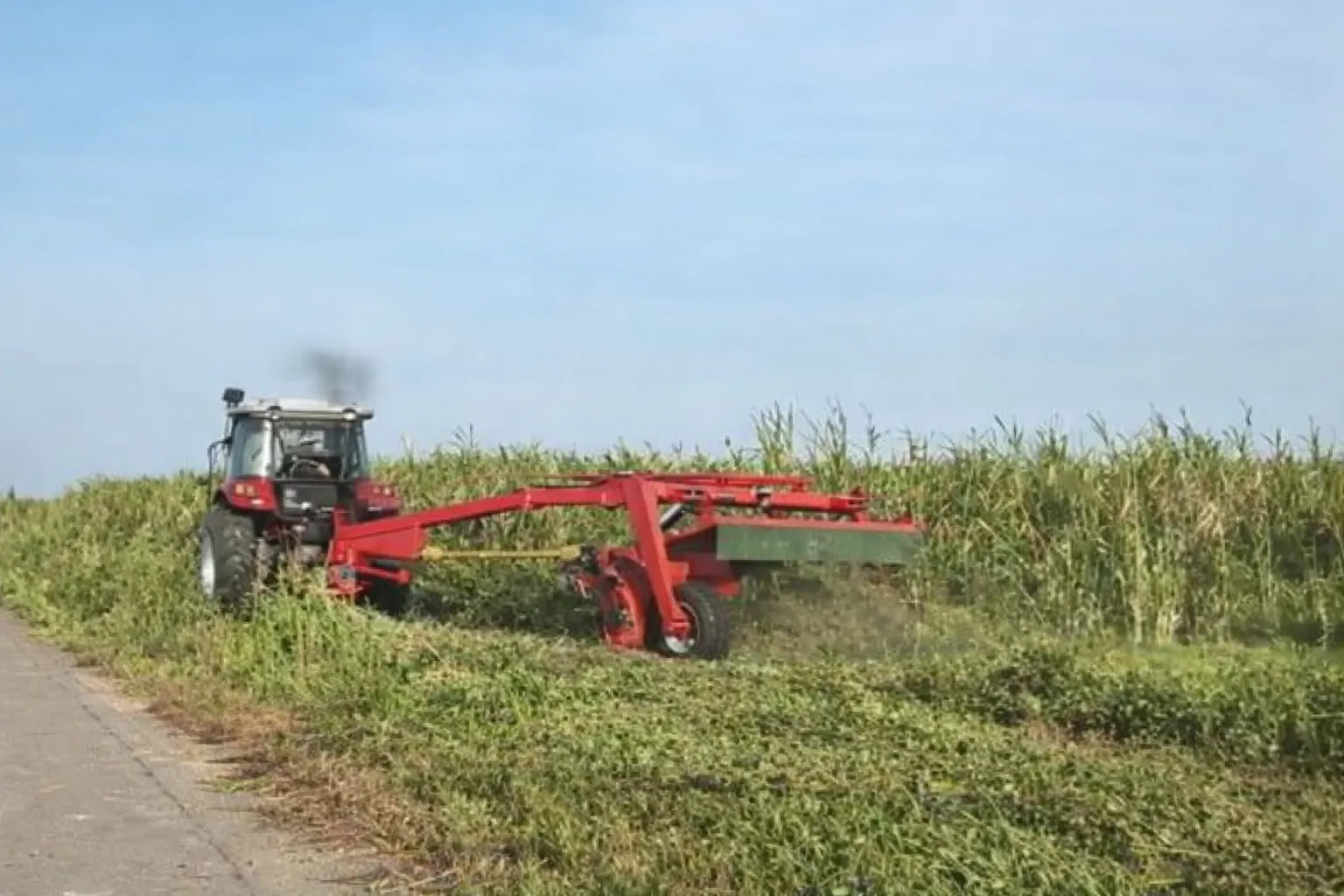
Cereal rye is the dominant cover crop species in many U.S. corn and soybean rotations because of its early spring growth, high biomass, and winter hardiness. For baling, cereal rye provides the most total biomass per acre of any common cool-season cover crop — but it has a narrow quality window. Cut at boot stage (the stem is fully elongated but the seed head has not emerged), cereal rye produces good-quality forage comparable to mature grass hay. Cut at heading or pollen shed, crude protein drops significantly and fiber increases, limiting the market to cattle roughage rather than premium hay.
Cut between the boot stage (stem extended, seed head enclosed) and early heading (seed head just emerging). At this stage, cereal rye tests 12–16% CP, RFV 90–120, and makes serviceable cattle hay that sells at livestock hay market prices. Biomass yield at this stage is typically 1.5–3 tons/acre — adequate to justify a baling pass in most rotations.
Once cereal rye has shed pollen and the seed heads are fully extended, the forage quality is below most buyers’ standards for hay — it is effectively a small-grain straw at this point. At full maturity, it can be harvested for straw after seed set, producing bedding-grade material. Alternatively, cereal rye above 35% moisture at boot-to-early-head stage can be baled and wrapped as silage, producing a high-quality fermented feed. The straw baling process and market are described in detail at harvest time — focusing on equipment settings and market channels for post-maturity small grain residue.
Agronomic Tradeoffs: Baling vs Terminating Cover Crops
Every pound of cover crop biomass baled and removed from the field is a pound not returned to the soil as organic matter and not available for weed suppression during termination. This tradeoff between forage value and soil benefit is the central tension in cover crop baling economics and must be evaluated honestly before committing to baling as a practice.
In heavy biomass years where the cover crop has produced 4+ tons/acre at planting date — so dense that residue interferes with planter or drill opener function — baling off part of the biomass improves stand establishment of the following cash crop. When the cover crop is predominantly a grass species with limited nitrogen contribution anyway (cereal rye fixes no nitrogen), removing it as hay does not deprive the following crop of meaningful N. In drought years when purchased hay is expensive, cover crop hay provides an on-farm emergency forage source at marginal cost.
If the primary goal of the cover crop program is soil organic matter building (the long-term soil health objective), baling removes the organic material that would otherwise feed soil biology. The short-term forage revenue from baling must be weighed against the reduced organic matter input to soil — this tradeoff favors baling when forage prices are high and soil organic matter is already adequate, and disfavors baling when soil health improvement is the primary program goal. Operations with highly developed cover crop programs and specific soil health targets often limit baling to high-biomass years where excess residue is genuinely a problem, rather than baling routinely.
Harvesting Mechanics: Mowing, Conditioning, and Raking Cover Crops
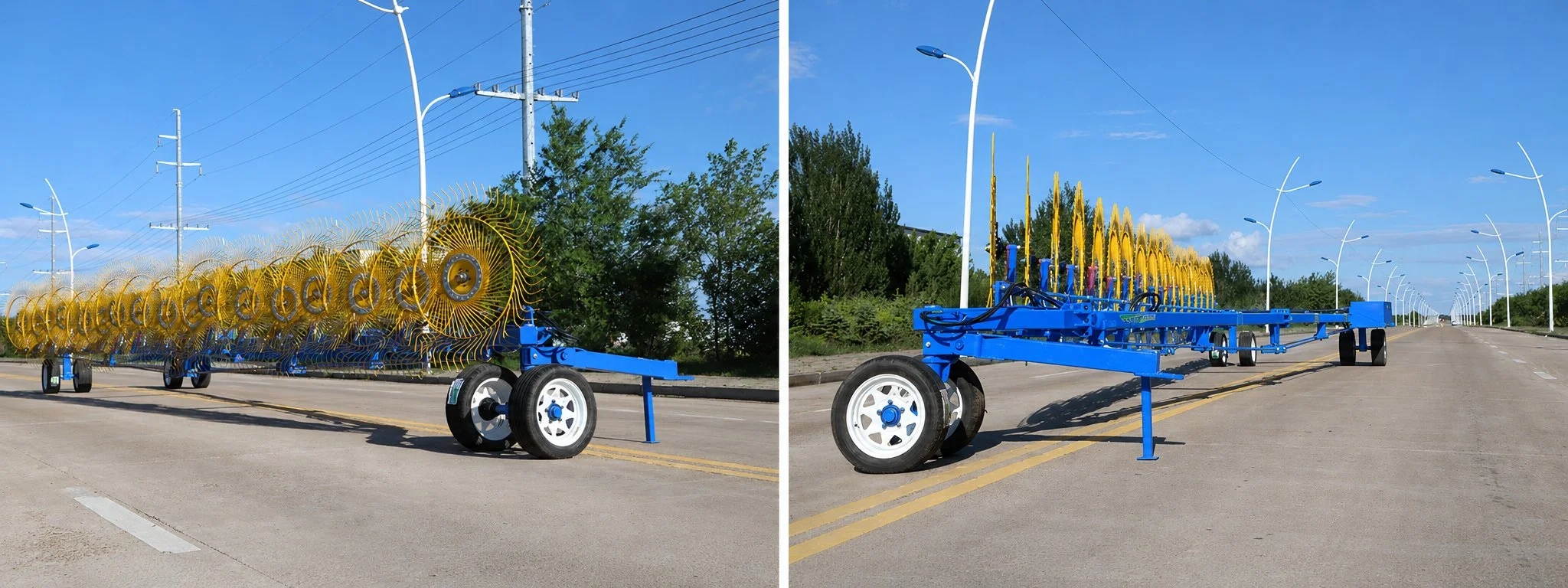
Cover crops bale best with a conditioning mower rather than a disc mower alone — conditioning breaks the waxy cuticle on cereal rye and triticale stems, reducing drying time by 20–30% compared to unconditioned material. This is particularly important in spring when overnight temperatures are still cool and drying windows may be short.
Cut cover crops at 3.5–5 inches above the soil surface — higher than standard alfalfa cutting height. This higher cut keeps soil pickup out of the windrow (cover crops grown in freshly worked soil or interseeded in standing cash crops can have significant soil at the crown) and maintains stubble that helps anchor the windrow against spring winds. Cutting too close on cover crops dramatically increases ash content in the baled material, reducing its value as feed and creating a challenging buyer conversation.
Cover crops cut in April–May in the northern U.S. typically require 48–72 hours to reach baling moisture in good spring weather (65–75°F, RH below 55%, light wind). Spring dew points are often lower than summer, which helps overnight drying, but spring storm systems move through more frequently than summer high-pressure systems. Probe the windrow carefully before baling — the hollow stems of cereal rye and triticale can trap moisture in ways that fool surface probe readings.
Rake gently — cereal rye and triticale are much less susceptible to leaf loss than alfalfa, but their hollow stems are more prone to crushing and cracking under aggressive rake tine contact. Finger-wheel rakes at moderate wheel angle work well for consolidating wide cover crop swaths into baler-width windrows without overly disturbing the mat structure. Avoid raking very dry cover crop material (below 18%) — the dry stems become brittle and shatter into short fragments that pour through the baler pickup rather than feeding as continuous material.
Market Reality: Where Cover Crop Hay Actually Sells
Cover crop hay rarely commands premium prices and should not be produced with premium market expectations. The realistic markets for baled cover crop material — and the prices they support — are more limited than many producers assume when evaluating whether cover crop baling is worth the investment of fuel and labor.
The most accessible market for cover crop hay — cow-calf and stocker operations that need roughage rather than premium nutrition. Good-quality cover crop hay (boot stage cereal rye or oats, RFV 90+) sells in most U.S. markets at $80–$130/ton, depending on availability and regional forage supply. This is typically 30–50% below equivalent alfalfa or grass hay prices. The economic case for baling depends entirely on whether the cost of baling (mowing, conditioning, raking, baling fuel and labor) falls below the $80–$130/ton revenue potential.
During hay shortage years (drought, poor cutting seasons), neighboring livestock producers who are short on forage represent the best available market for cover crop hay. In shortage conditions, cover crop hay that would normally sell at $100/ton may command $130–$160/ton because alternatives are unavailable. The timing advantage — cover crops are harvested in spring, when any prior-year hay supply gaps become evident — makes cover crop hay attractive precisely when forage shortages from the previous year are most acute.
For producers who own livestock, using cover crop hay on-farm at the replacement cost of purchased hay (what you would have paid for equivalent-quality forage) is often the most financially defensible use. You avoid the marketing, transport, and discount costs of selling into a thin market. If your livestock operation would otherwise buy $100/ton cattle hay and you produce cover crop hay at $45/ton variable cost (fuel, wrap, labor), the on-farm use captures $55/ton in cost avoidance per ton produced.
The detailed baling settings and market context for small grain cover crops used as straw after full maturity — including wheat, barley, and oat straw grades and pricing — is in the straw baling guide. The complete cover crop baling guide with equipment settings and operational approach for cereal rye and winter oats is in the Anleitung zum Ballenpressen von Zwischenfrüchten. The mower-conditioner and rake driveline specifications for spring harvesting operations are in Spezifikationen für landwirtschaftliche Getriebe und Zapfwellenantriebskomponenten.
Soil Compaction Management During Cover Crop Baling
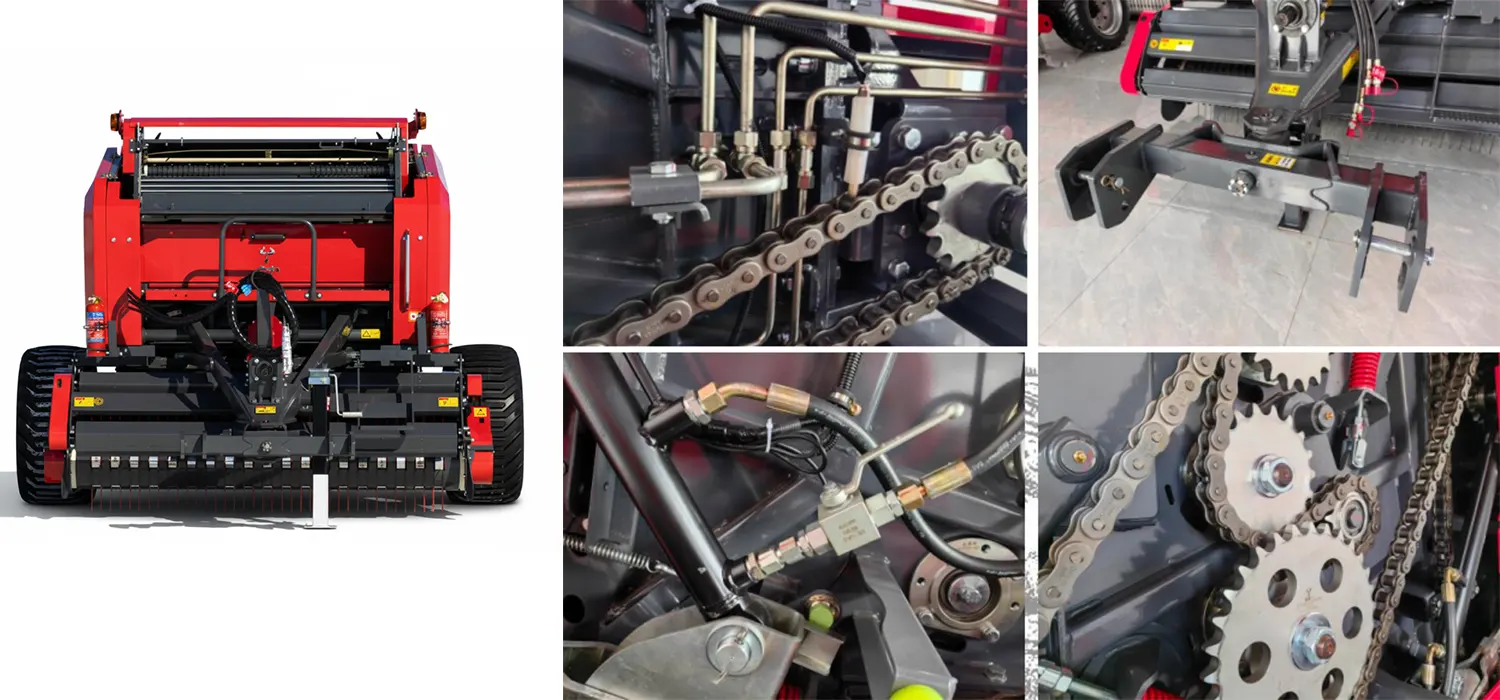
Cover crops are typically harvested in spring — the period when soils are most susceptible to compaction from field equipment. A spring field that looks dry on the surface may be saturated at 6–10 inches depth, and a loaded round baler (1,200–2,500 lbs gross weight depending on model and bale load) creates compaction pressures at that depth that can persist for multiple growing seasons.
The soil penetrometer test — push a probe to 6 inches and note the resistance — provides a quick field-side assessment of compaction risk. Soil that allows easy probe penetration to 6 inches with light hand pressure is below the compaction risk threshold. If you need significant effort to push the probe 6 inches, the soil is too saturated to support equipment. A simpler test: walk on the field and observe whether your boot leaves significant impressions; if footprints are more than 0.5 inches deep, equipment should not enter.
If soil conditions are too wet for safe equipment entry but the cover crop needs to be terminated for planting schedule reasons, consider terminating with herbicide or rolling-crimping and leaving the residue in place rather than baling. The soil health benefit of avoiding compaction may exceed the forage value of the baled cover crop, particularly on soils where compaction is already a limiting factor for crop productivity.
Cover Crop Silage: An Alternative When Hay Conditions Are Unfavorable
Spring weather in most of the U.S. is less predictable than summer hay-making weather — frequent rain systems, cool temperatures, and high overnight dew points create challenging conditions for drying cover crop material to hay baling moisture. Bale silage (chopping or direct cutting to 40–60% moisture and wrapping immediately) avoids the drying requirement entirely and produces a high-quality fermented feed when done correctly.
In wet spring periods where hay drying is impractical, cutting at 45–65% moisture and wrapping immediately as bale silage produces a higher-quality fermented product than waiting for uncertain drying windows that may expose the cut material to rain contact. Cover crop silage is also the appropriate choice for legume-heavy covers like hairy vetch — the high moisture content and thin stems make hay production difficult, but silage ferments readily.
Boot-stage cereal rye or triticale silage typically tests 12–16% CP on a DM basis, 55–65% NDF, and pH 4.0–4.5 after adequate fermentation. Rye-vetch mixture silage tests 16–20% CP from the legume component — a high-value fermented feed for dairy replacement heifers or beef cows in early lactation. Apply a homolactic inoculant (Lactobacillus plantarum) at wrapping to accelerate pH drop in the cool spring temperatures.
Cover Crop Baling FAQs
Get Equipment Guidance for Your Cover Crop Baling Operation
Tell us your cover crop species, approximate yield per acre, target market, and available equipment. We recommend the mower-conditioner setup and baler settings for efficient cover crop harvest at your scale and rotation timing.
Herausgeber: Cxm


