
La decisión del formato: ¿Qué determina realmente la elección correcta?
La decisión entre una empacadora redonda y una empacadora cuadrada pequeña depende de cuatro factores que no tienen nada que ver con cuál empacadora es "mejor": quién compra su heno y qué formato de paca requiere, cuánta mano de obra tiene disponible (o está dispuesto a pagar), cuál es la potencia de su tractor y cuál es su volumen de producción anual. Si tiene claros estos cuatro factores, el formato adecuado suele surgir sin ambigüedad.
Las pacas cuadradas pequeñas —generalmente de 18 a 29 kg y 35 x 45 x 91 cm— son el formato preferido para pequeñas explotaciones ganaderas, centros equinos, venta directa de heno al por menor y cualquier comprador que manipule las pacas manualmente o con maquinaria ligera. Las pacas redondas —de 180 a 680 kg, según el tamaño— son el formato preferido para explotaciones ganaderas más grandes que utilizan un tractor con cargador para la alimentación diaria, compradores comerciales de heno y mercados de exportación. Estas preferencias de mercado no son arbitrarias: reflejan diferencias reales en la capacidad de manipulación que no se pueden solucionar eligiendo un formato diferente al del comprador.
Empacadora cuadrada pequeña: Mecánica, mercados y aplicaciones ideales
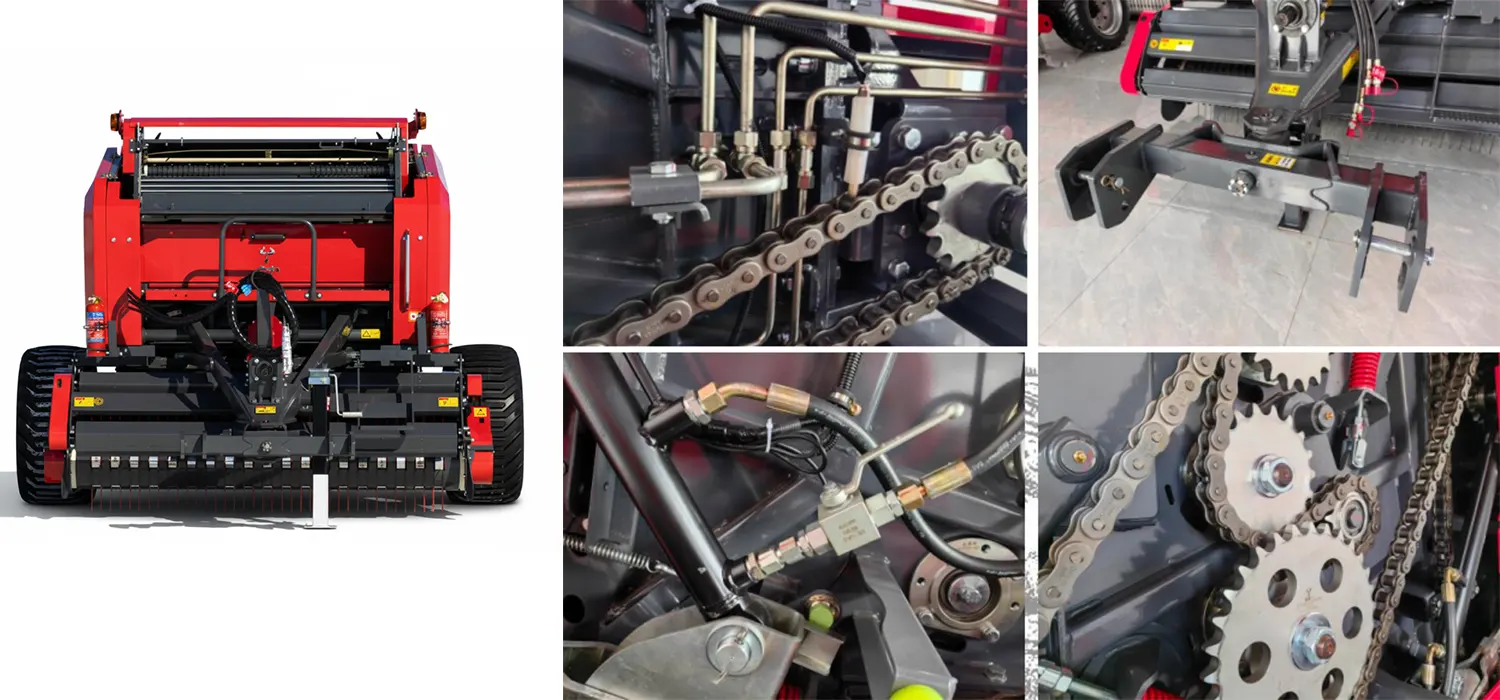
Una empacadora cuadrada pequeña recoge la hilera de forraje, la introduce en una cámara rectangular, la comprime hasta obtener una sección transversal uniforme y ata la paca con dos o tres cuerdas que se anudan automáticamente mediante un mecanismo de anudado. Las pacas se expulsan hacia atrás sobre una rampa, un acumulador o un vagón. Todo el ciclo de formación de la paca es continuo; a diferencia de las empacadoras redondas, la empacadora cuadrada pequeña no se detiene para el enfardado.
- Mercados de caballos y ganado menor: La mayoría de los compradores de equinos requieren o prefieren encarecidamente corrales pequeños para la alimentación manual sin necesidad de equipo.
- Venta directa al por menor y en puestos de venta en la granja: Los cuadrados pequeños son el único formato práctico para los consumidores que compran de 10 a 50 fardos a la vez sin necesidad de manipularlos.
- Precio premium por tonelada: El heno de pacas cuadradas pequeñas se vende habitualmente a $30–$80/tonelada por encima del heno de pacas redondas en mercados especializados que requieren este formato.
- Operaciones de bajo volumen: Con una producción inferior a 100 toneladas/año, donde el coste de capital es más importante, el coste de los equipos cuadrados pequeños es inferior al de las empacadoras redondas comerciales.
- Situaciones de alimentación manual: Cualquier operación en la que el usuario final alimente manualmente en lugar de mediante cargador.
- Requisito de mano de obra: Apilar pacas cuadradas pequeñas requiere entre 4 y 8 veces más mano de obra por tonelada que manipular pacas redondas, lo que limita las operaciones a aquellas en las que se dispone de mano de obra familiar o se aceptan altos costos de mano de obra contratada.
- Rendimiento a gran escala: Por encima de 200 toneladas/año, los pequeños cuellos de botella de mano de obra en pacas cuadradas ralentizan significativamente la operación en comparación con el empacado en pacas redondas.
- Pérdidas por almacenamiento al aire libre: Los pacas pequeñas almacenadas al aire libre pierden más materia seca que las pacas redondas porque las superficies planas acumulan y retienen la humedad; el almacenamiento cubierto es esencial para una conservación de calidad.
- Incompatibilidad del ensilaje: El empacado de ensilaje en pacas cuadradas pequeñas no es práctico; el ensilaje en pacas redondas es el único formato práctico de ensilaje en pacas envueltas.
Empacadora de balas redondas: Donde el formato ofrece ventajas estructurales
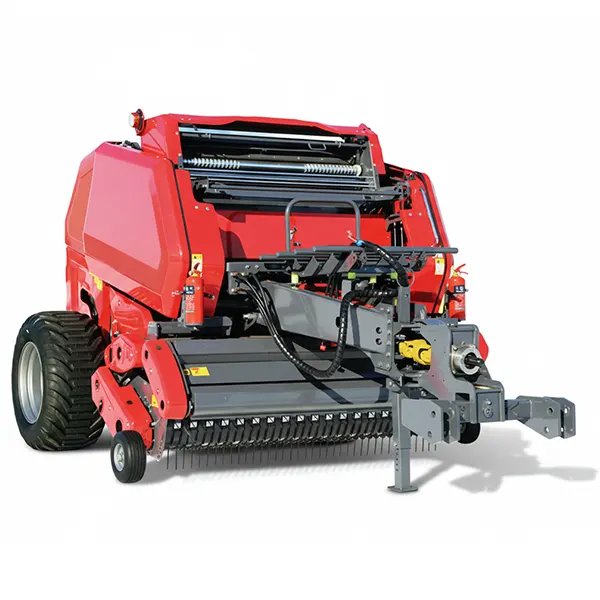
La ventaja mecánica de la empacadora de pacas redondas reside en su automatización: la paca se forma, se envuelve y se expulsa con un solo operario, sin necesidad de mano de obra adicional. Además, las pacas redondas permiten que la lluvia se deslice sobre su superficie curva, una propiedad que facilita considerablemente el almacenamiento al aire libre en comparación con las pacas cuadradas, tanto pequeñas como grandes. Las limitaciones del formato redondo radican en su incompatibilidad con mercados que requieren pacas de tamaño manejable manualmente y en su mayor peso por paca, lo que excluye a las pequeñas explotaciones ganaderas que no disponen de equipo de carga.
Un solo operario puede empacar y expulsar el forraje sin necesidad de mano de obra adicional en la empacadora. Los sistemas automáticos de envoltura de red reducen aún más la intervención del operario, limitándose a conducir el tractor. Para explotaciones agrícolas donde la cosecha individual es la norma, la empacadora de balas redondas es la única opción práctica.
Las pacas redondas envueltas en red y almacenadas sobre una base de grava con el espaciamiento correcto entre hileras pierden entre 5 y 121 TP5T de materia seca durante un período de almacenamiento al aire libre de 6 meses; una pérdida manejable para operaciones comerciales sin almacenamiento cubierto. Las pacas cuadradas pequeñas equivalentes almacenadas al aire libre pierden entre 15 y 351 TP5T de materia seca. Si no se dispone de almacenamiento cubierto, las pacas redondas son el único formato práctico para el almacenamiento al aire libre.
El ensilaje en pacas redondas (empacado con un contenido de humedad de 40–60 TP5T y envuelto en film plástico) es el formato predominante. El ensilaje en pacas cuadradas pequeñas es técnicamente posible, pero rara vez se practica, ya que envolver cada paca individualmente con film plástico resulta poco práctico. Las explotaciones que producen tanto heno seco como ensilaje requieren, esencialmente, una empacadora de pacas redondas para la producción de ensilaje.
Mano de obra y productividad: la diferencia operativa más decisiva
Empacado: 1 operario × 4 horas = 4 horas-persona
Apilamiento en campo (con acumulador y vagón): 2 operarios × 4 horas = 8 horas-persona
Descarga y apilamiento en el almacén: 3 operarios × 3 horas = 9 horas-persona
Total: 21 horas-persona por cada 100 toneladas
Empacado: 1 operario × 4 horas = 4 horas-persona
Recogida en campo (lanza en cargadora): 1 operario × 1,5 horas = 1,5 horas-persona
Traslado al lugar de almacenamiento: 1 operario × 0,5 horas = 0,5 horas-persona
Total: 6 horas-persona por cada 100 toneladas — 721 TP5T menos mano de obra
Para operaciones que pagan mano de obra contratada a $18–$25/hora, la diferencia de 15 horas-persona en una operación de 100 toneladas representa $270–$375 por cada 100 toneladas en costo adicional de mano de obra para pacas cuadradas pequeñas en comparación con pacas redondas. En una producción anual de 500 toneladas, esta diferencia es de $1,350–$1,875/año, significativa pero a menudo compensada por el precio adicional de las pacas cuadradas pequeñas en los mercados que lo pagan. Las estrategias de alimentación que minimizan la mano de obra en la alimentación para operaciones de pacas redondas se tratan en el Guía de estrategias de alimentación con pacas redondas.
Acceso al mercado y prima de precio: Adaptar el formato al comprador
| Tipo de comprador | Formato preferido | Prima de precio para cuadrados pequeños | Razón fundamental |
|---|---|---|---|
| Propietarios de caballos / operaciones equinas | Plazoleta | $30–$80/tonelada | Alimentación manual sin tractor; control visual de calidad fardo por fardo. |
| Pequeñas granjas de recreo y fincas rurales | Plazoleta | $40–$100/tonelada | Sin cargador; pequeñas cantidades; compra al por menor fardo por fardo. |
| Operaciones de cría de vacas y terneros y de engorde | paca redonda | Ninguno — se prefiere la ronda | Equipado con cargador; alimenta con pacas redondas a los rebaños con comederos anulares. |
| Explotaciones lecheras (de gran tamaño) | Redonda o cuadrada grande | No se prefiere el cuadrado pequeño | Altas necesidades de tonelaje diario; sistemas de alimentación mecanizados |
| elevadores de heno comerciales | Se prefiere un cuadrado grande | Cuadrado pequeño: descuento significativo | Eficiencia en el transporte; equipos de elevación dimensionados para formatos grandes o redondos. |
La empacadora cuadrada grande —un tercer formato que no se trata aquí— ocupa el mercado comercial de elevadores y exportaciones entre los formatos de empacadoras cuadradas pequeñas y redondas. La comparación detallada entre empacadoras cuadradas grandes y redondas, incluyendo la diferencia en el costo de capital y el volumen de producción requerido para justificar la propiedad de una empacadora cuadrada grande, se encuentra en el Guía para empacadoras de balas redondas frente a empacadoras de balas cuadradas grandesLas especificaciones de la línea de transmisión de la toma de fuerza para los sistemas de transmisión de empacadoras cuadradas y redondas pequeñas se encuentran en Especificaciones de los componentes de la caja de cambios y la transmisión de la toma de fuerza (PTO) agrícolas.
Tabla comparativa directa
| Dimensión | Plazoleta | Paca redonda (4×5) | Ventaja |
|---|---|---|---|
| Peso de la bala | 40–65 libras | 700–1400 libras | SS para manual; Redondo para mecanizado |
| Mano de obra por tonelada | Alto | Bajo ✓ | Redondo: 72% menos mano de obra por tonelada típica |
| prima para caballos/venta minorista | $30–$100/tonelada prima ✓ | Sin recargo para pequeños comercios | SS para mercados especializados/directos |
| Idoneidad para almacenamiento al aire libre | Pérdida de DM de 15–35% | Bueno (pérdida de DM de 5–12%) ✓ | Redonda: deja caer la lluvia sobre una superficie curva. |
| Capacidad de ensilaje | Ninguno | Excelente ✓ | El ensilaje en pacas redondas es un mercado importante |
| Costo de los equipos nuevos | $6k–$18k ✓ | $15k–$40k | Menor capital inicial para la misma superficie |
| Operación en solitario | Difícil (requiere ayuda para apilar) | Fácil (envoltura automática, un solo operador) ✓ | Redondo: verdadero sistema de un solo operador |
Utilizar ambos sistemas: cuándo tiene sentido el enfoque híbrido.
Algunas explotaciones ganaderas comerciales utilizan tanto una empacadora de pacas cuadradas pequeñas como una de pacas redondas en los mismos campos. Destinan los cortes de mayor calidad (alfalfa de primera calidad en su punto óptimo de maduración) a la producción de pacas cuadradas pequeñas para el mercado equino, y los cortes más pesados o de menor calidad a la producción de pacas redondas para el mercado ganadero. Este enfoque híbrido permite obtener un precio superior cuando la calidad lo justifica, manteniendo al mismo tiempo la eficiencia laboral del empacado redondo para la mayor parte de la producción.
Comparación del costo de capital y el período de propiedad a 10 años.
Con el mismo volumen de producción, las empacadoras de pacas cuadradas pequeñas tienen precios de compra más bajos, pero mayores costos operativos (principalmente mano de obra). Las empacadoras de pacas redondas tienen precios de compra más altos, pero menores costos operativos. El punto de inflexión —donde un formato resulta más económico en términos de costos totales a 10 años— depende de las suposiciones específicas sobre costos laborales y primas de precio.
Costo de propiedad a 10 años: $8,400 | Promedio de reparación anual: $800/año = $8,000 | Envoltura de red/cordel: $1,400/año = $14,000 | Combustible: $600/año = $6,000 | Total 10 años: $36.400 → $18,20/tonelada
Ingresos: 200 toneladas × $280/tonelada promedio = $56.000/año
Costo de propiedad a 10 años: $15,400 | Promedio anual de reparaciones: $1,200/año = $12,000 | Gastos netos: $1,800/año = $18,000 | Combustible: $800/año = $8,000 | Total a 10 años: $53.400 → $26,70/tonelada
Ingresos: 200 toneladas × $220/tonelada promedio = $44.000/año
Preguntas frecuentes sobre empacadoras cuadradas pequeñas frente a empacadoras redondas
Obtenga una recomendación sobre el formato y el modelo de empacadora más adecuados para sus mercados.
Indíquenos su tipo de comprador principal, su objetivo de producción anual, la potencia del tractor (HP) y la disponibilidad de mano de obra. Le recomendaremos el formato y el modelo que le ofrezcan el mejor resultado financiero para su mercado y tamaño de operación específicos.
Editor: Cxm


