
Horsepower Requirements: Minimum vs Recommended and Why the Difference Matters
Baler HP specifications come in two forms: the minimum HP required to operate the baler in normal conditions, and the recommended HP for commercial operation. The difference between these numbers is not marketing padding — it is the performance reserve that determines how the baler performs in the challenging conditions it will inevitably encounter. A tractor operating at the minimum specification is at peak load in average conditions; it has zero reserve for heavy windrows, wet material, or uphill operation. A tractor at the recommended specification runs at 70–80% load in average conditions, with capacity to handle periodic demand spikes without lug or stall.
| Baler size / type | Minimum HP (PTO) | Recommended HP | Notes |
|---|---|---|---|
| Small round baler (3×3, 3×4) | 35–45 HP | 50–65 HP | Compact and utility tractors; light-duty hay and pasture work |
| Mid-size round baler (4×5) | 50–65 HP | 70–90 HP | Most common commercial baler; standard for hay and silage operations up to 300 bales/yr |
| Large round baler (5×5, 5×6) | 70–90 HP | 95–130 HP | Commercial volume; heavy first-cut; straw and high-density silage applications |
| High-density large baler (5×6+) | 100 HP | 120–160 HP | Maximum density variable chamber; pre-cut knife systems; specialized export-spec baling |
PTO Speed: 540 vs 1000 RPM — Which Does Your Baler Require?
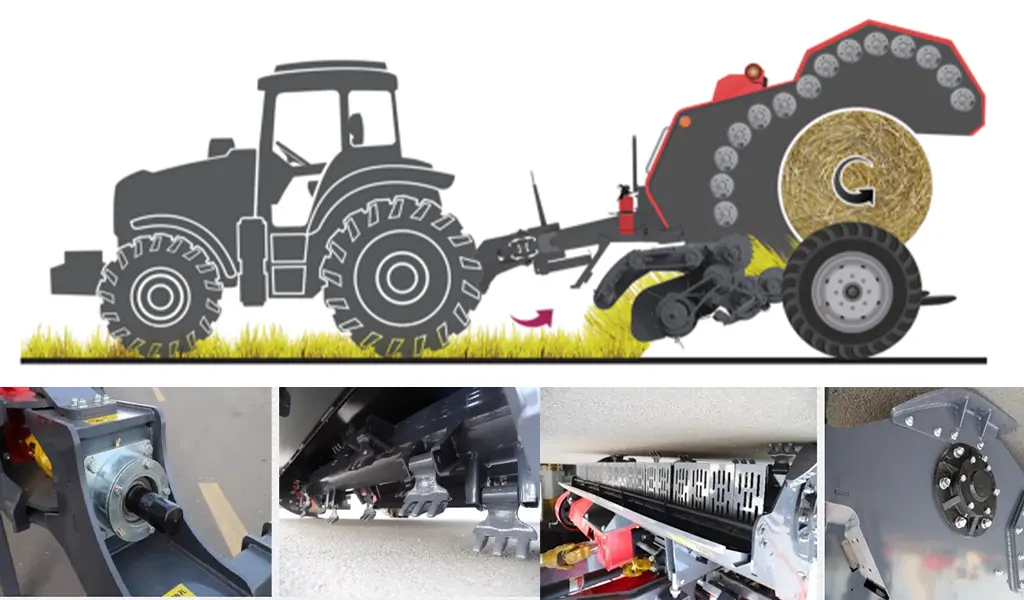
PTO speed is the single hardest compatibility constraint in the tractor-baler pairing — it is set by the baler’s internal gearbox design and cannot be adjusted. Connecting a 1000 RPM PTO tractor to a 540 RPM baler and operating at 1000 RPM over-speeds the baler’s internal mechanisms by 85%, causing immediate and catastrophic mechanical damage. Conversely, operating a 1000 RPM baler at 540 RPM under-speeds the mechanisms and produces insufficient pickup and belt drive speed for functional baling.
Most mid-size and small round balers are designed for 540 RPM PTO input. The 540 stub is 1 3/8 inch diameter with 6 splines — confirm your tractor’s PTO stub matches before connecting. Many modern tractors offer both 540 and 1000 RPM capability on the same stub (with a separate engagement control) — confirm you are engaging the 540 speed, not the 1000. Economy PTO modes on these tractors deliver 540 PTO RPM at reduced engine RPM, which is appropriate for baler operation and reduces fuel consumption.
Large commercial balers and pre-cut system balers often specify 1000 RPM PTO input, which requires a tractor with a 1 3/8 inch 21-spline or 1 3/4 inch PTO stub rated to 1000 RPM. These balers deliver more power transfer per unit of shaft torque at 1000 RPM input, which is why they are used for high-HP, high-density applications. Confirm the PTO stub diameter and spline count matches both the baler input shaft and your driveline shaft ends before purchasing either component.
Hitch Category and Drawbar Load: The Physical Connection
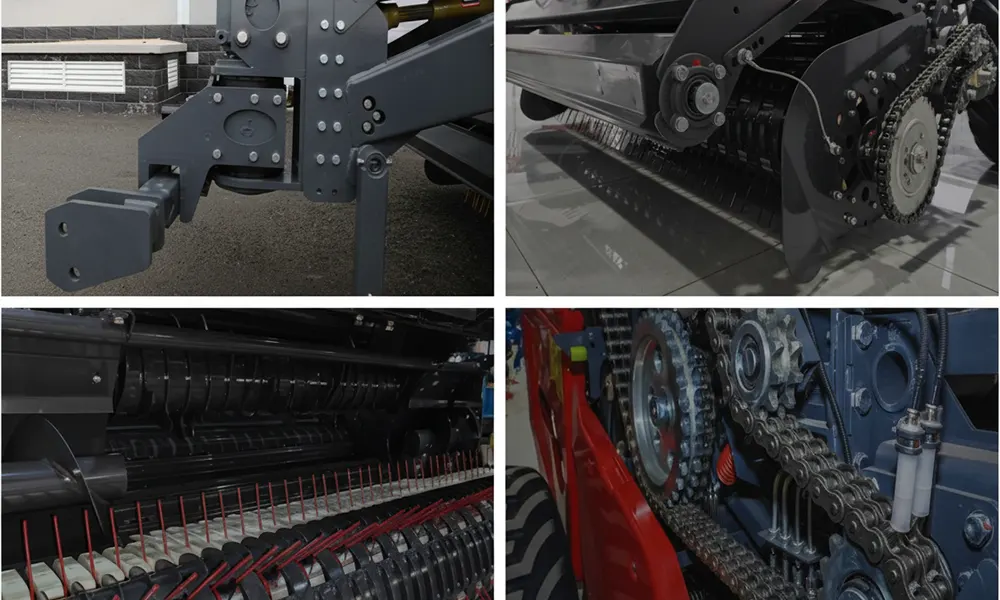
| Hitch category | Pin diameter | Top link hole | Typical tractor HP |
|---|---|---|---|
| Category I | 22.4 mm (7/8″) | 19 mm | 20–50 HP; compact tractors; unsuitable for mid-size or large balers |
| Category II | 28.7 mm (1 1/8″) | 25.5 mm | 40–120 HP; most common for commercial mid-size balers; standard for 4×5 and 5×5 |
| Category III | 36.6 mm (1 7/16″) | 32 mm | 100–250 HP; large tractors; required for very large or heavy balers that impose high drawbar loads |
For tongue-draw balers (the most common type, which attach to the tractor drawbar rather than the 3-point hitch), the relevant specification is the drawbar load capacity rather than the 3-point hitch category. Confirm the baler’s maximum tongue weight and drawbar pull specification does not exceed your tractor’s rated drawbar capacity at the draw pin position used. Overloading the drawbar affects tractor rear axle loads and steering control, particularly on sloped terrain.
Hydraulic Flow Requirements: Net Wrap, Tailgate, and Control Systems
Modern round balers require tractor hydraulic flow for tailgate operation, net wrap tensioner function, density spring assist on some models, and electronic control system power supply. The hydraulic requirements are well within the capacity of any tractor in the recommended HP range, but the specific remotes required and the flow rates must be confirmed before connecting a baler to an unfamiliar tractor.
Most round balers require 1–2 hydraulic remotes from the tractor. At minimum: one remote for tailgate open/close. Some balers add a second remote for the wrap system tensioner or the density spring adjustment. Confirm your tractor has the required number of rear hydraulic remotes with the correct flow direction (single-acting vs double-acting) before the season begins.
Confirm the baler has a case-drain or return line that connects to the tractor’s hydraulic return port — not just the pressure remote outlet. A baler circuit that returns oil directly to the tractor rear outlet rather than to the tank return creates back-pressure issues that can damage hydraulic seals over time. Most modern tractors and balers are configured correctly, but verify on any older equipment combination.
Modern balers with electronic monitor systems require an ISOBUS (ISO 11783) connection to the tractor terminal. Confirm your tractor has a compatible ISOBUS connector or universal terminal capability. Without a compatible ISOBUS connection, the baler will need its own dedicated monitor mounted in the cab — verify this is included or available as an option before purchasing.
Tractor Ballast and Stability: The Terrain Safety Factor
A loaded round baler behind a tractor affects the tractor’s weight distribution and stability, particularly on sloped terrain. The bale weight (800–1,400 lbs depending on size) adds tongue weight to the drawbar and shifts the tractor’s effective center of gravity rearward. On flat ground this is manageable; on steep slopes, particularly when turning with a loaded baler, the combination can create tip-over risk if the tractor’s front axle is not adequately weighted.
Matching the Complete System: Tractor + Baler + Raker + Mower
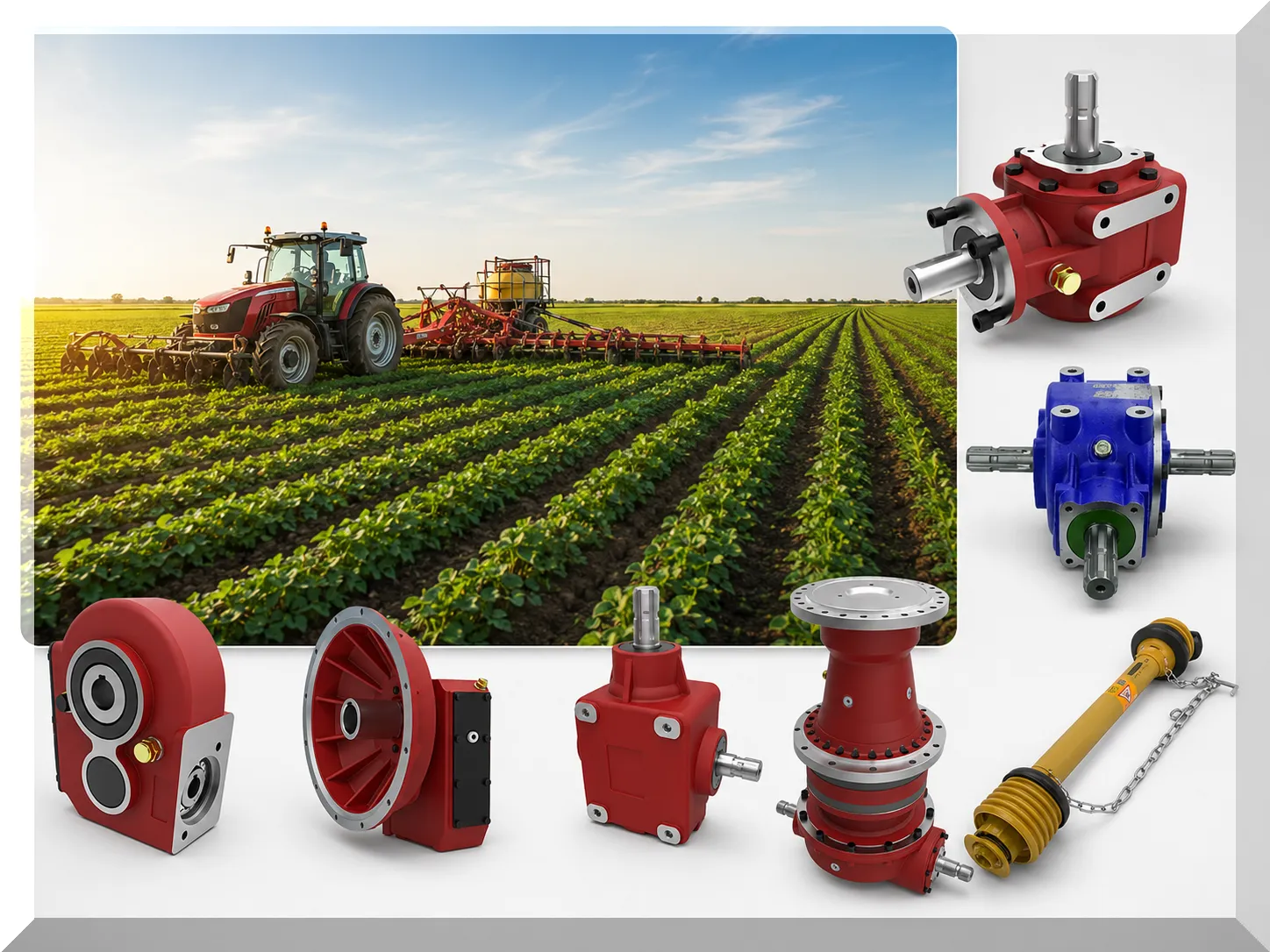
A common hay operation configuration is a single tractor that runs the mower-conditioner, the rake, and the baler in sequence. The tractor HP must meet the requirements of each implement individually — but not simultaneously, since they are used sequentially. The limiting implement is the one with the highest HP requirement, and the tractor must meet that requirement with reserve capacity. For most mid-scale hay operations (4×5 baler, disc mower-conditioner, V-rake), a 75–100 HP tractor covers all three implements comfortably.
The detailed matching framework — including the decision between a dedicated baling tractor and a shared multipurpose tractor, the case for tractor specialization at high production volumes, and the cost model comparing matched vs mismatched equipment pairings — is in the round baler to tractor matching guide. The full ROI model that evaluates whether a tractor upgrade to match a larger baler produces positive return is in the baler ROI investment analysis. The PTO driveline specifications and gearbox torque ratings that define the mechanical interface between any tractor and baler are in agricultural gearbox and PTO driveline component specifications.
Tractor vs Baler Weight Ratio: Why It Matters More Than HP Alone
Horsepower matches the mechanical drive requirement; tractor weight matches the traction requirement. A baler operating at maximum density in heavy first-cut alfalfa draws on both the tractor’s PTO capacity and its traction capacity. A tractor with adequate HP but insufficient ballasted weight will spin tires when the baler’s resistance forces exceed available traction — the PTO can supply the power but the tractor can’t plant its tires to transmit it.
General rule: the tractor should weigh at least 120–130 lbs per baler PTO HP for flat to rolling terrain. A 75 HP baler requires a tractor of at least 9,000–9,750 lbs ballasted weight. Most utility tractors in the 75–100 HP range weigh 8,000–11,000 lbs unballasted, which is generally adequate for flat field baling. Steeper terrain (slopes 10°+) requires tighter attention to front axle loading and potentially additional front suitcase weights.
If the tractor tires leave continuous slip marks in the field during baling, if bales have inconsistent density that correlates with slope direction, or if you have to reduce density settings when baling uphill compared to flat ground, the tractor is traction-limited for that combination. Solutions: add rear ballast (wheel weights or liquid ballast in tires), reduce bale density setting, reduce windrow size, or accept reduced forward speed on uphill passes to lower the bale formation force per unit time.
Used Tractor Evaluation for Baler Compatibility
When matching a used tractor to a baler, the nameplate specifications confirm compatibility in theory — the field condition of the specific tractor determines compatibility in practice. A used 85 HP tractor with a slipping clutch, a clogged air filter, and worn hydraulic seals may effectively deliver 60 HP and limited hydraulic capacity in the field, creating the same under-sizing problems as a genuinely too-small tractor.
Tractor Compatibility FAQs

Confirm Compatibility Between Your Tractor and Your Target Baler
Tell us your tractor’s PTO HP, PTO speed, hitch category, and number of hydraulic remotes. We confirm which baler models are fully compatible with your existing tractor and flag any interface requirements before you purchase.
Editor: Cxm


