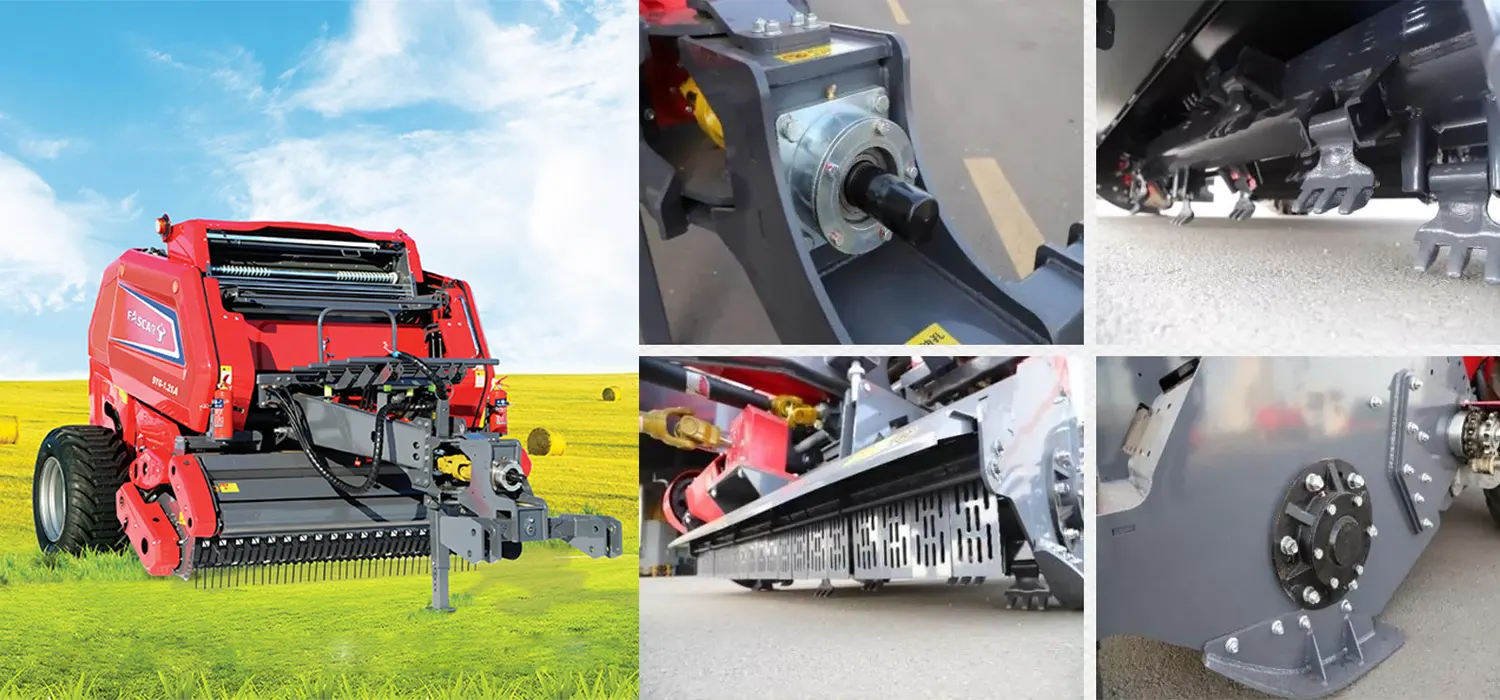
Buying the right baler is only half the decision. The other half is confirming that the baler you have chosen is mechanically compatible with the tractor you plan to pull it with. An underpowered tractor produces below-rated bale density and accelerated engine wear. An incorrect hitch category creates structural stress at the lower link pins on every bale cycle. A mismatched PTO shaft allows overload shock forces to reach the gearbox unchecked. A tractor with insufficient hydraulic flow produces erratic net wrap timing and inconsistent bale density. None of these failures are immediately catastrophic — they accumulate quietly, season by season, into early equipment failures and sub-standard bale quality.
The Four Compatibility Checks: What to Verify Before Any Baler Order
Every tractor and round baler pairing must pass four independent checks. Passing three of four is not sufficient — each factor addresses a different failure mode, and a single mismatch compromises the whole system. The grid below gives the function of each check and what to look for:
1
Horsepower (HP)
The tractor must deliver continuous PTO power at or above the baler’s rated minimum throughout the daily operating window — not just at the beginning of a fresh engine. Running at exactly the minimum HP means the tractor is at maximum continuous load every hour the baler is running.
✔ Check: PTO HP rating on your tractor spec sheet (not engine HP — PTO HP is typically 85–90% of engine HP at rated speed)
2
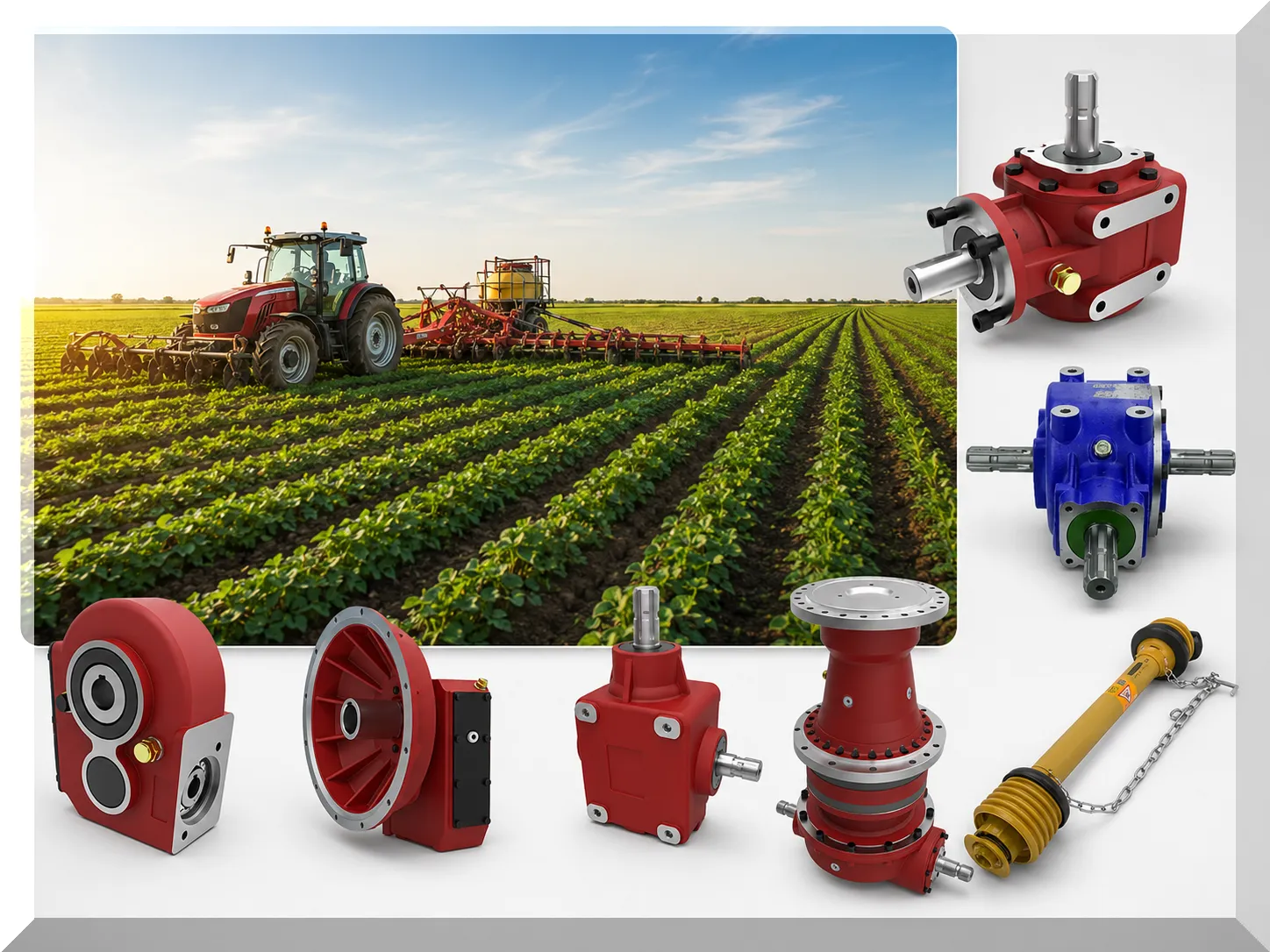
PTO Driveshaft
The PTO shaft connects tractor to baler — a seemingly simple component that carries all the torsional load of the bale chamber and pickup mechanism. Speed, spline count, shaft length, and overload clutch setting all determine whether the driveline protects the gearbox or transmits damaging overload torque directly to it.
✔ Check: PTO speed (540 rpm, 6-spline), shaft length vs baler hitch geometry, overload clutch slip torque setting
3
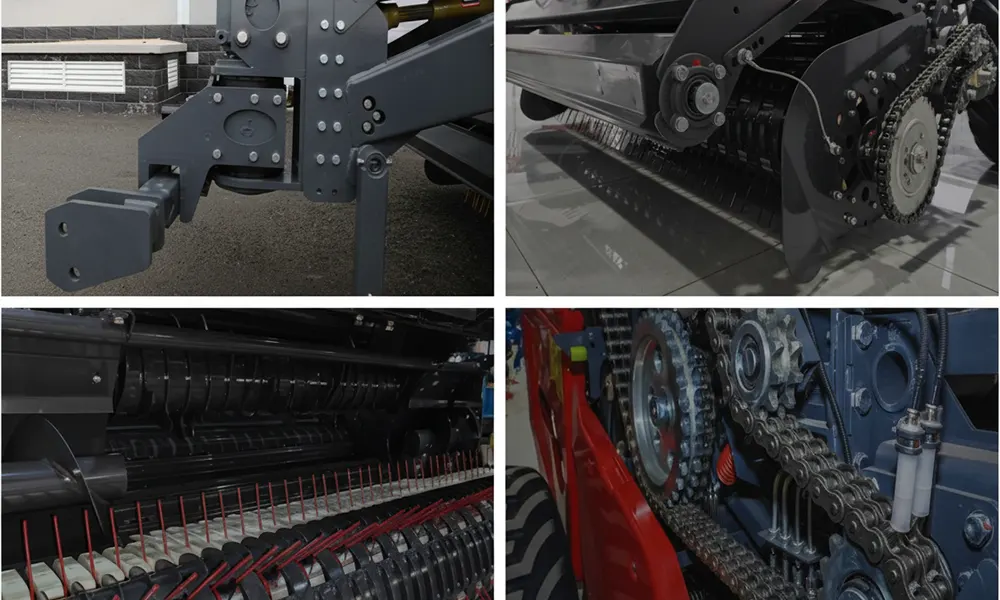
Three-Point Hitch
The hitch connects the baler structurally to the tractor. Category determines pin diameter and lower link geometry — running a Cat II baler on Cat I lower links means the pins are too small for the pin holes, creating mechanical slop that translates to baler sway during turns and on gradients.
✔ Check: Hitch category on your tractor, lower link pin lift capacity at the hitch pin (not the hitch ball), implement weight
4
Hydraulic Remotes
Round balers use tractor hydraulic remotes for pickup flotation, bale ejection gate actuation, and net wrap trigger on some models. Insufficient hydraulic flow rate produces jerky, inconsistent actuation; low pressure may not fully trigger the gate or net wrap arm at the required force.
✔ Check: Number of rear SCV outlets, flow rate (L/min), working pressure (bar/MPa)
Horsepower: Minimum vs Optimal — What the Spec Sheet Doesn’t Tell You
The minimum HP rating on a round baler specification sheet represents the floor at which the machine will physically produce bales — not the floor at which it produces bales at rated density, rated throughput, and rated belt life. A tractor running at exactly the minimum HP puts the engine at maximum continuous load for every hour of baling operation. Fuel consumption is at peak, engine temperature runs higher than optimal, and component wear accelerates across the entire drivetrain. The practical recommendation: target a tractor 15 to 20 HP above the listed minimum to operate at 75 to 85% of rated engine load — the sweet spot for fuel efficiency, component life, and consistent daily output.
| Baler Model |
Rated Minimum HP |
Optimal Operating HP |
Common Compatible Tractors |
At Minimum HP |
| 9YG-1.0C |
≥ 40 HP |
55–65 HP |
Kubota M5660, JD 4052R, NH Workmaster 50 |
△ Functional, slow |
| 9YG-1.25 |
60–80 HP |
75–95 HP |
Kubota M7060, JD 5075E, NH T4.90 |
△ Marginal at 60 HP |
| 9YG-1.25A |
75–100 HP |
90–110 HP |
JD 5085E, Case Farmall 75C, Massey 5711 |
△ Silage use limited |
| 9YG-2.24D (Base/Classic) |
100–130 HP |
120–145 HP |
JD 6115M, Case Maxxum 115, NH T6.145 |
✗ Not recommended |
| 9YG-2.24D Ultra |
120–150 HP |
140–160+ HP |
JD 6155R, Case Puma 165, NH T7.175 |
✗ Not recommended |
△ = functional but below rated performance. ✗ = tractor at constant max load; unacceptable for sustained commercial use. Tractor examples are for general reference only; verify specific model compatibility with our U.S. team. See the full round baler models page for complete HP specifications.
Continuous vs Peak HP: The PTO HP figure on a tractor spec sheet is measured at rated engine RPM under full load — a 90-second test condition. Sustained baling at 7 to 10 km/h through a dense windrow is a multi-hour continuous load, not a 90-second test. For silage-density crops or hilly terrain, budget an additional 10 to 15 HP above the “optimal” range shown above.
The PTO Driveshaft: Four Components That Protect Your Baler Gearbox
The PTO driveshaft between tractor and round baler is not merely a torque-transmission tube — it is a precision mechanical interface that handles both the sustained 400 to 1,200 Nm continuous baling load and the instantaneous torque spikes (2 to 4× continuous) when the pickup encounters a dense windrow pocket at full ground speed. A correctly assembled driveshaft manages these round baler loads reliably; a wrong-length or mis-adjusted shaft transmits them destructively to the baler’s transfer gearbox.
PTO Driveshaft: Four Critical Sections
🔧
Overload Clutch
Slips at 450–800 Nm to protect the baler gearbox from pickup surge events. Must be set with a torque wrench — never by feel. A loose clutch causes nuisance slipping; a tight clutch passes full overload torque to the gearbox.
↔
Telescopic Profile
Extends and compresses as the tractor turns and the hitch angle changes. Must be lubricated with EP-2 grease every 50 hrs. A stiff telescope induces PTO yoke stress at extreme steering angles.
✕
Universal Joints (×2)
Allow the shaft to operate at the angle between tractor PTO stub and baler input. Maximum operating angle: 15°. Above 15°, vibration increases and needle bearing life falls sharply. Check shaft angle with the baler at full working depth before seasonal use.
🛡️
Safety Guard
Required by OSHA 1928.57. The guard must fully enclose the rotating shaft at all times during operation and must be replaced if cracked or if any guard fasteners are missing. No exceptions — this is a legal requirement, not a recommendation.
The round baler PTO gearbox at the baler input end handles the highest torque in the entire driveline. Commercial-class balers (100+ HP) generate 800 to 1,200 Nm continuous torque at the gearbox input shaft during dense windrow baling. A correctly rated round baler PTO gearbox for this torque range uses case-hardened spiral bevel gears, sealed oil-bath lubrication, and tapered roller bearings at both input and output shafts — components that must be verified to spec when replacing a worn or damaged gearbox mid-season.
Setting the Overload Clutch: The One Task Operators Skip Most Often
The overload clutch is the round baler gearbox’s primary protection from the instantaneous torque spikes that occur every time the pickup encounters a dense pocket at full working speed. Factory slip torque settings are specified in the operator manual per model — typically 450 to 800 Nm depending on baler class. These settings drift over a season as the spring plate compresses under repeated slippage events. By season end, a clutch set at 650 Nm in spring may slip at 500 Nm — low enough to nuisance-slip under normal dense windrow operation. Reset clutch slip torque using a torque wrench at the start of each season. A $60 click-type torque wrench in the 200 to 1,000 Nm range is the most cost-effective tool a commercial baler operator can own.
Three-Point Hitch: Why Category and Lift Capacity Are Different Questions
Round baler hitch compatibility has two independent dimensions: category (which determines pin diameter and geometry) and lift capacity (which determines whether the tractor can support the baler’s weight). Both must be verified. An operator who confirms “I have Cat II” without checking the rear axle lift capacity may find their tractor can geometrically connect to the baler but cannot raise it fully at headland turns — causing the baler to drag on the soil surface and accumulate pickup damage on every pass.
Three-Point Hitch Quick Reference
Category I
28 mm
Lower link pin diameter
▸ Tractors up to ~60 HP
▸ 9YG-1.0C: compatible
▸ 9YG-1.25: marginal — verify lift capacity vs baler weight
Category II
35 mm
Lower link pin diameter
▸ Tractors 60–140 HP
▸ 9YG-1.25 / 1.25A: standard match
▸ 9YG-2.24D Base: Cat II minimum
Category III
45 mm
Lower link pin diameter
▸ Tractors 140+ HP
▸ 9YG-2.24D Ultra: recommended Cat III
▸ Wide-swath commercial balers: standard
Lift capacity — the number that matters most: Tractor manufacturers publish two lift capacity figures: at the hitch ball (at the end of the lower link arms) and at the hitch pin (at the standard draft link connection point, typically 24 inches from the link ends). The hitch pin figure is always lower than the hitch ball figure — and it is the hitch pin figure that applies to implement weight. For this round baler class (approximately 1,300 kg machine weight plus the weight of the bale in chamber at peak), the tractor’s rear axle lift capacity at the hitch pin should be at least 1,600 kg to ensure full lift capability on all terrain including uphill headlands.
Front ballast: Adding a heavy implement to the rear three-point hitch shifts the tractor’s center of gravity rearward, reducing front axle weight and steering authority. For the 9YG-2.24D and Ultra class balers (1,200 to 1,400 kg), add at minimum 200 to 350 kg of front ballast — either cast iron wheel weights or a front loader attachment with empty bucket — to maintain a front-axle loading of at least 20% of total tractor weight at all times.
Hydraulic Remotes: Flow Rate, Pressure, and SCV Count
Round balers use tractor hydraulics for two or three functions depending on the model: pickup header flotation (continuous low-pressure function), bale ejection gate (intermittent high-force actuation), and net wrap arm on some configurations. The common misconception is that one SCV outlet is enough for any round baler — which is true for simple mid-range models but not for commercial-class machines with hydraulic end-gate opening systems separate from the standard pickup float circuit.
| Hydraulic Function |
Flow Required |
Pressure Required |
SCV Type |
What Happens If Inadequate |
| Pickup header flotation |
8–15 L/min |
150–175 bar |
Float-position SCV |
Pickup rides hard on the ground — crop loss and tine wear accelerate |
| Bale ejection gate |
15–25 L/min |
170–200 bar |
Detent SCV or same as float |
Gate opens slowly or incompletely — bale ejection stalls; time lost per cycle |
| Net wrap arm (hydraulic models) |
10–20 L/min |
175–200 bar |
Second SCV (if separate) |
Inconsistent wrap arm travel — net application starts late or misses the bale leading edge |
Most mid-range utility tractors (60–100 HP) deliver 40–60 L/min combined SCV flow at adequate working pressure — well above baler requirements. Verify your tractor’s SCV specification if it is below 40 HP or an older model with a single SCV circuit.
Your Tractor Compatibility Self-Assessment: Before You Order
Gather your tractor’s operator manual or specification sheet before working through the checklist below. Manufacturers post digital spec sheets for most models — search “[tractor brand + model + specifications PDF]”. For older tractors without available digital documentation, contact the dealer for a printed spec sheet or check a third-party tractor specification database. The four items below map directly to the four compatibility factors covered earlier in this guide.
Pre-Order Tractor Compatibility Self-Check
HP
Confirm your tractor’s PTO HP, not just engine HP
PTO HP = engine HP × drivetrain efficiency (typically 0.85–0.90). A 90 HP engine tractor typically delivers 76–81 PTO HP. Compare this PTO HP figure — not the engine HP — to the baler’s “optimal operating HP” in the table above.
☐
PTO
Verify rear PTO is 540 rpm, 6-spline (standard in U.S. market)
All balers in our lineup are 540 rpm rear PTO. The 6-spline 1-3/8″ stub shaft is standard on U.S. tractors from 35 HP to approximately 100 HP. Above 100 HP, some tractors offer 1,000 rpm with 21-spline 1-3/4″ stub as an option — confirm the 540 rpm position is engaged when operating the baler, not the 1,000 rpm position.
☐
HITCH
Confirm hitch category and rear lift capacity at hitch pin
Find “rear lift capacity” on your tractor spec sheet. Note whether the figure is “at 24 inches behind link ends” (hitch pin position) or “at ball end” — these differ significantly. Compare the hitch pin figure to the baler’s transport weight. Cat II (35 mm pin) required for 9YG-1.25 and above.
☐
HYD
Count rear SCV outlets and confirm minimum working pressure
Balers in the 9YG-1.0C through 9YG-1.25A class require 1 rear SCV (remote) at ≥175 bar working pressure. The 9YG-2.24D range may require 1 or 2 SCVs depending on configuration — confirm with our U.S. team when ordering. Most utility tractors above 50 HP have 2 rear SCVs standard; compact tractors commonly have 1.
☐
The Pre-Purchase Verification Service: Let Our U.S. Team Run the Check
If working through the four compatibility checks above still leaves uncertainty — or if you are evaluating multiple tractor options against a single baler model, or comparing several baler models against one tractor — send us the tractor model and serial number for any round baler you are considering, and our U.S. engineering support team will pull the factory specification data and verify all four compatibility points before anything ships. This verification takes one business day and is provided at no charge with any order inquiry.
What Our Pre-Purchase Check Covers
✔ HP at PTO
Confirmed from factory spec sheet — not estimated from engine HP alone
✔ PTO Type & Shaft
Speed, spline count, and standard driveshaft length for your tractor-to-baler hitch distance
✔ Hitch Category
Pin diameter, lower link lift capacity at hitch pin position, and front counterweight recommendation
✔ SCV Count & Pressure
Remote outlet count and maximum working pressure confirmed against baler hydraulic requirements
Frequently Asked Questions
My tractor has 80 HP but the 9YG-2.24D requires 100 HP minimum. Is there any workaround?+
No practical workaround exists for an HP shortfall at the scale of 80 versus 100 HP minimum. Running a round baler of this class on an 80 HP tractor means the engine operates at maximum continuous rated load throughout all baling hours — which accelerates engine wear, reduces daily output, and requires slowing ground speed so significantly that the productivity advantage of the commercial baler is negated. The correct approach is either: (a) match the tractor to the 9YG-1.25A (75–100 HP range, optimal at 90–110 HP) which suits an 80 HP tractor comfortably, or (b) wait until a tractor upgrade to the 110–130 HP range before purchasing the 9YG-2.24D. Our team runs this analysis regularly for buyers who want to future-proof their baler purchase against a planned tractor upgrade — contact us with your current and planned tractor specs.
My tractor is Category I but I want the 9YG-1.25. Can I use a Cat I-to-Cat II adapter?+
Cat I-to-Cat II pin adapters (also called “pin expanders” or “reducing bushings”) are widely available and technically allow connection. However, they address only the geometry mismatch, not the underlying HP and lift capacity limitations that usually accompany a Cat I tractor (typically under 60 HP). If your Cat I tractor is in the 55 to 65 HP range and its rear lift capacity at the hitch pin exceeds 900 kg, the adapter works for the 9YG-1.25 (approximately 720 kg machine weight). If the tractor is under 55 HP or has rear lift capacity below 900 kg at the hitch pin, the adapter connects the machines geometrically but the tractor cannot safely support and operate the baler at rated performance. Send us your tractor model and we will confirm whether adapter use is appropriate for your specific machine.
How do I know if my tractor’s PTO is 540 rpm or 1000 rpm?+
Two ways: (1) Count the splines on your tractor’s PTO stub shaft. A 6-spline shaft is the 1-3/8″ standard for 540 rpm. A 21-spline shaft is the 1-3/4″ standard for 1,000 rpm. Most U.S. utility tractors from 40 to 100 HP use the 6-spline 540 rpm configuration as standard. (2) Check the operator manual — the PTO specifications page will list both the speed and the stub shaft profile. If your tractor offers both 540 and 1,000 rpm positions, always engage the 540 rpm position when operating balers — 1,000 rpm will over-speed the baler’s driveline and gearbox, which is designed and rated for 540 rpm input only.
What happens if I set the overload clutch too tight?+
If the overload clutch is set too tight — above its specified slip torque — it stops functioning as an overload protection device. When the pickup encounters a dense windrow pocket at full ground speed, the instantaneous torque spike (2 to 4× the continuous torque) is transmitted fully through the driveshaft to the baler’s transfer gearbox rather than being absorbed by clutch slippage. Over multiple such events, this accelerates fatigue wear on the gearbox gear tooth faces, then on the gear tooth roots. Eventually one tooth face chips or fractures — typically mid-season, at the worst possible time. Set the clutch to the exact slip torque specified in the operator manual at the start of each season, using a torque wrench. It takes 15 minutes and can prevent a multi-thousand dollar gearbox replacement.
My tractor has only one rear SCV. Which balers in your lineup can I run?+
All round balers in the 9YG-1.0C, 9YG-1.25, and 9YG-1.25A class operate on a single rear SCV. The one outlet handles both pickup float position and bale ejection gate sequentially — these functions do not operate simultaneously, so a single SCV circuit is adequate. The 9YG-2.24D range in its base configuration also operates on one SCV; however, the Classic and Ultra variants with the optional hydraulic gate-assist and net wrap pre-tensioner are two-SCV configurations. If you have one rear SCV, any model up through the 9YG-2.24D Base is compatible; confirm SCV requirements for the Classic and Ultra at time of order.
Do I need to add front ballast when operating the 9YG-1.25A?+
For the 9YG-1.25A (approximately 900 kg machine weight), front ballast becomes important when the tractor weight is below 3,500 kg total and when operating on slopes. The general rule is that the front axle should carry at least 20% of total tractor-plus-implement weight at all times. For a 2,800 kg tractor running the 9YG-1.25A at 900 kg: total = 3,700 kg; 20% = 740 kg required on the front axle. If the tractor’s front axle weight is below 740 kg with the baler attached, add front weights or a front loader to restore the front-axle loading. This is particularly important when navigating field headlands — brief but sharp steering demands at the turn expose any front-axle underloading that may be masked during straight-line baling.
One Step Before Every Baler Order
Send Your Tractor + Round Baler Model — We Verify HP, PTO, Hitch, and Hydraulics
Our California-based team pulls factory specification data from your tractor model and serial number and confirms all four compatibility points within one business day. This service is provided at no charge with any order inquiry — and is the fastest way to confirm you are ordering the right machine for the tractor you own.
✔ PTO HP Verified
Factory spec, not engine HP estimate
✔ Hitch Category Check
Pin diameter + lift capacity at hitch pin
✔ PTO Shaft Spec
Speed, spline count, standard shaft length
✔ SCV Count Check
Matched to baler hydraulic requirements
America Ever-Power Forage Baler Equipment INC. | 1401 21st ST STE R, Sacramento, CA 95811
Check My Tractor Compatibility
Editor: Cxm