
The Yield Formula: How Crop Tonnage Converts to Bale Count
The Basic Calculation
Bale count per acre follows a straightforward formula: total crop yield in kilograms per acre, divided by average bale weight in kilograms, equals the number of bales per acre. Every variable in that formula is a range rather than a fixed number — crop yield varies with field, weather and cutting stage; bale weight varies with crop moisture, species and the density setting on the plunger. The ranges combine to produce the wide bale-count estimates you see from experienced producers (“anywhere from 100 to 250 bales per acre depending on the field”) — and those ranges are accurate because the variables genuinely span that width.
(Yield per acre in kg) ÷ (Bale weight in kg) = Bales per acre
例: Alfalfa field at 2.2 tons per acre (2,000kg/acre) at first cut, bale weight 25kg at standard density: 2,000 ÷ 25 = 80 bales. At the same yield and a higher density setting producing 32kg bales: 2,000 ÷ 32 = 62.5 bales. Same field, same crop — but 18 fewer bales per acre at higher density. The revenue impact depends on whether you are paid per bale or per tonne.
Dry Weight vs Field Weight
Crop yield estimates from extension publications are usually given in dry-matter tons per acre. Bale weight is measured in field-fresh weight at baling moisture. To convert: a crop with 1.5 dry-matter tons per acre at 15% baling moisture has a field weight of approximately 1.5 ÷ 0.85 = 1.76 field-weight tons (1,600kg per acre). This is the figure to use in the bale-count formula — not the dry-matter yield. The difference is modest at 14–18% moisture but becomes significant if you are baling at 20% moisture, where field weight is 1.5 ÷ 0.80 = 1.875 tons — 12% more per acre in weight but going into bales that will lose that moisture over time in storage.
Small Square Bale Weight Reference by Crop Type
| 作物 | 梱包時の水分量 | Low Density | Standard Density | High Density |
|---|---|---|---|---|
| アルファルファ干し草 | 14–17% | 16–22kg | 22~30kg | 28–38kg |
| Grass hay (mixed) | 14–18% | 14~18kg | 18–26kg | 24–32kg |
| 麦わら | 10–16% | 10–16kg | 14–20kg | 18–24kg |
| 大麦の茎 | 10–16% | 10–15kg | 13–18kg | 16–22kg |
| トウモロコシの茎 | 14–22% | 18–24kg | 24–34kg | 32–42kg |
Alfalfa Hay: Bales Per Acre by Cutting Stage
First and Second Cut — Highest Yield Cuttings
First-cut alfalfa typically produces the highest dry-matter yield of the season — commonly 1.5–2.5 tons per acre in established stands in productive regions, with exceptional stands in irrigated Western production reaching 3–4 tons per acre at first cut. In 460×360mm small square bales at standard density (22–28kg per bale), first-cut alfalfa at 2 tons per acre (1,814kg at baling moisture) produces approximately 65–82 bales per acre.
Second cut is typically lower yield than first cut (1.2–1.8 tons per acre in most regions) but often produces the highest-quality alfalfa of the year in terms of leaf-to-stem ratio and digestibility. At 1.5 tons per acre and 24kg average bale weight, second cut produces approximately 62–70 bales per acre.
Third and Fourth Cut — Lower Yield, Dense Stems
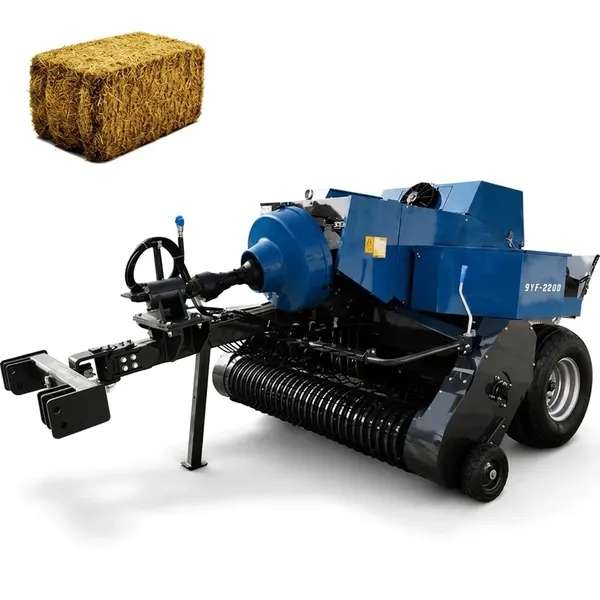
Later cuts (third through fifth in irrigated production) typically yield 0.8–1.3 tons per acre per cutting with stems that are thicker and more mature. In standard compression chamber square balers (9YF-1700/1900/2200), thick-stemmed late-season alfalfa compresses with some void zones between intact stems, which means bale density is slightly lower than first or second cut alfalfa at the same plunger setting. The single-stage shredder on the 9YF-2200S breaks stems before compression, producing higher and more uniform bale density from late-season alfalfa. At 1 ton per acre and 20kg bale weight (reflecting slightly lower compression efficiency), a third-cut field produces approximately 50–55 bales per acre.
Grass and Mixed Hay: Bales Per Acre for Common Species
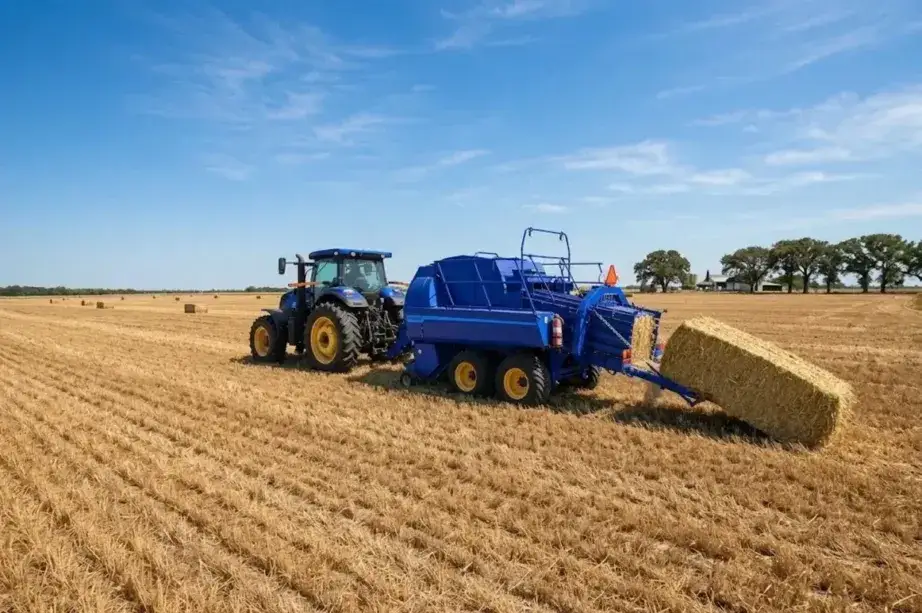
Well-established timothy stands in northern production regions yield 1.5–2.5 tons per acre for the full season (two to three cuts). At 20kg average bale weight: 75–125 bales per acre per season. Timothy bales are lightweight for their size — the stem structure leaves some void zones even at maximum plunger density, which is why bale weight per unit length is lower than alfalfa from the same machine setting.
Orchardgrass is a high-yield species across two to four cuts per season in suitable climates. At 2.5 tons per acre total and 22kg average bale weight: 113 bales per acre per season. Individual cut yields of 0.8–1.2 tons give per-cut bale counts of approximately 36–54 bales per acre per cut.
Bermudagrass in the Southern states at full production yields 3–6 tons per acre across five to seven cuts per season under irrigation. At 4 tons per acre and 22kg bale weight: 181 bales per acre per season — one of the highest bale-count species in the small square format.
Native grass prairie hay in the Great Plains typically yields 0.5–1.5 tons per acre in a single cut per season. At 1 ton per acre and 18kg bale weight: 55 bales per acre. Native hay bales are lightweight but command specialty market premiums from horse buyers who value the species diversity.
Wheat and Barley Straw: Bales Per Acre After Combine Harvest
Straw Yield and Recovery Rate
Wheat straw yield in the field after combine harvest depends on the grain-to-straw ratio of the variety grown (typically 1:1 to 1:1.5) and the combine straw management settings (chopped and spread vs standing windrow). For baling, the relevant figure is the harvestable straw remaining in the field after the combine pass. Average harvestable wheat straw yield for baling is 0.8–1.5 tons per acre depending on variety, weather and how much the combine spreads versus windrows the material.
At 1.0 ton per acre harvestable straw at 13% moisture and 16kg average bale weight (straw is low-density material): approximately 62–68 bales per acre. At 1.5 tons per acre and the same bale weight: approximately 94 bales per acre. Straw bale count per acre is sensitive to the combine straw spreading settings — a field where the combine has fully spread and chopped all straw produces zero harvestable straw regardless of the original yield.
Corn Stover: Bales Per Acre and Why Density Settings Matter More
Stover Yield and Recovery Challenges
Corn stover (stalks, leaves, husks and cobs remaining after grain harvest) yields 1.5–3.0 tons per acre of dry matter in standard U.S. corn production, with the harvestable fraction for baling typically representing 50–70% of total stover mass depending on how much is incorporated by the combine and how well the windrow is formed for the baler pickup.
Corn stover compresses differently from hay — whole stalks have hollow internodes that resist uniform compression and leave void channels in the bale cross-section. At standard compression settings on a non-shredder baler, corn stover bales are typically lighter per unit length than hay bales from the same density setting — approximately 18–28kg per bale. With the single shredder on the 9YF-2200S, shredded stover compresses more uniformly and reaches 24–38kg per bale at the same plunger setting. This difference in bale weight changes the bale count per acre significantly.
At 2.0 tons per acre harvestable stover (1,814kg) and 24kg average bale weight (standard compression): approximately 75 bales per acre. With the shredder at 32kg average bale weight: approximately 57 bales per acre. Fewer bales per acre from the shredder model, but each bale weighs more — total tonnage recovered is the same; the revenue difference comes from whether the market pays by count or by weight.
How Baler Density Setting Shifts Bale Count and Revenue Per Acre
The Density-Count Trade-Off
The plunger density setting on a square baler controls how much compression force the plunger applies before the bale reaches the trigger length and the knotters fire. Higher density = more compression per bale cycle = heavier bales = fewer bales per acre from the same crop yield. Lower density = lighter bales = more bales per acre from the same crop yield. The total weight of hay harvested per acre does not change — it is the number of containers (bales) that changes.
When you sell hay by weight per bale or by the tonne: fewer, heavier bales at the same per-kg price returns the same revenue per acre. Higher-density bales also stack more efficiently in barn storage (more kg per cubic metre) and are preferred by retail buyers who expect a firm, heavy bale as a quality signal. For transport efficiency, heavier bales mean fewer bales per truckload to move the same tonnage.
When you sell hay by the bale at a fixed per-bale price regardless of weight: more, lighter bales return more total revenue per acre. A field that produces 80 bales at high density vs 105 bales at low density earns 31% more revenue per acre at a fixed per-bale price — even though the hay tonnage is identical. For retail markets that charge per bale, this is a meaningful economic incentive to run lighter density settings.
The equine and retail hay market has practical weight preferences. A bale under 18kg is sometimes perceived as light or poor quality. A bale above 35kg is difficult to handle for many customers. The 20–28kg range satisfies most retail and equine buyers regardless of whether you price per bale or per weight. Set your density to reach this range rather than optimizing purely for bale count.
Revenue Per Acre: A Calculation Guide at Local Hay Prices
Example Revenue Calculations
Using local market prices from 2025–2026 for illustrative purposes — verify current rates in your area before production planning:
| シナリオ | Yield/Acre | Bales/Acre | Price/Bale | Gross/Acre |
|---|---|---|---|---|
| Premium alfalfa, horse market | 2 T/ac | 80 | $14 | $1,120 |
| Orchardgrass, retail hay market | 2.5 T/ac | 113 | $9 | $1,017 |
| Wheat straw, bedding and retail | 1.2 T/ac | 75 | $7 | $525 |
| Corn stover, cattle feed | 1.8 T/ac | 75 | $5 | $375 |
These are gross revenue estimates only. Production costs (mowing, raking, baling fuel and machine depreciation, twine, handling labour) typically run $60–120 per acre depending on equipment and labour costs in your area. Net margin is gross revenue minus total production costs.
Variables That Shift Your Real-World Count Away from Averages
The Six Factors That Change Bale Count in Practice
- Field variability:A 40-acre field will have sections of higher and lower yield. Average estimates mask the range — a 2 T/ac average might include sections at 1 T/ac and 3 T/ac in the same field. Count field sections separately when planning bale storage capacity.
- Weather before baling:Rain events during curing cause leaf shatter loss in legumes and physical loss of fine material from the windrow. A 2-inch rain on a curing alfalfa windrow can reduce recoverable yield by 15–25% through leaf loss alone.
- Bale length consistency:The star wheel trip mechanism has some variation cycle-to-cycle. In practice, bales from a well-maintained baler vary by 5–8% in length, meaning bale weight also varies by 5–8% around the average setting. The average is the planning number; individual bales will be lighter or heavier.
- Pickup recovery rate:No pickup system recovers 100% of the windrow material. Spring-tooth systems typically recover 90–95% of elevated windrow material; hammer-claw systems recover 92–98% including some flattened material. The unrecovered fraction is left in the field as surface residue.
- Moisture at baling:The same crop baled at 20% moisture produces bales that weigh 6% more per unit length than the same crop baled at 15% moisture (0.80 vs 0.85 dry-matter fraction). Fewer bales per acre at higher moisture — because each bale weighs more — but those bales carry more water weight that is lost in storage.
- Headland and obstacle loss:Baling around trees, waterways and field obstacles creates short windrow sections that the baler cannot process efficiently. On a small field with many obstacles, 5–10% of the windrow material may be left at headlands or turn areas that are too short for a full bale.
PTO Driveline Resources for Square Baler Operation
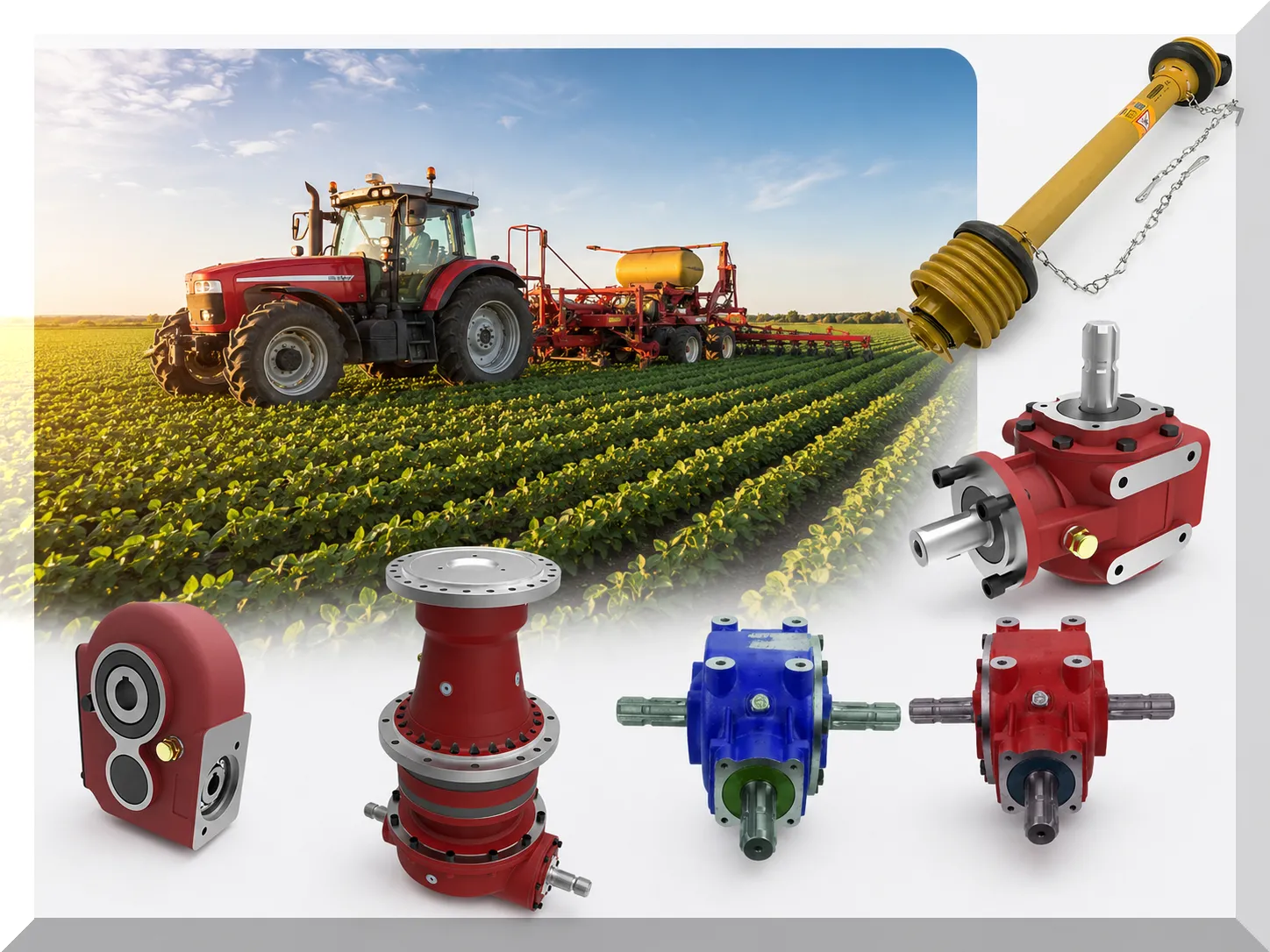
Gearbox torque ratings, shaft standards and coupling specifications: 農業用ギアボックスおよびPTOシャフトの仕様
PTO driveshaft length calculations and CV joint angle specifications for baler-tractor connection across the full acreage and power range covered in this guide: PTOドライブシャフトとCVジョイントのサイズガイド.
Frequently Asked Questions — Small Square Bales Per Acre
Plan Your Square Baling Operation
From the compact 9YF-1700 for small hobby operations to the fan-equipped 9YFS-2.2 for premium market production — tell us your acreage, crop type and tractor HP to get a model recommendation and pricing.
アメリカ・エバーパワー・フォレージ・ベーラー・イクイップメント社 · 1401 21st ST STE R, Sacramento, CA 95811
編集者:Cxm


