
Why Calibration Determines Loss Rate — Not Equipment Brand
The most common source of kidney bean harvest loss is not equipment failure or poor timing — it is a puller that is running at the wrong share depth or the wrong ground speed for the soil conditions encountered on that specific day of harvest. A well-maintained puller operating 1 inch too deep tears vines rather than lifting them cleanly, burying pods and breaking stem junctions. The same puller at correct depth and appropriate speed in the same field can reduce harvest losses by 3–6 percentage points — a difference worth hundreds of dollars per acre on a high-yielding irrigated stand.
The calibration challenge is that the correct settings change between fields, between soil moisture conditions, and sometimes between morning and afternoon of the same harvest day as soil temperature dries the surface. Understanding the mechanical relationship between share depth, ground speed, and vine lift angle is what allows an experienced operator to adapt the setup on the fly rather than running fixed settings from field entry to exit.
Share Depth: The Single Most Important Calibration Point
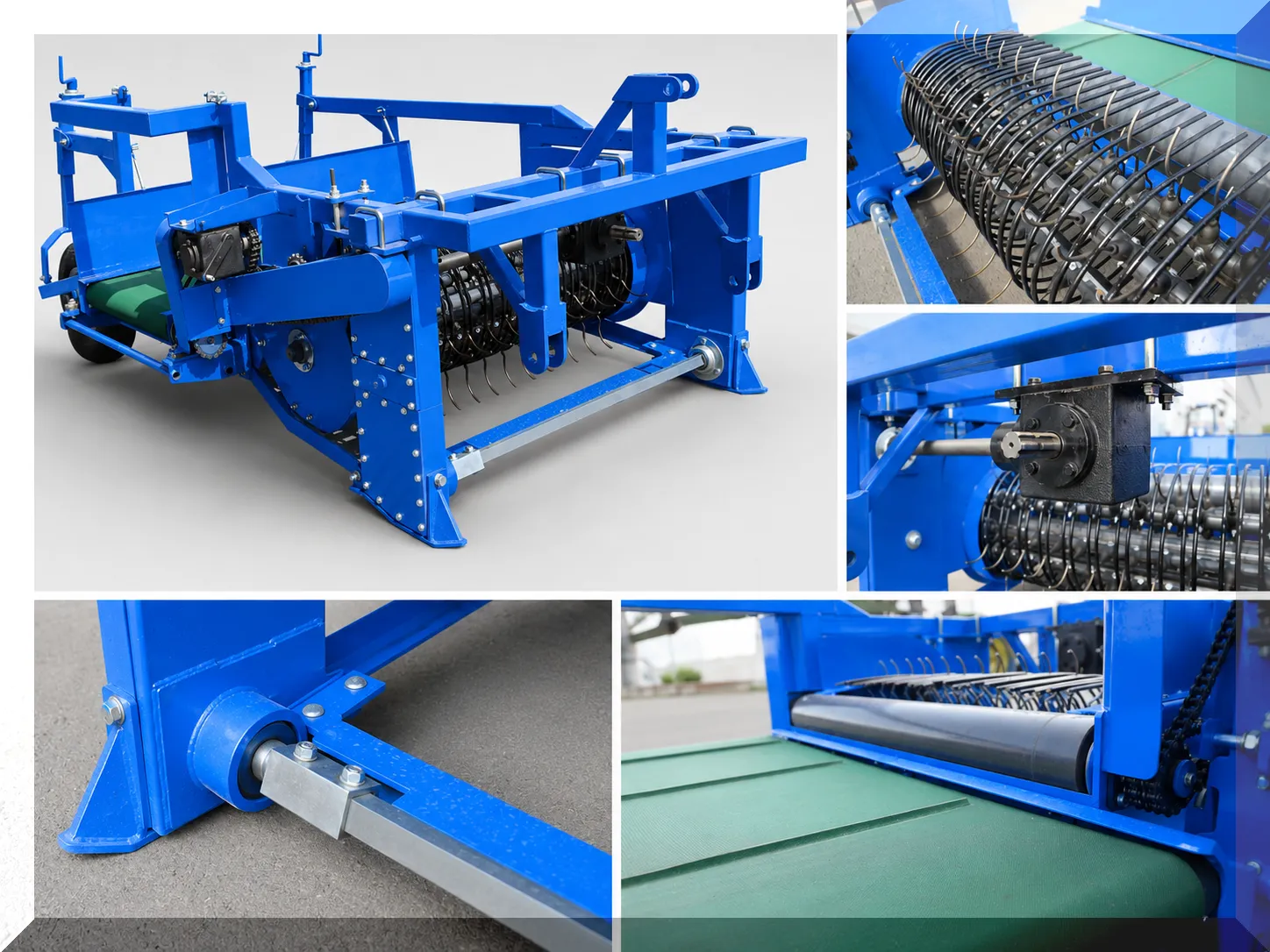
The share is the flat blade that slides horizontally through the soil beneath the bean root system, severing the taproot while the lifting fingers guide the vine upward onto the vine conveyor. Share running depth must be set so the blade runs approximately 1 to 1.5 inches below the base of the taproot — deep enough to ensure complete root severance on every plant, shallow enough to avoid the excessive soil disturbance and vine drag that causes pod impact losses.
Dig and measure root depth before pulling. Use a trowel to expose 5–10 random plant root systems in the intended field section. Measure from the soil surface to the base of the main taproot. Root base depth typically ranges from 2 to 4 inches depending on variety, planting date, and soil type.
Set share depth = root base + 1 to 1.5 inches. Adjust the puller’s depth-setting mechanism (usually a gauge wheel height adjustment or a top-link angle adjustment) to achieve this running depth. On the 4BYH series, the gauge wheel is the primary depth control — lower the gauge wheel to run deeper; raise it to run shallower.
Pull 50 feet at slow speed (1.5–2 mph). Stop and dig up 3 pulled plants. Confirm the root was severed cleanly 1–1.5 inches below the root base — not torn jaggedly (too shallow) and not snapped at the stem junction above the root (vine running against soil surface too long before lift).
Walk the pulled area and count dropped pods. Count all pods and loose beans on the soil surface in a 10-foot section of row. At correct depth and speed, fewer than 3 pods per 10-foot row section should be visible. Above 5 pods, the setup needs adjustment before proceeding.
Re-check depth every time soil conditions change. A field that transitions from clay to sandy loam, or from dry to wet conditions after morning irrigation, requires a depth reset. The same nominal gauge wheel setting runs deeper in soft wet soil than in firm dry soil.
Ground Speed: Matching Forward Velocity to Vine Lift Rate
Ground speed is the variable that most operators adjust by feel — but “feel” produces inconsistent results across different operators, different days, and different fields. The mechanical principle is straightforward: the vine conveyor fingers must be able to pick up and guide the vine upward faster than the forward travel is advancing the plant root position relative to the share. When ground speed is too high for the conveyor’s lift capacity, vines drag horizontally rather than lifting cleanly, pods contact the share blade, and shatter losses increase non-linearly with each additional 0.5 mph of excessive speed.
| Field condition | Recommended speed range | Why this range | Signs of excessive speed |
|---|---|---|---|
| Firm, dry soil; low vine density | 2.5–3.5 mph | Firm soil allows share to run at consistent depth; low vine density reduces conveyor loading | Pods accumulating on share; horizontal vine drag visible |
| Average conditions; medium vine density | 2.0–2.8 mph | Standard operating range for most commercial operations in the Great Lakes region | Bean scatter on share; vine bunching on conveyor |
| Soft or moist soil; high vine density | 1.5–2.2 mph | Soft soil lets share sink deeper under load at speed; high density loads conveyor heavily | Share pushing soil wave; vine pile-up at conveyor inlet |
| Dense vine canopy; tangled lodged plants | 1.0–1.8 mph | Tangled vines require maximum conveyor time to disentangle; rushing causes conveyor jam and vine breakage | Conveyor jams; vines wrapping around shaft; power spikes |
The on-field calibration test for speed: walk the pulled row immediately behind the machine and count loose bean drops in a 20-foot section. Two beans or fewer per 20 feet at operating speed = acceptable loss rate; above 5 beans per 20 feet = reduce speed or re-check share depth. This counting method is more reliable than any feel-based assessment because it measures the actual outcome directly.
Row Alignment: How Much Share Offset Creates Unacceptable Loss
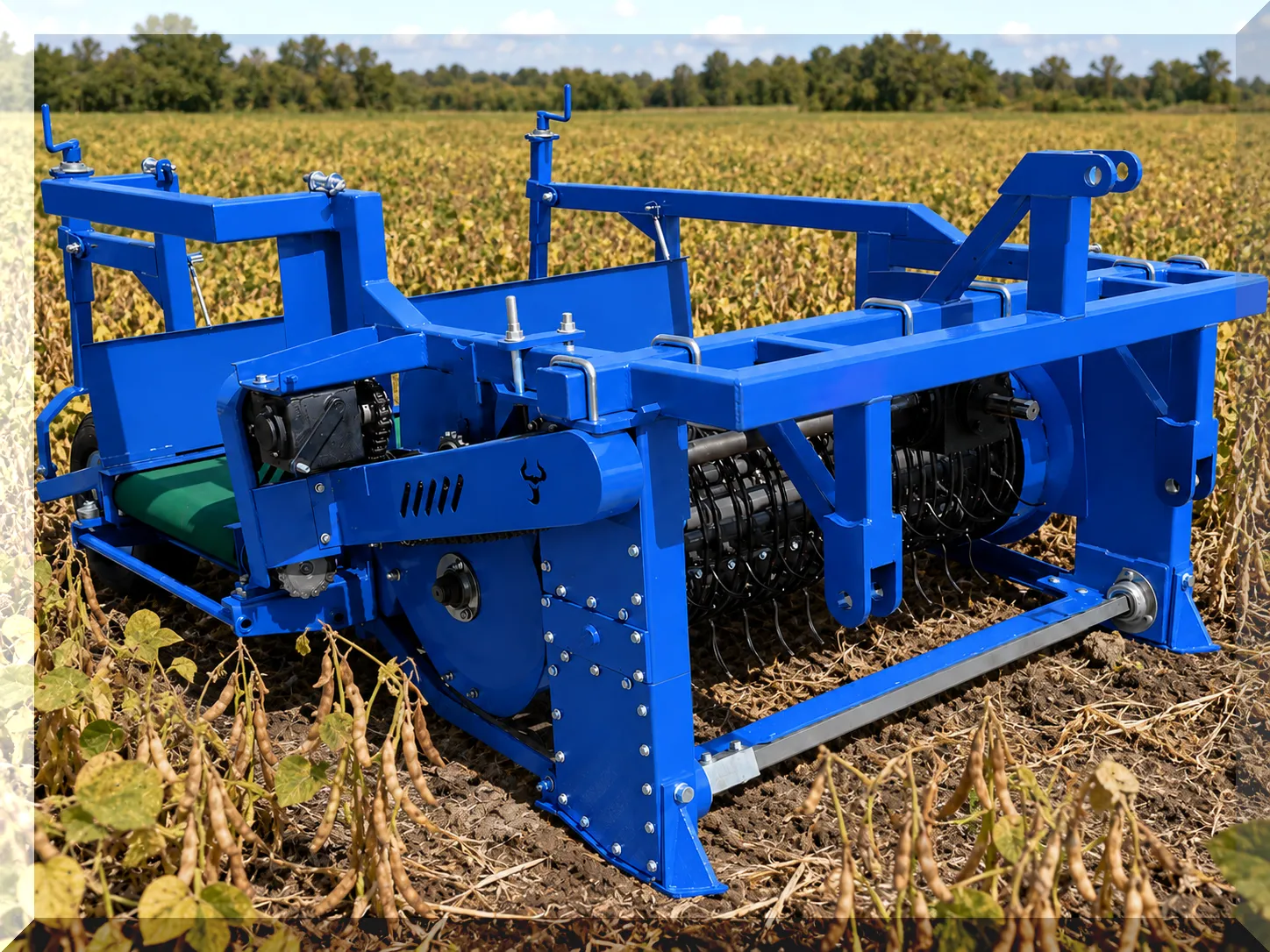
The share must pass directly beneath each plant row center. A share that is offset from the row center by more than 1 to 2 inches fails to undercut some plants cleanly — the share passes beside the root rather than beneath it, leaving the root in the ground while the vine is pulled by the conveyor. The result is a torn stem junction at the soil surface: the upper vine separates from the root, and all pods on that plant are either left in the field or lost to heavy mechanical impact during separation.
Row alignment is set at the tractor hitch. The puller’s shares must be centered on the planted rows — not centered on the tractor’s centerline if the tractor is not centered on the row midpoints. For multi-row pullers, the outer shares typically have the most alignment error risk on end-rows where the tractor hitch geometry creates lateral offset. Check share-to-row alignment for all rows on a multi-row puller at each new field, not just the field edges. The detailed row spacing matching process — confirming that the puller’s working width matches the planted row configuration — is covered in the kidney bean puller row spacing guide.
Drive the puller into the field entry point, stop, and walk to the first shares. Lay a string line along the planted row for 20 feet ahead of the share. The share tip should track within 1 inch of the string line. If the share center is offset more than 1.5 inches from row center, adjust the hitch lateral offset before proceeding. On tractors with front wheel assist, check that the front wheels are tracking the rows correctly — front wheel offset translates to rear hitch offset through the tractor frame geometry.
Vine Conveyor Belts: Tension, Wear, and the Pinch Point Problem
The vine conveyor on a kidney bean puller uses a pair of urethane or rubber belts running in opposition to grip and lift the vine stem from the ground surface upward onto the depositing windrow belt. These belts operate at the highest contact load of any component on the puller — they must grip fine, slippery vine stems firmly enough to pull a soil-laden root mass from the ground without snapping the stem. Belt wear and incorrect tension are the two most common causes of vine drop (vines slipping through the belt pair before being deposited properly).
At the mid-span of the two opposing conveyor belts (with the machine stopped and engine off), press the two belt faces toward each other at the vine entry point. Correct tension: you should be able to press them into full contact with moderate hand force (approximately 15–20 lbs), and they should spring back to their operating gap (typically 0.5–1.5 inches) when released. If they press together easily with less than 10 lbs of force, the belts are too slack and will slip on fine vine stems. If they resist contact with over 30 lbs, the tension is excessive and will pinch and break stems rather than gripping and lifting.
Inspect the belt gripping surface at season start and midseason. The vine-gripping surface should have a textured, slightly tacky urethane or rubber face. Signs of replacement need: a glazed, smooth gripping surface that no longer produces tactile friction when rubbed; cracks across the belt width perpendicular to the direction of travel; visible splice failure or delamination at the belt join; and sections where the belt width has narrowed from edge wear caused by contact with the belt guide rails. Replace both opposing belts as a pair — mismatched belt conditions cause uneven gripping that twists vines rather than lifting them straight.
Adapting Setup to Soil Conditions Within the Same Field
Michigan’s Thumb region and other major dry bean production areas routinely have fields that transition between soil types within the same planted stand — heavier clay at the field corners where water pooled during the season, sandier loam in the field centers, and transition zones with variable tilth. Running the same setup from field entry to field exit in a variable-soil field consistently produces above-target losses in the sections where the setup no longer fits the soil conditions. The discipline of adjusting when conditions change — even mid-row — is what separates experienced bean harvest operators from those who set up once and hope.
Annual Maintenance Schedule: Pre-Season, Mid-Season, Post-Season
Kidney bean pullers have a relatively short but intense season — typically 2 to 4 weeks of active use per year. The maintenance focus shifts accordingly: very thorough pre-season preparation, mid-season monitoring for wear accumulation, and proper post-season cleanup and storage to prevent off-season deterioration.
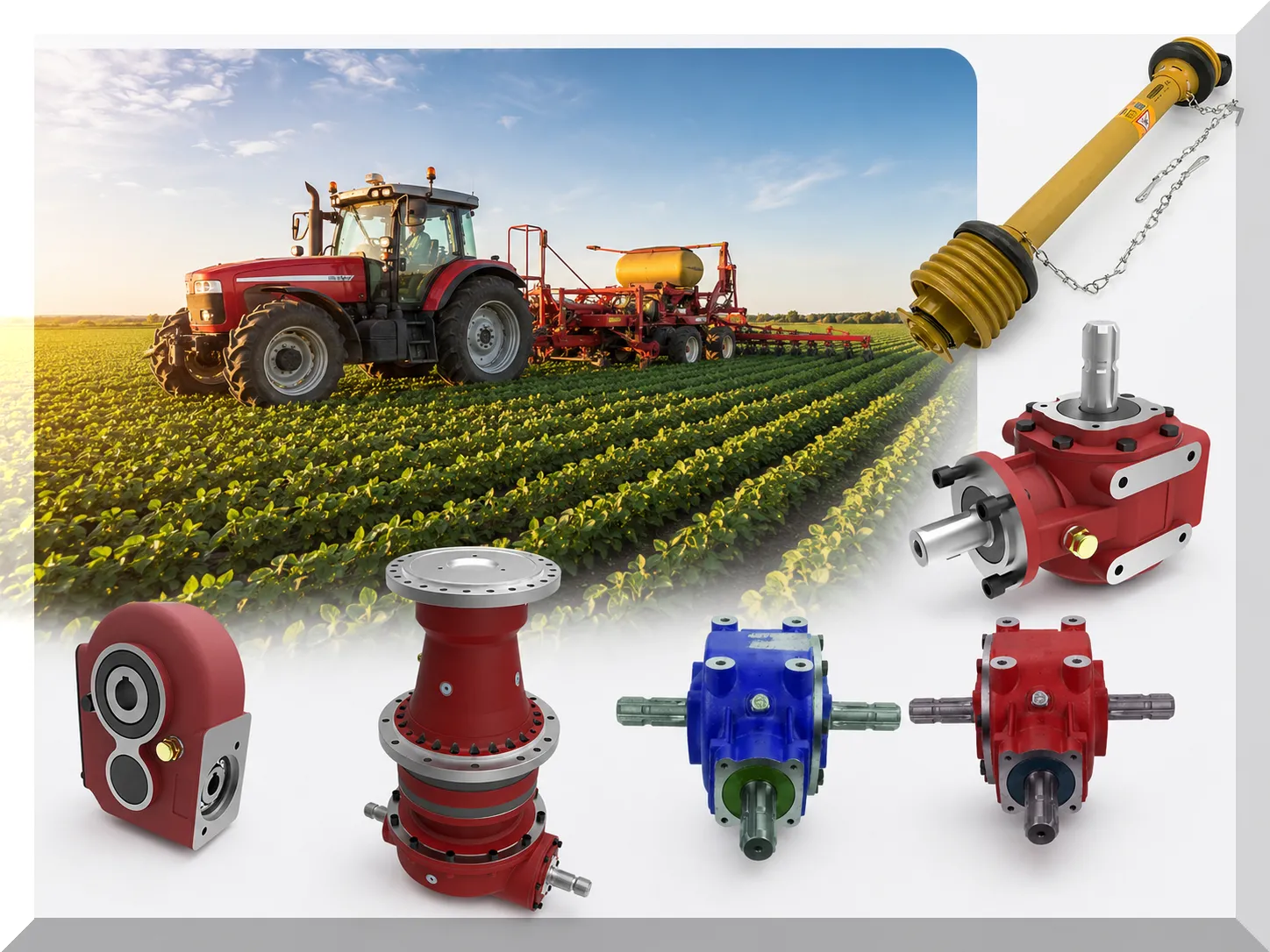
For the complete decision framework on pulling timing relative to the dry-down stage and the harvest window — the pre-equipment calibration decisions that determine whether pulling at all is appropriate on a given day — see the dry bean mechanical harvest guide. For the PTO driveline components on multi-row kidney bean pullers, the input shaft torque specification and PTO shaft rating for the puller’s drive should be confirmed against the agricultural gearbox and PTO driveline component specifications.
Daily Pre-Field Inspection: 12 Minutes Before Every Harvest Day
Run this sequence every morning before driving to the field. The 12 minutes invested here prevents 90% of mid-field stoppages that cost 20–45 minutes of harvest time each.
- All share bolts tight (hand-check)
- Share tips not visibly worn through
- No bent share from previous day’s rocks
- Belt tension — pinch test at entry point
- No vine residue wound around drive shaft
- Idler rollers spin freely by hand
- PTO shaft guards in place and undamaged
- Chain tension on drive chains
- No crop residue in chain guards
- Grease 2–3 highest-cycle zerks
- Check gauge wheel height setting for planned field
- Confirm share-to-row alignment at hitch
- Verify depositing belt speed setting matches planned field speed
Kidney Bean Puller FAQs
Get the Right Kidney Bean Puller Configured for Your Row Spacing and Acreage
Tell us your row spacing, typical stand density, tractor HP, and annual acreage. Our team confirms share spacing, conveyor belt type, and HP compatibility before your puller ships from Sacramento, CA.
Editor: Cxm


