건초 품질에 대한 대부분의 논의는 수확 시기, 베일러 선택, 저장 등 갈퀴질 전후 단계에 집중됩니다. 갈퀴질 자체는 그저 스쳐 지나가는 작업으로 여겨집니다. 갈퀴를 돌려 건초 더미를 만들고 다음 단계로 넘어가는 것이죠. 하지만 갈퀴로 만들어진 건초 더미의 품질이야말로 그 시점부터 베일의 균일성을 좌우하는 핵심 요소입니다. 좁고, 고르지 않거나, 잎이 흩어진 건초 더미는 품질이 좋지 않기 때문입니다. 건초 갈퀴질 건초를 모으는 과정에서 기술을 고정할 수는 없습니다. 갈퀴질하는 동안 내리는 결정, 즉 시기, 속도, 너비, 그리고 기술이 전체 수확량의 건초 품질을 좌우합니다.
베일러 작동 전, 윈드로우 품질이 베일 품질을 결정하는 이유
원형 베일러의 베일 챔버는 압축 기계로, 윈드로우의 상태에 따라 작동합니다. 넓고 깊으며 균일하게 분포된 윈드로우는 매번 통과할 때마다 챔버를 대칭적으로 채워 밀도가 높고 둥글며 일관된 모양과 예측 가능한 무게의 베일을 생산합니다. 반대로 좁고 고르지 않거나 군데군데 뭉쳐진 윈드로우는 정반대의 결과를 초래합니다. 한쪽으로 치우친 베일은 챔버가 고르게 채워지기 전에 적재 과정을 완료하고, 배출될 때는 타원형 단면과 밀도가 불균일한 부분, 그리고 불규칙한 무게를 갖게 됩니다.
불량한 사일리지 더미는 다음과 같은 실질적인 문제점을 야기합니다. 쌓을 때 굴러다니는 불규칙한 모양의 베일(취급 및 안전 위험), 산소를 가두는 밀도 공극으로 인한 국부적인 부패 발생, 정격 중량 미달로 인한 베일당 비용 및 운송 적재량 왜곡, 그리고 밀도가 높은 더미 부분에서 픽업 핀 과부하로 인한 픽업 마모 가속화. 이러한 모든 문제는 베일링 과정이 아닌 레이킹 과정에서 발생합니다. 베일러 운전자가 문제를 발견할 때쯤이면 이미 현장에서 두 단계나 뒤쳐진 상태입니다.
"완벽한 윈드로우"가 정량적으로 의미하는 바는 다음과 같습니다. 윈드로우는 베일러 픽업 헤더 폭의 70~90%를 전체 길이에 걸쳐 빈틈없이 고르게 채우고, 재료 밀도가 일정해야 합니다. "밀집"이라는 의미가 아니라 "균일"하다는 의미입니다. 베일의 모양과 무게의 일관성은 윈드로우의 균일성에서 직접적으로 비롯되므로, 갈퀴가 운반한 결과물에 대해 베일러를 탓할 수는 없습니다.
두 가지 갈퀴 유형, 두 가지 작물 줄 형성 방식: 각 기계가 작물을 처리하는 방식
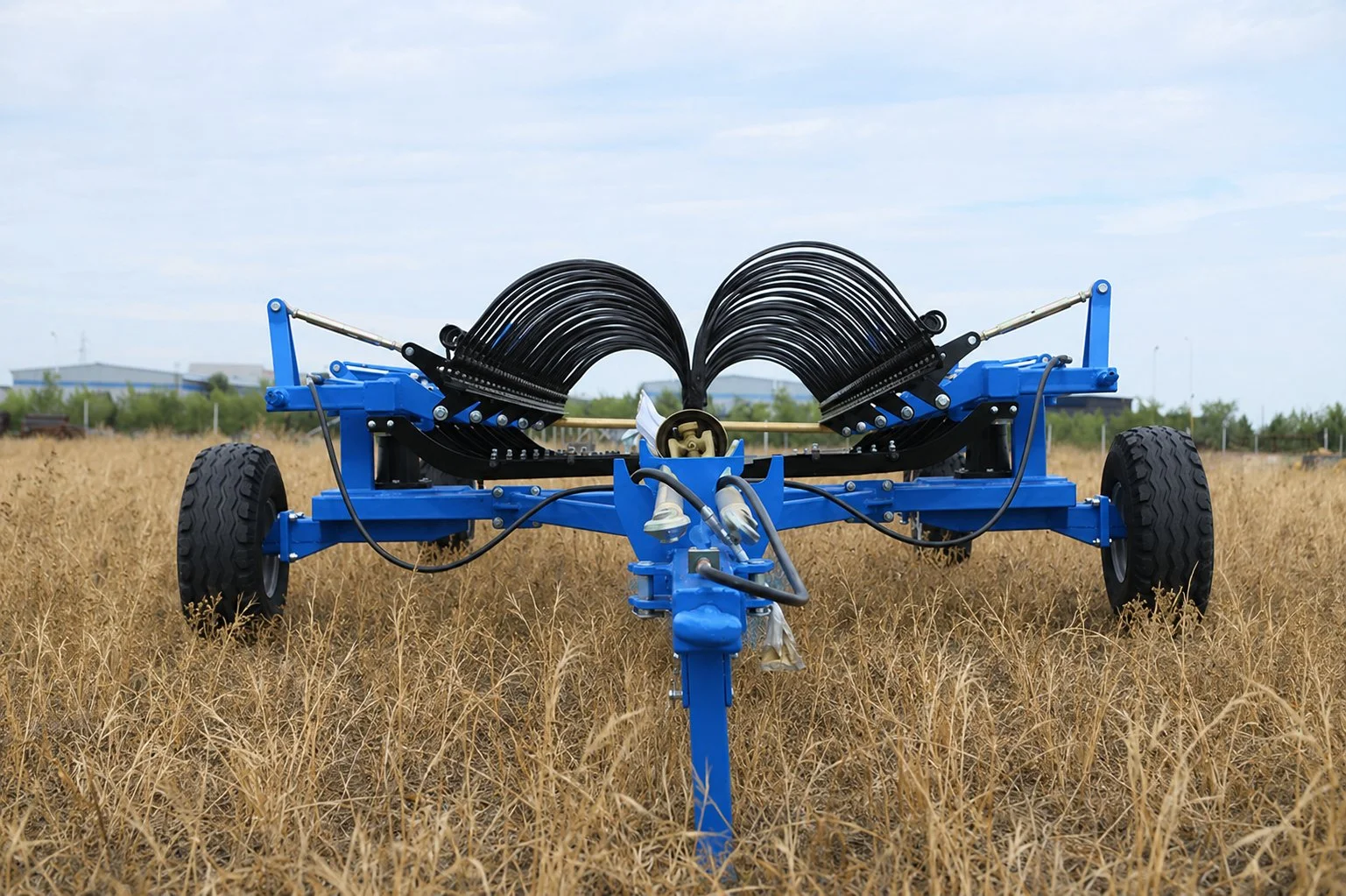
두 개의 지배적인 건초갈퀴 미국 건초 생산에 사용되는 원형 베일러용 갈퀴 유형에는 핑거 휠 V형 갈퀴와 견인식 수평(평행봉) 갈퀴가 있습니다. 이 두 유형은 근본적으로 다른 메커니즘을 통해 절단된 건초 더미를 처리하며, 서로 다른 단면 형상을 가진 건초 더미를 생성합니다. 이러한 물리적 차이는 건초 더미가 원형 베일러의 집게에 들어가는 방식에 직접적인 영향을 미칩니다.
윈드로우 단면 프로필 - 베일러 접근 시 정면도
핑거휠 V-레이크 윈드로우
✔ 뾰족한 삼각형 단면
✔ 중심부를 향해 분포하고 가장자리로 갈수록 가늘어지는 물질
✔ 베일러 픽업은 윈드로우 중앙에서 진입합니다 - 대칭 적재
✔ 봄철 갈퀴가 아래에서 위로 들어 올려지므로 콩과 식물의 잎이 부서지는 것을 최소화합니다.
△ 주어진 경사각에서 통과당 유효 폭이 더 좁아집니다.
견인식 수평 갈퀴 윈드로우
✔ 넓고 평평한 윗면을 가진 단면
✔ 재료가 윈드로우 전체 너비에 고르게 분포됨
✔ 넓은 프로필은 높은 집진 용량을 가진 상업용 베일러에 적합합니다.
✔ 높은 처리량 — 대규모 건초 생산 작업에 적합
△ 측면으로 쓸어내는 바람은 수분 함량이 40% 미만인 콩과 식물의 잎 파손을 증가시킬 수 있습니다.
이러한 프로파일 차이의 실제적인 의미는 다음과 같습니다. 핑거 휠 V형 갈퀴는 베일러 픽업 균일성과 잎에 민감한 작물에 최적화된 윈드로우를 생성합니다. 견인식 수평 갈퀴는 대량의 잔디 작물 재배 프로그램에서 처리량에 최적화된 윈드로우를 생성합니다. 건초갈퀴 설계에는 정당한 주요 적용 분야가 있지만, 문제는 최적의 작물 및 수분 조건 외에서 사용하는 것입니다.
갈퀴질 시기: 작물 및 용도별 적절한 수분 함량
건초 갈퀴질 수분 함량을 잘못 설정하는 것이 가장 흔한 기술적 오류이며, 이는 즉시 측정 가능한 손실을 초래합니다. 핵심은 다음과 같습니다. 건초 갈퀴질 원칙: 작물의 바깥쪽 줄기가 잎이 과도하게 부러지지 않고 다룰 수 있을 정도로 충분히 건조되었지만, 줄기 안쪽의 수분 함량은 줄기가 부러지기 쉽지 않고 유연할 정도로 충분히 높을 때 갈퀴질을 합니다. 정확한 목표 수분 함량은 작물과 최종 용도에 따라 다릅니다.
잔디 깎은 후 몇 시간 후 - 밭 건조 시간표 및 최적의 갈퀴질 시간
0시간
4시간
8시간
12시간
18시간
24시간
36시간
48시간 이상
이 타임라인은 따뜻하고 맑은 날씨(기온 25°C, 풍속 10km/h, 햇볕)를 기준으로 합니다. 춥거나 흐린 날씨에는 건조 시간이 30~60%만큼 연장됩니다. 비가 내리면 타임라인 계산이 초기화됩니다.
대부분의 농업 종사자들이 간과하는 알팔파 재배 시기 규칙: 알팔파 잎의 수분 함량이 35~40% 미만일 때는 갈퀴질을 해서는 안 됩니다. 이 수분 함량에서는 알팔파 잎의 내부 팽압이 충분히 감소하여 잎자루가 유연하지 않고 부서지기 쉬워집니다. 이 단계에서 갈퀴질을 하면 잎이 마디에서 떨어져 나가게 되는데, 이것이 바로 1등급 알팔파가 2등급으로 떨어지는 원인입니다. 최적의 알팔파 상태는 다음과 같습니다. 건초 갈퀴질 건초를 건조하기에 적절한 시기는 줄기 표면은 마르지만 잎의 유연성은 유지되는 시기로, 일반적인 여름철 조건에서 풀을 베고 18~28시간이 지난 후이며, 이때 수분 함량은 40~551Tp/T 범위입니다. 18시간 이전에는 줄기 내부가 여전히 너무 습하여 건초로 사용할 수 없으며, 30~36시간이 지나면 잎의 수분 함량이 너무 낮아 안전하게 갈퀴질할 수 없습니다.
갈퀴질 속도, 작물 수분 함량 및 잎 손실 위험: 조건에 맞는 속도 조절
지상 속도 (중) 건초 갈퀴질 트랙터 속도가 빠를수록 디스크 회전 속도가 빨라지고, 디스크 끝 속도가 빨라져 디스크 접촉당 충격력이 커지고, 줄기에서 잎이 더 많이 분리됩니다. 하지만 이 관계는 선형적이지 않습니다. 특정 속도 이상에서는... 건초 갈퀴질 잎이 부서지는 임계값에서, 시속 1km가 추가될 때마다 잎 손실량이 기하급수적으로 증가하는데, 이는 갈퀴의 충격력이 가장 약한 접촉점뿐만 아니라 여러 접촉점에서 동시에 잎자루의 파괴 저항을 초과하기 때문입니다.
정격 작동 속도 범위 — 작물 × 수분 함량 × 위험 수준
알팔파(수분 함량 40% 미만) - 잎이 갈라질 위험 높음
5~7km/h ✔
7~8km/h △
시속 8km 이상 ✗
알팔파(수분 함량 40–55%) — 잎의 유연성이 중간 정도
5~9km/h ✔
9~10km/h △
10세 이상 ✗
풀 건초(갈퀴질 범위 내의 모든 수분) - 잎이 부서질 위험이 낮음
짚/곡물 잔여물(건조, 14% 미만) - 구조적 줄기
8~14km/h ✔ — 처리량 극대화
14세 이상△
속도 범위는 핑거 휠 레이크에 적용됩니다. 콩과 작물에 사용하는 수평 레이크는 측면 충격력이 더 크기 때문에 각 범위의 하한선에서 작동해야 합니다. 경사면이나 바위가 많은 지형에서는 속도를 1~2km/h 줄이십시오.
경사면 정리 및 바위 지형: 두 가지 기술 조정
경사: 경사면을 가로질러(등고선 방향으로) 갈퀴질을 해야 하며, 절대로 수직으로 또는 수직으로 갈퀴질해서는 안 됩니다. 경사면에서 아래쪽으로 갈퀴질하면 갈퀴로 모은 짚단이 형성되면서 굴러가고 흩어지면서 평지 밭의 짚단 모양과 어긋나게 됩니다. 반대로 위쪽으로 갈퀴질하면 짚단이 고르지 않게 쌓입니다. 갈퀴가 짚단을 위쪽으로 밀어 올리는 데 어려움을 겪기 때문에 갈퀴질할 때마다 짚단이 위쪽으로 갈수록 두꺼워집니다. 등고선 방향으로 갈퀴질하면 경사도와 관계없이 짚단이 갈퀴의 배출 지점을 중심으로 유지됩니다.
바위투성이 땅: 표면에 돌이 많은 밭에서는 갈퀴의 작업 높이를 정상 설정보다 2~4cm 높이십시오. 이렇게 하면 갈퀴 날이 지면에 닿는 마찰이 줄어들고 돌 표면에 직접 닿지 않게 되어 갈퀴 날 파손 및 디스크 허브 베어링에 갑작스러운 충격 하중이 발생하는 것을 방지할 수 있습니다. 돌이 많은 밭에서는 정상 작동 속도보다 1~2km/h 정도 속도를 줄이면 갈퀴 날이 부분적으로 묻힌 돌에 닿더라도 충격력을 더욱 줄일 수 있습니다.
베일러의 픽업 헤더에 맞는 갈퀴 작업 폭을 선택하세요
건초 갈퀴 작업 폭과 베일러 픽업 폭은 서로 바꿔 쓸 수 있는 수치가 아닙니다. 베일러는 갈퀴의 전체 작업 폭을 픽업하는 것이 아니라, 갈퀴가 형성하는 윈드로우(사포 더미)를 픽업하는데, 이 윈드로우는 갈퀴의 작업 폭보다 훨씬 좁습니다. 건초 갈퀴질 최적의 베일 균일성을 위해 윈드로우는 베일러의 픽업 헤더 너비의 70~90%를 채우도록 크기를 조정해야 합니다.
갈퀴 모델 → 윈드로우 폭 → 베일러 픽업 매칭
| 레이크 모델 |
작업 폭 |
윈드로우 폭 생성됨 |
매칭된 베일러 클래스 |
| 9LZ-6.0 (12륜) |
6미터 |
0.8~1.2m |
9YG-1.0C, 9YG-1.25 — 직접 매칭 |
| 9LZY-9.0 (15인치 휠) |
9m |
0.9~1.3m |
9YG-1.25, 9YG-1.25A — 직접 일치 |
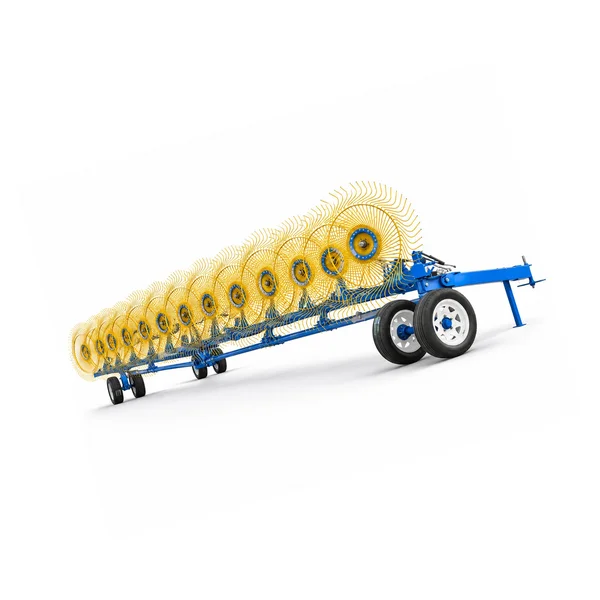
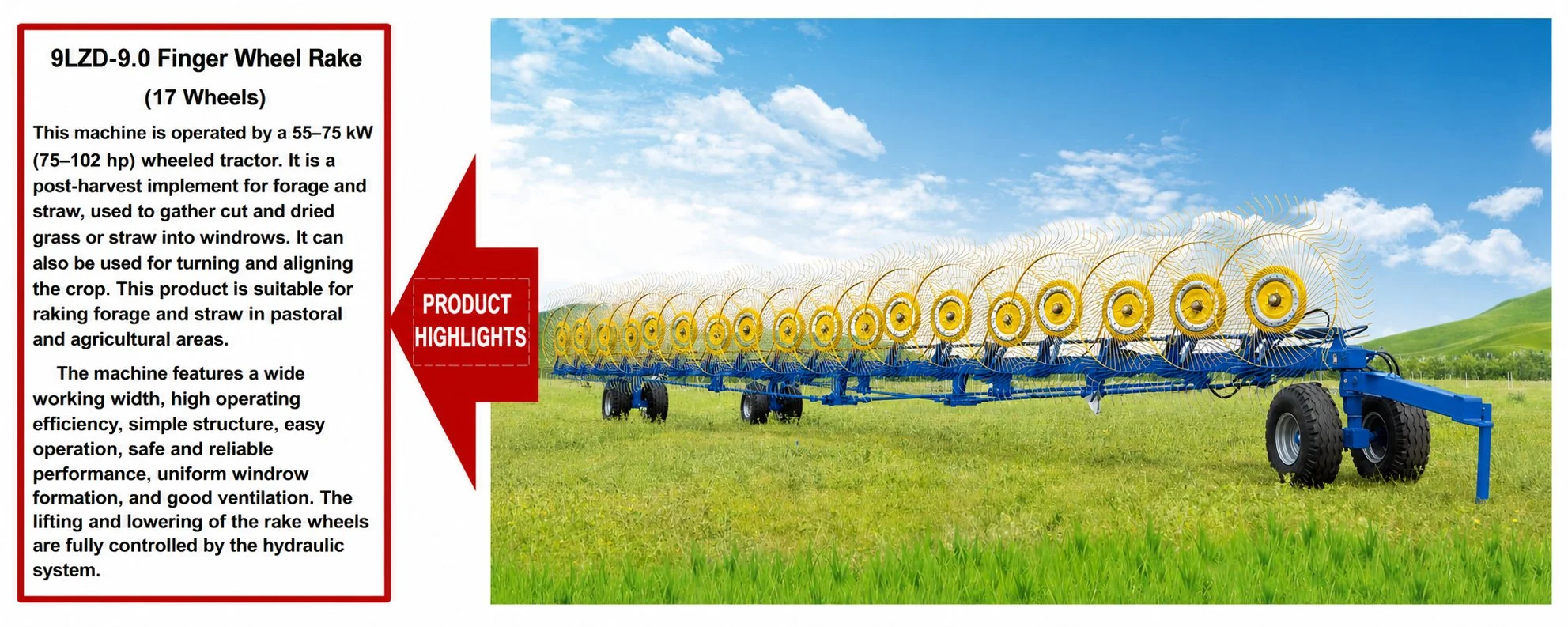
| 9LZD-9.0 (17인치 휠) |
9m |
0.9~1.3m |
9YG-1.25A, 9YG-2.24D — 2.24D 병합 |
| 9LH-12 (수평) |
12미터 |
1.0~1.6m |
9YG-2.24D 상업용 등급 - 직접 광범위 매칭 |
윈드로우 폭은 갈퀴 작업 높이를 변경하여 조절할 수 있습니다. 표시된 값은 표준 작업 높이를 기준으로 합니다. 전체 내용은 전체 내용을 참조하십시오. 건초 갈퀴 라인업 자세한 사양은 다음을 참조하십시오.
~을 위해 원형 베일러 모델 9YG-2.24D 상업용 등급에서 9LH-12 수평 레이크의 1.0~1.6m 윈드로우 폭은 상업용 베일러의 넓은 픽업 헤더를 효율적으로 채울 수 있을 만큼 충분히 넓어 별도의 병합 작업 없이도 최적의 조합입니다. 9YG-2.24D와 9LZD-9.0을 함께 사용할 경우, 병합 작업(아래 설명 참조)을 통해 인접한 두 윈드로우를 필요한 폭으로 합칩니다. 원형 베일러 자체의 구동 기어박스는 정밀 농업용 기어박스 픽업 및 챔버에 적재된 전체 양을 처리하며, 갈퀴가 일관되고 정확한 크기의 투입물을 제공할 때 정격 토크와 속도로 이 병합된 윈드로우를 처리합니다.
대용량 베일러를 위한 윈드로우 병합: 이중 윈드로우 기법
한 사람이 건초갈퀴 작업 과정에서 베일러의 정격 픽업 폭보다 좁은 윈드로우가 생성되거나, 개별 윈드로우가 베일러의 효율적인 작동에 필요한 무게보다 가벼울 경우, 인접한 윈드로우를 하나의 결합된 행으로 병합하여 상업용 베일러의 최적 흡입 범위에 맞는 더 무겁고 넓은 윈드로우를 생성합니다. 건초 갈퀴질 대규모 작업에서 9미터 V형 갈퀴와 상업용 베일러를 결합할 때 병합은 일상적인 단계입니다.
이중 창호 병합 - 위에서 내려다본 현장 모습
1단계 — 초기 정리 (두 개의 별도 윈드로우)
윈드로 A
← 레이크 1차 패스 →
→ 진행 방향
윈드로우 B
← 2차 레이크 패스, 레이크 폭만큼 오프셋 →
2단계 - 합류 단계 (갈퀴가 두 개의 윈드로우 사이에 중앙에 위치)
A + B → 병합된 윈드로우
← 두 줄 모두 중앙으로 쓸려 들어갔습니다 →
→ 베일러 준비 너비
Merging technique rules: The merging rake pass should be centered between the two windrows, running in the same direction as the original raking passes. The rake’s working height should be raised slightly — the material being re-handled is already partially sorted, and aggressive tine contact during the merge increases leaf loss without adding value. On alfalfa below 40% moisture, avoid the merging pass entirely — at this moisture, every additional tine contact adds to cumulative leaf shatter loss. If the windrow must be widened for the baler on dry alfalfa, raise the windrow width adjustment on the original rake pass instead of adding a merging pass.
Maximum merge limit: Do not merge more than two windrows for standard round balers. A triple-merged windrow (3 passes combined) consistently produces pickup bridging in the baler header — the material piles to a height that prevents the pickup tines from engaging the bottom layer, leaving unraked material on the field and reducing effective pickup efficiency below 90%.
Our Hay Rake Lineup: From 6-Meter Mid-Scale to 12-Meter Commercial
모두 건초갈퀴 models in our lineup are available from the California warehouse with confirmed specifications and same-day parts dispatch. A brief overview of the two primary models most suited to the windrow applications covered in this guide:
Towed Horizontal Rake
9LH-12
12 m · Horizontal Parallel Bar
▸ Broad flat windrow, 1.0–1.6 m width
▸ Maximum throughput for large grass programs
▸ Best match for 9YG-2.24D commercial class
▸ Tractor: ≥55 kW (74 HP) recommended
▸ Use at or above 40% moisture on legumes
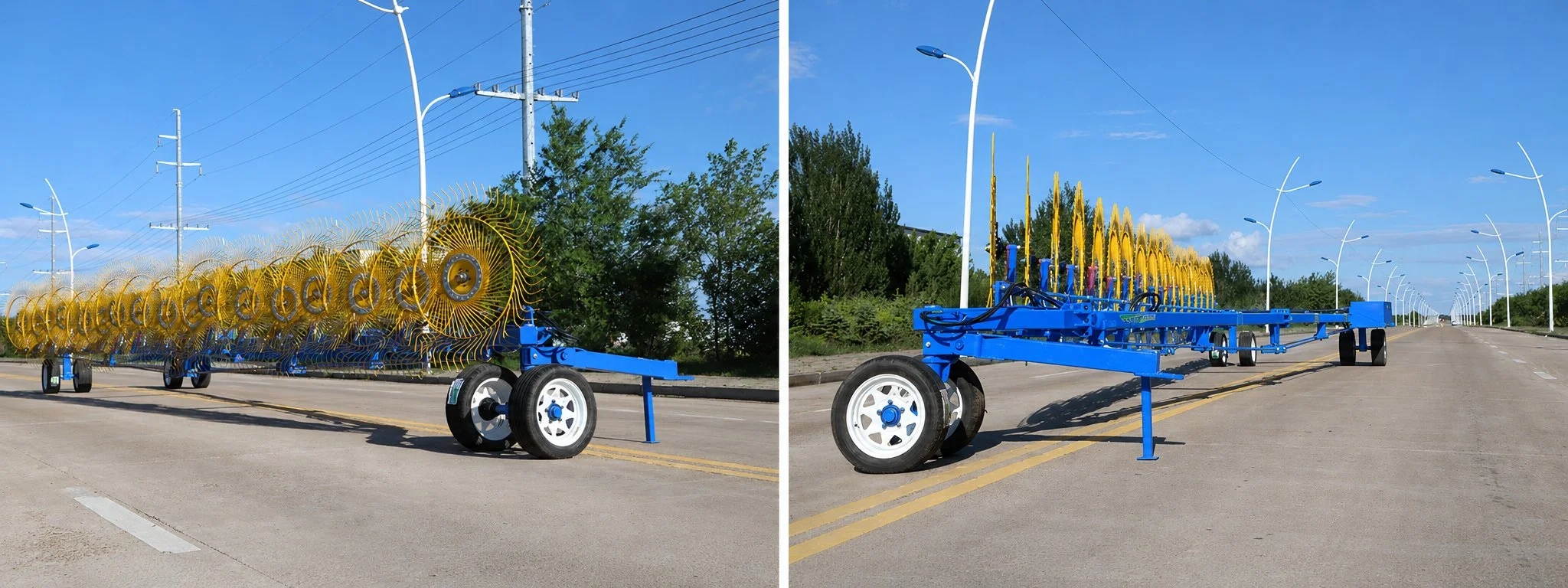
Finger Wheel V-Rake
9LZD-9.0
9 m · 17-Disc Ground-Driven
▸ Centered peaked windrow, 0.9–1.3 m width
▸ Lowest leaf shatter for alfalfa and legumes
▸ 지면 구동식 - PTO 불필요
▸ Best match for 9YG-1.25A and 9YG-2.24D (with merge)
▸ Tractor: ≥55 kW (75 HP)
Additional models — the 9LZY-9.0 (15-wheel, 9 m), 9LZ-6.0 (12-wheel, 6 m), and the full 9LH-12 horizontal rake — are detailed on the hay rake lineup page. If you are matching a rake to a specific baler model and annual acreage program, contact our U.S. team — we run this matching exercise regularly and can confirm which rake model produces the correct windrow width at your baler’s pickup specification.
Frequently Asked Questions: Hay Raking Techniques
Is it better to rake alfalfa in the morning or afternoon?+
For dry hay alfalfa, morning 건초 갈퀴질 is almost always better than afternoon. Morning dew re-wets the outer leaf surface overnight, raising leaf moisture back to 30 to 40% — right in the optimal raking window. The stems are still drying from the inside out, so the stem tip moisture is higher than it will be by afternoon. By 2:00 PM on a warm, clear day, alfalfa leaf moisture may drop below 25%, which is the primary leaf-shatter threshold. The practical recommendation: rake alfalfa between 9:00 AM and noon on clear days — after dew has evaporated (typically 8:30 to 9:30 AM depending on temperature) but before afternoon drying drives leaf moisture below 30%.
Can I rake hay that got rained on during the drying period?+
Yes, but wait until the surface re-dries before 건초 갈퀴질. Raking soaked hay causes two problems: (1) the flat, mat-like wet hay wraps around rake tines and disc hubs rather than lifting and flowing into a windrow; (2) wet raking causes significant leaf loss on legumes because the hydraulic impact of water between leaf and stem reduces the fracture resistance. The one benefit of re-raking after rain: if the original windrow was flat and rain-wetted it uniformly, re-raking turns the material and exposes the previously shaded bottom to sunlight — this can actually improve drying speed after a light rain event. Wait for the outer surface to be visibly dry before re-raking, typically 3 to 5 hours after rain stops on a warm, breezy day.
Why do my windrows vary in width across the same field pass?+
Windrow width variation in the same pass typically has two causes: (1) variable mower swath density — sections of the field that were cut at higher crop density produce more material per unit length, which the rake consolidates into a narrower, higher windrow. Sections with thinner crop spread the material further laterally, producing a wider, shallower windrow. (2) Inconsistent rake working height — if the rake is bouncing slightly on uneven ground or is not in full float position, the disc-to-ground contact angle changes across ground irregularities, which changes the lateral sweep force and the final windrow width. Solution: check that the hydraulic system is in the float detent position (not a fixed pressure position) during raking, and that the drawbar height is set consistently.
What causes a windrow to look “fluffy” and the baler to produce loose bales from it?+
A fluffy, airy windrow that the baler struggles to compress is caused by raking at too-dry moisture on fine-stemmed crops. When grass or legume hay is raked below 15 to 18% moisture, the individual stems have lost most of their flexibility and do not pack flat under tine contact — they spring back after each tine pass, producing a windrow that is bulky in volume but low in actual material density. The baler pickup pulls this material into the chamber, but the spring-back behavior of the over-dried stems fills the chamber volume before achieving adequate compression. Solution: on fields that have dried faster than expected, bale the material as-is (accepting lower density) and adjust tension upward for subsequent cuttings, or allow a light morning dew to re-introduce a small amount of surface moisture before raking.
Should I rake with the same tractor I use for baling, or use a dedicated smaller tractor?+
Raking can run on any tractor in the range from 35 HP (for the 9LZ-6.0 small V-rake) up to 80+ HP (for the 9LH-12 horizontal rake). If you have a single tractor, you can use it for both raking and baling sequentially — however, the time cost of swapping implements between stages on the same day means that on operations above 100 acres per day, a dedicated raking tractor improves daily throughput significantly. Many mid-scale operations assign the rake to a smaller, lower-HP tractor (35 to 55 HP) and reserve the larger HP for the baler — which has a higher sustained PTO load requirement. The ground-driven design of all our finger wheel V-rakes means there is no PTO output requirement on the raking tractor beyond the modest power needed for towing and hydraulic lift.
How do I prevent soil contamination in the windrow and finished bales?+
Soil contamination from 건초 갈퀴질 raises ash content in bales in feed analysis and reduces the effective digestible fraction of the hay. The primary sources of soil pickup during raking are: (1) tines running too close to the ground surface on recently disturbed or soft soil — adjust working height upward by 1 to 2 cm; (2) raking during or immediately after a rainfall event when the soil surface is soft and susceptible to tine penetration; (3) operating at excessively high ground speed on wet or soft fields, which drives tine contact deeper than the normal float setting allows. For high-value alfalfa destined for dairy feed, where ash content is routinely tested, keep working height at the highest setting that still achieves complete swath pickup.
Rake + Baler System Matching
Tell Us Your Crop, Baler Model, and Field Scale — We’ll Match the Hay Rake
Our California-based team matches rake working width, disc type, and windrow width to your specific baler’s pickup header specification and your crop program. All models ship from the U.S. warehouse with same-day parts dispatch and tractor compatibility confirmed before delivery.
✔ Finger Wheel V-Rakes
6 m, 9 m — no PTO required
✔ Horizontal Towed Rake
12 m — commercial throughput
✔ Pickup Width Matching
Windrow width confirmed vs baler pickup
Find the Right Rake for My Operation
편집자: Cxm