
A mower conditioner combines cutting and stem conditioning in a single pass. The conditioning action — whether roller crimping or flail maceration — breaks or cracks the waxy cuticle layer on the crop stem, allowing moisture to escape more rapidly during field drying. On alfalfa, the conditioning step reduces the curing time from a typical 72 hours for a plain-mowed swath to 36 to 48 hours under the same weather conditions. That time savings is the central economic case for mower conditioner selection over a plain disc or sickle mower for any operation where drying speed is a constraint.
What Conditioning Does That a Plain Mower Cannot
When a plant stem is cut, the primary moisture loss pathway is through the open cut end — but this accounts for only a fraction of the moisture that must be removed before the crop can be baled safely. The rest must evaporate through the stem surface, which is protected by a cuticle layer that slows evaporation significantly. This is why a freshly cut windrow can look dry on the outside while still containing 30 to 40% moisture in the stem interior.
Conditioning disrupts this cuticle mechanically. Both roller and flail systems work by applying physical force to the cut stem after mowing, creating cracks, bruises, or abraded zones in the waxy surface through which moisture can escape much faster. The result is a crop that dries from the inside out rather than waiting for surface-to-environment diffusion alone.
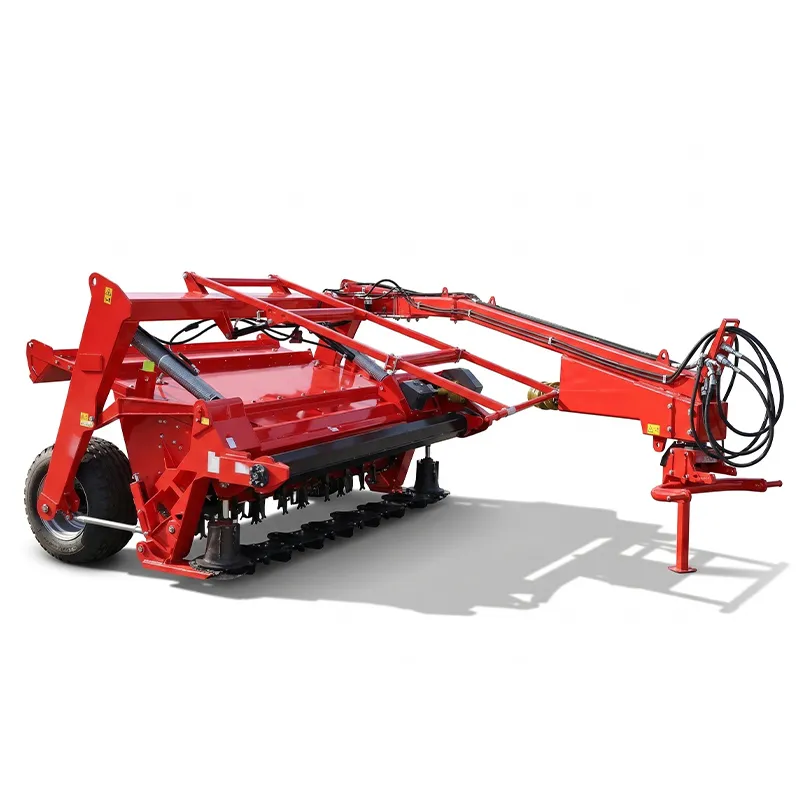
The practical value of this drying acceleration is most visible in multi-cut alfalfa programs. In a 4-cut-per-season system, each day saved in the curing window adds up across an entire season. An operation that can consistently bale second and third cut alfalfa in 30 to 36 hours after mowing has a meaningful weather risk advantage over neighboring operations using plain mowers that require 60+ hours before the crop is safe to bale.
Roller Conditioning: How It Works and What It Does to the Crop
Roller conditioning systems use two counter-rotating rolls — typically made of rubber, rubber-covered steel, or intermeshing steel — positioned immediately behind the mower cutting unit. As cut crop passes through the nip point between the two rollers, the rolls apply compressive force to the stems, crimping them at intervals along the stem length. The crimping creates a series of stress fractures in the cuticle layer that dramatically accelerate moisture loss.
Rubber rollers are the most common design in modern mower conditioners. They apply a gentler conditioning action than steel rolls and produce less leaf damage on fine-stemmed crops like alfalfa and clover. The roller gap is adjustable — typically 0 to 8 mm — with tighter settings applying more aggressive conditioning and wider settings for more delicate crops or already-dry conditions where over-conditioning could cause leaf shatter before the crop reaches the windrow.
The key advantage of roller conditioning for U.S. hay producers is that it conditions the stem without shredding or fragmenting the plant. The cut crop exits the roller pair with its physical structure largely intact — long stems, attached leaves, and coherent swath formation. This is especially important for alfalfa, where leaf integrity determines market grade and market price.
Flail Conditioning: How It Works and Where It Has the Advantage
Flail conditioning systems use a high-speed rotor carrying free-swinging flail elements — rubber paddles, Y-shaped flails, or chain-type beaters — positioned behind the mower cutting unit. The rotor operates at 1,000 to 1,500 RPM, and the flail elements strike, abrade, and lacerate the stem surface as the crop passes through. This is a more aggressive conditioning action than roller crimping.
The result is a conditioning process that produces superior moisture loss rates on thick-stemmed crops — corn silage interseeded forage, sorghum-sudan hybrids, and dense grass species with waxy cuticles — where roller conditioning alone may not penetrate the cuticle effectively. Flail conditioning also produces a more uniform conditioning effect on lodged or tangled crop where roller pairs may not achieve consistent nip contact with every stem.
The trade-off is that flail elements are more aggressive on leaf tissue. On legumes with delicate leaves — alfalfa, red clover, birdsfoot trefoil — the flail’s high-speed impact can cause leaf shatter that reduces yield and quality compared to roller conditioning at the same field speed. For pure grass hay programs and mixed grass-legume fields where leaf shatter is a lesser concern, flail conditioning is a viable and sometimes superior choice.
Conditioning Intensity vs Crop Type: Choosing the Right System
The following matrix positions roller and flail conditioning systems on a conditioning intensity axis and evaluates their performance across the four most common U.S. hay and forage crop types:
| Crop Type | Roller Conditioning (gentle–moderate) |
Flail Conditioning (moderate–aggressive) |
Notes |
|---|---|---|---|
| Alfalfa (legume) | ✔ | ⚠ | Roller strongly preferred. Delicate leaf structure makes flail conditioning a leaf-shatter risk — a 10% leaf loss on premium alfalfa is a direct market value reduction. Tight roller gap (1–3 mm) for fast drying without shatter. |
| Orchardgrass / Timothy (cool-season grass) | ✔ | ✔ | Both systems work well on fine-stemmed cool-season grasses. Roller is gentler on horse hay quality targets; flail provides slightly faster drying at the cost of a somewhat more fragmented swath appearance. |
| Bermudagrass (warm-season, waxy cuticle) | ⚠ | ✔ | Bermudagrass has a thick, waxy cuticle that roller conditioning at standard gap settings may not penetrate fully. Flail conditioning’s higher-energy surface abrasion achieves better cuticle disruption, especially on Coastal and Tifton varieties. |
| Cereal rye / cover crops (high-moisture, dense stems) | ⚠ | ✔ | Flag-leaf-stage cereal rye at 75–80% moisture has thick, rigid stems that benefit from flail aggressiveness. Roller conditioning may be insufficient for rapid drying in the narrow 7–14-day window available for cover crop termination harvest. |
✔ = preferred conditioning system for this crop | ⚠ = use with caution or requires setting adjustment for adequate performance
Working Width Selection: How to Calculate the Width Your Operation Needs
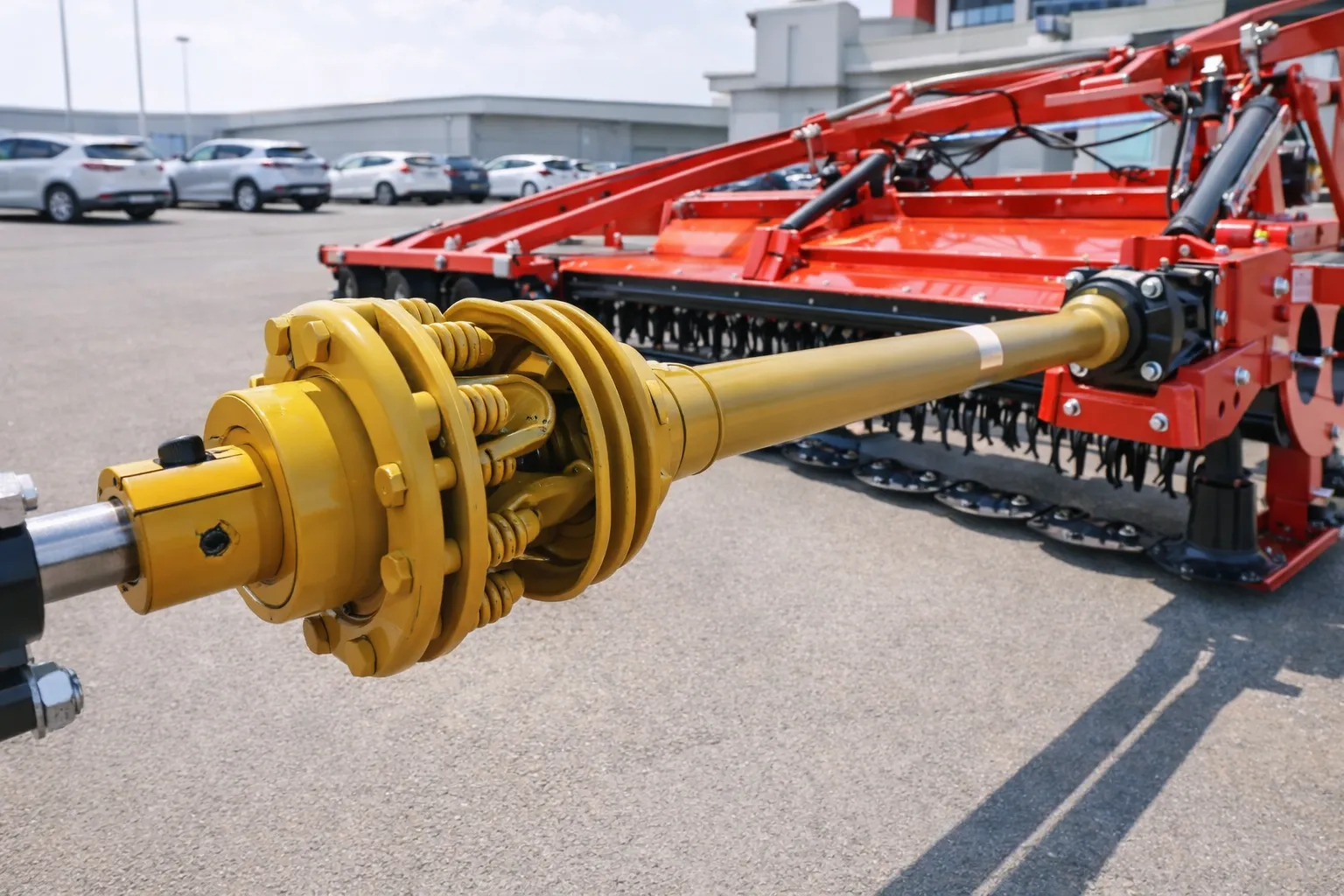
Working width selection for a mower conditioner depends on three factors working together: your total acreage, your weather window for each cutting, and the capacity of the baler and rake that follow in your system.
The starting point is your cutting window. If you are managing 300 acres of alfalfa and your typical reliable weather window between rain events is 3 days, you need a mowing system that can complete the full 300 acres in that window. At 12 km/h ground speed with a 3.2 m cutting width, a mower conditioner delivers approximately 2.7 to 3.0 ha/h depending on field shape. Over an 8-hour day, that is 21 to 24 ha — meaning a single machine can cover 65 to 72 ha in 3 days. For 300 acres (approximately 121 ha), one 3.2 m machine covers the full acreage in 5 days, which may exceed the reliable weather window.
This calculation is why operations above 150 to 200 acres often either run two narrower machines or one wider machine. Understanding the width-to-acreage relationship before purchasing prevents the common mistake of buying a machine that cannot pace the operation’s timing requirements.
The downstream compatibility requirement is equally important: the mower conditioner’s swath width should produce a windrow that, after raking, matches the baler pickup width within 15 to 20%. A 3.2 m mowing swath typically rakes to a 1.0 to 1.4 m windrow suitable for direct pickup by standard baler pickups. Our mowing and conditioning quality guide covers the full mow-to-bale workflow with more detail on swath management at each stage.
The 9GQY-3.2 Mower Conditioner: Specifications and Tractor Compatibility
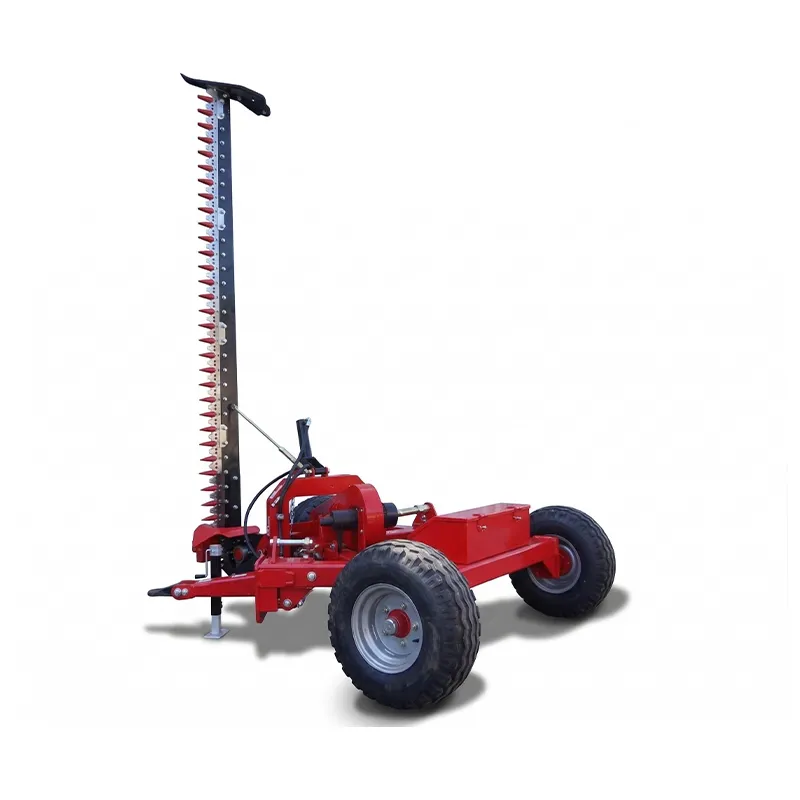
The 9GQY-3.2 mower conditioner delivers a 3.2 m working width with an integrated roller conditioning system, making it a direct match for the width calculation example above. At a 3.2 m cut width and recommended operating speed of 10 to 14 km/h, it produces approximately 2.8 to 3.2 ha/h effective field capacity under normal field conditions.
The roller conditioning system on the 9GQY-3.2 uses interlocking rubber-coated rolls with an adjustable gap setting, allowing the operator to tune conditioning intensity from light crimping for fragile legume leaf to aggressive crimping for thick-stemmed grass varieties. This adjustability is the critical feature for U.S. operations that run both alfalfa and cool-season grass on the same equipment across a season.
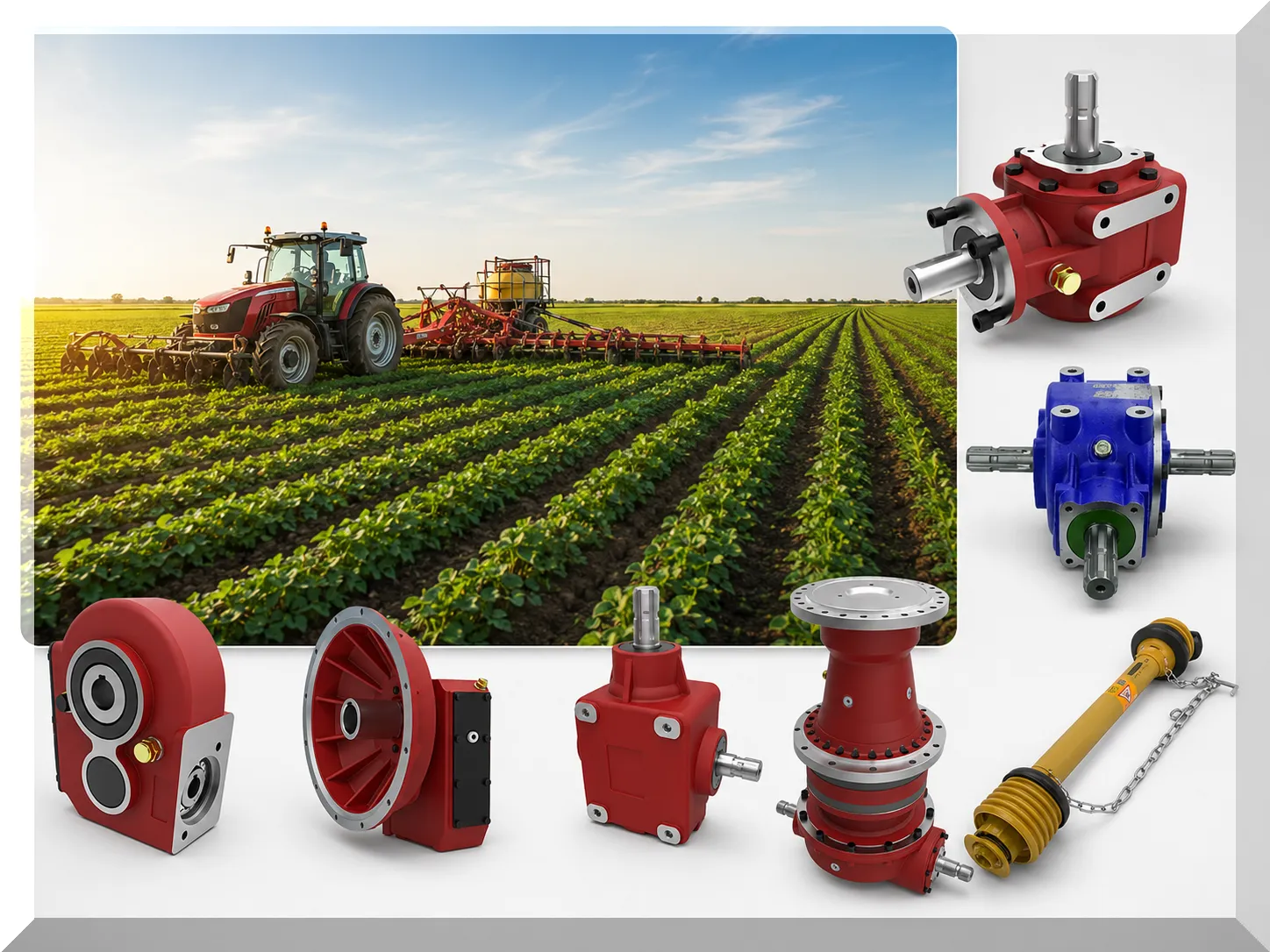
The machine connects via standard 3-point rear hitch at Category II connection. PTO requirement is 540 r/min at continuous rated output, with a minimum tractor HP recommendation of 65 HP for sustained operation at maximum working speed in high-yield first-cut crops. The agricultural gearbox and drive components in the mower conditioner’s driveline transfer PTO power to both the disc cutting unit and the roller conditioning system through a single input shaft.
Drying Time: How Much Does Conditioning Actually Accelerate Field Curing?
Research from multiple U.S. land-grant universities on alfalfa curing under conditioning consistently shows the following ranges under typical Midwest and Western hay-producing conditions:
| Mowing Method | Typical Curing Time to 18% Moisture | Weather Dependency |
|---|---|---|
| Plain disc mower (no conditioning) | 60–90 hours | High — full sun and low humidity required throughout |
| Mower conditioner (roller, standard setting) | 36–48 hours | Moderate — can tolerate one overnight dewfall without resetting the window |
| Mower conditioner (flail, on bermudagrass) | 24–36 hours | Low — aggressive surface disruption allows moisture loss even at higher humidity |
Curing times assume 25°C average daily temperature, 50–60% relative humidity during the drying period, and a yield of 3–5 t DM/ha. Higher yields, cooler temperatures, or higher humidity extend all figures above proportionally.
Roller Gap Adjustment and Maintenance
The roller gap on a mower conditioner is the single most impactful daily adjustment for conditioning quality. A gap that is too wide (above 6 mm) produces incomplete conditioning on thick-stemmed crops; a gap that is too tight (below 1 mm) risks shatter damage on delicate legume leaves. The correct setting depends on crop moisture at mowing time and the target end-use of the forage.
General roller gap guidelines for U.S. hay programs: alfalfa at first cut (high moisture, thick stems) — 1 to 3 mm tight setting; alfalfa at later cuts (lower moisture, thinner stems) — 2 to 4 mm; orchardgrass or timothy — 2 to 4 mm; bermudagrass — 1 to 2 mm for maximum cuticle disruption.
Roller maintenance involves periodic inspection of the rubber roll surface for wear grooves, flat spots, or cracking. A worn rubber roll surface reduces the consistent contact needed for reliable crimping — crops can pass through without being adequately conditioned, leading to inconsistent field drying rates across the swath. Annual visual inspection and measurement of the roll diameter against the manufacturer’s minimum specification is standard pre-season maintenance on high-hour mower conditioners.
Frequently Asked Questions
Tell Us Your Acreage, Crop, and Tractor HP — We Calculate the Right Width
Whether your operation is 50 acres of alfalfa or 400 acres of mixed grass-legume hay, our U.S. team confirms which conditioning system and working width fits your program, tractor, and weather window constraints. Direct factory pricing, California warehouse, no dealer markup.
Editor: Cxm


