
Cool-Season Grass Species: How Each One Differs in Production
The major cool-season grass hay species — orchardgrass, timothy, smooth bromegrass, tall fescue, and perennial ryegrass — each have distinct growth habits, maturity timing, market positions, and management requirements. Managing them as a single category produces average results. Matching management to species produces the premium quality that commands premium prices.
| Species | Cutting stage target | Drying speed | Peak market | Annual cuttings |
|---|---|---|---|---|
| Orchardgrass | Boot to early head | Fast (flat leaf) | Horse, rabbit, guinea pig | 2–4 |
| Timothy | Boot to early head | Moderate (dense stem) | Horse, export (Japan/Korea) | 2–3 |
| Smooth bromegrass | Boot to pre-head | Moderate | Horse, beef cattle | 2–3 |
| Tall fescue | Boot stage — before head emergence | Moderate (thick stem) | Cattle, endophyte-free varieties for horse | 2–4 |
| Perennial ryegrass | Head emergence | Fastest | Dairy, silage | 3–5 |
Cutting Stage for Grass Hay Quality: The Boot Stage Window
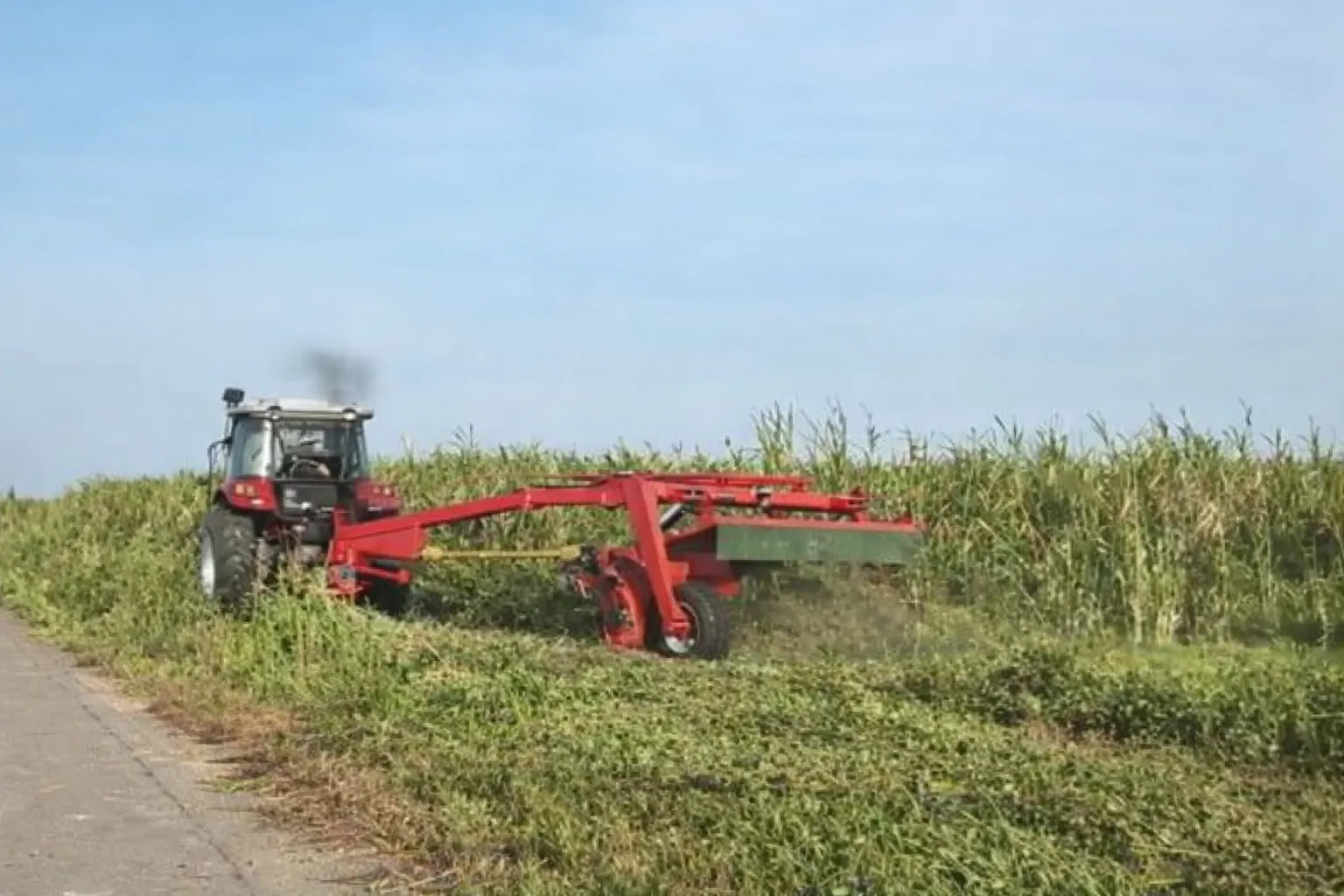
In alfalfa, the maturity trigger is bloom stage — visible flowers. In cool-season grasses, the equivalent quality-timing indicator is the boot stage — the period just before the seed head emerges from the uppermost leaf sheath. At boot stage, the grass has maximum digestibility (NDFD), acceptable protein (10–14% CP), and has not yet lignified the stem tissue that reduces ADF and NDF digestibility after heading.
The seed head is visible as a swelling in the flag leaf sheath — you can feel the bulge when you run your fingers up the stem — but it has not yet broken through the leaf. At this stage the stem is still flexible and contains high levels of non-structural carbohydrates. For horse and premium markets, cut at late boot to flag leaf emergence — before any seed head is visible above the top leaf. For livestock hay where moderate quality is acceptable, cutting at early head emergence (seedhead just visible) is acceptable but produces lower-grade hay.
Once the seed head has fully emerged and the grass begins to shed pollen (anthesis), ADF and NDF values climb rapidly. An orchardgrass stand cut at boot stage may test RFV 170; the same stand cut 10 days later at full head emergence may test RFV 140 — a 30-point quality reduction from a single week’s delay. Unlike alfalfa where delayed cutting loses 1–2 points per day, grass quality in the heading period can drop 3–5 points per day under warm conditions. The boot stage window is narrow — typically 5–10 days — and monitoring is required to catch it each cutting.
Conditioning Grass Hay: Different Stem Types Need Different Approaches
Cool-season grasses vary significantly in stem structure — from the flat, broad leaves of orchardgrass to the dense, thick culms of timothy — and each stem type responds differently to conditioning. Applying the same conditioner gap setting that works well for alfalfa to all grass species produces inconsistent results across a mixed operation.
Raking Grass Hay: Timing for Leaf Retention
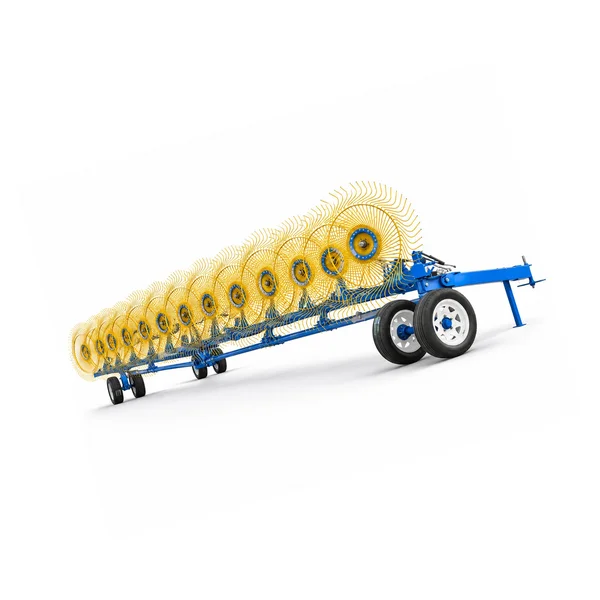
Grass hay raking timing is governed by the same moisture principles as alfalfa — rake when leaves are still flexible enough to flex over tines without shattering — but the specific moisture thresholds and the sensitivity to leaf loss differ by species. Broad-leaf grasses (orchardgrass, bromegrass) lose more leaf per unit of over-drying than narrow-blade grasses (timothy, ryegrass) because their larger leaf surface area presents more contact points with the rake tines.
Orchardgrass leaves are broad and have a low tensile strength at their attachment to the stem — they detach easily when dry and brittle. Rake orchardgrass at higher moisture (25–35%) than you would alfalfa, accepting a slightly wet windrow for the baler to process later. Raking at below 20% moisture on orchardgrass routinely causes 8–15% leaf loss — the visible “tan carpet” of shed leaves visible behind the rake that represents the highest-quality fraction of the hay disappearing into the field.
Timothy’s narrow leaves are more resistant to shatter than orchardgrass, allowing a slightly lower rake moisture without comparable leaf loss. However, timothy’s dense culms mean the windrow center dries more slowly than the surface — a rake moisture reading of 20% at the surface may correspond to 28%+ at the windrow center. Take probe readings at windrow depth before raking and base the timing on the deepest readings, not the surface.
Premium Grass Hay Markets: Who Buys and What They Pay
Premium grass hay commands prices equal to or above conventional alfalfa in specific market channels — primarily horse markets and international export. Producers who understand these channels and produce to their specifications consistently access the highest prices for grass hay production. The key insight: grass hay premiums are earned by meeting specific quality criteria that differ from alfalfa, not by simply being a “grass type.”
Horse owners — particularly those managing sport horses, racehorses, or metabolically sensitive horses — often prefer grass hay because its lower protein (10–14% CP) and lower nonstructural carbohydrate (NSC) content reduces the risk of metabolic and digestive issues that high-protein alfalfa can cause. Premium horse grass hay specifications: RFV 140–170, CP 10–14%, NSC below 12%, moisture below 14%, very low ash, golden color, minimal dust. Horse hay at this specification commands $180–$280/ton in most eastern and midwestern markets.
Japan, South Korea, and Taiwan import significant quantities of U.S. timothy hay for horses and small animals. Japanese export timothy specifications are stringent: color grade is as important as nutritional grade; dust must be virtually absent; moisture below 14%; seed head presentation (fully developed at cutting, consistent color) is evaluated visually. Pacific Northwest timothy grown under optimal irrigation and climate conditions is the primary source for this market. Export timothy can command $250–$380/ton FOB Pacific port, making it one of the highest-value grass hay markets in the U.S.
Orchardgrass and timothy hay packaged for small animals (rabbits, guinea pigs, chinchillas) command extremely high retail prices per pound — equivalent to $600–$1,200+/ton at consumer retail, though producers typically sell to distributors at $200–$400/ton. Requirements: virtually zero dust, no mold spores, bright fresh color, no seed heads (for some products), very low moisture. Small-scale farm-direct operations in suburban and peri-urban markets can sometimes access consumer prices directly, bypassing the distributor margin.
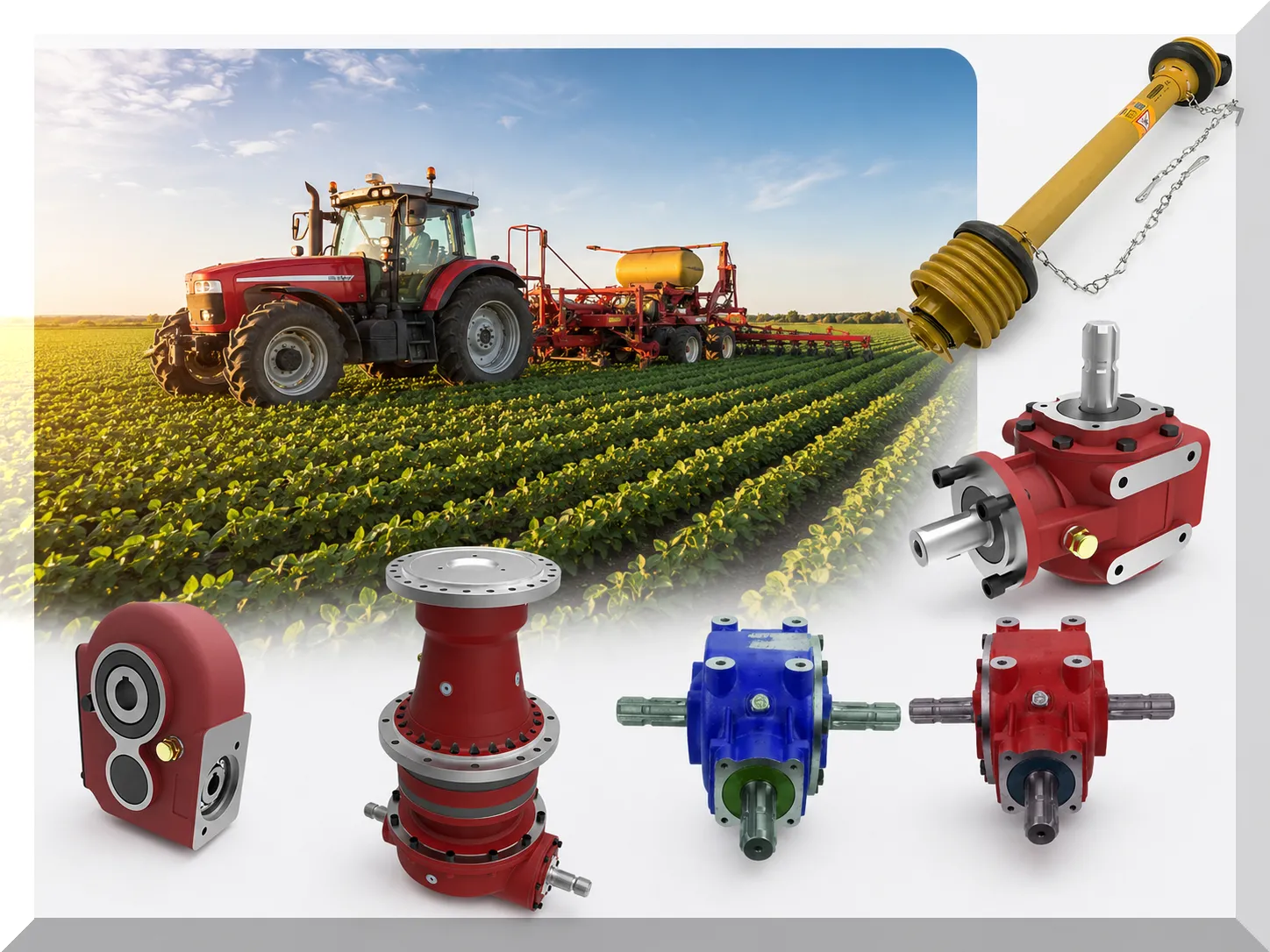
The complete quality management decisions from cutting through baling that determine whether grass hay achieves premium or commodity grade are in the hay quality improvement guide. The mowing and conditioning equipment setup that maximizes drying rate while protecting grass leaf retention is in the mowing and conditioning quality guide. The gearbox and driveline specifications for mower-conditioners used on grass stands are in agricultural gearbox and PTO driveline component specifications.
Grass Hay Production Calendar: Key Decisions by Season
| Season | Key action | Species-specific note |
|---|---|---|
| Early spring (greenup) | Walk fields, assess density and stand health; apply potassium and phosphorus if soil test indicates deficiency | Timothy: note whether tiller density is adequate (5+ tillers/sq ft); thin stands need reseeding before first cut |
| First cutting (May–June) | Monitor boot stage weekly once grass reaches 12 inches; mow at boot stage; condition at species-appropriate gap | Orchardgrass boots 2–3 weeks earlier than timothy in mixed stands — consider separate field management by species for quality optimization |
| Second cutting (July–August) | Allow 35–45 days recovery between cuts; second-cut grass typically produces lower yield but similar or slightly lower quality than first cut depending on summer heat | Timothy: second-cut yield is typically 40–60% of first-cut yield; don’t overestimate second-cut production when planning market commitments |
| Fall management | Allow 4–6 weeks of growth before frost for carbohydrate root reserve accumulation; do not cut within 6 weeks of expected first hard frost | Cool-season grasses are less sensitive to fall cutting date than alfalfa but still benefit from the fall rest; stand persistence is better with a 4-week fall growth period before dormancy |
Stand Persistence and Renovation Triggers for Grass Hay
Unlike alfalfa, cool-season grasses do not have the same dramatic thinning from over-cutting — they spread vegetatively and can partially self-heal gaps through tillering and rhizome growth. However, grass stands do decline over time from soil fertility depletion, compaction, pest damage, and weed ingress. Knowing when a stand has declined below economic productivity — and when renovation or overseeding can restore it — prevents investing in management on a stand that should be replaced.
- Canopy closes within 3–4 weeks of cutting with uniform regrowth
- Few visible weed patches covering less than 15% of field area
- Yield comparable to prior seasons without increased inputs
- Forage tests consistent with stand age and management
- More than 25–30% of field area dominated by undesirable grass or broadleaf weeds
- Yield below 2 tons/acre per cutting on sites with adequate fertility and moisture
- Bare areas that do not fill in between cuttings
- Forage quality consistently below market-acceptable grade despite early cutting
Overseeding works when the existing stand is 60%+ desirable species with uniform gaps — new seedlings fill gaps alongside existing plants. Full renovation (tillage, reseeding) is required when the existing stand is less than 50% desirable species or when the weed complex prevents new grass seedling establishment through competition or allelopathic interference.
Grass Hay Production FAQs
Get Equipment Specifications for Your Grass Hay Species and Market
Tell us your primary grass species, target market (horse, export, dairy, livestock), and annual acreage. We recommend the mower-conditioner gap settings, rake timing, and baler configuration that achieves the quality specification your market demands.
Editor: Cxm


