
What the Hydraulic System Controls on a Round Baler
Most round baler operators think of hydraulics as the system that opens and closes the tailgate. That is the largest and most visible hydraulic function, but it is not the only one. Depending on baler model and configuration, the hydraulic system may control some or all of the following:
The highest-cycle hydraulic function. One double-acting cylinder per side on most designs; actuates every bale ejection. 300–600 complete cycles per 10-hour day. Highest seal wear rate on the baler.
Some variable-chamber balers use a hydraulic cylinder to set and adjust the density gate spring preload, allowing cab-adjustable density without leaving the tractor. Low-cycle, high-pressure function.
Hydraulically actuated wrap arms on mid-range to commercial balers. One actuating cylinder per bale cycle. Intermediate cycle rate; exposed to crop debris contamination.
Single-acting cylinder on some designs for hydraulic pickup height control. Very low cycle rate; typically adjusted only at field changes. Most problematic for fluid contamination entry.
Understanding which functions share one hydraulic circuit and which are independent matters when diagnosing problems. On most round balers, all hydraulic functions share the tractor’s remote hydraulic output through a single pressure supply line — the functions are sequenced by the operator using the tractor remote levers. A contaminated fluid supply therefore affects all functions simultaneously. A seal failure in the tailgate cylinder, however, is isolated to that cylinder and does not affect the net wrap actuator on the same circuit until the seal failure advances to complete cylinder failure.
Hydraulic Fluid Specification: Why the Wrong Oil Destroys Seals
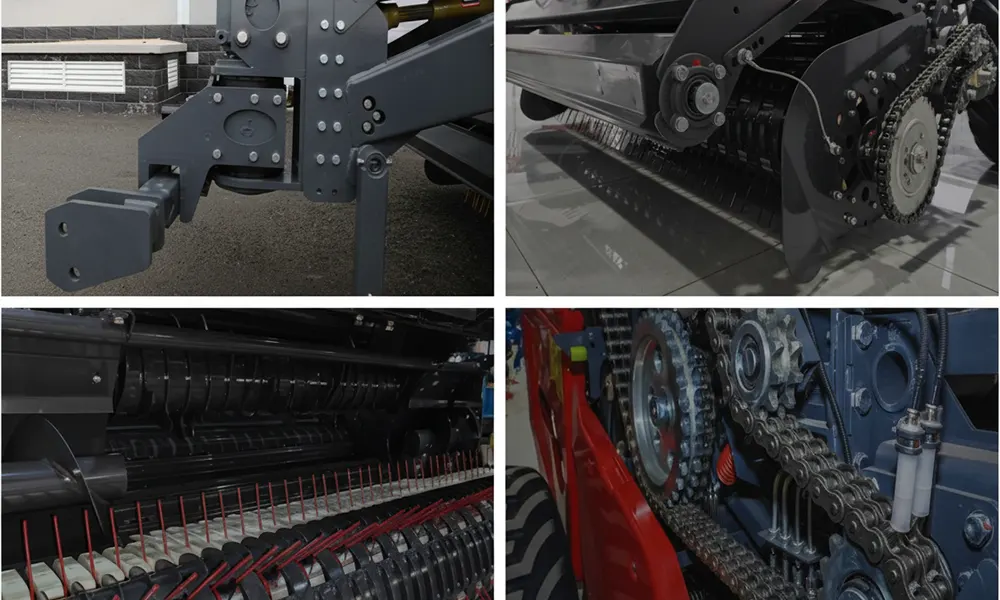
The baler’s hydraulic cylinders and seals are designed to operate with a specific fluid viscosity range and additive package. Using the wrong fluid does not immediately cause visible problems — the cylinder will still extend and retract normally. The damage is cumulative: seal materials formulated for mineral-based hydraulic oil swell and deteriorate when exposed to biodegradable ester-based fluids; nitrile seals designed for standard AW46 hydraulic oil crack when used with fluids containing aggressive friction modifiers; and viscosity-out-of-specification fluids cause either cavitation (too thin in hot weather) or sluggish response and incomplete sealing (too thick in cold weather).
| Fluid type | ISO viscosity grade | Compatibility with standard baler seals |
ملحوظات |
|---|---|---|---|
| AW Hydraulic Oil (mineral-based) | ISO 46 (most common) ISO 32 cold climates |
Full compatibility | Standard specification for most agricultural hydraulic cylinders; AW additive package provides anti-wear without seal-aggressive additives |
| Tractor Hydraulic / Universal Tractor Fluid (UTF) | ISO 46 equivalent | Generally compatible | UTF products contain friction modifiers for wet brakes and clutch packs — mostly harmless for external cylinders but confirm with seal manufacturer if uncertain |
| Biodegradable ester-based hydraulic oil | ISO 46 or 68 | Check seal compatibility | Some baler cylinder seal materials (EPDM, HNBR) not compatible with vegetable ester fluids. Confirm with baler manufacturer before switching to biodegradable fluid |
| Engine oil (any grade) — NEVER use | N/A | Incompatible | Engine oil detergent and dispersant additives attack hydraulic cylinder seal elastomers; using engine oil in hydraulic systems causes rapid seal degradation. Never substitute engine oil for hydraulic oil. |
The Tailgate Cylinder: Highest Wear, Most Critical Function
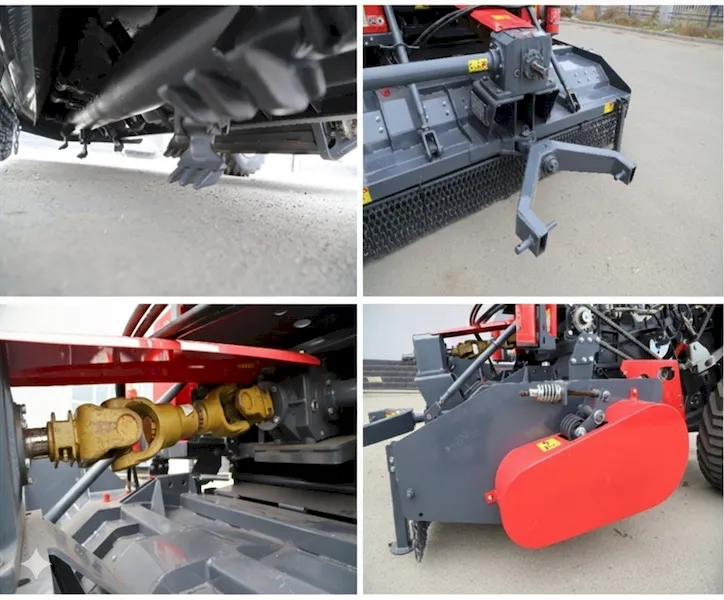
The tailgate cylinder on a round baler cycles every single bale ejection — typically 300 to 600 complete extend-and-retract cycles in a 10-hour baling day, and 15,000 to 30,000 cycles over a typical season. No other hydraulic component on the machine accumulates this many cycles in service. The combination of high cycle count, significant side load (the tailgate weight creates a bending moment on the cylinder rod), and crop debris contamination on the rod surface makes the tailgate cylinder seal set the highest-replacement-frequency hydraulic item on the baler.
Three Stages of Tailgate Cylinder Seal Failure
Rod Wiper Seal Replacement: Field-Serviceable Procedure
The rod wiper seal on most agricultural cylinders is replaceable without specialized tools or hydraulic press equipment. The procedure:
- Depressurize the hydraulic circuit completely before any work. Cycle the tailgate fully extended and fully retracted to release trapped pressure, then disconnect the hydraulic supply from the tractor.
- Retract the cylinder rod fully. Clean the rod end and wiper seal area with brake cleaner or contact cleaner spray — removing crop residue and old oil before disassembly prevents contamination of the new seal.
- Remove the rod seal gland nut (the threaded retaining collar at the rod end of the cylinder barrel). On most agricultural cylinders this is a large flat-wrench hexagonal nut; use a pipe wrench as a last resort.
- Slide the gland and seal assembly off the rod. The wiper seal (usually a polyurethane lip seal facing outward) and the primary rod seal (facing inward) are typically contained in the gland assembly as a matched set. Replace the complete gland seal kit from the baler parts supplier — do not replace only the wiper while leaving an aging primary rod seal in place.
- Inspect the cylinder rod surface for scoring or pitting in the seal contact area. A scored rod surface will destroy a new seal within 200 cycles. Light scoring (fingernail-catchable but not deep) can be polished with 600-grit wet/dry sandpaper; deep scoring requires rod replacement or resurfacing.
- Install the new seal kit with the correct orientation (lip seals are directional — the lip faces the fluid pressure). Lightly coat the new seals with hydraulic fluid before installation. Torque the gland nut to specification.
Hydraulic Hose Inspection: The Four Signs That Precede a Failure
Hydraulic hoses on agricultural equipment have a recommended service life of 6 to 10 years regardless of visible condition. A hose that looks externally intact can have interior liner degradation — the rubber inner layer that contacts the fluid delaminates with age and heat cycling, releasing rubber particles into the fluid that circulate through the cylinder system and damage seal surfaces. Never assume a hose is serviceable solely because it is not visibly leaking.
Fine cracks in the hose outer jacket perpendicular to the hose length are ozone and age degradation. Cracks deeper than 1mm indicate the wire reinforcement is exposed to moisture. Replace immediately.
A section of hose that is noticeably larger in diameter than the rest of the same hose has a delaminated inner liner or a broken wire braid layer — the hose is ballooning under pressure. Replace before it bursts.
Hoses that contact metal edges, other hoses, or frame members develop abraded sections where the outer jacket is worn through to the wire braid. Exposed wire braid corrodes rapidly and loses burst strength. Add a hose guard sleeve if relocation is not practical.
Oil weeping at the hose-to-fitting junction indicates either a damaged hose end ferrule or a fitting that is loosening due to vibration. A weeping hose fitting will become a dripping fitting within 50–100 operating hours in normal vibration conditions.
Contamination: The Root Cause of 70% of Hydraulic Failures
Particulate contamination — metal wear particles, crop debris, dirt, and rust — is responsible for the majority of hydraulic seal and cylinder failures in agricultural equipment. Particles as small as 10 microns (invisible to the naked eye) cause abrasive damage to polished cylinder bores and seal contact surfaces. Contamination enters the hydraulic system through three paths, and prevention of each path extends cylinder life dramatically.
Disconnecting hydraulic couplers without capping both the tractor coupler and the hose end allows crop dust and debris to enter the fitting bore. Every uncapped coupler in a hay field accumulates 0.5–2 grams of particulate per hour. Always cap couplers when disconnected — use the rubber dust caps provided or aftermarket plastic caps.
The rod wiper seal’s function is to wipe crop debris and contamination off the rod surface as it retracts into the cylinder. A worn or damaged rod wiper fails to wipe the rod clean on retraction, pulling contamination past the primary rod seal into the cylinder bore. Keeping the rod wiper seal serviceable is contamination prevention, not just leak prevention.
Hydraulic fluid itself generates contamination as it ages: oxidation products form varnish deposits on cylinder walls; water ingression causes rust particles from ferrous components; and thermal degradation breaks down the viscosity index improvers into sludge. Fluid that has exceeded its change interval is both contaminated and a contamination source. Change on schedule, not just when the fluid looks dark.
Leak Diagnosis: Locating the Source Before It Becomes Expensive
Hydraulic oil on the baler surface is easy to detect but sometimes difficult to source accurately — oil migrates along frame members and hoses, appearing at a low point far from the actual leak origin. A systematic approach to leak locating saves the time wasted chasing phantom leak locations.
For diagnosing hydraulic symptoms that appear as baler operational problems — sluggish tailgate, inconsistent density gate response, or wrap arm that does not fully extend — the root causes of these symptoms as they appear during baling are covered in the دليل استكشاف أعطال مكبس القش وإصلاحها. For the hydraulic cylinder and hose assembly in the context of the baler’s complete wear component replacement schedule, see the دليل قطع الغيار المستهلكة. The connection between the hydraulic circuit and the مكونات علبة التروس الزراعية ومجموعة نقل الحركة PTO is the main gearbox output shaft seal — a failed output shaft seal allows gearbox lubricant to migrate toward the hydraulic circuit area, creating confusion in leak diagnosis when both oil types are present simultaneously.
Pre-Season Hydraulic Inspection Checklist
Complete this checklist at least two weeks before first baling of the season — not the night before — so any seal or hose replacements can be sourced and installed without schedule pressure.
- Wipe all cylinder rods clean; check for scoring
- Inspect rod wiper seal area for oil film or residue
- Cycle tailgate fully 10 times; check for smooth, even operation
- Check cylinder mounting pin and bushing for excessive play (>2mm is excessive)
- Confirm rod end clevis pin retainer clips are in place
- Flex each hose through its full range of motion — cracks appear at bends
- Inspect all hose-to-fitting junctions for oil seeping or corrosion
- Check hose routing for contact against frame edges or chain guards
- Replace any hose older than 8 years regardless of condition
- Confirm dust caps present on all couplers
- Check tractor hydraulic fluid level and condition
- Inspect fluid color: yellow to amber = good; dark brown = change; milky = water contamination
- Change tractor hydraulic filter if within 100 hours of change interval
- Confirm fluid specification matches baler manufacturer requirement
- Test remote hydraulic pressure with gauge if previous season showed sluggish response
Hydraulic System FAQs
Get Hydraulic Specifications and Seal Part Numbers Before You Need Them
Cylinder bore dimensions, seal kit part numbers, and hydraulic fluid specification documented with every baler before delivery. Our team provides seal and hose sourcing support through the machine’s service life — not just at the time of purchase.
المحرر: Cxm


