
O que o sistema hidráulico controla em uma enfardadeira de fardos redondos?
A maioria dos operadores de enfardadeiras de fardos redondos pensa no sistema hidráulico como aquele que abre e fecha a porta traseira. Essa é a função hidráulica maior e mais visível, mas não é a única. Dependendo do modelo e da configuração da enfardadeira, o sistema hidráulico pode controlar alguns ou todos os seguintes itens:
A função hidráulica de maior número de ciclos. Um cilindro de dupla ação por lado na maioria dos modelos; aciona cada ejeção de fardos. 300 a 600 ciclos completos por dia de 10 horas. Maior taxa de desgaste de vedação na enfardadeira.
Algumas enfardadeiras de câmara variável utilizam um cilindro hidráulico para definir e ajustar a pré-carga da mola da comporta de densidade, permitindo o ajuste da densidade a partir da cabine sem precisar sair do trator. Função de baixa frequência e alta pressão.
Braços de enfardamento com acionamento hidráulico em enfardadeiras de médio a grande porte. Um cilindro de acionamento por ciclo de enfardamento. Taxa de ciclo intermediária; exposto à contaminação por resíduos da colheita.
Em alguns projetos, utiliza-se um cilindro de ação simples para o controle hidráulico da altura de captação. A frequência de ciclos é muito baixa; geralmente, o ajuste é feito apenas em alterações de campo. Este fator é particularmente problemático em casos de entrada de contaminantes no fluido.
Compreender quais funções compartilham um mesmo circuito hidráulico e quais são independentes é fundamental para diagnosticar problemas. Na maioria das enfardadeiras de fardos redondos, todas as funções hidráulicas compartilham a saída hidráulica remota do trator por meio de uma única linha de alimentação de pressão — as funções são sequenciadas pelo operador usando as alavancas remotas do trator. Portanto, um suprimento de fluido contaminado afeta todas as funções simultaneamente. Uma falha na vedação do cilindro da porta traseira, no entanto, fica isolada a esse cilindro e não afeta o atuador de enfardamento da rede no mesmo circuito até que a falha na vedação se transforme em uma falha completa do cilindro.
Especificação do fluido hidráulico: por que o óleo errado destrói as vedações
Os cilindros hidráulicos e as vedações da enfardadeira são projetados para operar com uma faixa específica de viscosidade do fluido e um pacote de aditivos. O uso do fluido errado não causa problemas visíveis imediatamente — o cilindro ainda se estenderá e retrairá normalmente. O dano é cumulativo: os materiais de vedação formulados para óleo hidráulico à base de minerais incham e deterioram-se quando expostos a fluidos biodegradáveis à base de ésteres; as vedações de nitrilo projetadas para o óleo hidráulico padrão AW46 racham quando usadas com fluidos que contêm modificadores de fricção agressivos; e fluidos com viscosidade fora da especificação causam cavitação (muito fluido em clima quente) ou resposta lenta e vedação incompleta (muito viscoso em clima frio).
| Tipo fluido | grau de viscosidade ISO | Compatibilidade com selos padrão para enfardadeiras |
Notas |
|---|---|---|---|
| Óleo hidráulico AW (à base de mineral) | ISO 46 (mais comum) ISO 32 climas frios |
Compatibilidade total | Especificação padrão para a maioria dos cilindros hidráulicos agrícolas; o pacote de aditivos AW oferece proteção antidesgaste sem aditivos agressivos às vedações. |
| Fluido hidráulico para tratores / Fluido universal para tratores (UTF) | Equivalente à norma ISO 46 | Geralmente compatível | Os produtos UTF contêm modificadores de fricção para freios úmidos e embreagens — em sua maioria inofensivos para cilindros externos, mas confirme com o fabricante da vedação em caso de dúvida. |
| Óleo hidráulico biodegradável à base de éster | ISO 46 ou 68 | Verifique a compatibilidade da vedação. | Alguns materiais de vedação do cilindro da enfardadeira (EPDM, HNBR) não são compatíveis com fluidos à base de éster vegetal. Consulte o fabricante da enfardadeira antes de mudar para um fluido biodegradável. |
| Óleo de motor (qualquer tipo) — NUNCA use | N / D | Incompatível | Os aditivos detergentes e dispersantes do óleo de motor atacam os elastômeros das vedações dos cilindros hidráulicos; o uso de óleo de motor em sistemas hidráulicos causa rápida degradação das vedações. Nunca substitua o óleo hidráulico por óleo de motor. |
Cilindro da Porta Traseira: Maior Desgaste, Função Mais Crítica
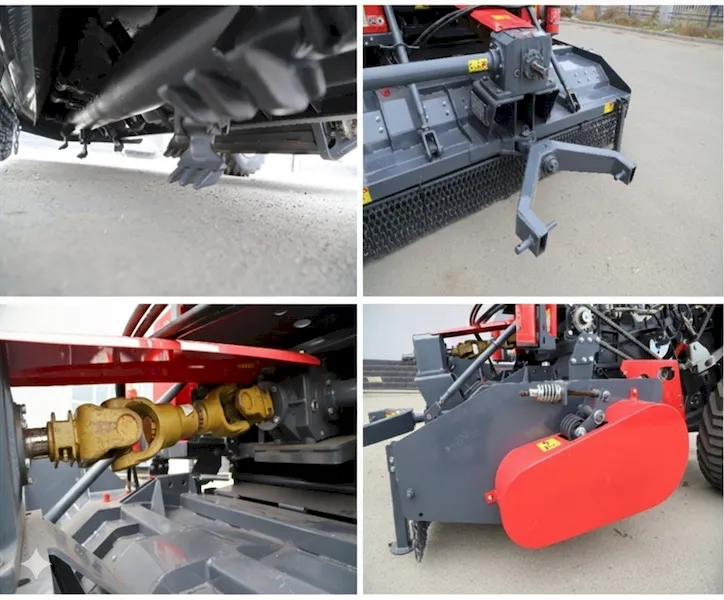
O cilindro da porta traseira de uma enfardadeira de fardos redondos completa cada ciclo de ejeção de fardos — tipicamente de 300 a 600 ciclos completos de extensão e retração em um dia de enfardamento de 10 horas e de 15.000 a 30.000 ciclos ao longo de uma safra típica. Nenhum outro componente hidráulico da máquina acumula tantos ciclos em serviço. A combinação do alto número de ciclos, da significativa carga lateral (o peso da porta traseira cria um momento de flexão na haste do cilindro) e da contaminação da superfície da haste por resíduos da colheita faz com que o conjunto de vedação do cilindro da porta traseira seja o item hidráulico da enfardadeira com maior frequência de substituição.
Três estágios de falha da vedação do cilindro da porta traseira
Substituição da vedação raspadora da haste: procedimento que pode ser realizado em campo
A vedação raspadora da haste na maioria dos cilindros agrícolas pode ser substituída sem ferramentas especiais ou prensa hidráulica. O procedimento é o seguinte:
- Antes de iniciar qualquer trabalho, despressurize completamente o circuito hidráulico. Abra e feche a porta traseira completamente para liberar a pressão acumulada e, em seguida, desconecte o suprimento hidráulico do trator.
- Retraia completamente a haste do cilindro. Limpe a extremidade da haste e a área da vedação raspadora com spray de limpeza de freios ou limpa-contatos — remover resíduos de colheita e óleo velho antes da desmontagem evita a contaminação da nova vedação.
- Remova a porca de fixação da haste (o colar de retenção roscado na extremidade da haste do cilindro). Na maioria dos cilindros agrícolas, trata-se de uma porca sextavada grande que se encaixa em uma chave de boca; use uma chave de cano como último recurso.
- Deslize o conjunto da gaxeta e da vedação para fora da haste. A vedação raspadora (geralmente uma vedação labial de poliuretano voltada para fora) e a vedação principal da haste (voltada para dentro) normalmente estão contidas no conjunto da gaxeta como um conjunto combinado. Substitua o kit completo de vedação da gaxeta do fornecedor de peças da enfardadeira — não substitua apenas a vedação raspadora, deixando uma vedação principal da haste desgastada no lugar.
- Inspecione a superfície da haste do cilindro em busca de riscos ou corrosão na área de contato com a vedação. Uma superfície da haste com riscos destruirá uma vedação nova em 200 ciclos. Riscos superficiais (que podem ser pegos com a unha, mas não profundos) podem ser polidos com lixa d'água de grão 600; riscos profundos exigem a substituição ou o recondicionamento da haste.
- Instale o novo kit de vedação na orientação correta (as vedações labiais são direcionais — o lábio fica voltado para a pressão do fluido). Aplique uma leve camada de fluido hidráulico nas novas vedações antes da instalação. Aperte a porca de fixação com o torque especificado.
Inspeção de Mangueiras Hidráulicas: Os Quatro Sinais que Antecedem uma Falha
As mangueiras hidráulicas em equipamentos agrícolas têm uma vida útil recomendada de 6 a 10 anos, independentemente de sua condição aparente. Uma mangueira que parece intacta externamente pode apresentar degradação do revestimento interno — a camada interna de borracha que entra em contato com o fluido se desprende com o tempo e os ciclos de aquecimento, liberando partículas de borracha no fluido que circulam pelo sistema de cilindros e danificam as superfícies de vedação. Nunca presuma que uma mangueira esteja em boas condições de uso apenas porque não apresenta vazamentos visíveis.
Fissuras finas na capa externa da mangueira, perpendiculares ao seu comprimento, são indicativas de degradação por ozônio e envelhecimento. Fissuras com mais de 1 mm de profundidade indicam que o reforço de arame está exposto à umidade. Substitua imediatamente.
Uma seção da mangueira com diâmetro visivelmente maior que o restante da mesma mangueira apresenta revestimento interno descolado ou uma camada de malha metálica rompida — a mangueira está se expandindo sob pressão. Substitua-a antes que estoure.
Mangueiras que entram em contato com bordas metálicas, outras mangueiras ou componentes da estrutura desenvolvem seções abrasadas onde o revestimento externo se desgasta até expor a malha de aço. A malha de aço exposta corrói rapidamente e perde a resistência à ruptura. Adicione uma capa protetora para a mangueira se a realocação não for viável.
O vazamento de óleo na junção da mangueira com a conexão indica uma ponteira da mangueira danificada ou uma conexão que está se soltando devido à vibração. Uma conexão com vazamento passará a gotejar em 50 a 100 horas de operação em condições normais de vibração.
Contaminação: a causa principal das falhas hidráulicas do modelo 70%
A contaminação por partículas — partículas de desgaste metálico, restos de colheita, sujeira e ferrugem — é responsável pela maioria das falhas em vedações hidráulicas e cilindros em equipamentos agrícolas. Partículas tão pequenas quanto 10 mícrons (invisíveis a olho nu) causam danos abrasivos aos furos polidos dos cilindros e às superfícies de contato das vedações. A contaminação entra no sistema hidráulico por três vias, e a prevenção de cada uma delas prolonga significativamente a vida útil do cilindro.
Desconectar os engates hidráulicos sem tampar tanto o engate do trator quanto a extremidade da mangueira permite a entrada de poeira e detritos da colheita no orifício da conexão. Cada engate sem tampa em um campo de feno acumula de 0,5 a 2 gramas de partículas por hora. Sempre tampe os engates ao desconectá-los — use as tampas de borracha fornecidas ou tampas de plástico disponíveis no mercado.
A função da vedação raspadora da haste é remover detritos da colheita e contaminantes da superfície da haste à medida que ela se retrai para dentro do cilindro. Uma vedação raspadora desgastada ou danificada não consegue limpar a haste durante a retração, permitindo que a contaminação seja puxada para dentro do cilindro, ultrapassando a vedação principal da haste. Manter a vedação raspadora da haste em boas condições de funcionamento é uma forma de prevenção de contaminação, e não apenas de vazamentos.
O próprio fluido hidráulico gera contaminação com o tempo: os produtos da oxidação formam depósitos de verniz nas paredes dos cilindros; a entrada de água causa a formação de partículas de ferrugem provenientes de componentes ferrosos; e a degradação térmica decompõe os aditivos melhoradores do índice de viscosidade em lodo. O fluido que ultrapassou o intervalo de troca recomendado está contaminado e também é uma fonte de contaminação. Troque o fluido conforme o cronograma, e não apenas quando ele estiver escuro.
Diagnóstico de Vazamentos: Localizando a Origem Antes que o Problema se Torne Caro
O óleo hidráulico na superfície da enfardadeira é fácil de detectar, mas às vezes difícil de identificar com precisão — o óleo migra ao longo da estrutura e das mangueiras, aparecendo em um ponto baixo, longe da origem real do vazamento. Uma abordagem sistemática para localizar vazamentos evita o tempo gasto procurando vazamentos fantasmas.
Para diagnosticar sintomas hidráulicos que se manifestam como problemas operacionais da enfardadeira — como porta traseira lenta, resposta inconsistente da comporta de densidade ou braço de envolvimento que não se estende completamente — as causas principais desses sintomas, conforme aparecem durante o enfardamento, são abordadas no guia de solução de problemas da enfardadeiraPara obter informações sobre o conjunto do cilindro hidráulico e da mangueira no contexto do cronograma completo de substituição de componentes de desgaste da enfardadeira, consulte o guia de peças de desgasteA conexão entre o circuito hidráulico e o componentes de transmissão de caixa de engrenagens e tomada de força (TDF) agrícolas É o retentor principal do eixo de saída da caixa de engrenagens — um retentor defeituoso do eixo de saída permite que o lubrificante da caixa de engrenagens migre em direção à área do circuito hidráulico, criando confusão no diagnóstico de vazamentos quando ambos os tipos de óleo estão presentes simultaneamente.
Lista de verificação para inspeção hidráulica pré-temporada
Preencha esta lista de verificação pelo menos duas semanas antes da primeira colheita da temporada — e não na noite anterior — para que quaisquer substituições de vedações ou mangueiras possam ser obtidas e instaladas sem pressão de cronograma.
- Limpe todas as hastes do cilindro; verifique se há riscos.
- Inspecione a área de vedação do raspador da haste quanto à presença de película de óleo ou resíduos.
- Acione a tampa traseira completamente 10 vezes; verifique se o funcionamento é suave e uniforme.
- Verifique se o pino de montagem do cilindro e a bucha apresentam folga excessiva (mais de 2 mm é considerado excessivo).
- Confirme se os clipes de retenção do pino da rótula estão no lugar.
- Flexione cada mangueira em toda a sua amplitude de movimento — rachaduras aparecem nas curvas.
- Inspecione todas as junções entre mangueiras e conexões para verificar vazamentos de óleo ou corrosão.
- Verifique o posicionamento da mangueira para garantir que não entre em contato com as bordas do quadro ou com os protetores de corrente.
- Substitua qualquer mangueira com mais de 8 anos, independentemente de sua condição.
- Confirme se as tampas de proteção contra poeira estão presentes em todos os acopladores.
- Verifique o nível e o estado do fluido hidráulico do trator.
- Inspecione a cor do fluido: amarelo a âmbar = bom; marrom escuro = alteração; leitoso = contaminação por água.
- Troque o filtro hidráulico do trator dentro do intervalo de 100 horas.
- Confirme se a especificação do fluido corresponde aos requisitos do fabricante da enfardadeira.
- Teste a pressão hidráulica remota com um manômetro se a temporada anterior apresentou resposta lenta.
Perguntas frequentes sobre sistemas hidráulicos
Obtenha as especificações hidráulicas e os números de peça das vedações antes de precisar delas.
As dimensões do cilindro, os números de peça do kit de vedação e as especificações do fluido hidráulico são documentados com cada enfardadeira antes da entrega. Nossa equipe oferece suporte para o fornecimento de vedações e mangueiras durante toda a vida útil da máquina — não apenas no momento da compra.
Editor: Cxm


