What Dairy Nutritionists Are Optimizing — and Why It Changes What They Buy
A dairy nutritionist’s job is to balance a total mixed ration (TMR) that maximizes milk production per cow per day while keeping body condition stable, rumen health intact, and feed cost per hundredweight of milk at target. Hay is one ingredient in that ration — but its nutrient profile determines how much of every other ingredient (expensive protein meal, energy concentrates, minerals) the nutritionist must add to compensate. Hay that is lower in protein requires more soybean meal. Hay with low fiber digestibility requires more starch. Hay with variable quality requires the nutritionist to build in safety margins that lower average animal performance. The cost of poor or variable hay quality is not just the price difference — it is compounded through the entire ration formulation.
$20–$40
Per-ton premium that documented NDFD values above 55% command over equivalent RFV hay without NDFD in well-managed dairy hay markets — paid by nutritionists who can demonstrate the value in ration formulation cost reduction
1/10 bloom
The alfalfa cutting timing stage that maximizes dairy hay value — every additional 7 days in the field past this stage costs approximately $12–$25/ton in reduced dairy hay pricing from NDFD decline and NDF increase
<5% CV
Coefficient of variation in key nutrient parameters that defines “consistent” hay quality for dairy supply contracts — lots exceeding this range within a delivery period require ration reformulation that costs the dairy in performance and the supplier in repeat business
The structural difference between dairy and beef hay markets: Beef cattle operations buy hay primarily on price per ton within a broad quality range. Dairy operations buy hay as a ration ingredient with defined nutritional specifications — price per ton matters but only after quality thresholds are met. A lot of hay that is $15/ton cheaper than the contract specification but tests 4 points lower in NDFD may cost the dairy more than $15/ton in concentrate substitution cost per cow. This changes the buyer-seller relationship fundamentally: dairy hay sales are negotiated on nutritional value delivered, not just volume.
RFV vs RFQ: The Quality Index Shift That Redefined Dairy Hay Pricing
Relative Feed Value (RFV) was the standard quality index in hay markets from the 1970s through the 1990s. Relative Forage Quality (RFQ) replaced it in sophisticated dairy markets beginning in the 2000s. Understanding why RFQ replaced RFV — and why not all markets have made the switch — is essential for understanding dairy hay pricing and what test to order.
RFV (Relative Feed Value) — the old standard
Formula: RFV = (DDM × DMI) ÷ 1.29
Where DDM = 88.9 − (0.779 × ADF%) and DMI = 120 ÷ NDF%
Problem: RFV uses ADF to predict digestibility (DDM), but ADF does not capture differences in how digestible the NDF fraction is between species. Bermudagrass at ADF 32% and alfalfa at ADF 32% produce the same RFV — but their actual digestibility in a dairy cow’s rumen can differ by 15–20 percentage points in 48-hr NDFD. A nutritionist formulating on RFV alone may be significantly overestimating the energy delivered by bermudagrass hay relative to alfalfa at equivalent RFV.
RFQ (Relative Forage Quality) — the dairy standard
Formula: RFQ = (DMI_p × TDN_p) ÷ 1.23
Where DMI_p and TDN_p are calculated using 48-hr NDFD in addition to NDF and ADF
Advantage: RFQ captures the actual digestibility of the fiber fraction, not just its presence. A hay with high NDF but also high NDFD (early-cut grass, BMR varieties) receives a significantly higher RFQ than the same hay would receive under RFV, accurately reflecting its feeding value. Two lots of hay with identical RFV can have RFQ values that differ by 40+ points when their NDFD differs by 15 percentage points — a difference that is real, significant to dairy cow performance, and invisible to buyers who rely on RFV alone.
Which index to use: Always specify RFQ when marketing to dairy buyers, and ensure your forage test panel includes 48-hr NDFD (required for RFQ calculation). For beef markets, RFV remains acceptable because the precision of RFQ is not matched by the precision of beef cattle ration formulation in those operations. For alfalfa hay specifically, RFV and RFQ often agree closely because alfalfa’s NDF is relatively consistent in digestibility; the RFV/RFQ gap is most dramatic for grass hays and warm-season species where digestibility varies widely.
NDFD: The Number That Drives Premium Pricing in Dairy Hay Markets
The 48-hour neutral detergent fiber digestibility (NDFD) measures the percentage of the hay’s NDF fraction that a cow can digest during a 48-hour rumen incubation period. This number drives dairy hay pricing because NDF is typically the largest fraction of hay dry matter (35–70% of DM depending on species and stage), and the energy a cow extracts from NDF is proportional to NDFD. A 10-point improvement in NDFD on hay at 45% NDF content delivers roughly the same additional energy as adding 2–3% corn grain to the ration — at a fraction of the cost when the improvement comes from better hay quality.
| Hay type / condition |
Typical 48-hr NDFD |
Dairy value tier |
Market premium potential |
| BMR sorghum sudangrass — boot stage |
58–72% |
Premium Plus |
+$30–$50/ton |
| Early-cut cool-season grass — vegetative |
55–65% |
Premium |
+$20–$35/ton |
| Alfalfa — 1/10 bloom (optimum cutting) |
48–56% |
Premium |
+$15–$30/ton |
| Alfalfa — 50% bloom (late cutting) |
38–46% |
Standard |
Market baseline |
| Bermudagrass — 28-day cut |
42–52% |
Standard-Plus |
+$5–$15/ton |
| Alfalfa — over-mature or rain-damaged |
28–36% |
Discounted |
−$10–$25/ton |
The forage test interpretation guide — including how to read NDFD alongside ADF, NDF, and CP values to understand total feeding value — is in the forage analysis and hay test results guide.
Dairy Hay Quality Targets by Ration Position
Dairy nutritionists do not have a single quality threshold for hay — they have different specifications depending on which group of cows the hay is feeding and what role it plays in the total ration. A producer who understands this can match their hay quality tier to the appropriate buyer category and command the appropriate price rather than selling premium-quality early-cut hay to buyers who will use it in dry cow programs where that quality is wasted.
HIGH-PRODUCTION COWS (Early lactation, 0–100 days in milk)
CP: ≥20% (replaces protein supplements)
NDF: ≤38% (limits rumen fill constraint)
ADF: ≤30%
48-hr NDFD: ≥50% (energy from fiber)
RFQ: ≥180
This is the highest-value position for hay in any dairy. Early-lactation cows produce the most milk and have the least appetite relative to their needs — they cannot eat enough to fuel production and are in negative energy balance. Every percentage point of NDFD improvement means more energy from each mouthful of hay, reducing the negative energy balance that limits peak milk production. Nutritionists pay the highest premium for hay meeting this specification because it directly displaces the most expensive concentrates in the ration.
MID-LACTATION COWS (100–200 days in milk)
CP: 18–22%
NDF: 38–45%
48-hr NDFD: 45–55%
RFQ: 140–185
Mid-lactation cows have better appetite relative to production demands. Good-quality alfalfa at 1/10 to 1/4 bloom consistently meets this specification. This is the largest volume market for premium dairy hay — most dairies are continuously managing this portion of the herd and need consistent quality supply year-round.
DRY COWS AND FAR-OFF PRE-FRESH (60–21 days pre-calving)
CP: 14–16%
NDF: 45–55%
48-hr NDFD: 40–50%
RFQ: 100–140
Intentionally lower quality — dry cows need to maintain body condition without fattening, and the higher-fiber lower-energy hay actually serves that goal better than premium hay that would over-condition them. Dairies often buy lower-tier hay specifically for this group, so over-quality hay is wasted here.
CLOSE-UP PRE-FRESH COWS (21 days pre-calving) — the special case every producer should know
Potassium (K): <1.5% of DM
CP: 14–16%
DCAD: Negative preferred
Calcium: 0.6–1.0% of DM
The most specification-sensitive cow group in any dairy — and the one that creates a specific hay procurement problem. Pre-fresh programs manage Dietary Cation-Anion Difference (DCAD) to prevent milk fever at calving. High potassium in hay makes DCAD management difficult or impossible. Dairies on DCAD programs specifically seek low-potassium hay (below 1.5% K, ideally below 1.2% K) and pay significant premiums for documented low-K analysis. Testing potassium is not included in basic forage panels — a producer with low-K hay from a well-managed, low-fertilizer field should test and market this as a specific pre-fresh supply.
The Consistency Factor: Why Variability Costs More Than Low Quality
A dairy ration is formulated to deliver a specific nutrient profile — CP, energy, effective fiber, minerals — within defined tolerances. When hay quality changes significantly between deliveries, the nutritionist must reformulate. Reformulation takes labor time, requires new ingredient orders, and during the transition period the cows receive a ration that is off-spec — either too much or too little of a nutrient that affects their production. The performance dip from a 10-day ration transition, multiplied by 1,000 cows at $20/cow/day in milk value, represents a real cost that nutritionists track and attribute to variable suppliers.
What “consistent” means in dairy hay contracts
A coefficient of variation (CV) below 5% for CP and NDF values across all lots delivered within a 6-month supply period. For a hay averaging 20% CP, this means all lots fall between 19% and 21% CP. For a hay averaging 40% NDF, this means all lots fall between 38% and 42% NDF. This level of consistency requires testing every lot, managing cutting timing to hit the same growth stage each cutting, and actively communicating unusual lot characteristics to the buyer before delivery rather than after the nutritionist discovers the deviation.
The premium for documented consistency
Dairy nutritionists who have found a consistent hay supplier pay $10–$25/ton above spot market pricing for that consistency — because it eliminates the reformulation cost and animal performance risk associated with variable quality. A producer who delivers 10 loads per year at consistent 20% CP and 50% NDFD, with test reports provided before each delivery, has a supply relationship with the dairy that is not easily replaced by a cheaper but inconsistent competitor. Consistency is the most durable competitive advantage in dairy hay supply and the most underestimated quality attribute by hay producers who focus only on individual lot peak numbers.
Mycotoxin Risk in Dairy Hay: The Hidden Quality Issue That Ends Contracts
Mycotoxins — toxic secondary metabolites produced by mold species during crop growth or storage — are present in hay at concentrations that vary from negligible to livestock-threatening depending on growing conditions, storage management, and species of mold. In dairy hay, mycotoxins carry a regulatory dimension that no other quality parameter carries: aflatoxin contamination above the FDA threshold translates directly to contaminated milk — a product recall scenario that a dairy will trace back to the hay supplier and terminate the supply relationship immediately.
AFLATOXIN
The most regulated — and the one with direct milk implications. FDA limit: 20 ppb in cattle feed. FDA milk action level: 0.5 ppb aflatoxin M1 in milk. The pathway is direct: cattle consuming aflatoxin-contaminated hay metabolize it to aflatoxin M1, which is excreted in milk within hours. A dairy that discovers aflatoxin M1 above 0.5 ppb in its bulk milk faces a mandatory dumping of the tank load and potential plant shutdown. Many large dairies now require aflatoxin testing on every hay load. Aflatoxin risk is highest in hay baled above 18% moisture in warm conditions and in hay stored outdoors with moisture penetration.
DON
Deoxynivalenol (vomitoxin) — intake suppression. Cattle are relatively tolerant compared to swine and poultry, but DON above 5–10 ppm in the total ration is associated with reduced dry matter intake in dairy cows — the last thing a nutritionist wants in a high-producing cow. DON is a wet-year mycotoxin, more common in hay from fields that received significant rain during flowering or in hay that experienced rain damage on the windrow. Sophisticated dairies test for DON in hay lots from wet production years.
ZEARALENONE
Estrogenic effects — reproductive disruption. Zearalenone is a mycoestrogenic compound that at elevated levels causes reproductive disorders in cattle — silent heats, poor conception rates, and cystic ovaries. The reproductive losses are significant in value terms but are often misattributed to other causes. Dairies with unexplained reproductive performance problems increasingly test hay for zearalenone when other causes are ruled out.
How producers minimize mycotoxin risk: The mycotoxin risk in hay is almost entirely controlled by baling moisture and storage management — not by the field. Hay baled at 14–16% moisture and stored in covered conditions on gravel pads has negligible mycotoxin risk from post-baling mold development. Hay baled above 18% moisture, stored on bare ground with moisture infiltration, or from rain-damaged windrows carries meaningfully elevated risk. The storage management protocol that prevents the moisture conditions that support mold growth is in the
hay quality improvement guide.
Cutting Timing and Management: The Production Decisions That Create Dairy-Quality Hay

The quality that a dairy nutritionist evaluates on a test report was determined in the field — most of it between cutting and baling. Baling equipment preserves or degrades the quality that was grown; it does not create quality that wasn’t present at cutting. The management decisions that create dairy-quality hay start earlier than most producers realize.
PRODUCTION DECISION IMPACT ON DAIRY HAY VALUE
Cutting timing
The single highest-leverage decision. Alfalfa cut at 1/10 bloom: NDFD 50–56%, NDF 34–38%, CP 20–24%. The same stand at 100% bloom: NDFD 32–38%, NDF 46–52%, CP 16–18%. That difference is worth $25–$45/ton in dairy market price. The management that balances cutting timing frequency with stand longevity is in the
alfalfa cutting frequency and stand life guide.
Raking moisture
Rake alfalfa at 40%+ moisture to minimize leaf loss. Leaves contain 70% of the crop’s CP — raking below 30% moisture causes shattering that simultaneously reduces the CP reading and leaves the high-protein fraction on the ground. Dairy buyers who receive hay with leaf dust evidence in the bag sample (the microscope shows mostly stem material) know the producer raked too dry.
Baling moisture
Target 14–16% for dairy hay. At this moisture level, internal heating during curing raises bale temperature to 100–120°F — within the normal range that does not damage protein (no ADICP elevation). Above 20% moisture, the curing temperature can exceed 140°F, causing the Maillard reaction that binds protein to fiber, creating heat-damaged protein (ADICP) that appears as total CP on the test but is largely indigestible. A forage test showing CP 20% with ADICP 8%+ is worth significantly less to a dairy nutritionist than the same CP with ADICP below 3%.
Net wrap selection
Net wrap reduces outer-layer DM loss by 60–70% compared to outdoor-stored twine-wrapped bales, directly protecting the surface CP that is highest in leaf density. The outer 4 inches of a badly stored twine-wrapped bale is often 30–40% spoiled — the CP in that layer is not captured in the core sample but is visible to the dairy buyer who inspects the bale before accepting delivery. Net wrap is standard practice for any operation supplying dairy hay. Round baler net wrap configurations and specifications are in our
round baler models.
Cutting height
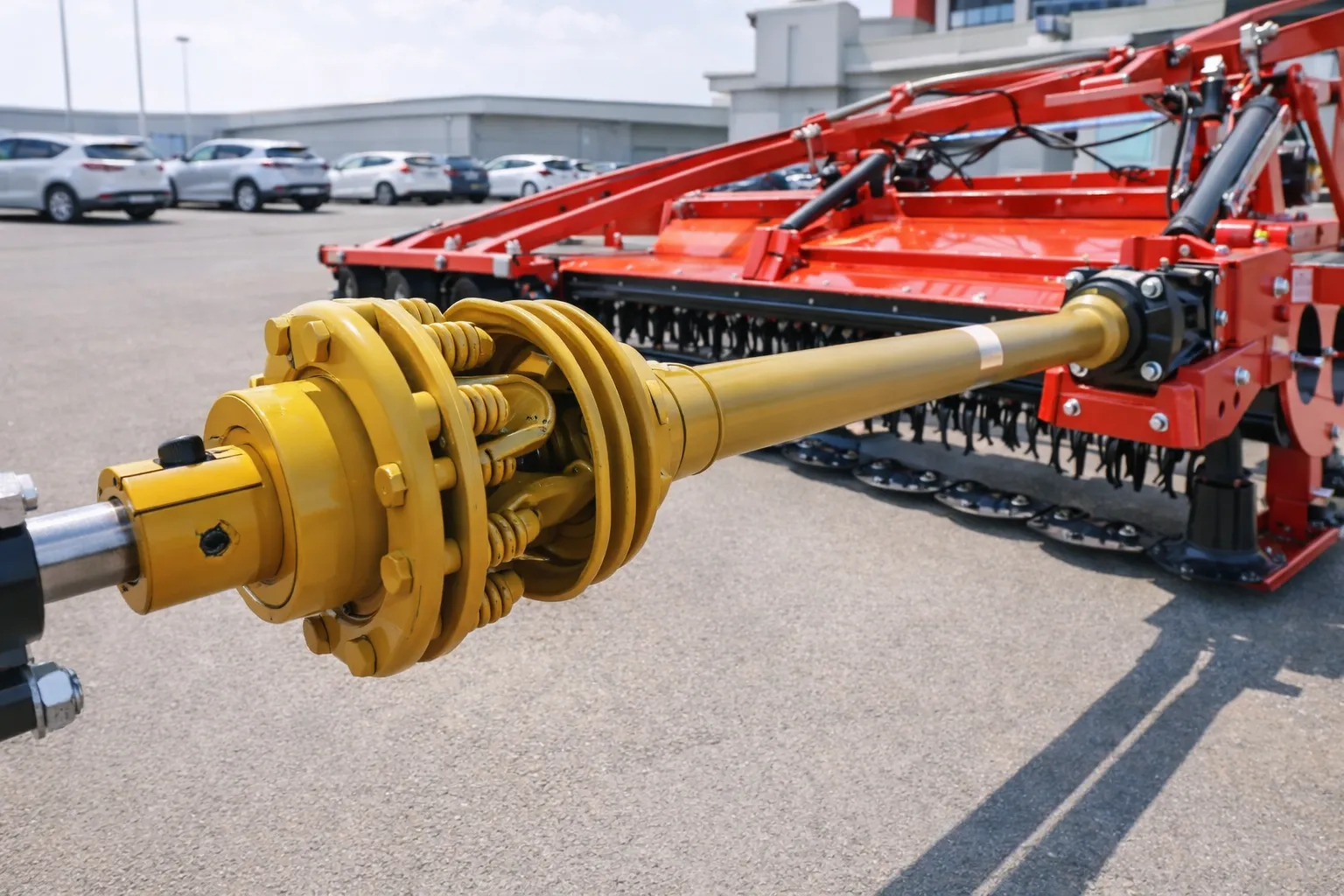
Minimum 3-inch cutting height reduces ash content (soil contamination) and preserves stand. High ash content (above 8% of DM) dilutes all nutrients — a lot testing 18% CP at 10% ash has less actual protein per pound than a lot testing 20% CP at 6% ash. Dairies notice high-ash hay from feeding behavior: the cows sort out the gritty, stemmy fraction and leave more refusal. The mowing equipment calibration that affects cutting height uniformity requires PTO driveline specifications in
agricultural gearbox and PTO driveline component specifications.
How Dairy Nutritionists Buy Hay and What They Pay
Understanding the buyer’s purchasing process positions a hay producer to present hay appropriately, time contract discussions correctly, and negotiate from knowledge rather than reaction. Dairy hay purchasing follows a distinctive calendar and decision-making pattern that differs from livestock auction or spot market cattle hay sales.
The annual contracting window
Large dairies bid hay annually in late winter (January–March) for the coming season’s supply. They approach 2–4 established suppliers who have delivered consistently in prior years and negotiate supply agreements specifying quality minimums, volume, delivery schedule, and price adjustment clauses for deviation from spec. Producers who establish themselves as consistent suppliers enter this bidding cycle as incumbents with pricing advantage. Producers who lack a track record must demonstrate quality through a trial delivery or testing documentation before being admitted to the contract bid process.
The sample approval process
Before accepting a truckload, dairy nutritionists (or their assigned livestock managers) sample from the lot — typically using a hay probe on 15–20 bales per load — and submit the composite sample to a laboratory. Results come back in 24–48 hours; if they meet specification, the load is approved for delivery or feeding. If they deviate, the nutritionist either rejects the load or accepts at a price discount corresponding to the quality shortfall. Producers who test their own hay before delivery and provide the test report proactively can negotiate the price before the load ships rather than after — a significant advantage.
Price adjustment provisions
Most dairy hay contracts include quality adjustment provisions — a specified base price for hay meeting the contracted CP and NDF specification, with per-unit adjustments for deviation. A common structure: $2.00/ton per 1% CP below 20% minimum, and $1.50/ton per 1% NDF above 38% maximum. A lot testing 18% CP and 41% NDF receives a $4.00 + $4.50 = $8.50/ton deduction from the base price. Understanding these provisions before signing a contract allows producers to assess whether a lot meeting the deduction scenario is still economically worthwhile to deliver or should be redirected to a beef market buyer.
Dairy Hay Quality FAQs
What RFQ does dairy hay need to be for premium markets?+
The RFQ threshold varies by dairy operation, ration formulation, and which cow group the hay is feeding — there is no universal dairy hay RFQ standard. However, practical market benchmarks for premium dairy alfalfa hay in major producing regions are: RFQ above 185 for early-lactation (high-group) hay, RFQ 150–185 for mid-lactation, and RFQ below 140 for dry cows and replacement heifers. RFQ must be calculated from a test that includes 48-hr NDFD — a test report that shows only RFV (without NDFD) cannot calculate RFQ and leaves the buyer without the primary quality metric for dairy ration formulation. The most important thing to know: the difference between RFQ 160 and RFQ 185 represents a real and quantifiable difference in feeding value per ton that sophisticated dairy nutritionists price accordingly — the premium for the higher-RFQ lot is not arbitrary.
Is second-cut alfalfa better than first-cut for dairy?+
In most U.S. alfalfa-producing regions, second and third cuttings consistently produce higher dairy-quality hay than first cutting — but the reason is management, not the cutting number per se. First-cut alfalfa grows under the coolest, wettest conditions of the season, producing thicker stems and a longer interval to boot stage than later cuttings. By the time first-cut alfalfa in most regions reaches boot or early bloom stage (when the producer can cut), it has accumulated more NDF and lower NDFD than second-cut material cut at equivalent growth stage. Second and third cuttings grow faster under warmer conditions, reach cutting stage in 28–35 days rather than 45–55 days, and have finer stems with higher leaf fraction at equivalent cutting timing. The net effect: equivalent cutting stage management produces higher NDFD in later cuttings because the crop’s growth rate is faster and lignification per unit of time is lower. In California and other warm regions where first-cut timing coincides with optimal spring conditions, this effect is less pronounced.
Do dairy buyers require mycotoxin testing on every hay load?+
Large modern dairies (500+ cows) with active nutrition management increasingly require aflatoxin testing on every hay delivery as a condition of accepting the load. This is non-negotiable for dairies under milk contracts with premium processors, because a milk load testing positive for aflatoxin M1 above the FDA action level creates immediate liability for the dairy. The aflatoxin test cost is $15–$25 per sample — a small fraction of the load value that provides insurance against a six-figure liability from contaminated milk. Smaller dairies on direct beef-chain milk contracts may not require mycotoxin testing but should receive hay produced with the same moisture and storage management that prevents aflatoxin regardless. Proactive producers who include aflatoxin test results with their hay delivery documentation differentiate themselves as professional suppliers — it signals the same quality consciousness that dairy operations want in a long-term hay partner.
Can bermudagrass hay meet dairy quality requirements?+
Bermudagrass hay at 28-day cutting intervals (Tifton 85 specifically) can meet dairy mid-lactation quality specifications and is routinely fed in southern dairy operations as a component of the TMR. Tifton 85 at boot-to-early-head stage typically tests CP 11–14%, NDF 55–62%, and 48-hr NDFD 42–52% — values that meet mid-lactation and dry cow dairy specifications but fall short of high-production alfalfa standards (CP 20%+, NDFD 50%+) without supplementation. Southern dairy nutritionists commonly blend bermudagrass hay with alfalfa or alfalfa-grass hay to achieve the combined nutrient profile of a high-production ration. Bermudagrass hay marketed to dairy operations should always include a full NDFD test result, because the variability in NDFD between Tifton 85 and common bermudagrass is significant and directly affects how much the nutritionist must supplement with concentrates.
What is ADICP and why do dairy nutritionists care about it?+
ADICP (Acid Detergent Insoluble Crude Protein), sometimes called heat-damaged protein or bound protein, represents the fraction of total CP that is chemically bound to fiber — specifically the ADF fraction — and is therefore largely unavailable for digestion and absorption in the rumen and small intestine. Heat from excessive internal bale temperature during curing (typically from baling above 18–20% moisture) drives the Maillard reaction that creates this bound protein. A hay that tests 20% total CP but contains 8% ADICP has only 12% available CP from a ruminant’s perspective — the 8% ADICP shows up in the total CP number but provides virtually no nutritional value. Dairy nutritionists routinely subtract ADICP from total CP when formulating rations. A lot with 20% CP and 8% ADICP receives nutritional credit equivalent to approximately 12–13% CP when formulated by a knowledgeable nutritionist — a finding that significantly reduces its value relative to a 20% CP lot with only 2% ADICP. Specifically request ADICP in your forage test panel when marketing to dairies; the result is a direct quality indicator of baling moisture management that sophisticated buyers use to assess supplier practices.
What is the difference between RFV 180 and RFQ 180 hay?+
RFV 180 hay and RFQ 180 hay are likely very different products in practice, even though they carry the same number. RFV does not incorporate NDFD into its calculation — it uses ADF to predict digestibility. RFQ uses NDFD directly. A lot of hay can achieve RFV 180 with high NDFD (around 50%) or with moderate-to-low NDFD (around 38%) if the NDF and ADF values are in the right range. The same is not true for RFQ — to achieve RFQ 180, the NDFD must be high (typically 50%+) because RFQ’s formula gives significant weight to actual digestibility. Two lots of hay — one at RFV 180 with NDFD 38% and one at RFQ 180 with NDFD 52% — would perform dramatically differently when fed to high-producing dairy cows despite carrying the same index value under their respective systems. This is precisely why RFQ replaced RFV as the preferred dairy hay metric: the RFQ number cannot be achieved by low-NDFD hay, making it a better predictor of actual animal performance and a better proxy for true feeding value at the dairy.
Editor: Cxm