Baler Hydraulic System Guide

원형 베일러 유압 시스템: 유지보수 및 문제 해결

The hydraulic system is responsible for every powered movement on the round baler: opening and closing the tailgate, applying the density spring assist, operating the net wrap or twine tensioner, and controlling the crop intake deflector on some models. A hydraulic system that is correctly maintained — clean fluid, intact hoses, functional cylinders — operates without attention for thousands of bales. One that receives deferred maintenance gradually develops the slow leaks, contamination, and reduced pressure that cause the most frustrating mid-harvest problems.

System Overview

Round Baler Hydraulic Circuit: What Each Component Does

The round baler’s hydraulic circuit is supplied by the tractor’s rear hydraulic system through one or two remote couplings. The tractor’s hydraulic pump generates pressure; the baler’s circuit directs that pressure to specific functions through control valves, cylinders, and accumulators. Understanding what each component does allows you to isolate failures to the correct component rather than guessing at repairs.

Tailgate cylinder
Double-acting cylinder that raises and lowers the tailgate. Most common hydraulic maintenance point on the baler.
Density accumulator
Hydraulic or spring-hydraulic accumulator that maintains density spring tension. Requires pre-charge pressure check annually.
Control valves
Direct oil flow to each function. Spool valves most common; contamination is the primary failure mode.
Hoses and fittings
Connect all components. Most visible wear items; inspected annually and after any physical contact events.
No. 1 cause
Contamination — dirt and water in hydraulic fluid — is the leading cause of hydraulic component failure in farm equipment
2,000 hr / 2 yr
Typical tractor hydraulic fluid change interval; baler receives fluid from tractor — fluid condition affects baler components directly
≤5 in / 15 min
Acceptable tailgate drift rate for a healthy hydraulic system; above this rate indicates cylinder seal or valve leak

Hydraulic Fluid: Type, Condition, and the Contamination Problem

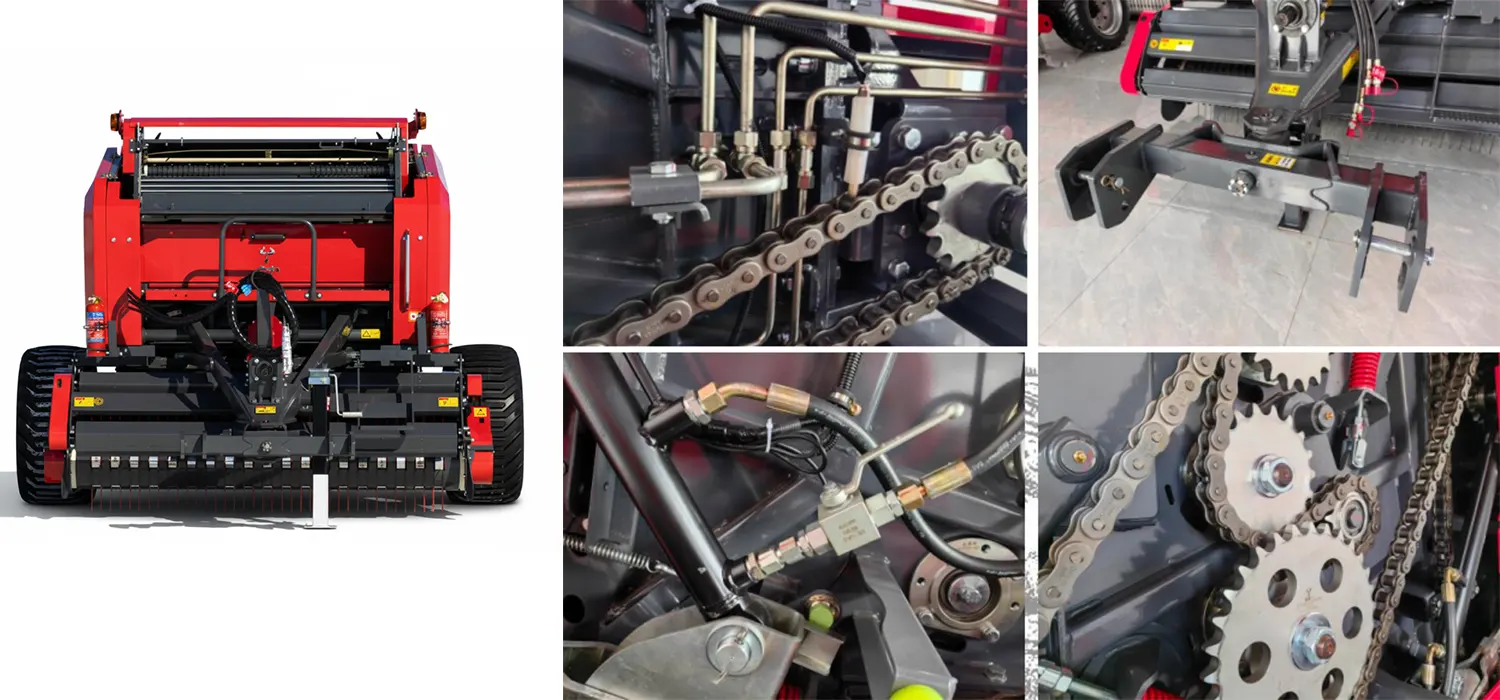
round baler hydraulic features — the baler's hydraulic components receive fluid from the tractor's rear hydraulic circuit; the fluid condition in the tractor directly determines the service life of every seal, valve, and cylinder on the baler

The round baler does not have its own hydraulic reservoir — it operates on fluid supplied by the tractor’s rear hydraulic system. This means the baler’s hydraulic components are directly exposed to whatever condition the tractor’s hydraulic fluid is in. A tractor with degraded, water-contaminated, or overdue hydraulic fluid is simultaneously degrading the baler’s seals, valves, and cylinder bores every time the tractor’s hydraulics are engaged.

Fluid type specification
Use the fluid specification listed in the tractor’s operator manual — typically a UTTO (universal tractor transmission oil) or HF0 hydraulic fluid meeting ISO VG 46 or 68 specification. Never mix fluid types; if the tractor has been running one specification and you top up with a different type, the additive chemistries can interact and reduce the fluid’s lubrication and wear-protection properties. When switching fluid types at a full drain-and-fill service, flush the system with the new fluid before filling to the service level.
Water contamination signs
Hydraulic fluid with water contamination appears milky, cloudy, or hazy when examined in a clear container. Water lowers the fluid’s viscosity, reduces its lubrication film strength, and initiates rust formation on metal surfaces inside cylinders and valve bores. A fluid that appeared golden and clear at the previous change that now looks cloudy should be changed immediately regardless of hour interval. Water enters hydraulic systems through condensation in the reservoir, a leaking cooler, or washdown water entering through a damaged breather.
Particle contamination
Dirt particles in hydraulic fluid cause abrasive wear on spool valve bores and cylinder walls — surfaces machined to tolerances measured in thousandths of an inch. Particles larger than the clearance between spool and bore score both surfaces, eventually causing the spool to stick or leak. The tractor’s hydraulic filter removes particles above filter media rating; a filter that has exceeded its service interval no longer removes particles effectively. Service the tractor’s hydraulic filter on the manufacturer’s schedule — the baler’s service life depends on it.

Hydraulic Hose Inspection: Identifying Hoses That Need Replacement

foragebaler.com equipment quality — hydraulic hose condition inspection is a pre-season and annual maintenance requirement; a hose that shows outer cover cracking, abrasion damage, or soft spots should be replaced before harvest season begins rather than run to failure during operation

Hydraulic hoses are rated for a service life of 6–10 years under normal agricultural use — but field conditions accelerate wear significantly. Hoses that route near moving components, experience vibration, are exposed to UV, or have been bent sharply beyond their minimum bend radius fail earlier than the rated service life. Annual hose inspection is the practice that catches developing failures before they become a high-pressure spray of hot hydraulic oil during operation.

Replace immediately — these signs
  • Visible oil seep or weeping at any point on the hose body (not just at fittings)
  • Soft spot in the hose body that deforms under finger pressure — indicates inner tube delamination
  • Outer cover cracked deeply enough to expose braid reinforcement
  • Kinked hose that has been creased from a sharp bend
  • Fittings showing corrosion, rust, or physical damage at the swage collar
Monitor closely — schedule replacement
  • Surface crazing (fine surface cracks without depth) — replace before next season
  • Outer cover showing brittleness (breaks when bent sharply by hand) — UV degradation has progressed
  • Hoses over 8 years old regardless of appearance — replace proactively
  • Any hose routed adjacent to a rotating component without a protective sleeve
Acceptable — continue monitoring
  • Uniform outer cover with minor surface weathering but no cracking
  • Fittings dry and undamaged
  • No soft spots along full hose length
  • Hose under 6 years old from manufacture date (printed on hose)
  • No contact with hot or rotating components
High-pressure hose safety: Never check for hydraulic leaks with bare hands — a pinhole leak at 2,500 PSI can inject fluid through skin and cause serious injury. Use a piece of cardboard held near the suspected leak to detect the stream. If fluid injection injury occurs, seek emergency medical treatment immediately regardless of how minor the entry wound appears.

Tailgate Hydraulic Cylinder: The Most Serviced Component

The tailgate cylinder is the most frequently operated hydraulic component on the baler — it cycles on every bale ejection, accumulating hundreds or thousands of cycles per season. The cylinder’s piston seals and rod seal are wear items that require periodic replacement. Seal deterioration shows as three progressively worsening symptoms: oil film on the rod surface, active weeping, and finally active dripping that becomes a visible oil drip at the rod seal face.

Tailgate drift test

Open the tailgate fully and engage the hydraulic remote to hold. With the tractor at idle, observe the tailgate position over 15 minutes. A healthy cylinder with good seals should not drift more than 4–5 inches over 15 minutes. Drift above this rate indicates either a leaking piston seal (internal bypass), a leaking control valve spool (oil returning to tank), or a leaking tractor remote coupler (oil bypassing the connection). Distinguish between these by isolating: if the tailgate drifts with the tractor remote fully engaged in hold, the leak is in the cylinder or valve. If it drifts only when the remote is in neutral, the tractor remote coupler is the likely leak point.

Cylinder seal replacement

Most round baler tailgate cylinders can be serviced with a seal kit available from the baler manufacturer or aftermarket hydraulic suppliers. The procedure involves removing the cylinder from the baler, disassembling the end cap to access the piston, replacing the piston seal, rod seal, and O-rings, reassembling with clean parts, and reinstalling. Clean assembly is critical — any contamination introduced during reassembly immediately begins damaging the new seals. Hydraulic seal kits typically cost $20–$80; professional cylinder service at a hydraulic shop runs $100–$250 for the labor if you prefer not to DIY.

Hydraulic Pressure Testing: Confirming System Performance

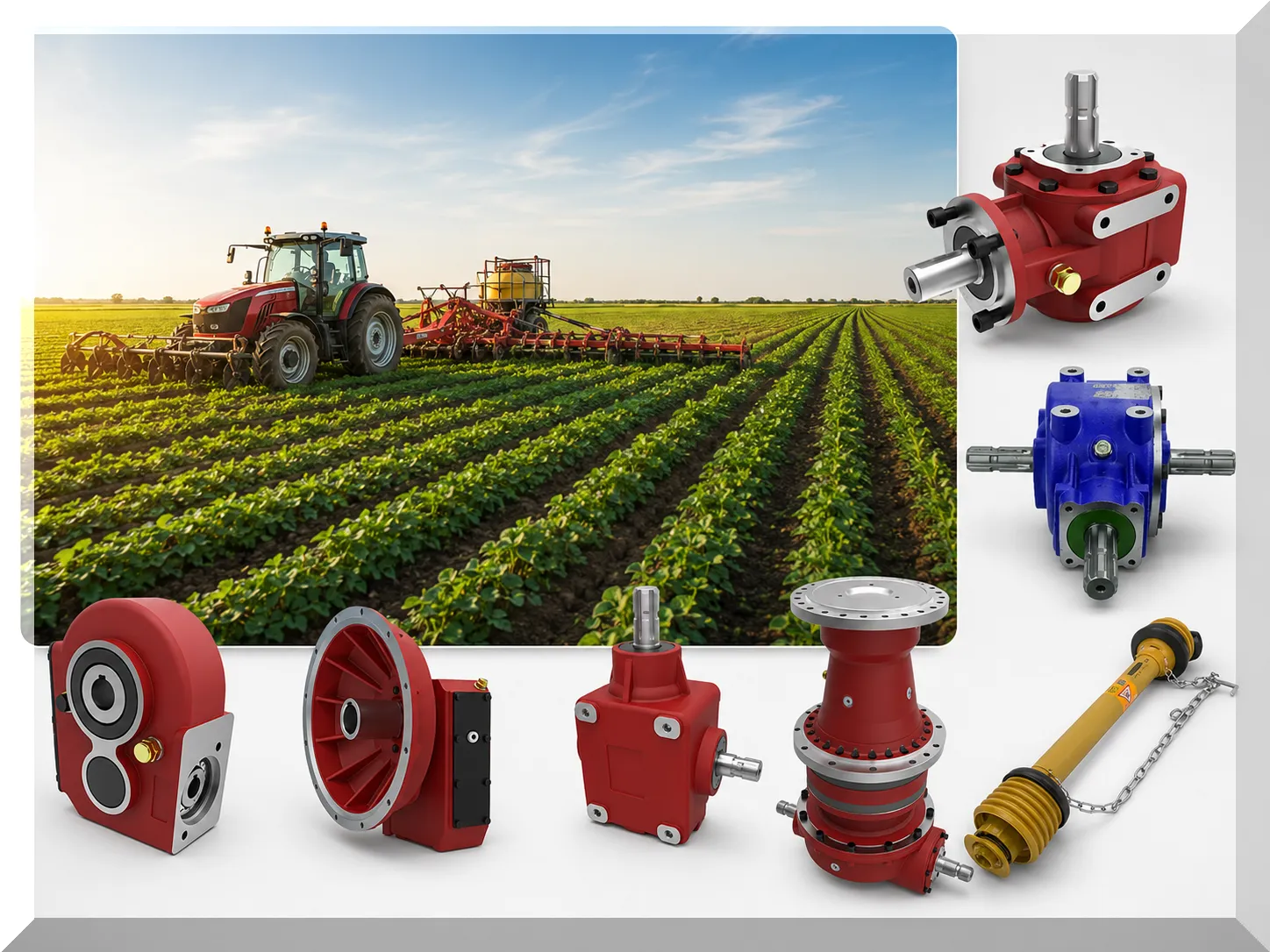
hydraulic driveline interface components — the tractor-to-baler hydraulic interface at the remote couplers is the most common source of hydraulic flow restriction; worn or damaged couplers that don't fully open reduce the flow rate available to the baler's functions and cause slow or incomplete tailgate operation

Hydraulic pressure testing confirms whether the system is delivering the pressure and flow rate the baler’s components require. This is the diagnostic step that distinguishes between a slow tailgate caused by low tractor hydraulic pressure, low flow due to a restricted coupler, or a valve that is not opening fully. A hydraulic pressure gauge and flow meter can be rented from most equipment dealers for a half-day diagnostic session.

Basic Hydraulic System Pressure Check — Procedure
1

Check tractor relief valve pressure: Connect a hydraulic pressure gauge to the tractor’s rear remote port. Operate the remote to full extension against a blocked load. The gauge reading is the system’s relief valve pressure — should match the tractor’s specified system pressure (typically 2,000–2,500 PSI for open-center systems, 2,500–3,000 PSI for closed-center). Low pressure indicates a worn pump or incorrect relief valve setting.

2

Check coupler flow restriction: With the baler disconnected, time how fast the tractor remote extends a known cylinder at a known pressure. Then reconnect the baler and time the same operation. Significantly slower time with the baler connected indicates restriction in the baler’s couplers, hoses, or internal valve. Dirty or partially closed quick-connect couplers are the most common cause of flow restriction at the tractor-baler interface.

3

Inspect and clean quick-connect couplers: Detach all hydraulic hose couplers from the tractor remote ports. Inspect the ball check mechanism in each coupler half for dirt, wear, or ball that doesn’t seat cleanly. Clean with compressed air and solvent. A coupler that doesn’t open fully restricts flow to 30–50% of its rated capacity — equivalent to a severely restricted hydraulic system even though no component is technically “failed.”

The complete seasonal maintenance schedule — incorporating hydraulic system checks alongside belt, chain, and bearing service — is in the round baler seasonal maintenance checklist. Diagnosing slow tailgate operation, incomplete tailgate closure, and other hydraulic symptoms from their specific root cause is in the round baler troubleshooting guide. Hydraulic system component specifications including operating pressure and flow requirements are in 농업용 변속기 및 PTO 구동계 부품 사양.

Common Hydraulic Symptoms and Their Root Causes

SYMPTOM
Tailgate opens and closes slowly

Most common causes in order: dirty or restricted quick-connect couplers at tractor interface; tractor hydraulic pump producing below-specification pressure; tractor hydraulic oil cold (viscosity too high — wait for warm-up); baler’s internal control valve spool partially stuck in partially-open position. Start diagnostic at the couplers — cleaning them resolves this symptom in approximately 50% of cases without further investigation.

SYMPTOM
Tailgate drifts down when held in the open position

Internal cylinder bypass: piston seal worn and allowing oil to pass from cap-end to rod-end within the cylinder. Load-holding valve failure: the check valve that holds pressure in the cylinder when the tractor remote is in neutral is leaking. Tractor remote coupler not holding: the tractor’s remote port coupler is allowing back-flow. Isolate by disconnecting the baler hose at the tractor remote and capping the tractor port — if tailgate stops drifting, the leak is in the tractor coupler. If it continues to drift with hose disconnected and cylinder circuit isolated, the cylinder piston seal has failed.

SYMPTOM
Oil visible on cylinder rod surface at rest

Rod seal deterioration — the dynamic seal that prevents oil from escaping along the polished rod surface has worn past its sealing capability. An oil film (not dripping) is an early warning; active weeping is advanced seal wear; dripping is seal failure requiring immediate service. Oil on the rod also attracts dust that acts as grinding compound on the rod surface — a contaminated rod surface accelerates the remaining seal life dramatically. Schedule rod seal replacement at first sign of weeping; do not defer.

SYMPTOM
Tailgate will not fully close or close consistently

Often misdiagnosed as a hydraulic problem but frequently caused by mechanical interference — a bale that hasn’t fully ejected, tailgate latch mechanism binding, or tailgate hinge wear causing misalignment. Before assuming hydraulic failure on a “tailgate won’t close” symptom, confirm the bale has fully ejected and there is no mechanical obstruction. If the tailgate mechanism moves freely by hand when the hydraulic pressure is released, the problem is mechanical, not hydraulic. If the tailgate feels hydraulically sluggish or won’t generate enough force to close against normal resistance, then the hydraulic system is the cause.

Hydraulic System Pre-Season and In-Season Service Intervals

Service item Interval Action / specification
Hydraulic fluid condition check Pre-season Examine tractor hydraulic fluid from dipstick — look for cloudiness (water) or dark discoloration (oxidation). Change fluid if condition questionable regardless of hour interval.
Hose visual inspection Pre-season + after any physical contact event Full visual inspection per the criteria in this guide. Replace any hose with replace-immediately criteria before season opens.
Quick-connect coupler cleaning Pre-season + whenever slow tailgate observed Clean both male and female coupler halves with compressed air and solvent. Inspect ball check for full travel. Replace any coupler with a sticky or partially-opening ball.
Tailgate drift test Pre-season 15-minute drift test as described; acceptable drift less than 5 inches. Investigate any result above this threshold before the season opens.
Hydraulic accumulator precharge Annually Check nitrogen precharge pressure with a nitrogen charging kit; top up to manufacturer specification (typically 150–250 PSI); a zero-precharge accumulator provides no function.

Baler Hydraulic System FAQs

My tailgate slams shut instead of closing smoothly. What causes this?+
A tailgate that closes violently rather than smoothly indicates the return flow from the cylinder is not being controlled — the oil is flowing back to the tractor’s return at an uncontrolled rate without the metered restriction that slows the closing cycle. The most common causes: a missing or failed flow control valve or restrictor orifice in the return line (some balers have a fixed orifice to slow tailgate closure — check if it is present and clean); a tractor remote in a float or detented position that allows unrestricted return flow; or a pilot-operated check valve that is not providing the intended load-holding and metered-release function. Check the baler’s operator manual for the intended tailgate closure speed — if the manual describes a slow-close system and yours closes in under 1 second, the flow control mechanism has failed or is missing.
Can I use any hydraulic hose from the auto parts store to replace a baler hose?+
No — hydraulic hoses have specific pressure ratings, temperature ratings, and chemical compatibility requirements that must match the application. A standard auto parts store hydraulic hose is typically rated to 3,000 PSI working pressure; this may be adequate for the baler’s tailgate circuit (which typically operates at tractor system pressure of 2,000–2,500 PSI) but may be insufficient if the circuit has pressure spikes during operation. More importantly, the hose end fittings must be the correct type — JIC 37°, ORFS (O-ring face seal), or NPT — and the correct thread size. Agricultural hydraulic components almost universally use JIC or ORFS fittings; using the wrong fitting type creates a leak-prone joint that will fail. For any hose replacement, take the old hose to an agricultural hose fabrication shop (most farm equipment dealers have this capability) and have a new hose fabricated to the identical specification rather than substituting a generic hose.
How do I know if it’s the cylinder or the valve causing my hydraulic problem?+
The isolation test distinguishes cylinder problems from valve problems: disconnect the hydraulic hoses from the cylinder and cap both ports on the cylinder. If the symptom (usually tailgate drift) continues after the cylinder is isolated, the leak is in the valve or hose upstream of the cylinder — not in the cylinder itself. If the symptom stops when the cylinder is isolated, the leak is inside the cylinder (piston seal bypass). This test takes 10 minutes and saves the cost of removing and servicing a cylinder that wasn’t the problem. The same isolation logic applies to any other hydraulic actuator on the baler — cap the cylinder, verify whether the symptom persists to identify which side of the circuit the leak is on.
What is the white residue I see around some hydraulic fittings?+
White or gray residue around hydraulic fittings is typically dried hydraulic fluid — oil that seeped past the fitting, collected dust, and then oxidized to a paste-like consistency. It indicates the fitting has been seeping even if the seep is currently too slow to produce visible oil drips. Clean the area around the fitting thoroughly, dry it, and watch for new oil accumulation over the next hour of operation. A fitting that produces fresh oil accumulation after cleaning has an active leak that requires tightening or seal replacement. Some fittings use O-ring face seal (ORFS) connections where the seal is in the face of the fitting — inspect the O-ring condition when disconnecting these fittings; a flattened or cracked O-ring requires replacement and is the common cause of seeping at ORFS connections.
Is it safe to operate the baler with a minor hydraulic hose weep during harvest?+
A minor seep — defined as a very slow accumulation of oil at a fitting or hose body with no active drip — can typically be operated through a single cutting day if the hose body damage is isolated to a fitting area and no structural hose damage is visible. However, any seep should be repaired before the next operation day, not deferred to end-of-season. The risk of operating with a seeping hose is not primarily the oil loss — it is that a hose with one seep point is more likely to develop a complete failure under operating pressure, particularly when the oil heats up and pressure spikes occur during operation. A seep that was minor in the morning can become a spray failure by afternoon. Replace seeping hoses at the end of the day; do not defer to next season.
Do I need to bleed air from the baler’s hydraulic system after hose replacement?+
Yes — air introduced into the hydraulic system during hose replacement must be purged before normal operation. Air in a hydraulic circuit causes the characteristic “spongy” or inconsistent cylinder response — the actuator may move in short jerks rather than smoothly, or take several cycles to complete the full stroke. To bleed air: after replacing the hose and reconnecting all fittings, slowly cycle the affected circuit (e.g., open and close the tailgate) 6–10 times at moderate speed — not at full speed. The repeated cycling moves air through the system toward the highest point in the circuit where it can return to the tractor reservoir. If spongy response continues after 10 cycles, check that all fitting connections are fully tight and that no air entry point remains. Never operate at full load or speed with a spongy hydraulic system — air compression can cause cavitation damage to downstream components.

foragebaler.com round baler hydraulic specifications — cylinder bore, operating pressure, and flow requirements for all current models

Get Hydraulic Specifications for Your Baler Model

Tell us your baler model and the specific hydraulic symptom you are experiencing. We provide the operating pressure specification, cylinder bore dimensions, and hose routing reference for your configuration so you have the correct specs for any repair or service.

Get Hydraulic Specifications

편집자: Cxm