
Para onde vai a matéria seca da silagem entre o ensilador e o silo?
Um fardo de silagem redondo bem feito — devidamente murchado, embalado corretamente, selado em até 2 horas após a formação e armazenado em solo drenado — perde de 2 a 41 TP5T de sua matéria seca durante o próprio processo de fermentação. Essa perda é inevitável; ela representa o substrato consumido pelas bactérias do ácido lático enquanto acidificam o fardo até atingir seu pH estável de fermentação. Qualquer perda adicional de matéria seca além desse valor basal de 2 a 41 TP5T é evitável.
Na realidade da maioria das operações de alimentação com silagem em escala comercial e agrícola, as taxas de perda total de matéria seca (MS) variam de 12 a 221 TP5T desde o enfardamento até o consumo final pelos animais. Essa diferença entre os 2 a 41 TP5T evitáveis e os 12 a 221 TP5T observados representa valor nutritivo real que está sendo descartado ou decomposto em vez de consumido. As três fontes de perda pós-fermentação — danos na película de armazenamento, deterioração aeróbica na distribuição e desperdício na alimentação — possuem práticas de manejo específicas que as reduzem de forma independente.
Quando o fardo está pronto para alimentar o gado? Cronograma de fermentação
A fermentação da silagem não se completa imediatamente após o enfardamento — a população de bactérias do ácido lático precisa aumentar, dominar e acidificar toda a massa do fardo antes que um pH anaeróbico estável seja atingido. Abrir um fardo antes da fermentação estar completa expõe o material parcialmente fermentado ao oxigênio, o que pode desencadear uma fermentação aeróbica secundária e aquecimento, em vez de uma conservação anaeróbica estável. Compreender o cronograma de fermentação permite determinar o tempo mínimo de espera antes da distribuição da silagem.
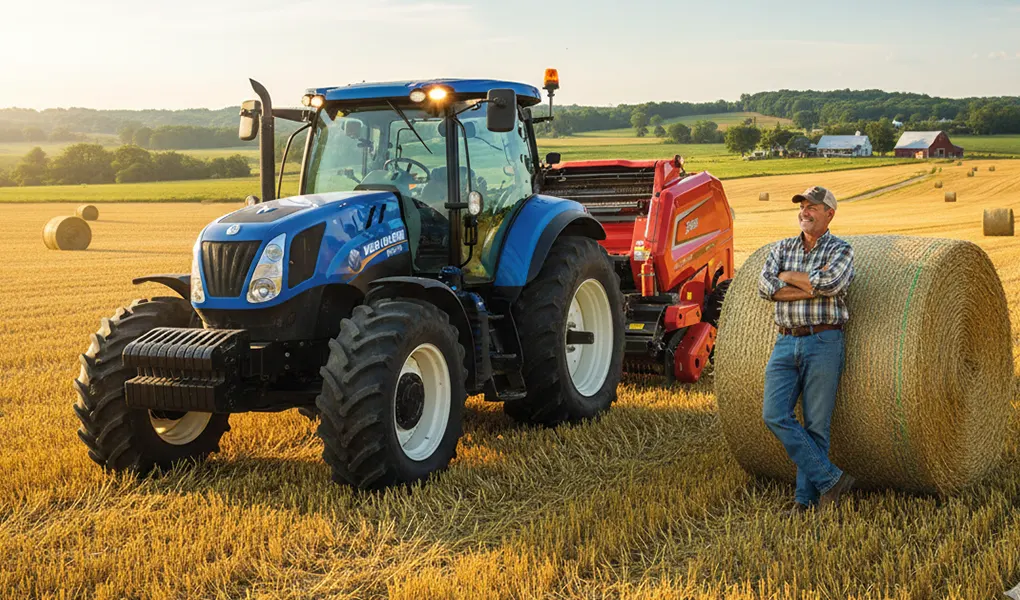
Abrindo um fardo embalado: a sequência que minimiza a exposição aeróbica
Cada segundo, desde a remoção do filme plástico até o consumo pelo animal, é um segundo em que organismos aeróbicos estão metabolizando a superfície do fardo. As 24 a 48 horas após a abertura de um fardo de silagem são o período de maior perda de matéria seca por ação aeróbica — leveduras e fungos presentes na superfície do fardo começam a consumir ácido lático e carboidratos poucos minutos após a exposição ao oxigênio. O controle da sequência de abertura e da velocidade de consumo após a abertura determina o quanto dessa perda será evitada.
- Abra e alimente dentro de 4 a 6 horas (não “abra de manhã e alimente à noite”).
- Remova a película apenas de uma extremidade — não desdobre completamente o fardo antes de usar.
- Posicione o fardo no local de alimentação. antes Filme de abertura — mova-se enquanto estiver embrulhado
- Adeque a área de superfície aberta à taxa de consumo diário (ver Módulo 4).
- Mantenha a superfície exposta longe da chuva e da luz solar direta — ambos aceleram a perda aeróbica.
- Abrir o fardo e deixá-lo durante a noite antes de alimentar os animais — a população de leveduras duplica a cada 3-4 horas em condições de temperatura elevada.
- Remover completamente a embalagem antes de transportar para o local de alimentação (danos por manuseio + exposição ao oxigênio)
- Alimentar os animais sob luz solar direta, sem sombra — o aumento da temperatura da superfície acelera exponencialmente o metabolismo aeróbico.
- Subdimensionamento da população de animais em relação ao volume de fardos abertos — a deterioração superficial ocorre quando a taxa de consumo é muito lenta.
Janela de estabilidade aeróbica: ajustar a taxa de alimentação ao tamanho do rebanho.

A regra fundamental de estabilidade aeróbica para silagem em fardos redondos é: Consuma a superfície aberta do fardo antes que o mofo se desenvolva visivelmente.Em termos práticos, isso significa que cada fardo aberto deve ser consumido em 24 a 48 horas em clima quente (temperatura ambiente acima de 18 °C) ou em 72 a 96 horas em clima frio (temperatura abaixo de 10 °C). Se o seu rebanho consome silagem mais lentamente do que isso, há um descompasso — ou muitos fardos abertos simultaneamente, ou muitos animais por fardo aberto.
| Classe animal | Ingestão diária de matéria seca de silagem (Peso corporal %) |
ingestão diária (lbs DM) |
Animais por fardo de 1.000 lb de matéria seca para alimentação de 2 dias |
Notas |
|---|---|---|---|---|
| Vaca leiteira (de alta produção) | 2,8–3,5% | 39–49 libras de matéria seca | 10 a 13 vacas | A silagem normalmente contém 50% de MS de Ração Total Misturada (RTM); o consumo real do fardo é maior se a silagem for a principal fonte de forragem. |
| Vaca de corte (seca/gestante) | 1,8–2,2% | 24–30 libras de matéria seca | 17–21 vacas | Se a silagem for a única forragem, aumente a escala; vaca de 544 kg (1.200 lb), silagem como única forragem. |
| Carne de novilho/carne de engorda | 2.2–2.8% | 16–22 libras de matéria seca | 23–31 estocadores | Novilho de 317 kg (700 lb); a taxa de crescimento e a suplementação com grãos afetam a ingestão de silagem. |
| Ovelhas (ovelhas) | 2,5–3,2% | 3,5–5 libras de matéria seca | 100–143 ovelhas | Ovelha de 150 libras (aproximadamente 68 kg); pequenos ruminantes necessitam de rebanhos grandes para consumir um fardo redondo inteiro em 48 horas. |
| Cavalo | 1,5–2,0% | 18–24 libras de matéria seca | 21–28 cavalos | Cavalo de 544 kg (1.200 lb); a alimentação de cavalos com silagem requer ausência comprovada de risco de listeria devido à boa qualidade da fermentação. |
As estimativas de consumo consideram a silagem como principal fonte de forragem, com base na matéria seca. O consumo real varia de acordo com a qualidade da forragem, a estação do ano, a condição corporal e o estágio de produção. O peso da matéria seca do fardo considera aproximadamente 500 libras de matéria seca por fardo de 1.000 libras (peso bruto) (50% de matéria seca, típico de silagem com umidade entre 45% e 55%). Ajuste de acordo com a umidade real do seu fardo.
Como a qualidade da silagem de feno muda entre o enfardamento e a alimentação do gado
A silagem não é o mesmo alimento no momento do fornecimento que a forragem era no momento do ensilamento. O processo de fermentação provoca algumas alterações que melhoram a disponibilidade de certos nutrientes e outras que reduzem a fração de proteína bruta. Conhecer essas alterações ajuda a prever com precisão a contribuição nutricional da silagem de feno nas formulações de rações e explica as diferenças entre uma análise da forragem fresca (pré-ensilagem) e uma análise da silagem (pós-fermentação).
- Digestibilidade da FDN — A fermentação decompõe parcialmente a hemicelulose, melhorando a digestibilidade ruminal da fração fibrosa em 3 a 8 pontos percentuais em comparação com o feno seco da mesma cultura.
- Palatabilidade — O ácido lático e o ácido acético presentes na silagem fermentada melhoram a aceitação por ruminantes, particularmente bovinos, em comparação com o feno seco de qualidade equivalente.
- Energia disponível — os ácidos orgânicos produzidos têm valor energético; o NEl da silagem de boa qualidade muitas vezes excede o do feno seco do mesmo corte em 5–10%
- Fração de proteína solúvel — A proteólise (degradação de proteínas por enzimas vegetais e bactérias) converte algumas proteínas verdadeiras em formas de nitrogênio não proteicas que são menos eficientemente utilizadas por ruminantes; parcialmente compensada por inoculantes adequados.
- Caroteno (precursor da vitamina A) — O beta-caroteno degrada-se significativamente durante a ensilagem; dietas à base de silagem para vacas próximas do parto devem incluir suplementação de vitamina A.
- Conteúdo de DM — 2–4% de MS são consumidos como substrato; o fardo pesa 2–4% a menos na saída do que no enfardamento (custo inevitável da fermentação)
A implicação prática para o balanceamento da ração: sempre utilize uma análise da forragem da silagem propriamente dita (e não a análise do feno seco antes da ensilagem) para a formulação da Ração Total Misturada (RTM). As alterações na digestibilidade da FDN, na fração proteica solúvel e no teor de umidade são tão significativas que o uso dos valores do feno seco para uma ração à base de silagem subestima consideravelmente os valores de energia, proteína e ingestão que os animais realmente recebem. Envie uma amostra de um fardo representativo para um laboratório de análise de forragem antes do início da temporada de alimentação. Para a configuração correta da ensiladeira que maximiza a qualidade da fermentação e minimiza as alterações negativas, consulte o [inserir referência aqui]. guia de enfardamento de fardos redondos.
Identificando silagem estragada antes de alimentar o gado — e o que fazer com ela.

Nem toda silagem que parece problemática é problemática — e nem toda silagem problemática tem uma aparência ruim. Desenvolver o hábito de inspecionar sistematicamente cada fardo ao abri-lo evita tanto o desperdício de descartar silagem boa prematuramente quanto o erro de alimentar o gado com material realmente estragado que contenha micotoxinas ou Listeria.
| O que você vê/cheira | Nível de risco | Causa mais provável | Decisão |
|---|---|---|---|
| Cheiro ácido e limpo, cor verde-oliva a castanha, superfície úmida | Nenhum | silagem de feno normal bem fermentada | Alimente imediatamente |
| Mofo branco ou cinza na superfície, apenas nos 2,5 a 5 cm externos; interior limpo. | Baixo | Deterioração aeróbica superficial durante o armazenamento devido a danos na película perfurada | Remova a camada externa mofada; limpe o interior. Certifique-se de que a película restante esteja intacta. |
| Cheiro amanteigado ou pútrido; descoloração marrom ou preta que se estende por mais de 10 cm (4 polegadas) dentro do fardo. | Alto | Fermentação clostridial (enfardado muito úmido, umidade >60%) ou penetração extensa de mofo. | NÃO alimentar animais de criação. Particularmente perigoso para cavalos e ovelhas. Compostagem ou descarte. |
| Colônias visíveis de mofo azul-esverdeado (Penicillium); cheiro de mofo | Alto | Infiltração sustentada de oxigênio através de danos na película; risco de micotoxinas | Realize testes para micotoxinas antes de alimentar o gado. Não alimente o gado leiteiro sem realizar os testes. Restrinja o consumo de micotoxinas pelo gado a menos de 20% da dieta se a qualidade parecer aceitável e não houver testes disponíveis. |
| Textura escorregadia e viscosa; cor castanha muito escura; cheiro a amoníaco | Crítico | Contaminação por Listeria monocytogenes (associada à contaminação do solo e à má fermentação) | NÃO administrar a animais gestantes de qualquer espécie, nem a cavalos. Consulte um veterinário antes de alimentar qualquer animal de criação. |
O último problema do 20%: Gerenciando a parte inferior do fardo
A parte inferior de um fardo redondo de silagem é a seção mais difícil de alimentar os animais de forma eficiente. Quando a parte superior do fardo é consumida, o material restante geralmente fica mais denso (o fardo se acomoda sob o próprio peso), mais úmido (a condensação e os efluentes do fardo migram para baixo) e em contato mais direto com a superfície do solo. Os animais também demonstram menos interesse em consumir o material da parte inferior, pois o sabor é diferente (maior acidez devido à concentração de efluentes) e exige mais esforço para ser acessado à medida que o fardo encolhe.
Distribua os fardos sobre uma base de concreto, cascalho ou plataforma de madeira elevada. O contato com o solo absorve os efluentes e permite que os organismos do solo penetrem na base dos fardos por baixo, acelerando a decomposição na última seção.
Quando o fardo estiver com menos de 30% do tamanho original, reduza o número de animais com acesso simultâneo. Um grupo menor que termina o fardo mais rapidamente reduz o tempo total de exposição aeróbica na parte inferior densa e úmida.
Pequenos rebanhos (menos de 15 vacas) alimentados com silagem em fardos redondos devem usar formatos de fardos menores (4x4) para reduzir o tempo em que o fardo permanece na fase final de silagem (20%). Fardos grandes de 5x5 para pequenos rebanhos geram perdas excessivas por deterioração na fase final de silagem (20%), o que é evitado com o uso de fardos menores.
Perguntas frequentes sobre alimentação de silagem
Adquira equipamentos de enfardamento e embalagem adequados ao seu programa de silagem.
A qualidade da fermentação começa com uma densidade consistente dos fardos e uma aplicação confiável do filme plástico — ambos determinados na etapa de enfardamento e embalagem. Nossa equipe confirma a configuração de densidade dos fardos, a quantidade de camadas de filme plástico e a configuração da embaladora para a umidade da sua colheita e a taxa de alimentação do rebanho antes do envio do seu equipamento.
Editor: Cxm


