
Why Variety Choice Is the First Mechanical Harvest Decision
Kidney bean mechanical harvest involves two sequential operations that put different demands on the variety: the pulling operation, which grips the crown of each plant and lifts it from the soil, and the windrowing and combining that follow. A variety that is easy to pull can still produce high combine losses if the pods shatter during windrow pickup. A variety with excellent pod retention can produce high pulling losses if the root system is too aggressive to extract cleanly at harvest maturity.
The Michigan dry bean industry — the largest kidney bean producing region in the United States — has developed extensive data on variety performance across these harvest requirements through decades of university trials and commercial grower experience. The key lesson from this data: the 8–12% spread in field losses between the best and worst varieties for mechanical harvest represents more economic impact than any equipment or timing decision a grower makes during the season. Variety selection is the highest-leverage harvest decision, and it is made at planting.
The Six Variety Traits That Determine Mechanical Harvest Suitability
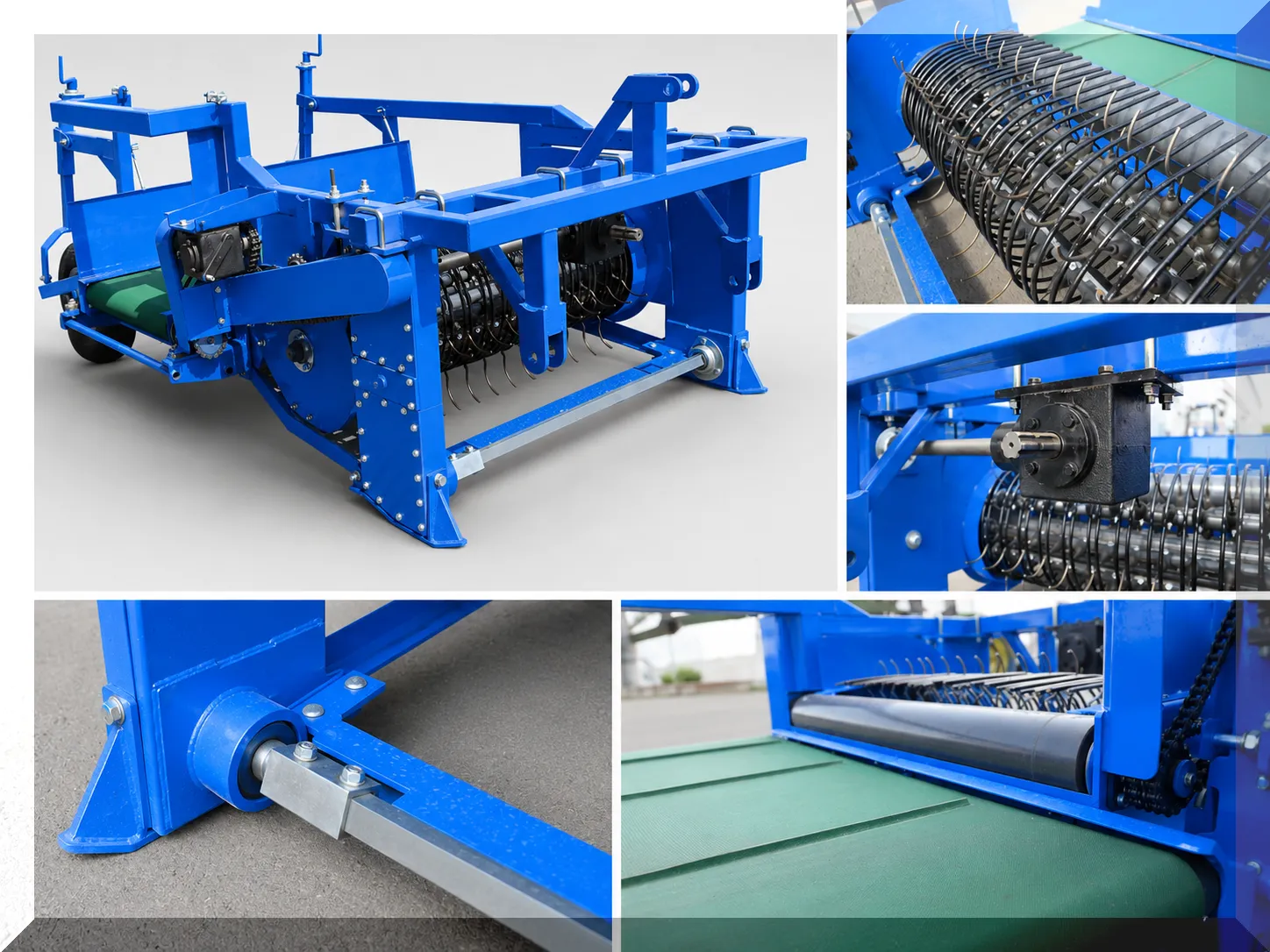
The height above the soil surface of the lowest mature pod on the plant determines the minimum pulling height and the proportion of crop that is recoverable without soil contact. Varieties with lowest pod height below 3 inches produce unacceptable soil disturbance and pod shattering during pulling. Target varieties with lowest pod height of 4 inches or above — this allows the puller to extract the plant cleanly without the lower pods contacting the puller shoes. University variety trials report lowest pod height as a standard measurement; verify this metric for any new variety before committing large acreage.
Determinate varieties set pods in a concentrated period and reach maturity uniformly across the plant — the top pods and bottom pods are at similar maturity stages simultaneously. Indeterminate varieties continue to produce new pods as lower pods mature, creating a range of pod maturities at any given calendar date. Mechanical harvest of indeterminate varieties requires a difficult compromise: harvest early and lose the still-maturing upper pods, or harvest late and accept shatter losses in the fully mature lower pods. Determinate varieties eliminate this compromise — the entire plant is ready to harvest within a narrow, predictable window. For mechanical harvest, strongly prefer determinate varieties.
The stem must transmit pulling force from the puller’s grip point at the crown to the root system below without fracturing. Varieties with brittle stems at maturity snap rather than pulling cleanly — the crown separates from the root zone and the pod-bearing portion of the plant remains in the puller. Stem flexibility at harvest maturity is a variety-specific trait that shows up clearly in mechanical harvest evaluations but is not always reported in yield trials. Grower experience in your specific county and soil type is often the most reliable indicator of which varieties pull cleanly vs. snap.
Pod shatter occurs when the suture holding the pod halves together splits under mechanical stress during pulling, windrowing, or combining. High-shatter varieties lose 3–8% of their yield in field losses during the harvest sequence, most visibly in the raking or windrow-formation step when pods contact the rake tines. Pod shatter resistance is rated in most university variety trials. Select varieties rated “good” or better for shatter resistance — the yield difference between high-shatter and low-shatter varieties in replicated trials is often as large as the yield difference between the top-yielding and bottom-yielding varieties.
The length of the harvest window — the number of days during which the crop can be pulled with acceptable losses — varies significantly between varieties. Some determinate varieties have very narrow harvest windows (5–7 days), requiring precise timing. Others have wider windows (10–14 days) that provide scheduling flexibility. In Michigan’s variable late-summer weather, a wider harvest window variety is often more valuable than a higher-yielding narrow-window variety because rain and equipment availability constraints commonly prevent harvesting at the optimal moment for narrow-window types.
Upright, concentrated canopy architectures pull more cleanly than sprawling, vining types. Vining varieties tangle between rows, and the connected vine mass means pulling one plant row applies lateral force to the adjacent row — causing row displacement and puller shoe misalignment. Erect, compact canopy varieties remain in their row spacing during pulling, allowing the puller to track the row precisely. For mechanical harvest, select the most erect available variety within your target yield and market class.
Growth Habit Impact on Puller Setup and Timing
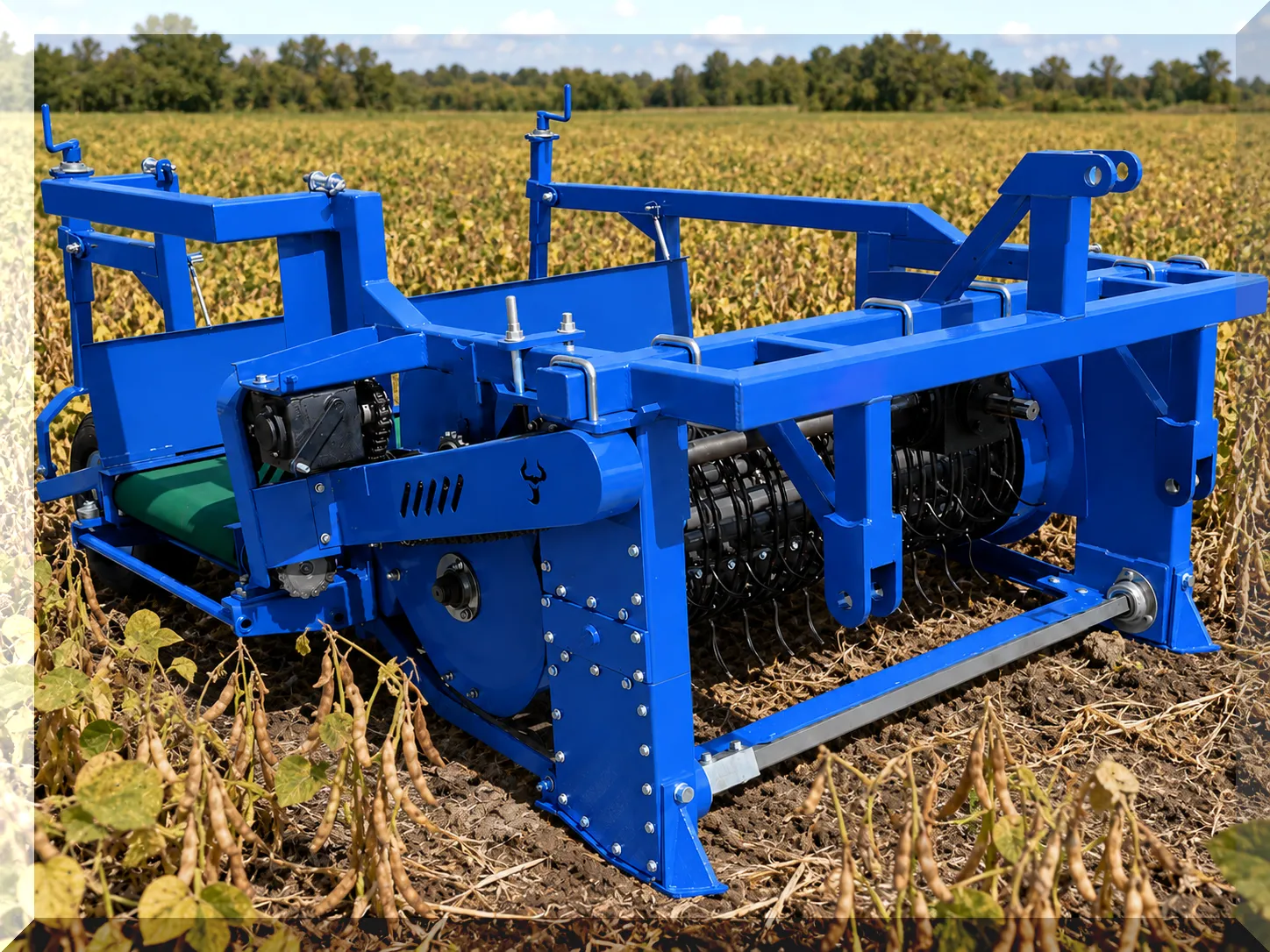
The growth habit of the variety — determinate vs. indeterminate, erect vs. vining — directly affects the optimal puller settings and timing decisions. A single puller setup does not work equally well across different variety types; the setup should be adjusted for the specific variety on each field.
| Variety characteristic | Puller depth setting | Optimal harvest timing | Speed adjustment |
|---|---|---|---|
| Determinate, erect, high lowest pod | Standard depth — 1–2 in below soil surface at plant crown | When 85–90% of pods are mature (yellow-brown) and morning dew has dried | Standard — 3–4 mph on flat ground |
| Determinate with low lowest pod (<3 in) | Shallower — 0.5 in below crown to minimize shoe contact with lowest pods | Harvest at 80–85% pod maturity rather than waiting for full maturity — later harvest increases shattering risk for low-pod varieties | Reduce 10–15% to minimize shoe-pod contact in low-pod rows |
| Indeterminate, upright | Standard depth — same as determinate erect | When lower 75% of pods are mature; upper pods will finish in windrow. Do not delay for full plant maturity — lower pod shatter will exceed upper pod value | Standard, but inspect windrow for shatter frequently — adjust speed down at first signs |
| Vining or semi-vining | Deeper to capture vine crowns that may have shifted from row center | When lower 70% mature — vine types hold moisture longer; wait for adequate dew-free morning period before pulling | Reduce 20–25% — vine tangles create lateral resistance spikes that can damage puller timing system at standard speed |
The complete row spacing and working width configuration for the 4BYH-1.3 kidney bean puller — including the adjustment procedure for matching the puller’s shoe spacing to your specific row spacing and variety width — is in the kidney bean puller row spacing and working width guide. The full harvest timing and field-loss assessment procedure across the complete harvest operation is in the kidney bean mechanical harvest pulling guide. For the gearbox and PTO shaft specifications that determine maximum ground speed and pulling force for the drive system on the 4BYH-1.3 puller, see Specifiche dei componenti del cambio agricolo e della presa di forza.
Harvest Window Characteristics by Market Class
Michigan kidney bean production includes several distinct market classes with different variety characteristics. Understanding the harvest window implications of each class helps growers plan equipment scheduling across their total acreage when multiple classes are grown.
Using Trial Data to Select Varieties for Your Farm
Michigan State University Extension, the Michigan Bean Commission, and private seed companies publish replicated variety trial results annually for the major Michigan dry bean production counties. These trials include yield, maturity date, and frequently mechanical harvest assessments for each variety. Using this data effectively for farm-level variety decisions requires understanding what the trial data measures and its limitations.
Prioritize multi-year, multi-location data. A variety that performed well in one year in one county may not be representative of its average behavior across seasons and soils. Look for varieties that consistently appear in the upper third of yield rankings across at least 3 years and 2 locations before committing significant acreage.
Look for mechanical harvest ratings, not just yield. Some trial reports include a mechanical harvest suitability score or rank. Where available, this is more directly relevant than yield alone. When not available, use lowest pod height and pod shatter ratings as proxies — these two metrics explain the majority of mechanical harvest performance variation between varieties.
Talk to adjacent growers before committing to a new variety. Growers with 2–3 seasons of experience pulling a specific variety in your county can provide information that no published trial data captures — how the variety responds to the specific soil type, how it behaves in wet-soil pulling conditions common in your area, and how the specific variety’s vine habit interacts with your field row spacing.
Scheduling Multiple Varieties Across Your Operation
Growers planting multiple kidney bean market classes face an equipment scheduling challenge at harvest: multiple fields reach optimal pulling conditions simultaneously, but one puller can only work one field at a time. Strategic variety selection that staggers maturity dates across your acreage extends the effective pulling season and reduces the pressure of simultaneous field readiness.
Plant earliest-maturing variety on the field most likely to be accessible first (best drainage, southern exposure). This field reaches harvest condition first and provides the first pull opportunity. Early maturity typically correlates with shorter season growth, meaning lower yield potential — compensate with higher-yielding mid-season variety on better soils.
Plant the highest-yielding variety in your market class on your best soil. Mid-maturity timing follows Field A by 5–10 days, allowing the puller to move directly from Field A to Field B without scheduling conflict. The best soils justify the best yielding variety even if it is not the earliest maturing.
Late-maturing varieties push the harvest schedule toward the autumn frost risk window but allow puller use through the end of the season. In Michigan, varieties that mature in mid-to-late September push against frost risk; evaluate yield advantage vs. frost risk carefully. Late varieties on well-drained fields with lower frost risk are the safest placement.
Row Spacing and Planting Considerations for Mechanical Harvest Varieties
Row spacing selection interacts directly with variety choice to determine pulling efficiency. The standard Michigan dry bean production row spacings of 26, 28, and 30 inches each have implications for mechanical harvest that vary by variety canopy width and puller shoe spacing adjustment range.
Narrower rows force wider canopy spread between rows — vine-prone varieties overlap into adjacent rows more at 26 inches than at 30 inches, increasing tangling at pull time. Best with the most erect, compact varieties. Advantage: more plants per acre for potential yield benefit with appropriate varieties.
The most widely used spacing in Michigan dry bean production — compatible with most puller models and provides good balance between per-acre plant population and canopy separation. Works with a broader range of variety canopy widths than 26-inch rows. Standard choice for most operations without a compelling reason to deviate.
Wider spacing reduces inter-row canopy contact on vining varieties, improving pull cleanliness at the cost of slightly lower plant population. Preferred for semi-vining or wider canopy varieties, and for fields where white mold pressure historically justifies maximizing canopy air circulation. Confirm your puller’s maximum shoe spacing matches 30-inch rows before planting.
Kidney Bean Variety Selection FAQs
Configure Your Bean Puller for Your Variety and Row Spacing
Tell us your variety, lowest pod height, row spacing, and soil type. We confirm the 4BYH-1.3 shoe spacing, depth setting, and travel speed recommendation for your specific variety and field conditions before harvest season.
Redattore: Cxm


